Standing back extension
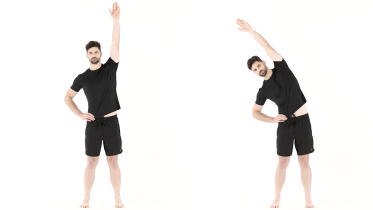
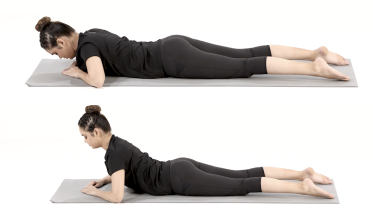
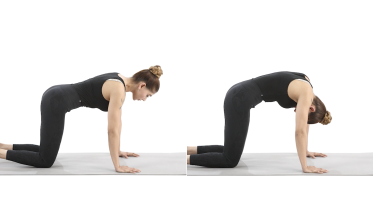
The standing back extension is a gentle backward bend done on your feet, hands on your hips. Lower back programs often use it as a quick break from long spells of sitting or bending forward.
How to do the standing back extension
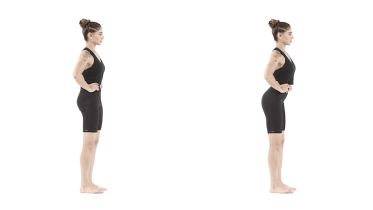
- Stand up straight with your feet shoulder width apart and your weight even on both feet.
- Place your hands on the back of your hips, fingers pointing down, for support.
- Squeeze your buttocks gently and let your hips move slightly forward.
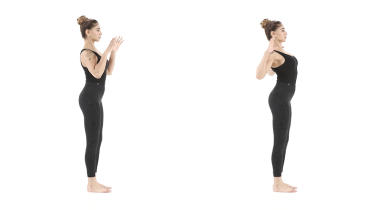
- Arch your back slowly, leaning your upper body back. Let your head move in line with your body and look up only a little, rather than tipping your head far back. Go only as far as feels comfortable.
- Hold for about 10 seconds while you keep breathing, then come back up to standing tall.
What you should feel
A stretch or mild pressure across your lower back, and sometimes a stretch in the front of your hips. It should ease as soon as you are upright again.
Common mistakes
- Throwing your head back. Let your neck follow the movement rather than lead it.
- Going too far, too fast. A smaller, controlled bend is enough.
- Holding your breath. Breathe out as you lean back.
How often
The voice guide uses a hold of about 10 seconds. Many programs do a few repetitions at a time, for example 3 to 5, several times a day, and especially after a long spell of sitting or bending. Your physio will adjust the hold and how often you do it.
Stop and check with your physio if
- Pain spreads into your buttock or down your leg, or you get numbness or tingling.
- You feel sharp or pinching pain in your lower back that stays after you stand up straight.
- You feel dizzy, faint or unsteady. Stop and get medical advice the same day. If you faint, it does not settle within a few minutes of sitting still, or you cannot stand or walk steadily, call emergency services.
- Things look double, your vision suddenly blurs or goes, your speech slurs or becomes muddled, swallowing becomes hard, your face or lips go numb, one side of your face droops or one side of your body goes weak or numb, you suddenly become so dizzy or unsteady that you fall or cannot stand or walk, your legs suddenly give way but you do not black out (a drop attack), or you get a sudden severe headache. Stop and call emergency services, even if it goes away.
From the clinic
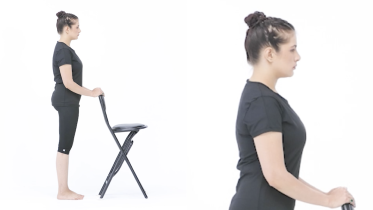
People who sit most of the day tend to like this one. It needs no mat and no floor space, so it fits into a work break. If balance is a worry, stand next to a kitchen counter or with a wall a short step behind you for the first few tries.
Backs respond to it differently. Some feel easier afterward, and others get stirred up. If yours feels worse, tell your physio. That is useful information when they plan your exercises, and it does not mean you did it wrong.
If you have been told you have narrowing of the spinal canal (spinal stenosis) or a forward-slipped vertebra (spondylolisthesis), ask your physio before you start, because bending backward often aggravates both.
Reviewed by the PocketPhysio by VirtueLife expert physiotherapy team. Last reviewed 2026-09-25.
This page is general education, not a diagnosis or a personal treatment plan. If you have pain, an injury or a health condition, see a physiotherapist or doctor before starting new exercises.