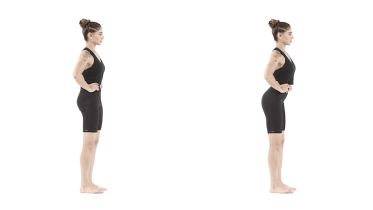
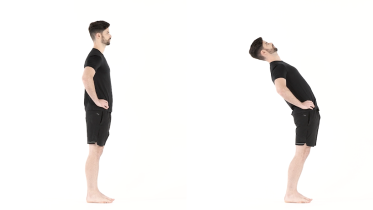
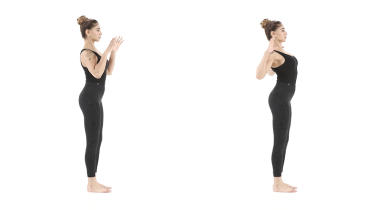
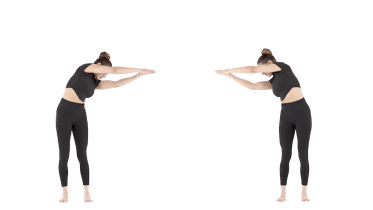
Standing side bend stretch
The standing side bend stretch works along the side of your trunk, from the hip up to the armpit. You raise one arm overhead and lean away from it, letting your other hand slide down the side of your thigh. It needs no equipment and suits a quick break from sitting.
How to do the standing side bend stretch
- Stand tall with your feet about hip width apart and your knees soft, not locked.
- Let one arm hang by your side. Raise the other arm up over your head.
- Lean your upper body sideways, away from the raised arm, and let the lower hand slide down the outside of your thigh. Reach the raised arm over your head in the same direction.
- Let your hips move a little the opposite way to deepen the stretch. Keep facing straight ahead.
- Hold and breathe, then come slowly back up to standing. Switch arms and repeat on the other side.
What you should feel
A stretch along the side of the trunk on the raised arm side, from the waist up toward the armpit.
Common mistakes
- Twisting or leaning forward instead of bending straight to the side.
- Bending so far that you lose your balance or feel a pinch on the other side.
- Shrugging the raised shoulder up toward your ear.
How often
Often held for 15 to 30 seconds, 2 to 3 times on each side, once or twice a day. Your physio will adjust this.
Stop and check with your physio if
- Sharp or pinching pain in your back or side.
- Pain, numbness or tingling spreading down a leg or into an arm.
- Pins and needles in your arm or hand that do not go away after you stop, or part of your arm or hand goes numb. Get medical advice the same day. If one side of your face or body suddenly goes numb or weak, or your speech becomes slurred or muddled, call emergency services, even if it goes away.
- Your shoulder hurts when you raise your arm overhead.
- You feel dizzy or unsteady on your feet. If you faint while exercising, call emergency services, even if you feel fine again quickly.
From the clinic
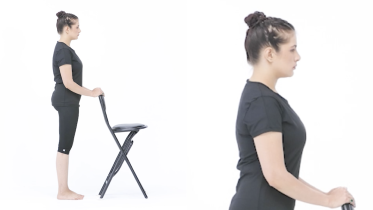
If your shoulder does not like going overhead, rest that hand on the side of your head, or keep both arms down and just slide one hand down the outside of your thigh as you lean. The voice guide puts the lower hand on your hip, which also works. If your balance is not steady, stand side on to a wall or next to a sturdy chair you can hold. You can do the same stretch sitting on a firm chair.
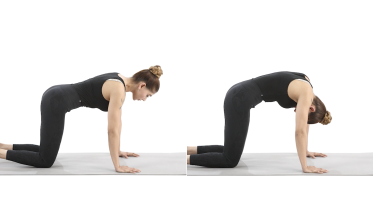
Lean only as far as you comfortably can. After recent back or rib surgery, or a recent rib injury, check with your physio before stretching this area. For other gentle trunk movements, see thoracic rotation and the cat-camel stretch.
Written and checked by the PocketPhysio editorial team. Last updated 2026-09-28.
This page is general education, not a diagnosis or a personal treatment plan. If you have pain, an injury or a health condition, see a physiotherapist or doctor before starting new exercises.