
Occipital neuralgia exercises and physiotherapy
Warning signs, and when to get help
What is occipital neuralgia?
Three nerves leave the top of the neck and run up the back of the head: the greater, lesser and third occipital nerves. Occipital neuralgia is pain in the area they supply, starting at the base of the skull and spreading up over the back of the head, sometimes as far forward as the top of the head or behind the eye on that side. It is usually one sided, but ICHD-3 allows either, so pain on both sides does not rule it out.
The pain has a particular shape. ICHD-3 describes bouts lasting from a few seconds to minutes, severe, and shooting, stabbing or sharp in quality, and people often have a duller ache in between. The scalp on the sore side is usually sensitive to light touch, so brushing your hair, pulling a hat on or resting your head on a pillow can hurt out of proportion to the pressure.
How common is it? Nobody knows. NINDS calls it rare, and a review in Pain Practice states that no data are available on its prevalence or incidence (Vanelderen 2010). Any page giving you a percentage is giving you a number that has not been measured.
How is occipital neuralgia diagnosed?
This is the part most pages skip, and it changes what you can do with the name. ICHD-3 asks for four things together: pain in the distribution of those nerves, at least two of the three pain features above, a scalp that is painful or oddly sensitive to innocuous touch along with tenderness over the nerve branches or trigger points where the greater occipital nerve emerges, and pain that eases temporarily when a doctor numbs the affected nerve with local anesthetic.
That last criterion is an injection, which means the diagnosis cannot be settled at home, by a symptom checker, or by this page. What you can do is describe the pattern accurately to a doctor, because the pattern is what sends them down this path rather than another one.
ICHD-3 adds a caution of its own. Pain in the same place can be referred from the joints at the top of the neck or from tender trigger points in the neck muscles, and that is a different diagnosis with the same map on the skin. A doctor or physio examining you is checking exactly that.
How is it told apart from a headache coming from the neck?
The overlap is large and the two can sit in the same person, so this is a comparison rather than a clean split. What separates them in the criteria is the quality and distribution of the pain plus the scalp sensitivity, not the location: both can hurt at the base of the skull on one side.
Cervicogenic headache is head pain driven by a problem in the neck itself, usually in the upper joints and soft tissues. It tends to be a steadier ache brought on by neck movement or by holding one position, and the ICHD-3 criteria for it ask for evidence of a neck disorder plus signs that the two are linked. Occipital neuralgia is about the nerve: short shooting attacks in the nerve's territory, tenderness where it emerges, and a sensitive scalp. Barmherzig and Kingston reviewed the two together for this reason (Barmherzig 2019).
Other pages may fit you better. Tension-type headache presses on both sides of the head and is not set off by pressing a single spot at the base of the skull. If neck pain is your main complaint and the head pain comes and goes with it, start with neck pain, and if all this began after a car accident, read whiplash and get checked before you exercise. Pain, pins and needles or weakness running into the arm points toward the nerve roots instead, which is cervical radiculopathy.
Do exercises help occipital neuralgia?
Honestly, we do not know, and you deserve to hear that before you start. Deuel and colleagues reviewed conservative management of this condition for physical therapy and found that published research specific to it is limited to very low quality evidence for TENS, so their framework treats the clinical features in front of them rather than the diagnosis (Deuel 2024). Lefel and colleagues list conservative care as pain education and self-care, medication, physical therapy aimed at reducing secondary muscle tension and improving posture, TENS, or some combination (Lefel 2025).
So why give exercises at all? Because the nerve travels through the muscles and past the joints at the top of the neck, and because the criteria themselves require telling this apart from upper neck joint referral and muscle trigger points, which are treatable. The program below is the neck program. It is offered as reasonable care for the structures the nerve runs through, and not as a treatment shown to settle this diagnosis.
How to use this program
Begin at stage 1 if you are not sure. Move up when the current stage is comfortable, your neck is no worse the next day, and attacks are not coming more often.
Each exercise page gives a typical starting dose. As a guide, the neck movements are often 5 to 10 slow repetitions in each direction, chin tucks 8 to 10 with a 3 to 5 second hold a few times a day, and the stretches 15 to 30 seconds held 2 to 4 times. The deep neck flexor exercise usually starts at holds of about 5 to 10 seconds, 5 to 10 times, once or twice a day, and the band pull-apart at 2 to 3 sets of 10 to 15. Your physio will adjust this.
Sore muscles the next morning are common and settle. An attack of the shooting pain during or after an exercise is different: leave that one out and say so at your next appointment. Do not chase the tender spot with harder pressure, because a scalp that hurts from light touch is part of this diagnosis rather than a knot to be worked out.
After neck surgery or a broken bone in the neck, check with your surgeon or physio before you start. If you have rheumatoid arthritis, or you have been told the spaces around the nerves or spinal cord in your neck are narrowed, check with your physio or doctor before you start. The same applies if you have Down syndrome or have been told the top of your neck is unstable. If you are pregnant, check with your midwife or doctor first. This program is for adults, and a child or teenager with this kind of pain needs a doctor's assessment rather than a program from a website.
The exercise program
The exercises below carry their own stop signs and precautions. Open the line under an exercise and read them before you try it.
Stage 1: Settle the area and keep the neck moving
Start here if the base of your skull and the top of your neck are tender and turning your head feels stiff. Keep every movement slow and stay inside a range that does not set an attack off. Two of these stretches need a hand resting on the back or the side of your head, which in this condition is often the exact patch of scalp that hurts from light touch, so rest the hand lightly, use no more pull than it takes to feel a stretch, and leave either one out if the contact or the stretch sets off the shooting pain. Deuel and colleagues list desensitization, meaning graded and gentle exposure to touch, among the physical therapy options here, which is the opposite of working harder on a sore spot (Deuel 2024). None of these exercises has been tested in occipital neuralgia, so treat them as looking after the neck rather than as treatment for the nerve. If a neck movement makes you dizzy, stop, sit still until it settles, and get medical advice the same day before you try again.
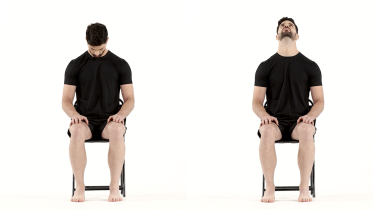 Neck range of motion exercises
Stop signs and precautions for the neck range of motion exercises
Before you start
- If your neck pain started after a recent car accident or fall, get it checked by a doctor or physio before you begin. Keep still and call emergency services if the pain came straight after a high-speed crash, a car that rolled over, being thrown from a vehicle, being hit by a vehicle while walking or cycling, a motorbike or quad bike accident, a horse riding accident, a diving injury or a fall from a height or down several stairs, or if you have numbness, tingling or weakness in an arm or leg. If you hit your head and were knocked out, cannot remember what happened, have had a headache ever since, are being sick, or take medicine that thins your blood other than aspirin on its own, go to an emergency department, and do not drive yourself. If you have a condition that stiffens the spine, such as ankylosing spondylitis, new neck pain after even a minor fall, knock or jolt is an emergency: keep still and call emergency services if it started straight after the injury, or go to an emergency department straight away, without driving yourself, if it started later. See a doctor the same day, before any exercise, if you are 65 or over, have low bone density (osteoporosis) or have taken steroid tablets for a long time, if your neck pain is severe, if you cannot turn your head halfway toward each shoulder, or if it hurts when you press on the bony middle of the back of your neck. Having none of these does not rule out an injury.
- After neck surgery or a broken bone in the neck, check with your surgeon or physio before you start.
- Looking up bends the neck back, which briefly narrows the space around the nerves and the spinal cord in the neck. If you have rheumatoid arthritis or Down syndrome, have been told the top of your neck is unstable, or know of pressure on the spinal cord in your neck, get your physio's advice before you start.
When to stop and get help
- You feel dizzy, faint or unsteady. Stop and get medical advice the same day. If you faint, it does not settle within a few minutes of sitting still, or you cannot stand or walk steadily, call emergency services.
- Things look double, your vision suddenly blurs or goes, your speech slurs or becomes muddled, swallowing becomes hard, your face or lips go numb, one side of your face droops or one side of your body goes weak or numb, you suddenly become so dizzy or unsteady that you fall or cannot stand or walk, your legs suddenly give way but you do not black out (a drop attack), or you get a sudden severe headache. Stop and call emergency services, even if it goes away.
- An electric shock feeling runs down your back or into your arms or legs as your head bends forward. Stop and get medical advice the same day.
- Pain, pins and needles or numbness travels down into your arm or hand, or one of the movements gives a sharp catch in the neck.
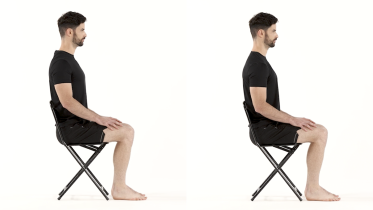 Chin tuck
Stop signs and precautions for the chin tuck
Before you start
- If your neck pain started after a recent car accident or fall, get it checked by a doctor or physio before you begin. Keep still and call emergency services if the pain came straight after a high-speed crash, a car that rolled over, being thrown from a vehicle, being hit by a vehicle while walking or cycling, a motorbike or quad bike accident, a horse riding accident, a diving injury or a fall from a height or down several stairs, or if you have numbness, tingling or weakness in an arm or leg. If you hit your head and were knocked out, cannot remember what happened, have had a headache ever since, are being sick, or take medicine that thins your blood other than aspirin on its own, go to an emergency department, and do not drive yourself. If you have a condition that stiffens the spine, such as ankylosing spondylitis, new neck pain after even a minor fall, knock or jolt is an emergency: keep still and call emergency services if it started straight after the injury, or go to an emergency department straight away, without driving yourself, if it started later. See a doctor the same day, before any exercise, if you are 65 or over, have low bone density (osteoporosis) or have taken steroid tablets for a long time, if your neck pain is severe, if you cannot turn your head halfway toward each shoulder, or if it hurts when you press on the bony middle of the back of your neck. Having none of these does not rule out an injury.
- After neck surgery or a broken bone in the neck, check with your surgeon or physio before you start.
When to stop and get help
- You feel dizzy, faint or unsteady. Stop and get medical advice the same day. If you faint, it does not settle within a few minutes of sitting still, or you cannot stand or walk steadily, call emergency services.
- Things look double, your vision suddenly blurs or goes, your speech slurs or becomes muddled, swallowing becomes hard, your face or lips go numb, one side of your face droops or one side of your body goes weak or numb, you suddenly become so dizzy or unsteady that you fall or cannot stand or walk, your legs suddenly give way but you do not black out (a drop attack), or you get a sudden severe headache. Stop and call emergency services, even if it goes away.
- Pain, numbness or tingling spreads into your arm or hand.
- Neck pain gets sharper with each repetition.
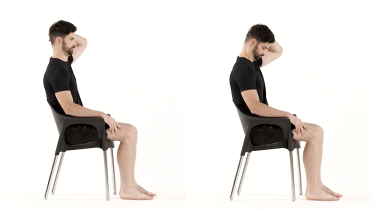 Suboccipital stretch
Stop signs and precautions for the suboccipital stretch
Before you start
- If your neck pain started after a recent car accident or fall, get it checked by a doctor or physio before you begin. Keep still and call emergency services if the pain came straight after a high-speed crash, a car that rolled over, being thrown from a vehicle, being hit by a vehicle while walking or cycling, a motorbike or quad bike accident, a horse riding accident, a diving injury or a fall from a height or down several stairs, or if you have numbness, tingling or weakness in an arm or leg. If you hit your head and were knocked out, cannot remember what happened, have had a headache ever since, are being sick, or take medicine that thins your blood other than aspirin on its own, go to an emergency department, and do not drive yourself. If you have a condition that stiffens the spine, such as ankylosing spondylitis, new neck pain after even a minor fall, knock or jolt is an emergency: keep still and call emergency services if it started straight after the injury, or go to an emergency department straight away, without driving yourself, if it started later. See a doctor the same day, before any exercise, if you are 65 or over, have low bone density (osteoporosis) or have taken steroid tablets for a long time, if your neck pain is severe, if you cannot turn your head halfway toward each shoulder, or if it hurts when you press on the bony middle of the back of your neck. Having none of these does not rule out an injury.
- After neck surgery or a broken bone in the neck, check with your surgeon or physio before you start.
- If you have rheumatoid arthritis or Down syndrome, or have been told the top of your neck is unstable or there is pressure on the spinal cord in your neck, ask your physio before you start.
When to stop and get help
- An electric shock feeling runs down your back or into your arms or legs as your head bends forward. Stop and get medical advice the same day.
- Pain, numbness or tingling spreads into an arm or hand.
- You feel dizzy, faint or unsteady. Stop and get medical advice the same day. If you faint, it does not settle within a few minutes of sitting still, or you cannot stand or walk steadily, call emergency services.
- Things look double, your vision suddenly blurs or goes, your speech slurs or becomes muddled, swallowing becomes hard, your face or lips go numb, one side of your face droops or one side of your body goes weak or numb, you suddenly become so dizzy or unsteady that you fall or cannot stand or walk, your legs suddenly give way but you do not black out (a drop attack), or you get a sudden severe headache. Stop and call emergency services, even if it goes away.
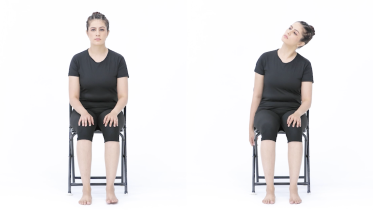 Upper trapezius stretch
Stop signs and precautions for the upper trapezius stretch
Before you start
- If your neck pain started after a recent car accident or fall, get it checked by a doctor or physio before you begin. Keep still and call emergency services if the pain came straight after a high-speed crash, a car that rolled over, being thrown from a vehicle, being hit by a vehicle while walking or cycling, a motorbike or quad bike accident, a horse riding accident, a diving injury or a fall from a height or down several stairs, or if you have numbness, tingling or weakness in an arm or leg. If you hit your head and were knocked out, cannot remember what happened, have had a headache ever since, are being sick, or take medicine that thins your blood other than aspirin on its own, go to an emergency department, and do not drive yourself. If you have a condition that stiffens the spine, such as ankylosing spondylitis, new neck pain after even a minor fall, knock or jolt is an emergency: keep still and call emergency services if it started straight after the injury, or go to an emergency department straight away, without driving yourself, if it started later. See a doctor the same day, before any exercise, if you are 65 or over, have low bone density (osteoporosis) or have taken steroid tablets for a long time, if your neck pain is severe, if you cannot turn your head halfway toward each shoulder, or if it hurts when you press on the bony middle of the back of your neck. Having none of these does not rule out an injury.
- After neck surgery or a broken bone in the neck, check with your surgeon or physio before you start.
- If you have rheumatoid arthritis or Down syndrome, or have been told the top of your neck is unstable or there is pressure on the spinal cord in your neck, ask your physio before you start.
When to stop and get help
- You feel dizzy, faint or unsteady. Stop and get medical advice the same day. If you faint, it does not settle within a few minutes of sitting still, or you cannot stand or walk steadily, call emergency services.
- Things look double, your vision suddenly blurs or goes, your speech slurs or becomes muddled, swallowing becomes hard, your face or lips go numb, one side of your face droops or one side of your body goes weak or numb, you suddenly become so dizzy or unsteady that you fall or cannot stand or walk, your legs suddenly give way but you do not black out (a drop attack), or you get a sudden severe headache. Stop and call emergency services, even if it goes away.
- Pins and needles, numbness or pain travels down into your arm or hand.
- The stretch turns into sharp pain in your neck.
Stage 2: Work the deep neck and shoulder blade muscles
Move on when stage 1 is comfortable and you can turn your head without starting an attack. The deep neck flexor exercise is a small nod with light effort, held rather than pushed, and it is the one here worth having a physio watch. The levator scapulae stretch reaches the muscle running from the shoulder blade to the top of the neck, which often feels like a tight cord on the sore side. The seated squeeze and the standing check are low-effort ways to take load off the base of the skull during a long day at a desk. Lefel and colleagues describe conservative care here as pain education and self-care, medication, physical therapy aimed at secondary muscle tension and posture, and TENS, which is why this stage looks the way it does (Lefel 2025).
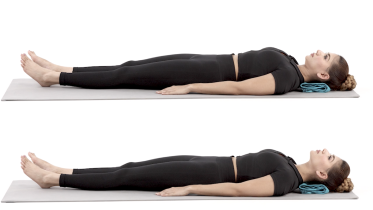 Deep neck flexor exercise
Stop signs and precautions for the deep neck flexor exercise
Before you start
- If your neck pain started after a recent car accident or fall, get it checked by a doctor or physio before you begin. Keep still and call emergency services if the pain came straight after a high-speed crash, a car that rolled over, being thrown from a vehicle, being hit by a vehicle while walking or cycling, a motorbike or quad bike accident, a horse riding accident, a diving injury or a fall from a height or down several stairs, or if you have numbness, tingling or weakness in an arm or leg. If you hit your head and were knocked out, cannot remember what happened, have had a headache ever since, are being sick, or take medicine that thins your blood other than aspirin on its own, go to an emergency department, and do not drive yourself. If you have a condition that stiffens the spine, such as ankylosing spondylitis, new neck pain after even a minor fall, knock or jolt is an emergency: keep still and call emergency services if it started straight after the injury, or go to an emergency department straight away, without driving yourself, if it started later. See a doctor the same day, before any exercise, if you are 65 or over, have low bone density (osteoporosis) or have taken steroid tablets for a long time, if your neck pain is severe, if you cannot turn your head halfway toward each shoulder, or if it hurts when you press on the bony middle of the back of your neck. Having none of these does not rule out an injury.
- After neck surgery or a broken bone in the neck, check with your surgeon or physio before you start. If you are pregnant and past the first three months, check with your physio before exercising flat on your back.
When to stop and get help
- You feel dizzy, faint, unsteady or sick. Stop and get medical advice the same day. If you faint, it does not settle within a few minutes of sitting still, or you cannot stand or walk steadily, call emergency services.
- Things look double, your vision suddenly blurs or goes, your speech slurs or becomes muddled, swallowing becomes hard, your face or lips go numb, one side of your face droops or one side of your body goes weak or numb, you suddenly become so dizzy or unsteady that you fall or cannot stand or walk, your legs suddenly give way but you do not black out (a drop attack), or you get a sudden severe headache. Stop and call emergency services, even if it goes away.
- Tingling, numbness or pain shows up in an arm or hand.
- Your neck pain or headache gets clearly worse during or after the exercise.
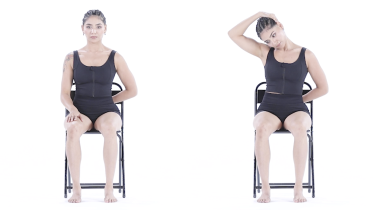 Levator scapulae stretch
Stop signs and precautions for the levator scapulae stretch
Before you start
- If your neck pain started after a recent car accident or fall, get it checked by a doctor or physio before you begin. Keep still and call emergency services if the pain came straight after a high-speed crash, a car that rolled over, being thrown from a vehicle, being hit by a vehicle while walking or cycling, a motorbike or quad bike accident, a horse riding accident, a diving injury or a fall from a height or down several stairs, or if you have numbness, tingling or weakness in an arm or leg. If you hit your head and were knocked out, cannot remember what happened, have had a headache ever since, are being sick, or take medicine that thins your blood other than aspirin on its own, go to an emergency department, and do not drive yourself. If you have a condition that stiffens the spine, such as ankylosing spondylitis, new neck pain after even a minor fall, knock or jolt is an emergency: keep still and call emergency services if it started straight after the injury, or go to an emergency department straight away, without driving yourself, if it started later. See a doctor the same day, before any exercise, if you are 65 or over, have low bone density (osteoporosis) or have taken steroid tablets for a long time, if your neck pain is severe, if you cannot turn your head halfway toward each shoulder, or if it hurts when you press on the bony middle of the back of your neck. Having none of these does not rule out an injury.
- After neck surgery or a broken bone in the neck, check with your surgeon or physio before you start.
- If you have rheumatoid arthritis or Down syndrome, or have been told the top of your neck is unstable or there is pressure on the spinal cord in your neck, ask your physio before you start. They may want you to leave out the hand that guides your head at first.
When to stop and get help
- You feel dizzy, faint or unsteady. Stop and get medical advice the same day. If you faint, it does not settle within a few minutes of sitting still, or you cannot stand or walk steadily, call emergency services.
- Things look double, your vision suddenly blurs or goes, your speech slurs or becomes muddled, swallowing becomes hard, your face or lips go numb, one side of your face droops or one side of your body goes weak or numb, you suddenly become so dizzy or unsteady that you fall or cannot stand or walk, your legs suddenly give way but you do not black out (a drop attack), or you get a sudden severe headache. Stop and call emergency services, even if it goes away.
- Numbness, tingling or pain runs down into the arm or hand.
- It hurts sharply in the neck instead of pulling.
- An electric shock feeling runs down your back or into your arms or legs as your head bends forward. Stop and get medical advice the same day.
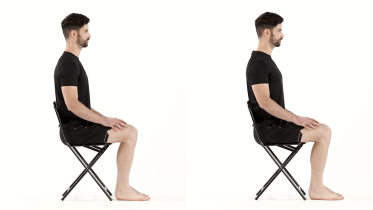 Scapular squeeze
Stop signs and precautions for the scapular squeeze
When to stop and get help
- Pain, numbness or tingling spreads into the arm or hand.
- Pins and needles in your arm or hand that do not go away after you stop, or part of your arm or hand goes numb. Get medical advice the same day. If one side of your face or body suddenly goes numb or weak, or your speech becomes slurred or muddled, call emergency services, even if it goes away.
- Neck or shoulder pain gets sharper during the squeeze instead of settling.
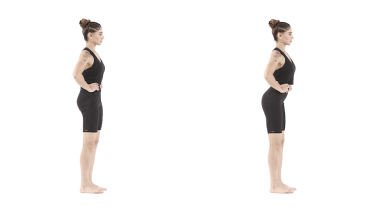 Correct standing posture
Stop signs and precautions for the correct standing posture
When to stop and get help
- Tingling, numbness or pain that travels down an arm or a leg.
- Adjusting how you stand brings on sharp pain in your back or neck, or makes existing pain steadily worse.
- You feel dizzy, faint or unsteady. Stop and get medical advice the same day. If you faint, it does not settle within a few minutes of sitting still, or you cannot stand or walk steadily, call emergency services.
- Things look double, your vision suddenly blurs or goes, your speech slurs or becomes muddled, swallowing becomes hard, your face or lips go numb, one side of your face droops or one side of your body goes weak or numb, you suddenly become so dizzy or unsteady that you fall or cannot stand or walk, your legs suddenly give way but you do not black out (a drop attack), or you get a sudden severe headache. Stop and call emergency services, even if it goes away.
- Numbness around your genitals or bottom, new trouble with your bladder or bowels, pain, tingling, numbness or weakness in both legs, or loss of feeling in one leg. Call emergency services or go to an emergency department straight away, and do not drive yourself.
- Your leg or foot gets weaker, for example your foot drags, catches on the ground or slaps down when you walk (foot drop). Get medical advice the same day. If the weakness is getting worse by the hour, go to an emergency department.
Stage 3: Build endurance in the neck and upper back
When the stage 2 holds feel easy and attacks are less frequent, these ask the same muscles to keep working for longer. The head lift makes the muscles at the front of the neck hold your head up against gravity, and the face-down tuck does the same job for the muscles at the back. The band pull-apart and the seated rotation spread some of the work to the upper back and shoulder blades. Build the holds and the repetitions in small steps, because a flare that lasts days usually means the jump was too big. Drop back a stage if the shooting pain starts coming more often.
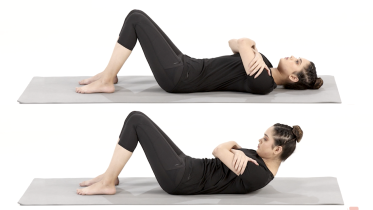 Chin tuck head lift
Stop signs and precautions for the chin tuck head lift
Before you start
- If your neck pain started after a recent car accident or fall, get it checked by a doctor or physio before you begin. Keep still and call emergency services if the pain came straight after a high-speed crash, a car that rolled over, being thrown from a vehicle, being hit by a vehicle while walking or cycling, a motorbike or quad bike accident, a horse riding accident, a diving injury or a fall from a height or down several stairs, or if you have numbness, tingling or weakness in an arm or leg. If you hit your head and were knocked out, cannot remember what happened, have had a headache ever since, are being sick, or take medicine that thins your blood other than aspirin on its own, go to an emergency department, and do not drive yourself. If you have a condition that stiffens the spine, such as ankylosing spondylitis, new neck pain after even a minor fall, knock or jolt is an emergency: keep still and call emergency services if it started straight after the injury, or go to an emergency department straight away, without driving yourself, if it started later. See a doctor the same day, before any exercise, if you are 65 or over, have low bone density (osteoporosis) or have taken steroid tablets for a long time, if your neck pain is severe, if you cannot turn your head halfway toward each shoulder, or if it hurts when you press on the bony middle of the back of your neck. Having none of these does not rule out an injury.
- After neck surgery or a broken bone in the neck, check with your surgeon or physio before you start. Past the first trimester of pregnancy, ask your physio before doing exercises lying flat on your back.
- If you have high blood pressure, breathe steadily through every hold and never hold your breath.
When to stop and get help
- Your neck pain or headache builds with each lift, or pain, numbness or tingling spreads into an arm or hand.
- You feel dizzy, faint or unsteady. Stop and get medical advice the same day. If you faint, it does not settle within a few minutes of sitting still, or you cannot stand or walk steadily, call emergency services.
- Things look double, your vision suddenly blurs or goes, your speech slurs or becomes muddled, swallowing becomes hard, your face or lips go numb, one side of your face droops or one side of your body goes weak or numb, you suddenly become so dizzy or unsteady that you fall or cannot stand or walk, your legs suddenly give way but you do not black out (a drop attack), or you get a sudden severe headache. Stop and call emergency services, even if it goes away.
- An electric shock feeling runs down your back or into your arms or legs as your head bends forward. Stop and get medical advice the same day.
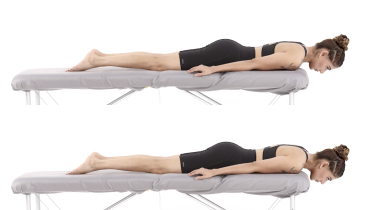 Prone chin tuck
Stop signs and precautions for the prone chin tuck
Before you start
- If your neck pain started after a recent car accident or fall, get it checked by a doctor or physio before you begin. Keep still and call emergency services if the pain came straight after a high-speed crash, a car that rolled over, being thrown from a vehicle, being hit by a vehicle while walking or cycling, a motorbike or quad bike accident, a horse riding accident, a diving injury or a fall from a height or down several stairs, or if you have numbness, tingling or weakness in an arm or leg. If you hit your head and were knocked out, cannot remember what happened, have had a headache ever since, are being sick, or take medicine that thins your blood other than aspirin on its own, go to an emergency department, and do not drive yourself. If you have a condition that stiffens the spine, such as ankylosing spondylitis, new neck pain after even a minor fall, knock or jolt is an emergency: keep still and call emergency services if it started straight after the injury, or go to an emergency department straight away, without driving yourself, if it started later. See a doctor the same day, before any exercise, if you are 65 or over, have low bone density (osteoporosis) or have taken steroid tablets for a long time, if your neck pain is severe, if you cannot turn your head halfway toward each shoulder, or if it hurts when you press on the bony middle of the back of your neck. Having none of these does not rule out an injury.
- After neck surgery or a broken bone in the neck, check with your surgeon or physio before you start.
- If you have had recent heart or chest surgery, do not lie face down on a healing chest wound. The weight of your chest presses on the wound for as long as you are down there, and pushing up through your arms to get off the bed pulls across the breastbone. Ask your surgeon or surgical team when lying on your front is allowed, and until then ask your physio for another way to do this while you lie on your side, sit or stand. If the breastbone clicks, grinds, shifts or feels as if it is moving while you do it, stop, and contact your surgical team the same day.
- If it is hard on your back or your breathing, or you are pregnant, ask your physio for another way to train these muscles.
- If you have high blood pressure, breathe steadily through every hold and never hold your breath.
When to stop and get help
- Pain, numbness or tingling spreads into an arm or hand, or your neck pain or headache builds with each lift.
- You feel dizzy, faint or unsteady. Stop and get medical advice the same day. If you faint, it does not settle within a few minutes of sitting still, or you cannot stand or walk steadily, call emergency services.
- Things look double, your vision suddenly blurs or goes, your speech slurs or becomes muddled, swallowing becomes hard, your face or lips go numb, one side of your face droops or one side of your body goes weak or numb, you suddenly become so dizzy or unsteady that you fall or cannot stand or walk, your legs suddenly give way but you do not black out (a drop attack), or you get a sudden severe headache. Stop and call emergency services, even if it goes away.
- An electric shock feeling runs down your back or into your arms or legs as your head bends forward. Stop and get medical advice the same day.
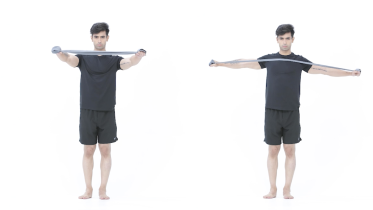 Band pull-apart
Stop signs and precautions for the band pull-apart
Before you start
- If you have had shoulder surgery, or the shoulder has dislocated or feels loose, ask your physio before you try it.
- After recent heart or chest surgery, get your surgeon's or surgical team's okay first, because pulling the band apart with straight arms pulls out across the healing breastbone. If the breastbone clicks, grinds, shifts or feels as if it is moving while you do it, stop, and contact your surgical team the same day.
- If you have high blood pressure, breathe steadily through every repetition and never hold your breath.
When to stop and get help
- A sharp pain or catch in the shoulder comes on during the pull.
- You feel dizzy, faint or unsteady. Stop and get medical advice the same day. If you faint, it does not settle within a few minutes of sitting still, or you cannot stand or walk steadily, call emergency services.
- Tingling or pain spreads down either arm.
- Pins and needles in your arm or hand that do not go away after you stop, or part of your arm or hand goes numb. Get medical advice the same day. If one side of your face or body suddenly goes numb or weak, or your speech becomes slurred or muddled, call emergency services, even if it goes away.
- Pain at the front of the shoulder comes on each time the arms open wide.
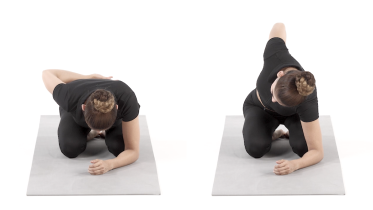 Thoracic rotation
Stop signs and precautions for the thoracic rotation
Before you start
- If you have had a hip replacement, get the go-ahead from your surgeon or physio before you try thoracic rotation. Sitting back toward your heels with your body leaned forward bends the hip well past a right angle, and many surgeons ask you to avoid that for the first months after some operations.
- If you have had surgery on your spine in recent months, get the go-ahead from your surgical team or physio first.
- If you have osteoporosis or a past fracture in the spine, check the range with your physio before you start, as twisting to the end of your range is often limited.
- After recent heart or chest surgery, get your surgeon's or surgical team's okay first, because taking your weight through one arm and turning the chest loads and twists the healing breastbone. If the breastbone clicks, grinds, shifts or feels as if it is moving while you do it, stop, and contact your surgical team the same day.
When to stop and get help
- Sharp pain in your back, ribs or shoulder as you turn.
- You feel dizzy, faint or unsteady. Stop and get medical advice the same day. If you faint, it does not settle within a few minutes of sitting still, or you cannot stand or walk steadily, call emergency services.
- Pain, numbness or tingling spreads into your arm or down your leg.
- Pins and needles in your arm or hand that do not go away after you stop, or part of your arm or hand goes numb. Get medical advice the same day. If one side of your face or body suddenly goes numb or weak, or your speech becomes slurred or muddled, call emergency services, even if it goes away.
- Kneeling or sitting back on your heels hurts your knees.
What are the medical treatments, and where does surgery come in?
Knowing the ladder helps you ask better questions. The American Association of Neurological Surgeons sets out heat, physical therapy or massage therapy and oral medication first, then percutaneous nerve blocks and botulinum toxin, and then, for pain that has not responded, occipital nerve stimulation, spinal cord stimulation and surgery on the C2 and C3 nerve tissue.
A local anesthetic block of the nerve does two jobs, because easing the pain for a while is also one of the diagnostic criteria. Blocks of the greater occipital nerve have been reviewed across headache disorders in their own right (Chowdhury 2021). Barmherzig and Kingston are clear that the surgical options belong at the end of the line, reserved for selected people who have not responded to everything conservative and minimally invasive (Barmherzig 2019).
We do not set rehabilitation after any of those procedures. If you have had one, your medical team's instructions come first, and this page is not a substitute for them.
What to avoid or change
Long spells with the neck in one position are what usually sets this off, especially bent forward over a phone or a laptop. Change position often, and do a few stage 1 movements before you carry on.
Watch how often you reach for painkillers. The NHS lists taking too many painkillers among the common causes of headaches, so keep a note of the days you take them and tell your doctor if that number is creeping up.
A practical one from clinic: people with this condition often sleep badly because the pillow presses on the sore spot. Trying a different pillow height, or sleeping on the other side for a while, costs nothing and sometimes buys a few nights.
When to see a physio or doctor
See a doctor if you have not had this diagnosed, if attacks are getting more frequent, or if the pattern changes. A physio can assess your neck movement, the upper neck joints and the deep neck muscles, help work out how much of your pain is coming from the neck itself, and set a dose for the exercises. Tell them about any new or unusual headache before any hands-on treatment to your neck.
One overlap deserves naming on its own, because this condition shares a symptom with a dangerous one. A scalp that hurts to light touch is part of the criteria for occipital neuralgia, and it is also a feature of inflamed arteries in the head (temporal arteritis), which mainly affects people aged 50 and over and can take your sight. So do not file a tender scalp under this diagnosis and stop thinking about it. What points at the arteries rather than the nerve is a headache that is new in kind after the age of 50, tenderness over the temples rather than the back of the head, pain in the jaw or tongue that comes on while you chew or talk and eases when you stop, aching and stiffness in the shoulders or hips, a fever, night sweats or losing weight without trying, and any change in vision. The warning signs below give the timing for each of those, and a change in vision is an emergency.
Anything in the warning signs below needs faster help than a routine appointment, within the time each one gives.
For physiotherapists
ICHD-3 13.4 requires unilateral or bilateral pain in the distribution of the greater, lesser or third occipital nerves, at least two of three pain characteristics, both dysesthesia or allodynia on innocuous stimulation of the scalp or hair and either tenderness over the affected nerve branches or trigger points at the emergence of the greater occipital nerve or in the C2 distribution, and temporary easing by local anesthetic block. Its own comment separates it from occipital referral from the atlantoaxial or upper zygapophyseal joints and from trigger points in neck muscles or their insertions, which is where most of our examination effort goes.
Deuel 2024 is the one review written for our profession, and its value is the mechanistic framework rather than an evidence base: it states that published research on conservative interventions specific to occipital neuralgia is limited to very low-quality evidence for TENS. Lefel 2025 gives the current conservative list. Vanelderen 2010 records the absence of epidemiological data and sets out the graded interventional ladder. Fabry 2024 covers the anatomy of the greater occipital nerve and interventional management for anyone wanting the anatomical detail. Set expectations accordingly.
On the tension between a program that includes suboccipital and upper trapezius work and a diagnosis defined in part by scalp allodynia: it is real, and it does not have to be left hanging. Deuel 2024 lists desensitization alongside exercise, manual therapy, posture and biomechanical training, TENS and patient education, so the recognized answer to an allodynic receptive field is graded exposure rather than firmer pressure or a longer hold. Treat the hand contact these two stretches need as part of the dose, screen it before the stretch, and leave the exercise out rather than working through the allodynia. The page says the same thing in four places on purpose, because a patient who reads only the program will otherwise meet an upper cervical stretch with no gate on it.
One more overlap for the clinic: criterion C requires allodynia on innocuous stimulation of the scalp or hair, which is also a cardinal feature of giant cell arteritis in the over 50s. Do not let this diagnosis absorb a tender scalp in that age group. Jaw claudication, temporal rather than occipital tenderness, girdle stiffness, constitutional symptoms and any visual change are the discriminators, and they are on the page.
Warning signs
Get emergency help now
- Emergency: any sign of a stroke, even if it goes away. That means a face that droops on one side, an arm you cannot lift or keep up, slurred or muddled speech, weakness or numbness on one side of your body or face, sudden blurred vision, double vision or loss of sight, trouble swallowing, sudden dizziness with unsteadiness or falling over, a sudden severe headache, or a sudden fall where your legs give way but you do not black out (a drop attack). Call emergency services straight away. With neck pain, these can rarely come from a tear in an artery in the neck.
- Emergency: a sudden, severe headache or neck pain that feels new and unlike anything you have had before. Call emergency services straight away.
- Emergency: a new headache or neck pain, or both, that does not feel like ordinary neck pain. If this is your first bout, judge it by how it behaves rather than by how it compares. Either of the next two is enough on its own. One, it came on suddenly, in a single moment, even if it is not severe and even if it has eased since. Sudden onset counts on its own. Two, nothing you do changes it much: no position or rest makes a real difference, and after the first day or two it has not started to settle. It counts even if you have none of the other emergency signs above, and it matters more if it started after a neck injury or strain, even a minor one, a bout of heavy coughing, or having your neck manipulated. Go to an emergency department straight away, or call emergency services if you cannot get there safely, and do not drive yourself. Do not start these exercises, and do not have any hands-on treatment to your neck, until your neck has been checked. A tear in an artery in the neck can start as pain alone, often on one side, with nothing else to find. If it came on gradually rather than in a single moment, and you can find a position that eases it, follow the same day warning sign for this below instead. Pain that started in one moment stays with this emergency line even if a position now eases it.
- Emergency: a new headache, or new pain on one side of your face, jaw or neck, with a drooping eyelid or a smaller pupil on the same side, or with a new pulsing or whooshing sound in one ear that keeps time with your heartbeat. Call emergency services or go to an emergency department straight away, and do not drive yourself. This can be a tear in an artery in the neck (cervical artery dissection), which can lead to a stroke.
- Emergency: a stiff neck with a fever, a severe headache that is getting worse, pain when you look at bright lights, confusion, or a rash that does not fade when you press a glass on it. Call emergency services. These can be signs of meningitis.
- Emergency: a headache with a fit (seizure), drowsiness, confusion, new memory problems, a change in personality or behavior, or new trouble walking or keeping your balance. Call emergency services straight away.
- Emergency: neck pain straight after a high-energy accident, such as a crash at high speed, a car that rolled over, being thrown from a vehicle, being hit by a vehicle while walking or cycling, a motorbike or quad bike accident, a horse riding accident, a diving injury, or a fall from a height or down several stairs. Keep still and call emergency services. If the neck pain only starts later and nobody has checked your neck since, keep your neck as still as you can, do not twist or bend it, and call emergency services or go to an emergency department straight away. Do not drive yourself, and tell them what kind of accident it was, because that is one of the things that decides whether you need a scan.
- Emergency: in the first days after the accident, numbness, tingling, pins and needles or weakness in your arms or legs, or a sudden electric shock feeling in your neck and back that runs into your arms or legs. If it starts straight after the accident, keep still and call emergency services. If it starts later, call emergency services or go to an emergency department straight away, and do not drive yourself.
- Emergency: after a knock to the head, being very drowsy or finding it hard to keep your eyes open, confusion, a fit (seizure), new weakness or numbness anywhere in your body, new trouble understanding, speaking, walking or keeping your balance, new problems seeing or hearing, clear fluid coming from your ears or nose, bleeding from your ears or bruising behind them, a black eye when your eye was not hit, a dent in your head or a wound with something stuck in it, or a change in behavior. Call emergency services straight away. These can be signs of an injury to the brain.
- Emergency: a knock to the head in a high-energy accident, even if you feel completely well. That means a fall from a height of more than 1 meter (about 3 feet) or more than 5 stairs, a crash at high speed, a car that rolled over, being thrown from a vehicle, being hit by a vehicle while walking or cycling, a bike crash, an accident on a quad bike or similar motorized vehicle, a fall from a horse, a diving accident, or any other heavy, fast impact to the head. Call emergency services straight away, without waiting to see how you feel. A high-energy head injury is a reason for emergency assessment on its own, with no symptoms needed.
- Emergency: after a knock to the head, you were knocked out, even for a moment, you cannot remember what happened just before or after, you have had a headache ever since, or you are being sick (vomiting). The same applies, even if you feel fine, if you take medicine that thins your blood, other than aspirin on its own, have a bleeding or clotting condition, have had brain surgery in the past, or had been drinking alcohol or taking drugs when it happened. Go to an emergency department straight away, and do not drive yourself.
- Emergency: severe neck pain after a knock to the head, whatever the fall or the knock was like. Keep still and call emergency services, and do not let anyone move you until someone trained has checked your neck. If the neck pain only starts later and nobody has checked your neck since, go to an emergency department straight away, and do not drive yourself.
- Emergency: after a knock to the head, swelling, a deep cut or severe pain at the exact spot that was hit. Call emergency services or go to an emergency department straight away, and do not drive yourself. These can be signs of a broken skull.
- Emergency: a headache and you have had a head injury in the last 3 months. Go to an emergency department straight away, and do not drive yourself.
- Emergency: a headache with sudden, intense eye pain, a red eye, blurred vision or rainbow-colored rings around lights, often with feeling or being sick. Call emergency services or go to an emergency department straight away, and do not drive yourself. This can be a sudden rise in pressure inside the eye (acute glaucoma).
- Emergency: neck, jaw or arm pain that comes with chest pain, shortness of breath, sweating or feeling sick. Call emergency services.
- Emergency: new problems walking, for example your legs feel stiff, heavy or weak or you have become unsteady on your feet, new trouble controlling your bladder or bowels, or hands that suddenly become clumsy, for example you can no longer do up buttons. Call emergency services straight away. These can be signs of pressure on the spinal cord in the neck.
- Emergency: new neck or back pain after a fall, a knock or a jolt, even a minor one such as a trip or a sudden stop in a car, if you have a condition that stiffens the spine, such as ankylosing spondylitis. Call emergency services or go to an emergency department straight away, do not drive yourself, and tell the staff about your spine condition, so they keep your neck and back in their usual position. A stiff spine can break after a small injury, and the break is easy to miss at first. If the pain started straight after the injury, or you also have numbness, tingling or weakness in your arms or legs, keep still and call emergency services.
- Emergency: neck pain with a fever, or you feel hot, shivery or very unwell, and you also have new weakness, numbness or tingling in one or both arms or legs, new trouble walking, or new trouble with your bladder or bowels. Call emergency services or go to an emergency department straight away. This can be an infection pressing on the spinal cord or nerves in the neck (spinal epidural abscess), which needs emergency treatment.
- Emergency: you have had cancer, now or in the past, and your back or neck pain feels like a tight band around your body, or you have new or worsening pain spreading down an arm or leg, weakness, numbness, pins and needles or a loss of feeling in your arms or legs, trouble walking, or trouble controlling your bladder or bowels. Those symptoms count on their own, with or without back or neck pain. Call your cancer team's emergency number straight away, or go to an emergency department if you do not have one or cannot get through, and do not drive yourself. This can be cancer pressing on the spinal cord (metastatic spinal cord compression), which needs treatment straight away.
Get help now, day or night
- You are pregnant or had a baby in the last few weeks and have a severe headache that does not go away with simple painkillers, problems with your vision such as blurring or flashing lights, pain just below your ribs, vomiting, heartburn that does not go away with heartburn medicines, sudden swelling of your face, hands or feet, or you feel very unwell. Contact your maternity unit straight away, or get urgent medical help if you cannot reach them. These can be signs of pre-eclampsia, which can develop in the days or weeks after the birth and needs checking immediately. The same applies to a headache after an epidural or spinal anesthetic that gets worse when you sit or stand up and eases when you lie down. Call emergency services if you have a fit (seizure) or a headache that came on suddenly and is very severe. Call emergency services too if you have a headache with a stiff neck and either a high temperature or bright light hurting your eyes, as this can be meningitis.
- You have rheumatoid arthritis and get new neck pain, or a new headache at the back of your head that keeps coming back. If it comes with tingling or numbness in your hands or arms, get medical advice the same day. If you also feel unsteady on your feet or your legs feel stiff, heavy or weak, call emergency services straight away. Without any of those, tell your doctor or rheumatology team within a few days, and leave out any neck exercises until you have been checked.
Get help today
- A new headache or neck pain, or both, that does not feel like ordinary neck pain, that came on gradually rather than in a single moment, that started after a neck injury or strain, even a minor one, a bout of heavy coughing, or having your neck manipulated, but that does ease when you change position or rest. Get checked the same day before you start these exercises or have any hands-on treatment to your neck. If nothing you do changes it much any more, or it has not started to settle after a day or two, or it did come on in a single moment, follow the emergency warning sign for this above.
- Same day: you have had a knock to the head and you take aspirin on its own, without any of the emergency signs above. Get medical advice the same day. Aspirin on its own is the only blood thinning medicine left out of the emergency line above, and the NHS still asks anybody taking a medicine that thins the blood to get urgent advice after a head injury.
- Hands that have slowly become clumsy, for example trouble doing up buttons or dropping things, or numbness in both hands. Get medical advice the same day. These can be signs of pressure on the spinal cord in the neck (cervical myelopathy). If the clumsiness or numbness gets worse quickly, call emergency services straight away.
- An electric shock feeling runs down your back or into your arms or legs as your head bends forward. Stop and get medical advice the same day.
- Pain or tingling in both arms at the same time, rather than in one. Get medical advice the same day. This can also be a sign of pressure on the spinal cord in the neck.
- An arm or hand that is getting weaker. Get medical advice the same day.
- Pins and needles in an arm together with neck or arm pain, or an arm that feels heavy or weak, and nobody has checked it yet. Get medical advice the same day.
- Neck pain after a car accident or a fall, even a minor one, if you are 65 or older, have low bone density (osteoporosis) or have taken steroid tablets for a long time. Get your neck checked by a doctor the same day, for example at an emergency department, before you start these exercises. At 65 or older, doctors usually want an X-ray or scan of the neck after an accident.
- New, frequent headaches with pain or tenderness at your temples or on your scalp, or jaw pain when you eat or talk, or, if you are 50 or over, a temple or scalp that has become tender to touch, for example when you brush your hair or rest your head on a pillow. Get medical advice the same day. These can be signs of inflamed arteries in the head (temporal arteritis, also called giant cell arteritis). If your vision changes, call emergency services.
- A new kind of headache that starts after the age of 50, even without the signs in the line above. Get medical advice the same day. Inflamed arteries in the head (temporal arteritis) mainly affect people aged 50 and over, and need treating quickly to protect your sight.
- A new blistering rash, or a band of small blisters, on your scalp, the back of your head, your forehead or around one ear or eye, in or near the area where the pain is. Get medical advice the same day. This can be shingles, which can cause pain in exactly this area and often starts with tingling or pain in the skin a few days before the rash shows. Antiviral treatment works best started within 3 days of the rash appearing, so this is not one to wait on. Ask for an urgent appointment, or call 111 in the UK, if the rash is on your eye or nose, your vision changes, you are pregnant, your immune system is weakened or you are 17 or younger.
- A headache that keeps getting worse and comes with a fever, or you feel generally unwell, without any of the emergency signs above. Get medical advice the same day. If your temperature is very high, call emergency services.
- Neck pain with a fever or chills, or you feel generally unwell. Get medical advice the same day, and go to an emergency department if you feel very unwell.
- A headache that is much worse when you lie down, or much worse when you sit or stand up and eases when you lie flat. Get medical advice the same day.
- Headaches that have started to wake you from sleep, or a headache with being sick (vomiting). Get medical advice the same day. The vomiting counts even when it seems explained, unless this is a migraine you already know you get, behaving as it usually does.
- A headache that comes on or gets worse when you cough, sneeze, strain, bend down or exercise. Get medical advice the same day.
- A headache with eye or vision problems, without any of the emergency signs above. Get medical advice the same day.
- A new headache and you have had cancer, now or in the past, or your immune system is weakened, for example by HIV or by medicines that suppress it. Get medical advice the same day and mention it. If you are being treated for cancer now, contact your cancer team the same day.
- New neck pain and you have had cancer, now or in the past, or you have lost weight without trying. Get medical advice the same day and mention it. If you are being treated for cancer now, contact your cancer team the same day.
- Severe neck or arm pain that comes on suddenly or is getting worse quickly, without any of the emergency signs above. Get medical advice the same day.
- Dizziness, a spinning feeling or feeling sick that comes on when you turn or tip your head, without any of the emergency signs above. Stop the exercises and get medical advice the same day. If you faint, it does not settle within a few minutes of sitting still, or you cannot stand or walk steadily, call emergency services.
- Pain that is there all the time and does not ease with rest or changing position, or pain at night that keeps getting worse. If you have had cancer, now or in the past, or you have lost weight without trying, get medical advice the same day.
Book an appointment
- Pain that is there all the time and does not ease with rest or changing position, or pain at night that keeps getting worse. See your doctor within a few days.
- Your usual headaches change: they come more often, feel different, or keep getting worse over days or weeks. See your doctor within a few days. If they are getting worse quickly, get medical advice the same day.
Common questions
How long does occipital neuralgia last?
No study we could find measures how long the condition itself runs, so any figure you see should be treated with suspicion. What is described is the shape of an attack: ICHD-3 defines the pain as coming in bouts lasting from a few seconds to minutes, often on a background ache, with the scalp staying sensitive between bouts. Some people get a short run of attacks that settles, others get bouts that come back over years, and nobody can tell you in advance which you have. That is one reason to get a diagnosis rather than wait it out.
What causes occipital neuralgia?
In many people no cause is ever found. The nerve can be irritated where it passes through the muscles at the base of the skull, and it has also been reported after whiplash and other neck injuries, with arthritis in the upper neck joints, and from pressure on the nerve by nearby structures (AANS, Fabry 2024). ICHD-3 is careful here: occipital pain can also be referred from the upper neck joints or from trigger points in the neck muscles, which is a different diagnosis with the same map. That is why a doctor examines the neck as well as the nerve.
Can occipital neuralgia be treated at home?
Some of it, and not the diagnosis. Heat, gentle neck movement, changing how long you hold one position, and looking after the muscles at the top of the neck are reasonable things to do yourself, and they sit at the bottom of the treatment ladder the American Association of Neurological Surgeons describes. The one treatment with research behind it specific to this condition is TENS, and the evidence for it is very low quality (Deuel 2024). If attacks keep coming, the next steps are medical rather than self-care, so see your doctor.
Which exercises should you avoid with occipital neuralgia?
There is no tested list, so judge it by the attacks. The movements that cause trouble are usually the ones that pull or press on the sore area: hard stretching at the base of the skull, deep massage over the tender spot, and anything that holds the neck still at the end of its range for a long time. Heavy pressure is worth being careful with, and for a specific reason: the criteria for this diagnosis include a scalp that hurts from light touch, so firm work on it can provoke rather than settle. The direction that fits an over-sensitive scalp is the other one. Deuel and colleagues name desensitization, which means gentle touch built up in small steps, among the physical therapy options for this condition (Deuel 2024). Leave out anything that sets off the shooting pain and tell your physio what happened.
Does massage help occipital neuralgia?
It is listed as an option rather than proven. Massage therapy appears alongside heat and physical therapy in the first tier of the AANS treatment list, and reducing secondary muscle tension is part of the conservative care Lefel and colleagues describe (Lefel 2025). Set against that, pain from light touch on the scalp is part of the diagnosis itself, so a firm technique over the tender area can be the wrong tool for the same problem. If you try it, ask for light pressure and stop if it brings the attacks on.
Is occipital neuralgia a migraine?
No, although the two can be confused and can happen in the same person. The AANS page notes the pain is often described as migraine-like, and a 2025 review puts occipital neuralgia, headache coming from the neck and migraine-type neck pain side by side as a three-way problem for clinicians (Mathew and Sailesh 2025). Migraine usually throbs, lasts hours rather than seconds, and tends to come with feeling sick or a dislike of light and noise. We have no migraine page, so if that sounds more like yours, ask your doctor about it specifically.
What pillow should you use for occipital neuralgia?
We found no research on pillows for this condition, so treat anything sold for it as a comfort choice rather than a treatment. The practical aim is to keep your head in line with your body and to keep weight off the sore spot, which for many people means a pillow that fills the gap under the neck without pushing the head forward. If you sleep on your side, a pillow that keeps your nose in line with the middle of your chest is a reasonable start. Comfort decides it.
References
- Headache Classification Committee of the International Headache Society (IHS). ICHD-3 13.4 Occipital neuralgia. The International Classification of Headache Disorders, 3rd edition. https://ichd-3.org/13-painful-cranial-neuropathies-and-other-facial-pains/13-4-occipital-neuralgia/
- Headache Classification Committee of the International Headache Society (IHS). ICHD-3 11.2.1 Cervicogenic headache. The International Classification of Headache Disorders, 3rd edition. https://ichd-3.org/11-headache-or-facial-pain-attributed-to-disorder-of-the-cranium-neck-eyes-ears-nose-sinuses-teeth-mouth-or-other-facial-or-cervical-structure/11-2-headache-attributed-to-disorder-of-the-neck/11-2-1-cervicogenic-headache/
- Deuel D, Sandgren A, Nelson EO, Cropes M, Deacon A, Houdek T, Abd-Elsayed A. Conservative Management of Occipital Neuralgia Supported by Physical Therapy: A Review of Available Research and Mechanistic Rationale to Guide Treatment. Current Pain and Headache Reports. 2024;28(12):1321-1331. https://doi.org/10.1007/s11916-024-01288-6
- Lefel N, van Suijlekom H, Cohen SPC, Kallewaard JW, Van Zundert J. 11. Cervicogenic headache and occipital neuralgia. Pain Practice. 2025;25(1):e13405. https://doi.org/10.1111/papr.13405
- Vanelderen P, Lataster A, Levy R, Mekhail N, van Kleef M, Van Zundert J. 8. Occipital neuralgia. Pain Practice. 2010;10(2):137-144. https://doi.org/10.1111/j.1533-2500.2009.00355.x
- Barmherzig R, Kingston W. Occipital Neuralgia and Cervicogenic Headache: Diagnosis and Management. Current Neurology and Neuroscience Reports. 2019;19(5):20. https://doi.org/10.1007/s11910-019-0937-8
- Mathew PG, Sailesh S. A Pain in the Neck: Occipital Neuralgia vs. Cervicogenic Headache vs. Migrainous Cervicalgia. Current Pain and Headache Reports. 2025;29(1):101. https://doi.org/10.1007/s11916-025-01419-7
- Fabry A, Nedunchelian M, Stacoffe N, Guinebert S, Zipfel J, Krainik A, Maindet C, Kastler B, Grand S, Kastler A. Review of craniofacial pain syndromes involving the greater occipital nerve: relevant anatomy, clinical findings, and interventional management. Neuroradiology. 2024;66(2):161-178. https://doi.org/10.1007/s00234-023-03273-z
- Chowdhury D, Datta D, Mundra A. Role of Greater Occipital Nerve Block in Headache Disorders: A Narrative Review. Neurology India. 2021;69(Supplement):S228-S256. https://doi.org/10.4103/0028-3886.315993
- National Institute of Neurological Disorders and Stroke. Headache. https://www.ninds.nih.gov/health-information/disorders/headache
- American Association of Neurological Surgeons. Occipital Neuralgia. https://www.aans.org/patients/conditions-treatments/occipital-neuralgia/
- NHS. Headaches. https://www.nhs.uk/symptoms/headaches/
Written and checked by the PocketPhysio editorial team. Last updated 2026-11-06.
This page is general education, not a diagnosis or a personal treatment plan. See a physiotherapist or doctor for advice about your own situation.