
Part of TMJ disorder
How to sleep with TMJ jaw pain: the best sleeping position, and the one to avoid
Warning signs, and when to get help
How should I sleep with TMJ jaw pain?
On your back, or on the side away from the sore jaw. Not face down. That is nearly the whole of how to sleep with TMJ pain, and only the face down part of it comes from a published source.
That source is an NHS physiotherapy leaflet for people with TMJ pain, published through NHS Scotland's Right Decision Service, which puts "avoid sleeping face down" in its list of advice, next to cutting tougher food into smaller pieces, giving up chewing gum and being mindful of your posture. It is one physiotherapy department's leaflet, not national guidance, and its own review date has now passed, so treat it as careful departmental advice. No trial sits behind the instruction either. It is still the only positional instruction for a sore jaw we can find in NHS patient guidance, and face down is the position people in clinic most often name when they describe the morning they woke up worst.
Two studies have looked at sleeping position in people with jaw trouble and they disagree. One points the same way as the leaflet. Researchers examined 200 people for TMD and sorted them by whether they habitually slept face down and whether they had a deviated nasal septum. Face-down sleepers had TMD more often than people who did not sleep that way, and the group with both had it most often, 44% (Yalcinkaya and colleagues, 2016). Everything was measured at one point in time, so it cannot say which came first: a jaw that hurts can push you onto your front as easily as the front can hurt your jaw.
The other found nothing. A Swedish group asked 100 people referred to a specialist clinic for TMD and 100 matched dental patients which position they preferred, found no difference between the groups, and concluded that sleep position seems to have little or no significance for the development or maintenance of TMD symptoms (Mundt and colleagues, 2011). The buried result is the useful one. The TMD group had changed their usual position because of their face, jaw or neck symptoms far more often than the controls had. People move off the side that hurts, which is also the simplest reading of the first study.
The rest is mechanism, and you can check it on yourself. Face down means your jaw carries part of the weight of your head through one cheek for hours, pushed back and off to one side, and nothing you do in a waking day holds the joint loaded that long. Lying on your back takes that pressure off both joints. Lying on the side away from the sore jaw does the same job for one side.
Mechanism is not the end of it, and this is the part that stops us putting the back position first. Sleep recordings can count the bursts of jaw muscle activity that make up night-time grinding and clenching, and they find most of them while the sleeper is on their back. In nine people with sleep bruxism, 74% of those episodes were scored in the back position against 23% on the side, with the same time spent in each (Miyawaki and colleagues, 2003). In 100 adults recorded for sleep apnea, the rate was higher on the back than off it (Kuang and colleagues, 2024). A small randomized trial that propped the head and chest up by 15 to 30 degrees instead of lying flat brought the same episode counts down (Zhong and colleagues, 2025). None of those studies measured pain, the groups are small, and one of the three was done in people with sleep apnea and not in people with a sore jaw, so side lying does not become the answer. What they do settle is narrower. On a jaw whose problem is clenching at night, the back position is not the safe bet it looks like on paper.
So nobody can hand you a ranking. No trial has compared sleeping positions for jaw pain itself, so "the best sleeping position for TMJ" is a phrase off the internet and not a finding, and anyone who states one with confidence has gone past the evidence. The TMJ disorder program is where the treatments that do have evidence behind them sit.
What is the best sleeping position for TMJ?
Either of two positions, and we leave them level. On your back, nothing at all presses on either joint. On the side away from the sore jaw, the sore joint is off the mattress and the night recordings above count fewer clenching episodes in that position. Neither one wins on the evidence we have, so pick whichever you actually fall asleep in, give it two weeks, and judge it on your own mornings. Face down is the one to drop.
If you go for the back, two practical things make it stick. Use a pillow that keeps your head roughly in line with your body, not propped forward. And if you tend to roll over in the night, a pillow under your knees makes staying put easier.
The back position is not for everyone. From about 28 weeks of pregnancy the NHS advises going to sleep on your side rather than on your back, because it says sleeping on your back after that point can double the risk of stillbirth. So use the side position, with the sore jaw uppermost, and leave lying on your back until after the birth. The NHS also says not to worry if you wake up on your back: settle onto your side again and carry on.
Sleep apnea is the other exception. The NHS lists sleeping on your back among the things linked to sleep apnea and tells people who have it to sleep on their side, so if you have it, or are being tested for it, clear the back position with the team who treats it instead of trying it on the strength of a jaw page.
Side lying means the sore side up, and which side you are on is the part with some evidence under it. Among 87 people with a jaw joint disc that had slipped forward, confirmed on scans, 33 of the 50 whose problem was one-sided habitually slept on the same side as the affected joint, and none of them slept on the opposite side (Hibi and Ueda, 2005). Small study, done on scans and not on pain, and it cannot say which came first. It is still one more reason to keep the sore jaw uppermost. What your hands are doing matters more than the position. A hand or a forearm tucked under the jaw presses on the joint and the chewing muscles all night, which is the same load as resting your chin on your fist through a long afternoon, held for eight hours instead of one.
Face down is the hardest advice on this page to follow, because nobody picks a sleeping position on purpose. Making the old position hard to reach works better than trying to hold a new one, so put a body pillow or a rolled duvet along your front to block the half roll onto your face.
The jaw has a position of its own, and you can set it as you settle. Lips together, teeth apart, tongue resting lightly on the roof of your mouth, jaw loose. The NHS leaflet's first exercise is the same idea, tongue on the roof of the mouth while the jaw muscles let go, held for 10 seconds and repeated 5 times, and it is worth doing as the last thing before the light goes off, because teeth apart is the position you are asking your jaw to hold for the next several hours.
How to sleep with TMJ when one side hurts
Most jaw pain is one-sided, because you have two jaw joints and each one works on its own in every bite. Jaw pain on one side goes through what that pattern does and does not mean.
For sleeping, one-sided pain is the easier version of the problem, because you have a side to get off. Sleep on the painless side, with the sore cheek clear of the mattress and clear of your own hand. People who have been lying on the sore side for months often notice a difference within a week. If nothing has changed in two weeks, the position probably was not the main thing.
When the painless side is not available, a shoulder that hurts in that position for example, there are two ways round it. Half side, with your lower shoulder propped on a pillow so your face tilts up and off the mattress, puts the weight on the cheekbone instead of the jaw. Or move onto your back and accept a couple of rough nights while you get used to it. If you are more than about 28 weeks pregnant, use the half side set-up and not the back one.
Separate one thing out before you blame the pillow. Pain in or around the ear often belongs to the jaw joint, which sits right in front of the ear canal, but some of it is the ear itself, and no position helps that. The NHS asks for same-day advice, which it gives as an urgent GP appointment or help from NHS 111, for earache that has lasted more than 2 to 3 days, or earache with feeling generally unwell, a high temperature or feeling hot, cold or shivery, swelling around the ear, fluid coming from the ear, hearing loss or a change in hearing, something stuck in the ear, or a child under 2 with earache in both ears. That line is on the warning list at the foot of this page.
If both sides hurt, the clenching is doing more of the work than the position, and the sections below are the ones you want.
Does your pillow matter, and can a TMJ pillow help?
No trial has tested whether a pillow reduces jaw pain, so any pillow sold as a TMJ pillow is sold on a claim. One small study comes close, and it shows why close is not the same thing. Two pillow types went under 15 people with a jaw muscle problem and 15 without, and what was measured was the electrical activity of the neck muscles, not anybody's pain: side lying loaded the two sides unevenly with both pillows (Palazzi and colleagues, 1999). Muscle activity in a laboratory is not a result you can shop with. The pillow trials that did measure pain were done in people with neck pain, where a meta-analysis did find some pillow types better than others, and stiff neck after sleeping goes through what they found and what they were never built to answer.
What a pillow can do for a jaw is narrow. It keeps your head in line with your body so your neck is not twisted all night, and if it is firm enough to hold your head instead of letting it sink, it keeps the side of your face off the mattress. That is the whole of it. No pillow stops you clenching, and none of them unloads a joint you are lying on top of.
So spend nothing until the free changes have had a fair run: the position, then the arm away from the jaw, then the height of the pillow you already own.
Why does your jaw hurt most in the morning?
A jaw that is tight and sore on waking, often with aching at the temples, is pointing at what your jaw did overnight, not at how you were lying. Clenching and grinding is the usual answer. The NHS names stress and anxiety as the most common cause of teeth grinding and says a painful jaw from grinding can lead to temporomandibular disorder. It also puts ways to relax among the things to try for grinding, which is why the wind-down below is part of the plan here and not a nice extra.
The detail belongs on two other pages. TMJ flare-ups and what to do covers the night-time flare pattern, and TMJ and neck pain covers the mornings when the neck is as sore as the jaw.
Mouth guards, splints and jaw devices at night
Teeth and pain are two different questions, and they get merged constantly. Keeping them apart saves a lot of disappointment.
Start with the teeth. The NHS says a dentist may recommend a mouth guard or splint, worn at night, made to fit over your upper or lower teeth, and that it protects your teeth from damage. The TMJ leaflet says much the same, that if you clench or grind in your sleep, seeing your dentist about a mouth guard may be appropriate. If you are wearing teeth down or cracking fillings, that is a good reason to have one, and it is a dental decision and not ours.
Pain is the other question, and the evidence there is thinner. For jaw pain lasting 3 months or more, the 2023 clinical practice guideline in the BMJ made a conditional recommendation against removable occlusal splints, because the benefit for pain was not clear, and a strong recommendation against irreversible oral splints, the kind that permanently change your bite (Busse and colleagues, 2023). The NIDCR puts it more broadly, advising against treatments that permanently change the jaw joints, teeth or bite, and noting that night guards do not change the teeth or the bite. So a guard to protect teeth, yes, with your dentist. A guard as the treatment for the pain, on current evidence, no.
The device people forget is the one already on their face. If you use CPAP for sleep apnea, or a mandibular advancement device, the gum shield type appliance that holds the airway open, change nothing about it on the strength of a jaw page. The two sets of advice do collide, and the honest thing is to say where. The NHS tells people with sleep apnea to sleep on their side, and it lists sleeping on your back among the things linked to sleep apnea, so one of the two positions this page offers is the one its advice steers away from, and the one it does recommend is the one that puts a jaw joint on the pillow. Nobody has studied that trade-off, so there is no answer here to give you.
What there is instead is a route. The NHS page lists no side effects for either device, and what it does say is to tell your doctor if you find a CPAP machine uncomfortable or hard to use. The sleep medicine guideline for these appliances goes further, and it is the more useful line for a sore jaw: it asks for a qualified dentist to keep an eye on anyone using one, so that dental side effects and changes in your bite are picked up and kept down, with periodic review visits (Ramar and colleagues, 2015). So take a jaw that has got worse since the appliance went in back to the team who fitted it, instead of working around it at home. Treated sleep apnea is not something to trade for a more comfortable jaw.
A wind-down routine for a sore jaw
The NHS sleep advice for people who grind their teeth is plain, and it is where to start: go to bed at the same time each night, do something relaxing beforehand, keep the bedroom dark and quiet, and find a way to unwind, such as breathing exercises or music. Regular exercise is on the same list.
The TMJ leaflet adds two things that fit the last half hour: heat or ice over the sore area, wrapped in a tea towel so nothing hot or cold touches your skin directly, and a gentle massage of the muscles around the joint. The times given do not agree, so take the shortest for cold: the leaflet says 10 to 15 minutes at a time for either, while the NHS page on TMD gives a wrapped ice pack no more than 5 minutes at a time, and a wrapped hot water bottle 15 to 20 minutes, twice a day. The NHS page on teeth grinding says 20 to 30 minutes for an ice pack, which is the longest of the three and the one to ignore on a jaw.
Do not use heat on skin that cannot feel heat properly, which includes a face, lip or chin that has gone numb, because it can burn without you noticing. A numb patch on the face is on the warning list below in its own right, and it needs advice the same day.
Then the relaxation work, which is aimed at the clenching and not at the position. The NHS lists ways to relax, breathing exercises among them, as things to try if you grind your teeth, while the 2023 BMJ guideline looked at relaxation therapy on its own as a treatment for long-lasting jaw pain and made a conditional recommendation against it (Busse and colleagues, 2023). So it supports the self-care and the teeth-apart habit. It is not the treatment by itself. None of it is a sedative either, and none of it is quick: the people who get something out of it tend to be the ones doing it at set times through the day, not only at bedtime when the jaw is already sore.
The relaxation work for night-time clenching
These are the stage 1 exercises from the TMJ program, and on this page they are aimed at the clenching rather than at the position you sleep in. As a starting guide, many programs use 5 to 10 slow breaths or a few minutes of diaphragmatic breathing 1 to 3 times a day, a few minutes of the body scan once or twice a day, and 3 to 5 facial relaxation squeezes once or twice a day or whenever you notice tension. Your physio will adjust this, and each exercise page carries its own dose and cautions. Do the facial relaxation with your teeth slightly apart, squeezing only around your eyes and cheeks and never the jaw. If your jaw clicks painfully, catches, will not open fully or has ever locked, have it checked in person before you start any of this. If your jaw has ever got stuck open, check with your dentist or physio before you start. After jaw surgery or a broken jaw, check with your surgeon before you start, and follow their plan. Breathe steadily through every hold and never hold your breath, which matters most if you have high blood pressure. The breathing exercise is done lying on your back. If you are pregnant and past the first three months, check with your physio before exercising flat on your back. If you have a lung condition such as COPD, or a heart condition, ask your physio or doctor how breathing exercises fit your own plan, as the approach can be quite different. If you have been through a trauma or are being treated for a mental health condition, ask your doctor or therapist whether the body scan suits you, as focusing on your body with your eyes closed is not comfortable for everyone. After eye surgery, such as a cataract operation, ask your eye team before you squeeze your eyes shut in the facial relaxation, and if your face is weak after a stroke, ask your stroke team before you start.
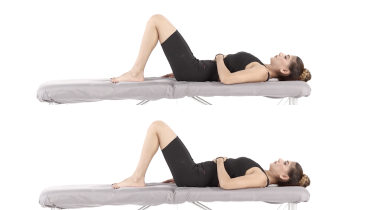 Diaphragmatic breathing
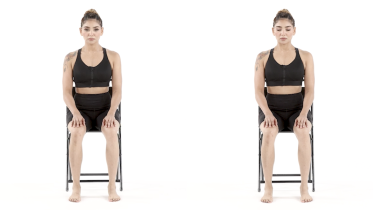 Body scan relaxation
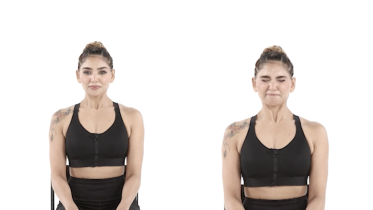 Facial muscle relaxation
If a jaw that locks or catches is part of your nights, read when your jaw locks or catches before you start any jaw movement, because that pattern gets looked at in person first.
When jaw pain at night needs to be seen
Night pain has its own entries on the warning list below, and their job is routing, not alarm. Jaw or face pain that is there all the time and does not ease with rest, or pain at night that keeps getting worse, has a timeframe attached to it on the list below, and a shorter one if you have had cancer at any point or have lost weight without trying.
New, frequent headaches with pain or tenderness at your temples or on your scalp, or, if you are 50 or over, new jaw aching that comes on as you chew or talk and eases when you stop, need medical advice the same day, as they can be signs of inflamed arteries in the head (giant cell arteritis). If your vision changes, call emergency services. The NHS lists jaw pain while eating or talking among the main symptoms of temporal arteritis, and it treats a change in vision as something to be seen about the same day, which is why that line sits above the rest.
The cardiac pattern is the other one to know on a page about nights. Jaw, neck, shoulder or arm pain that comes with chest pain or tightness, sweating, feeling sick, light-headedness or breathlessness, or that comes on with effort, stress or cold and does not settle within a few minutes of rest, goes to emergency services. The NHS names the jaw among the places angina pain is felt and lists exercise, stress, emotion and cold as triggers, and it lists chest pain spreading to the jaw, neck and arms as a sign of a heart attack. Waking at night with it counts.
Short of that, the ordinary route is a dentist, doctor, physio or physical therapist if the jaw is not settling with self-care, if it keeps coming back, or if you think you grind your teeth. The NHS asks for an urgent GP appointment or a call to 111 if you cannot eat or drink, if you have trouble opening your mouth fully or a jaw that is locking, if you have frequent severe headaches, pain or tenderness at the side of your head or on your scalp, or vision problems.
Two more items on that list need handling and not just repeating: clicking, popping or grinding noises when you move your jaw, and pain around your jaw, ear or at the side of your head. Both of those sit on the same NHS page as ordinary symptoms of TMD, a condition it opens by calling not usually serious, so between them they cover nearly everyone who has it. Painless clicking by itself is not urgent, and the NIDCR says so plainly: clicking or popping without pain is common, is considered normal and does not need treatment.
Jaw and ear pain that behaves like your usual jaw problem is what the self-care on this page is for. New tenderness at the temple or on the scalp is the exception and keeps the urgent route, because that is the pattern of inflamed arteries in the head and it has its own line below. Those two items do mean one thing: a jaw nobody has assessed should be assessed, and that is a booked appointment with a dentist, doctor, physio or physical therapist rather than a call to 111.
Every line below carries its own timeframe, and red flags in physiotherapy explains how to read a list like that without reading it as a list of things you probably have.
Related exercise programs
Warning signs
Get emergency help now
- Emergency: any sign of a stroke, even if it goes away. That means a face that droops on one side, an arm you cannot lift or keep up, slurred or muddled speech, weakness or numbness on one side of your body or face, sudden blurred vision, double vision or loss of sight, trouble swallowing, sudden dizziness with unsteadiness or falling over, a sudden severe headache, or a sudden fall where your legs give way but you do not black out (a drop attack). Call emergency services straight away. With neck pain, these can rarely come from a tear in an artery in the neck.
- Emergency: jaw, neck, shoulder or arm pain that comes with chest pain or tightness, sweating, feeling sick, feeling light-headed or being short of breath, or that comes on when you exert yourself, feel stressed or go out in the cold and does not ease within a few minutes of rest. Call emergency services straight away, as this can be a heart attack. If it eases quickly with rest and none of these happen, get medical advice the same day, and do not exercise again until you have been checked. Jaw pain that comes with effort and goes with rest can be a sign of angina, a heart problem, rather than TMD.
- Emergency: chest pain or tightness, which may spread to your arm, neck or jaw, or shoulder or arm pain that comes with shortness of breath, sweating or feeling sick. This can be a heart attack. Call emergency services straight away.
- Emergency: your mouth is stuck open and you cannot close it, for example after a big yawn, or after a blow to your face your jaw looks out of place, your teeth no longer meet as they did or you cannot bite together. Go to an emergency department straight away, supporting your jaw gently with your hand, and do not drive yourself. Call emergency services if you also find it hard to breathe or are bleeding heavily.
- Emergency: your jaw locked, you cannot open or close your mouth properly, part of your lower lip, chin or jaw feels numb, a tooth is loose or broken or your gum or mouth is bleeding, your jaw swings to one side as it opens, or your cheek or jaw has a lump or a changed shape, after a blow to the face, a fall, a sports injury or any other accident, even if your teeth still meet as they did. Go to an emergency department straight away, supporting your jaw gently with your hand, and do not drive yourself. Call emergency services if you also find it hard to breathe, are bleeding heavily or your face is swelling quickly. A jaw can be broken without looking out of place, and jaw stiffness, trouble opening your mouth widely, pain in front of your ear that is worse when you bite or chew, or a numb lower lip can be the main sign.
- Emergency: you think you have a tooth infection, or your face or jaw is swollen, and you find it hard to breathe, speak, swallow or open your mouth, have a lot of swelling in your mouth, have swelling of your neck or around your eye, or have a swollen or painful eye or sudden problems with your eyesight. Call emergency services or go to an emergency department straight away, and do not drive yourself. This can be a spreading infection, for example from a tooth abscess.
- Emergency: a new headache, or new pain on one side of your face, jaw or neck, with a drooping eyelid or a smaller pupil on the same side, or with a new pulsing or whooshing sound in one ear that keeps time with your heartbeat. Call emergency services or go to an emergency department straight away, and do not drive yourself. This can be a tear in an artery in the neck (cervical artery dissection), which can lead to a stroke.
- Emergency: a headache or face pain with sudden, intense eye pain, a red eye, blurred vision or rainbow-colored rings around lights, often with feeling or being sick. Call emergency services or go to an emergency department straight away, and do not drive yourself. This can be a sudden rise in pressure inside the eye (acute glaucoma).
- Emergency: new problems walking, for example your legs feel stiff, heavy or weak or you have become unsteady on your feet, new trouble controlling your bladder or bowels, or hands that suddenly become clumsy, for example you can no longer do up buttons. Call emergency services straight away. These can be signs of pressure on the spinal cord in the neck.
Get help today
- New, frequent headaches with pain or tenderness at your temples or on your scalp, or, if you are 50 or over, new jaw pain or aching that comes on as you chew or talk and eases when you stop, or a temple or scalp that has become tender to touch, for example when you brush your hair or rest your head on a pillow. Get medical advice the same day. These can be signs of inflamed arteries in the head (temporal arteritis, also called giant cell arteritis). If your vision changes, call emergency services.
- Your jaw suddenly locks so you cannot open your mouth fully, or the pain or stiffness stops you eating or drinking, without any of the emergency signs above. Get medical advice the same day from your doctor or dentist.
- Frequent, severe headaches alongside your jaw problem, without any of the emergency signs above. Get medical advice the same day.
- Numbness, tingling or a dead feeling in part of your face, lips, tongue or chin, or weakness in the muscles of your face, that has come on gradually, without any of the emergency signs above. Get medical advice the same day. Changes like these point to a nerve problem rather than TMD and need checking.
- An electric shock feeling runs down your back or into your arms or legs as your head bends forward. Stop and get medical advice the same day.
- Hands that have slowly become clumsy, for example trouble doing up buttons or dropping things, or numbness in both hands. Get medical advice the same day. These can be signs of pressure on the spinal cord in the neck (cervical myelopathy). If the clumsiness or numbness gets worse quickly, call emergency services straight away.
- Pain or tingling in both arms at the same time, rather than in one. Get medical advice the same day. This can also be a sign of pressure on the spinal cord in the neck.
- An arm or hand that is getting weaker. Get medical advice the same day.
- Jaw or face pain with a high temperature, a swollen face or gum, or you feel hot, cold, shivery or generally unwell, without any of the emergency signs above. Get medical advice the same day. If you think a tooth is the cause, contact a dentist for an urgent appointment.
- Same day: ear pain that has lasted more than 2 to 3 days, or ear pain with feeling generally unwell, a high temperature or feeling hot, cold or shivery, swelling around your ear, fluid coming from your ear, hearing loss or a change in your hearing, something stuck in your ear, or a child under 2 with earache in both ears, without any of the emergency signs above. Get medical advice the same day. The NHS route for any of these is an urgent GP appointment or NHS 111.
- New jaw or face pain and you have had cancer, now or in the past, or you have lost weight without trying. Get medical advice the same day and mention it. If you are being treated for cancer now, contact your cancer team the same day.
- Jaw or face pain that is there all the time and does not ease with rest, or pain at night that keeps getting worse. If you have had cancer, now or in the past, or you have lost weight without trying, get medical advice the same day.
- Dizziness, a spinning feeling or feeling sick that comes on when you turn or tip your head, without any of the emergency signs above. Stop the exercises and get medical advice the same day. If you faint, it does not settle within a few minutes of sitting still, or you cannot stand or walk steadily, call emergency services.
Book an appointment
- Jaw or face pain that is there all the time and does not ease with rest, or pain at night that keeps getting worse. See your doctor within a few days.
- A mouth ulcer that has lasted more than 3 weeks, a lump in your mouth, on your lip, in your neck or in your throat, a red or white patch in your mouth, pain in your mouth that is not going away, difficulty swallowing or speaking, or a hoarse voice that does not go away. See your doctor or dentist within a few days. These are usually caused by something else, but they need checking for mouth cancer.
Common questions
What is the best sleeping position for TMJ?
Either on your back, where nothing presses on the jaw joint, or on the side away from the sore jaw with your arm kept away from your face. We leave those two level because nothing published ranks them, and because the night recordings that exist count more jaw muscle activity in people lying on their back than on their side, which is reason enough not to put the back first. Face down is the one to drop, and it is the only position an NHS source takes a view on, in the TMJ patient leaflet published through NHS Scotland's Right Decision Service, which says to avoid sleeping face down. From about 28 weeks of pregnancy the NHS advises going to sleep on your side rather than on your back, because it says sleeping on your back after that point can double the risk of stillbirth. So use the side position, with the sore jaw uppermost, and leave lying on your back until after the birth. The NHS also says not to worry if you wake up on your back: settle onto your side again and carry on. If you have sleep apnea, ask the team who treats it before you move onto your back, because the NHS advises side sleeping for it. Beyond that, be careful what you are told. No trial has compared sleeping positions for jaw pain itself, so a confident ranking is somebody's opinion.
Which side should I sleep on with TMJ?
The side that does not hurt, so the sore jaw is uppermost and off the mattress. Most jaw pain is one-sided, because you have two jaw joints and each one works on its own in every bite, so there is usually a side to get off. Watch your arm as well as your head: a hand or forearm tucked under the jaw loads the joint and the chewing muscles for as long as you are asleep. If both sides are sore, the position is doing less of the work than the clenching, and the wind-down routine matters more than which way you face.
Can your sleeping position cause TMJ?
Nothing shows that it causes it, and the two studies that have looked do not agree. Among 200 people examined for TMD, those who habitually slept face down had it more often than those who did not, and more often again when a deviated nasal septum came with it (Yalcinkaya and colleagues, 2016). A comparison of 100 people referred for TMD treatment with 100 matched controls found no difference in preferred sleeping position at all, and concluded that position has little or no bearing on whether TMD starts or carries on (Mundt and colleagues, 2011). Both designs record everything on the same day, so neither can tell you which came first, and a sore jaw is a reason to change position as easily as the other way round. The second study did find that the TMD group had changed their usual position because of their symptoms more often than the controls had. Alongside it sits the narrower documented thing: an NHS physiotherapy leaflet advises people who already have TMJ pain to avoid sleeping face down, which is advice about comfort and load rather than a claim about cause. The route from the night to a sore jaw that does have sources behind it is grinding and clenching: the NHS says stress and anxiety are the most common cause of teeth grinding, and that a painful jaw from grinding can lead to temporomandibular disorder.
Why does my jaw hurt more in the morning?
In most people, because of what the jaw has been doing overnight, not how they have been lying. A jaw that is tight and sore on waking, often with aching at the temples, is the pattern of clenching or grinding through the night, and the NHS names stress and anxiety as the most common cause of teeth grinding. The useful question is what time of day your jaw is worst, which is also the first question you will be asked at an appointment. Morning soreness points at the night; pain that builds through the afternoon is usually daytime clenching, and that one you can catch yourself doing.
How should I sleep with TMJ ear pain?
The same way, with the sore side up, because ear pain can be part of the jaw problem: the NHS lists pain around the jaw, ear and temple among the symptoms of temporomandibular disorder. Keeping that ear and jaw off the pillow is the practical step, and it is worth checking that your hand is not under your jaw either. Some ear pain is the ear. The NHS asks for same-day advice, which it gives as an urgent GP appointment or help from NHS 111, for earache that has lasted more than 2 to 3 days, or earache with feeling generally unwell, a high temperature or feeling hot, cold or shivery, swelling around the ear, fluid coming from the ear, hearing loss or a change in hearing, something stuck in the ear, or a child under 2 with earache in both ears. None of that is answered by a pillow.
Do TMJ pillows work?
No trial has tested whether a pillow reduces jaw pain, so a pillow sold for TMJ is sold on a claim. The nearest thing is a 1999 study of two pillow types in 15 people with a jaw muscle problem, and it measured neck muscle activity rather than pain (Palazzi and colleagues, 1999). The pillow trials that did measure pain were done in people with neck pain. What a pillow can genuinely do for a jaw is keep your head in line with your body and keep the side of your face off the mattress instead of letting your head sink until the cheek is buried, so firmness and height matter more than shape. Try the free changes first: the position, your arm, and the height of the pillow you already own.
References
- NHS Borders. Temporomandibular joint (TMJ) pain, a guide for patients. Right Decision Service, NHS Scotland. Next review date 1 May 2026. https://www.rightdecisions.scot.nhs.uk/patient-information-leaflets/primary-community-services/physiotherapy/temporomandibular-joint-tmj-pain-a-guide-for-patients/
- NHS. Temporomandibular disorder (TMD). Page last reviewed 20 June 2023. https://www.nhs.uk/conditions/temporomandibular-disorder-tmd/
- NHS. Teeth grinding (bruxism). Page last reviewed 8 April 2026. https://www.nhs.uk/conditions/teeth-grinding/
- Busse JW, Casassus R, Carrasco-Labra A, Durham J, Mock D, Zakrzewska JM, et al. Management of chronic pain associated with temporomandibular disorders: a clinical practice guideline. BMJ. 2023;383:e076227. https://doi.org/10.1136/bmj-2023-076227
- National Institute of Dental and Craniofacial Research (NIDCR). Temporomandibular disorders (TMD). Last reviewed September 2026. https://www.nidcr.nih.gov/health-info/tmd
- NHS. Sleep apnoea. Page last reviewed 11 May 2026. https://www.nhs.uk/conditions/obstructive-sleep-apnoea/
- NHS. 27 weeks pregnant: the best sleeping positions during pregnancy. Best Start in Life week by week guide. https://www.nhs.uk/best-start-in-life/pregnancy/week-by-week-guide-to-pregnancy/2nd-trimester/week-27/
- Yalcinkaya E, Cingi C, Bayar Muluk N, Ulusoy S, Hanci D. Are temporomandibular disorders associated with habitual sleeping body posture or nasal septal deviation? European Archives of Oto-Rhino-Laryngology. 2016;273(1):177-181. https://doi.org/10.1007/s00405-014-3476-6
- Palazzi C, Miralles R, Miranda C, Valenzuela S, Casassus R, Santander H, Ormeno G. Effects of two types of pillows on bilateral sternocleidomastoid EMG activity in healthy subjects and in patients with myogenic cranio-cervical-mandibular dysfunction. Cranio. 1999;17(3):202-212. https://doi.org/10.1080/08869634.1999.11746096
- Mundt AK, Helkimo M, Magnusson T. Sleeping position and reported quality of sleep. A comparison between subjects demanding treatment for temporomandibular disorders and controls. Swedish Dental Journal. 2011;35(4):187-193. https://pubmed.ncbi.nlm.nih.gov/22372306/
- Hibi H, Ueda M. Body posture during sleep and disc displacement in the temporomandibular joint: a pilot study. Journal of Oral Rehabilitation. 2005;32(2):85-89. https://doi.org/10.1111/j.1365-2842.2004.01386.x
- Miyawaki S, Lavigne GJ, Pierre M, Guitard F, Montplaisir JY, Kato T. Association between sleep bruxism, swallowing-related laryngeal movement, and sleep positions. Sleep. 2003;26(4):461-465. https://pubmed.ncbi.nlm.nih.gov/12841373/
- Kuang B, Lobbezoo F, Li D, Hilgevoord AAJ, de Vries N, Aarab G. The effect of sleep position on sleep bruxism in adults with obstructive sleep apnea. Journal of Oral Rehabilitation. 2024;51(7):1207-1212. https://doi.org/10.1111/joor.13696
- Zhong Z, Li Q, Zou X, Ouyang Q, Zhang L, Liu X, Luo Y, Yao D. Effects of the low Fowler's sleep position and methazolamide treatment on sleep bruxism: A randomized controlled trial. Journal of Sleep Research. 2025;34(1):e14250. https://doi.org/10.1111/jsr.14250
- Ramar K, Dort LC, Katz SG, Lettieri CJ, Harrod CG, Thomas SM, Chervin RD. Clinical Practice Guideline for the Treatment of Obstructive Sleep Apnea and Snoring with Oral Appliance Therapy: An Update for 2015. Journal of Clinical Sleep Medicine. 2015;11(7):773-827. https://doi.org/10.5664/jcsm.4858
- NHS. Earache. Page last reviewed 27 October 2025. https://www.nhs.uk/conditions/earache/
- NHS. Temporal arteritis. Page last reviewed 14 August 2023. https://www.nhs.uk/conditions/temporal-arteritis/
- NHS. Angina. Page last reviewed 18 March 2025. https://www.nhs.uk/conditions/angina/
- NHS. Heart attack: symptoms. Page last reviewed 31 March 2026. https://www.nhs.uk/conditions/heart-attack/symptoms/
- NHS. Symptoms of a stroke. Page last reviewed 12 September 2024. https://www.nhs.uk/conditions/stroke/symptoms/
- NHS. Glaucoma. Page last reviewed 13 June 2025. https://www.nhs.uk/conditions/glaucoma/
- NHS. Dental abscess. Page last reviewed 18 March 2026. https://www.nhs.uk/conditions/dental-abscess/
- NHS. Symptoms of mouth cancer. Page last reviewed 19 June 2023. https://www.nhs.uk/conditions/mouth-cancer/symptoms/
- MedlinePlus. Broken or dislocated jaw. US National Library of Medicine. Review date 3 April 2025. https://medlineplus.gov/ency/article/000019.htm
Written and checked by the PocketPhysio editorial team. Last updated 2026-10-24.
This page is general education, not a diagnosis or a personal treatment plan. See a physiotherapist or doctor for advice about your own situation.