
Part of TMJ disorder
Can TMJ cause neck pain, and which do you treat first?
Warning signs, and when to get help
Can TMJ cause neck pain?
Yes, TMJ can cause neck pain, and most of the time the two arrive together rather than one plainly causing the other. The clinical name for the jaw problem is temporomandibular disorder, or TMD, and in clinic the neck is involved in a good share of the people who come in for their jaw.
The best evidence on how closely the two run together is a meta-analysis of observational studies comparing people with TMD to people without. It found a clinically relevant association between neck disability and jaw disability, with a standardized mean difference of 0.72, and moderate evidence for both lower pressure pain thresholds and limited neck movement in the TMD group (Cuenca-Martinez and colleagues, 2020).
The same analysis also measured posture, and that result is the one to hang on to. It found no significant difference in cervical alignment or craniocervical position: the figures were 0.02 and minus 0.09, which is as close to nothing as this kind of measurement gets. Posture is the explanation most people with a sore jaw and a sore neck are handed. It is the part the measurements do not back up, and the authors described what they did find as sensorimotor rather than postural.
What it cannot tell you is which one came first in your case. These were observational studies, so they show the two conditions keeping company, not one producing the other.
How the jaw and the neck are connected
Two connections matter here, and the second is the one that explains the odd symptoms.
The muscular one is obvious once you see it. The muscles that clamp the jaw shut and the muscles that hold your head up are all working in the same person at the same time, and the person who clenches through a difficult afternoon is not relaxing their neck and shoulders while they do it. Sore, overworked muscles at the temple, the cheek, the base of the skull and the top of the shoulders is the commonest presentation of the pair, and it responds to the same things.
The neurological one explains why pain shows up where the problem is not. Nerve signals from the face and jaw, carried by the trigeminal nerve, and nerve signals from the upper segments of the neck, converge on the same pool of neurons in the brainstem. That convergence, with sensitization of those neurons, is the accepted substrate for pain being spread and referred around the head, face and neck (Bartsch and Goadsby, 2003). A companion review of the same convergence puts the clinical consequence plainly: trigeminal input produces symptoms in both territories, and so does input from the neck (Piovesan and colleagues, 2003). It comes from headache research rather than from TMD research, which is the caveat that belongs with it, and it is the mechanism that makes a jaw problem felt at the back of the skull entirely plausible.
Neither of those needs anything to be out of line. That is why the posture finding above is not a technicality.
Can TMJ cause neck pain on one side?
One side is the normal way this presents, so a one-sided ache is not a sign of anything unusual. You have two jaw joints, left and right, and both of them work in every mouthful. When one joint or one set of chewing muscles is the sore one, the neck muscles on that side are usually the ones doing the extra work.
Two habits make a one-sided pattern worse, and both are easy to catch. The first is chewing everything on the comfortable side for weeks. Cut food smaller and share it out instead. The second is the phone, the passenger seat or the monitor that keeps your head turned one way for hours.
What nobody can tell you is whether the sides have to match. We have no study showing that a left jaw produces a left neck, so a jaw sore on one side and a neck sore on the other is not evidence of something exotic. Neck pain on one side runs through the other causes of that pattern, including the ones that have nothing to do with muscles or joints.
One-sided pain does have a short list of patterns that are not musculoskeletal at all. New pain on one side of the face, jaw or neck with a drooping eyelid, a smaller pupil on that side, or a new pulsing or whooshing sound in one ear is on the emergency list at the foot of this page, and it goes there whatever your jaw has been doing.
TMJ, neck pain and headaches
Headaches sit in the middle of this group, and where a headache starts is the most useful thing you can describe.
The NHS lists a headache around the temples among the symptoms of TMD, along with pain around the jaw, the ear and the temple. A headache that starts at the back of the neck is described differently: the NHS names headaches that often start at the back of the neck, along with neck and shoulder pain or stiffness that comes and goes, as symptoms of cervical spondylosis, the age-related changes in the bones and discs of the neck.
So a headache at the temples with a sore jaw fits the jaw. A headache that climbs from the base of the skull fits the neck, and cervicogenic headache is the page for that pattern. If the headaches are a band around the head and are the main problem rather than a side effect, tension-type headache covers them, and the three overlap often enough that people get all three labels over a few years.
One headache pattern is not in this group at all. New, frequent headaches with pain or tenderness at the temples or on the scalp, or, in anyone of 50 or over, new jaw aching while chewing or talking or a temple or scalp that has turned tender to touch, need medical advice the same day, because of inflamed arteries in the head. That line is on the warning list, and the NHS treats suspected temporal arteritis as urgent because of the risk to sight.
Does the neck cause the jaw pain, or the other way round?
Both directions happen, and in a lot of people nobody can separate them. That matters less than it sounds, because the plan rarely comes down to a choice between the two.
A few things help point the way. Pain that changes when you turn or tip your head while your jaw stays still is behaving like a neck. Pain that arrives with chewing, with a wide yawn, or partway through opening, and sits right in front of the ear, is behaving like a jaw. Clicking, catching or a jaw that will not open fully is a joint sign, and nothing in the neck produces it.
Timing is the other clue to bring to an appointment. A jaw that started hurting weeks after a neck injury, or a neck that got sore in the month after a dental procedure or a jaw flare, is a sequence a clinician can work with. You will not be asked to settle it yourself.
What matters most is that you mention both. A person who names only the louder of the two gets an assessment of one area, and that is how people end up doing a correct program for half their problem.
Which do you treat first?
You usually do not have to pick, and the surprise in the evidence is that starting at the neck is a legitimate way into a jaw problem.
A meta-analysis of seven randomized trials in adults with muscle-type TMD found that cervical rehabilitation improved pain: pain intensity across five studies with 223 people gave a standardized mean difference of minus 0.98, and the comparison of neck manual therapy alone or with neck exercise against control gave minus 1.52 across four studies with 203 people (Bednarczyk and colleagues, 2024). Pressure pain thresholds over the chewing muscles improved too. Two cautions come with it: heterogeneity between the studies was high, and the authors were clear this is short-term evidence.
A second meta-analysis points the same way. Cervical manual therapy beat placebo or minimal intervention for pain intensity, which the authors graded as moderate evidence, and it also raised pressure pain thresholds over the chewing muscles. Treating the neck and jaw together produced greater short-term pain reduction and better pain-free mouth opening than treating the neck alone, and that comparison rests on two studies and is graded low (La Touche and colleagues, 2020).
Set against that, the broader picture in this field is modest. A review of 48 trials of exercise and manual therapy for TMD found small to moderate effects, no clear superiority of exercise over other conservative treatments, and no high-quality evidence (Armijo-Olivo and colleagues, 2016). And the 2023 BMJ guideline, which covers jaw pain lasting 3 months or more, strongly recommends supervised jaw exercise and stretching, therapist-assisted mobilization, manual trigger point therapy, supervised posture exercise and cognitive behavioral therapy (Busse and colleagues, 2023). Supervised is doing real work in those recommendations.
Where the order does change is when the joint is the problem rather than the muscles. A jaw that locks, catches or will not open fully gets looked at before anybody works on either area, and the research above was done in people with muscle-type TMD rather than with a locked joint.
One thing comes before hands-on neck treatment of any kind, including the manual therapy those studies used. A new neck pain or headache that does not feel like ordinary neck pain, or that started after a neck injury, a bout of heavy coughing or having your neck manipulated, is checked before anyone treats the neck and before you start the exercises. That has its own line on the warning list at the foot of this page, and the reason is a tear in an artery in the neck, which can begin as pain alone.
Exercises for jaw and neck pain together
The practical gain from all of this is that you are not running two programs. The TMJ disorder program already contains the neck work, and the neck pain program builds the same muscles from the other end, so people with both usually need one plan rather than a choice.
Jaw and neck exercises used together
These are the neck exercises from the TMJ program plus the one jaw movement it uses. As a starting guide, many programs use 8 to 10 chin tucks held 3 to 5 seconds a few times a day, deep neck flexor holds of 5 to 10 seconds repeated 5 to 10 times, the three stretches held 15 to 30 seconds, and 5 to 10 slow jaw openings held for a few seconds. Your physio will adjust this, and each exercise page carries its own dose and cautions. Keep your teeth apart and your jaw loose through the neck work. If a neck movement makes you dizzy, stop, sit still until it settles, and get medical advice the same day before you try again. If your jaw clicks painfully, catches, will not open fully or has ever locked, have it checked in person before you start any of this, the neck work as well as the jaw opening. The cervical research below was done in people with muscle-type jaw pain, not in people with a joint that locks. Breathe steadily through every hold and never hold your breath, which matters most if you have high blood pressure. Check with your surgeon or physio before you start if you have had neck surgery or a broken bone in your neck, and with your physio or doctor if you have rheumatoid arthritis, have been told the spaces around the nerves or spinal cord in your neck are narrowed, have Down syndrome, or have been told the top of your neck is unstable. Some of the neck stretches may need changing or leaving out.
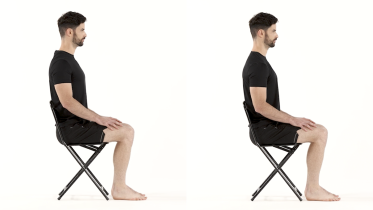 Chin tuck
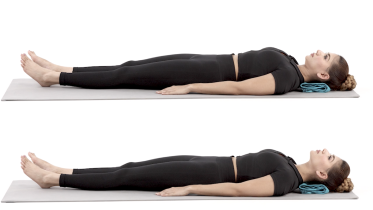 Deep neck flexor exercise
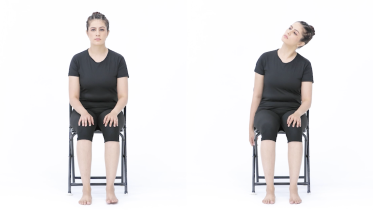 Upper trapezius stretch
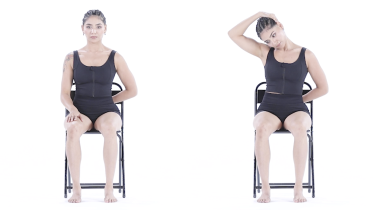 Levator scapulae stretch
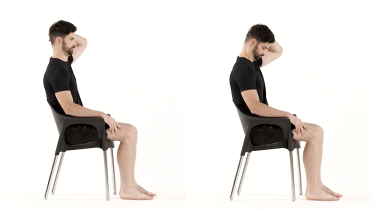 Suboccipital stretch
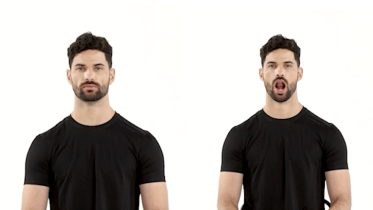 Jaw opening with the tongue on the roof of the mouth
Three things we watch for when people do these two together. Keep your teeth apart and your jaw loose during the neck exercises, because a chin tuck done with the jaw clamped shut gives the chewing muscles a workout nobody asked for. Judge each area on its own response rather than lumping them together, since the neck often settles faster than the jaw. And stop any stretch that brings tingling into an arm or hand, which is not a stretch response and has its own line on the warning list.
If a long day at a desk is the background to all of this, neck and back pain when working from home is where that belongs, and forward head posture covers the posture question properly, including what the evidence does and does not support.
Sleeping position and pillows
There is no trial we can point to on pillows for jaw pain, so anyone selling you the best pillow for TMJ is ahead of the evidence. What we have is a few principles from clinic, and that is all they are.
Lying with your full weight on the sore jaw, with the cheek pressed into a pillow, is the position people most often wake up sore from, and the fix is usually the simplest one available: sleep on the other side or on your back. A pillow that keeps your head roughly in line with your body, rather than propped high or dropped low, is the usual starting point for a neck. A hand or forearm tucked under the jaw while you sleep does the same thing as a day of leaning on it.
If mornings are consistently the worst part of your day, the thing to look at is not the pillow but the grinding, and the main program covers the NHS advice on winding down and sleep habits. Stiff neck after sleeping deals with the neck side of the same morning.
Neck symptoms that are not coming from the jaw
Three symptoms that turn up alongside a sore jaw and a sore neck need checking in their own right, and a longer list of jaw stretches is the wrong answer to every one of them.
Pain when you swallow is not on the NHS symptom list for TMD. Difficulty swallowing or speaking, and mouth pain that will not go away, are on its list of reasons to see a doctor or dentist about your mouth, and they have their own line below. Swollen glands in the neck are not a TMD symptom either.
They are on the NHS list of dental abscess symptoms, though, as swollen glands on each side of the neck, so glands up alongside toothache, a bad taste or a swollen face or jaw point at a tooth. That one goes to a dentist for an urgent appointment rather than to a doctor, because a GP surgery cannot provide dental treatment. The NHS describes swollen glands as tender, painful lumps that usually go down within 1 to 2 weeks and are commonly caused by infection, and it advises seeing a doctor if they are getting bigger or have not gone down within a week, feel hard or do not move when pressed, come with night sweats or a very high temperature, come with no other sign of illness or infection, or sit just above or below the collarbone. That fifth one is the case to know about on a page like this, because a gland that has come up without a cold or a sore throat is the one people put down to their neck.
It puts swollen glands with great difficulty swallowing, or any difficulty breathing, at the urgent level, and on this site any difficulty breathing goes straight to emergency services, which is where the same symptom sends a reader everywhere else on the page. Both tiers are on the warning list below.
Dizziness is the third, and here the sources disagree. The NHS leaves it off its symptom list for TMD. The NIDCR puts it on, grouped with ringing in the ears and hearing loss. Neither of those tells you what is causing yours, and the list of other things that make a room spin is long, so a spinning or lightheaded feeling is assessed in its own right rather than filed under a jaw diagnosis. If it comes on when you turn or tip your head, stop the exercises and get medical advice the same day, and dizziness and BPPV explains what else produces that pattern.
Then there are the arm and hand symptoms, which belong to the neck rather than the jaw and need a timeframe rather than a program. Pins and needles in one arm along with neck or arm pain, pain or tingling in both arms, hands that have slowly become clumsy, numbness in both hands, an arm that is getting weaker, and an electric shock feeling down the back or limbs when you bend your head forward each have their own line on the list below. The NHS is specific about these for the neck too. It puts heaviness or weakness in the arms or legs, and pins and needles with neck or arm pain, among the reasons for an urgent appointment, and new problems walking or loss of bladder or bowel control among the reasons to call 999.
When to get checked
See a dentist, doctor, physio or physical therapist if the jaw and the neck are both sore and self-care has stopped making a difference, if it keeps coming back, or if you cannot tell which end the pain is starting at. That last one is the best reason to go. A single assessment that sorts out the source can save months of exercises aimed at the wrong area.
Say that both areas hurt, in that order, at the start of the appointment. The jaw is easy to miss in a neck assessment and the neck is easy to miss in a jaw assessment, and you are the only person in the room who knows both.
Some things do not wait for an appointment. Jaw or neck pain with chest pain, breathlessness, sweating or feeling sick, or brought on by effort and eased by rest, is a cardiac pattern and goes to emergency services: the NHS names the jaw and the neck among the places angina is felt and lists exercise, stress, emotion and cold as triggers. Any sign of a stroke, and one-sided face, jaw or neck pain with a drooping eyelid, a smaller pupil or a new pulsing sound in one ear, are emergencies in their own right. A swollen face or jaw with difficulty breathing, speaking, swallowing or opening your mouth is an infection route, and so is a swollen neck, swelling around an eye, or a lot of swelling in the mouth, with a tooth you think is infected. Every line on the list below carries its own timeframe, and red flags in physiotherapy explains how to read it.
Related exercise programs
Warning signs
Get emergency help now
- Emergency: any sign of a stroke, even if it goes away. That means a face that droops on one side, an arm you cannot lift or keep up, slurred or muddled speech, weakness or numbness on one side of your body or face, sudden blurred vision, double vision or loss of sight, trouble swallowing, sudden dizziness with unsteadiness or falling over, a sudden severe headache, or a sudden fall where your legs give way but you do not black out (a drop attack). Call emergency services straight away. With neck pain, these can rarely come from a tear in an artery in the neck.
- Emergency: a new headache, or new pain on one side of your face, jaw or neck, with a drooping eyelid or a smaller pupil on the same side, or with a new pulsing or whooshing sound in one ear that keeps time with your heartbeat. Call emergency services or go to an emergency department straight away, and do not drive yourself. This can be a tear in an artery in the neck (cervical artery dissection), which can lead to a stroke.
- Emergency: a sudden, severe headache or neck pain that feels new and unlike anything you have had before. Call emergency services straight away.
- Emergency: a new headache or neck pain, or both, that does not feel like ordinary neck pain. If this is your first bout, judge it by how it behaves rather than by how it compares. Either of the next two is enough on its own. One, it came on suddenly, in a single moment, even if it is not severe and even if it has eased since. Sudden onset counts on its own. Two, nothing you do changes it much: no position or rest makes a real difference, and after the first day or two it has not started to settle. It counts even if you have none of the other emergency signs above, and it matters more if it started after a neck injury or strain, even a minor one, a bout of heavy coughing, or having your neck manipulated. Go to an emergency department straight away, or call emergency services if you cannot get there safely, and do not drive yourself. Do not start these exercises, and do not have any hands-on treatment to your neck, until your neck has been checked. A tear in an artery in the neck can start as pain alone, often on one side, with nothing else to find. If you can find a position that eases it, follow the same day warning sign for this below instead.
- Emergency: a headache or face pain with sudden, intense eye pain, a red eye, blurred vision or rainbow-colored rings around lights, often with feeling or being sick. Call emergency services or go to an emergency department straight away, and do not drive yourself. This can be a sudden rise in pressure inside the eye (acute glaucoma).
- Emergency: neck, jaw or arm pain that comes with chest pain, shortness of breath, sweating or feeling sick. Call emergency services.
- Emergency: jaw, neck, shoulder or arm pain that comes on when you exert yourself, feel stressed or go out in the cold, and does not ease within a few minutes of rest, or comes with sweating, feeling sick, feeling light-headed or being short of breath. Call emergency services straight away, as this can be a heart attack. If it eases quickly with rest and none of these happen, get medical advice the same day, and do not exercise again until you have been checked. Jaw pain that comes with effort and goes with rest can be a sign of angina, a heart problem, rather than TMD.
- Emergency: new problems walking, for example your legs feel stiff, heavy or weak or you have become unsteady on your feet, new trouble controlling your bladder or bowels, or hands that suddenly become clumsy, for example you can no longer do up buttons. Call emergency services straight away. These can be signs of pressure on the spinal cord in the neck.
- Emergency: you think you have a tooth infection, or your face or jaw is swollen, and you find it hard to breathe, speak, swallow or open your mouth, have a lot of swelling in your mouth, have swelling of your neck or around your eye, or have a swollen or painful eye or sudden problems with your eyesight. Call emergency services or go to an emergency department straight away, and do not drive yourself. This can be a spreading infection, for example from a tooth abscess.
- Emergency: your mouth is stuck open and you cannot close it, for example after a big yawn, or after a blow to your face your jaw looks out of place, your teeth no longer meet as they did or you cannot bite together. Go to an emergency department straight away, supporting your jaw gently with your hand, and do not drive yourself. Call emergency services if you also find it hard to breathe or are bleeding heavily.
- Emergency: your jaw locked, you cannot open or close your mouth properly, part of your lower lip, chin or jaw feels numb, a tooth is loose or broken or your gum or mouth is bleeding, your jaw swings to one side as it opens, or your cheek or jaw has a lump or a changed shape, after a blow to the face, a fall, a sports injury or any other accident, even if your teeth still meet as they did. Go to an emergency department straight away, supporting your jaw gently with your hand, and do not drive yourself. Call emergency services if you also find it hard to breathe, are bleeding heavily or your face is swelling quickly. A jaw can be broken without looking out of place, and jaw stiffness, trouble opening your mouth widely, pain in front of your ear that is worse when you bite or chew, or a numb lower lip can be the main sign.
Get help today
- A new headache or neck pain, or both, that does not feel like ordinary neck pain, that started after a neck injury or strain, even a minor one, a bout of heavy coughing, or having your neck manipulated, but that does ease when you change position or rest. Get checked the same day before you start these exercises or have any hands-on treatment to your neck. If nothing you do changes it much any more, or it has not started to settle after a day or two, follow the emergency warning sign for this above.
- New, frequent headaches with pain or tenderness at your temples or on your scalp, or, if you are 50 or over, new jaw pain or aching that comes on as you chew or talk and eases when you stop, or a temple or scalp that has become tender to touch, for example when you brush your hair or rest your head on a pillow. Get medical advice the same day. These can be signs of inflamed arteries in the head (temporal arteritis, also called giant cell arteritis). If your vision changes, call emergency services.
- Frequent, severe headaches alongside your jaw problem, without any of the emergency signs above. Get medical advice the same day.
- Hands that have slowly become clumsy, for example trouble doing up buttons or dropping things, or numbness in both hands. Get medical advice the same day. These can be signs of pressure on the spinal cord in the neck (cervical myelopathy). If the clumsiness or numbness gets worse quickly, call emergency services straight away.
- Pain or tingling in both arms at the same time, rather than in one. Get medical advice the same day. This can also be a sign of pressure on the spinal cord in the neck.
- An arm or hand that is getting weaker. Get medical advice the same day.
- Pins and needles in an arm together with neck or arm pain, or an arm that feels heavy or weak, and nobody has checked it yet. Get medical advice the same day.
- Severe neck or arm pain that comes on suddenly or is getting worse quickly, without any of the emergency signs above. Get medical advice the same day.
- An electric shock feeling runs down your back or into your arms or legs as your head bends forward. Stop and get medical advice the same day.
- Numbness, tingling or a dead feeling in part of your face, lips, tongue or chin, or weakness in the muscles of your face, that has come on gradually, without any of the emergency signs above. Get medical advice the same day. Changes like these point to a nerve problem rather than TMD and need checking.
- Dizziness, a spinning feeling or feeling sick that comes on when you turn or tip your head, without any of the emergency signs above. Stop the exercises and get medical advice the same day. If you faint, it does not settle within a few minutes of sitting still, or you cannot stand or walk steadily, call emergency services.
- Swollen glands in your neck and you are finding it very difficult to swallow, without any of the emergency signs above. Get medical advice the same day. If you have any difficulty breathing, call emergency services straight away.
- Your jaw suddenly locks so you cannot open your mouth fully, or the pain or stiffness stops you eating or drinking, without any of the emergency signs above. Get medical advice the same day from your doctor or dentist.
- Jaw or face pain with a high temperature, a swollen face or gum, or you feel hot, cold, shivery or generally unwell, without any of the emergency signs above. Get medical advice the same day. If you think a tooth is the cause, contact a dentist for an urgent appointment.
- Neck pain with a fever or chills, or you feel generally unwell. Get medical advice the same day, and go to an emergency department if you feel very unwell.
- New jaw, face or neck pain and you have had cancer, now or in the past, or you have lost weight without trying. Get medical advice the same day and mention it. If you are being treated for cancer now, contact your cancer team the same day.
- Jaw, face or neck pain that is there all the time and does not ease with rest or changing position, or pain at night that keeps getting worse. If you have had cancer, now or in the past, or you have lost weight without trying, get medical advice the same day.
Book an appointment
- Swollen glands in your neck that are getting bigger, have not gone down within a week, feel hard or do not move when you press them, come with night sweats or a high temperature, come with no other sign of illness or infection, or sit just above or below your collarbone, without any of the emergency signs above. See your doctor within a few days.
- Jaw, face or neck pain that is there all the time and does not ease with rest or changing position, or pain at night that keeps getting worse. See your doctor within a few days.
- A mouth ulcer that has lasted more than 3 weeks, a lump in your mouth, on your lip, in your neck or in your throat, a red or white patch in your mouth, pain in your mouth that is not going away, difficulty swallowing or speaking, or a hoarse voice that does not go away. See your doctor or dentist within a few days. These are usually caused by something else, but they need checking for mouth cancer.
Common questions
Can TMJ cause neck pain?
It can, and the honest version is that the jaw and the neck usually turn up sore together rather than one clearly causing the other. A meta-analysis of observational studies found a clinically relevant association between neck disability and jaw disability in people with TMD, with a standardized mean difference of 0.72, plus moderate evidence for reduced pressure pain thresholds and limited neck movement (Cuenca-Martinez and colleagues, 2020). The same analysis found no difference in neck posture or alignment, which rules out the explanation most people are given. Neck pain also has its own causes, so a sore neck alongside a sore jaw is not automatically the jaw's doing.
How does TMJ cause neck pain?
The mechanism with the best support is shared wiring rather than anything mechanical. Nerve traffic from the jaw and face and from the upper segments of the neck converges on the same group of neurons in the brainstem, and that convergence, along with sensitization of those neurons, is the accepted explanation for pain spreading and being referred between the head, face and neck (Bartsch and Goadsby, 2003). The more everyday route is simpler: the muscles that close the jaw and the muscles at the back of the neck and top of the shoulders are all working hard in a person who clenches through the day, and they get sore like any overworked muscle.
Can TMJ cause neck pain on one side?
Yes, and one-sided is the usual way both problems present. You have two jaw joints and they are used separately in every bite, so the sore joint, the chewing muscles on that side and the neck muscles on the same side tend to be the ones that complain. What no study we can point to shows is that the sides must match, so a left jaw and a right neck does not mean something exotic is happening. One-sided neck or face pain with a drooping eyelid, a smaller pupil or a new pulsing sound in one ear is a different matter, and it has its own emergency line on this page.
Should I treat my jaw or my neck first?
Usually both, in one plan, and the evidence says starting at the neck is not the detour it sounds like. A meta-analysis of seven randomized trials in people with muscle-type TMD found cervical rehabilitation reduced jaw pain, with the largest effect where neck manual therapy was used alone or with neck exercise, in the short term (Bednarczyk and colleagues, 2024). Another meta-analysis found cervical manual therapy better than placebo or minimal intervention for pain intensity, graded moderate, and treating the neck and jaw together better than the neck alone, graded low (La Touche and colleagues, 2020). Which order suits you is an assessment question, and a jaw that locks, catches or will not open fully changes the answer: that gets examined before anyone works on either area.
Can TMJ cause neck stiffness and headaches?
Headaches around the temples are on the NHS symptom list for TMD, and tight, sore neck and shoulder muscles commonly come with it. Headaches starting at the back of the neck are described differently, as a symptom of age-related changes in the neck (NHS cervical spondylosis), so where your headache starts is worth saying out loud at an appointment. Reduced neck movement has moderate evidence behind it as a finding in people with TMD (Cuenca-Martinez and colleagues, 2020), so a stiff neck fits the picture. Frequent severe headaches, or tenderness at the temples or on the scalp, are on the warning list and need advice the same day.
References
- Cuenca-Martinez F, Herranz-Gomez A, Madronero-Miguel B, Reina-Varona A, La Touche R, Angulo-Diaz-Parreno S, et al. Craniocervical and cervical spine features of patients with temporomandibular disorders: a systematic review and meta-analysis of observational studies. Journal of Clinical Medicine. 2020;9(9):2806. https://doi.org/10.3390/jcm9092806
- Bednarczyk V, Proulx F, Paez A. The effectiveness of cervical rehabilitation interventions for pain in adults with myogenic temporomandibular disorders: a systematic review and meta-analysis. Journal of Oral Rehabilitation. 2024;51(6):1091-1107. https://doi.org/10.1111/joor.13671
- La Touche R, Martinez Garcia S, Serrano Garcia B, Proy Acosta A, Adraos Juarez D, Fernandez Perez JJ, et al. Effect of manual therapy and therapeutic exercise applied to the cervical region on pain and pressure pain sensitivity in patients with temporomandibular disorders: a systematic review and meta-analysis. Pain Medicine. 2020;21(10):2373-2384. https://doi.org/10.1093/pm/pnaa021
- Armijo-Olivo S, Pitance L, Singh V, Neto F, Thie N, Michelotti A. Effectiveness of manual therapy and therapeutic exercise for temporomandibular disorders: systematic review and meta-analysis. Physical Therapy. 2016;96(1):9-25. https://doi.org/10.2522/ptj.20140548
- Bartsch T, Goadsby PJ. The trigeminocervical complex and migraine: current concepts and synthesis. Current Pain and Headache Reports. 2003;7(5):371-376. https://doi.org/10.1007/s11916-003-0036-y
- Piovesan EJ, Kowacs PA, Oshinsky ML. Convergence of cervical and trigeminal sensory afferents. Current Pain and Headache Reports. 2003;7(5):377-383. https://doi.org/10.1007/s11916-003-0037-x
- National Institute of Dental and Craniofacial Research (NIDCR). Temporomandibular disorders (TMD). https://www.nidcr.nih.gov/health-info/tmd
- Busse JW, Casassus R, Carrasco-Labra A, Durham J, Mock D, Zakrzewska JM, et al. Management of chronic pain associated with temporomandibular disorders: a clinical practice guideline. BMJ. 2023;383:e076227. https://doi.org/10.1136/bmj-2023-076227
- NHS. Temporomandibular disorder (TMD). Page last reviewed 20 June 2023. https://www.nhs.uk/conditions/temporomandibular-disorder-tmd/
- NHS. Cervical spondylosis. Page last reviewed 2 August 2023. https://www.nhs.uk/conditions/cervical-spondylosis/
- NHS. Swollen glands. Page last reviewed 29 September 2023. https://www.nhs.uk/conditions/swollen-glands/
- NHS. Mouth cancer: symptoms. Page last reviewed 19 June 2023. https://www.nhs.uk/conditions/mouth-cancer/symptoms/
- NHS. Glaucoma. Page last reviewed 13 June 2025. https://www.nhs.uk/conditions/glaucoma/
- NHS. Dental abscess. Page last reviewed 18 March 2026. https://www.nhs.uk/conditions/dental-abscess/
- MedlinePlus. Broken or dislocated jaw. US National Library of Medicine. Review date 3 April 2025. https://medlineplus.gov/ency/article/000019.htm
- NHS. Temporal arteritis. Page last reviewed 14 August 2023. https://www.nhs.uk/conditions/temporal-arteritis/
- NHS. Angina. Page last reviewed 18 March 2025. https://www.nhs.uk/conditions/angina/
Written and checked by the PocketPhysio editorial team. Last updated 2026-10-23.
This page is general education, not a diagnosis or a personal treatment plan. See a physiotherapist or doctor for advice about your own situation.