
Part of TMJ disorder
TMJ flare up: what to do while it settles, and how long it lasts
Warning signs, and when to get help
What is a TMJ flare up?
A flare up is your own jaw problem turned up for a spell, not a new condition and not evidence that the joint has given way. The clinical name for the problem underneath is temporomandibular disorder, or TMD, and you will see it on a letter or a referral. Here we stick with TMJ, which is what almost everyone calls it.
What gets louder is the list the NHS gives for TMD: pain around the jaw, the ear and the temple, clicking, popping or grinding noises when you move the jaw, a headache around the temples, trouble opening your mouth fully, and a jaw that locks when you open your mouth. A flare rarely brings all of them. It usually turns two or three of them up and leaves the rest where they were.
Get one distinction clear before you start treating it, because it changes what helps. The US National Institute of Dental and Craniofacial Research counts TMD as a group of more than 30 conditions, some sitting mainly in the joint and some mainly in the chewing muscles. A joint-flavored flare tends to be a sharp, local thing right in front of the ear, with catching or clicking. A muscle-flavored flare is duller and wider: the temple, the cheek and the side of the jaw, worse by the evening, like a muscle that has been working all day. Plenty of people get both at once, and the main TMJ disorder program goes into how to tell where your soreness sits.
What to do in a TMJ flare up, in order
The order matters more than any single item on the list. Taking load off the jaw comes first, and the rest only earns its place once that has happened. Steps 1 to 4 are the NHS self-care advice for TMD, which also includes massaging the painful jaw muscles, a reasonable thing to try when the soreness sits in the muscles at the temple and cheek rather than in the joint itself. The ordering and the practical detail are ours.
- Cut the mechanical load. Soft food cut into small pieces, nothing you have to bite with your front teeth, no gum, no chewy or crusty food, and no testing how wide you can open. When a yawn comes, keep it small with a hand under your chin.
- Teeth apart. Lips together, teeth apart, tongue resting lightly on the roof of your mouth. Apart from eating, your teeth should not be touching at all, which is the NHS instruction and the one we push hardest in clinic. Check it when you are at a screen, driving, or concentrating hard, because those are the moments it slips.
- Warmth or cold, whichever feels better on the day. The NHS says to hold an ice pack or a heat pack wrapped in a tea towel to the jaw, and leaves the choice between them to you, which is fair enough, because we have no study that settles it. It does give timings, and the two are not the same: 5 minutes at a time at most for cold, from frozen peas or a cold pack with a tea towel between it and your skin, and 15 to 20 minutes twice a day for heat, from a hot water bottle wrapped the same way. Keep to them, because nothing icy should sit against skin and longer is not better. Do not use heat on skin that has lost feeling or cannot feel heat properly, because it can scald or burn without you noticing.
- Painkillers if you need them. The NHS suggests paracetamol, which is sold as acetaminophen in the US, or ibuprofen. A pharmacist can tell you in two minutes whether either one fits with your other medicines, and never stop or change a prescribed medicine on your own. If you are pregnant or breastfeeding, ask your midwife, doctor or pharmacist before you take either one.
- Swap the jaw exercises for the relaxation work. This is the change people get wrong most often. A flare is not the week for jaw opening drills or a chewing muscle stretch.
- Protect the evenings. Winding down, a regular bedtime and a dark, quiet room are the NHS advice for grinding, and a flare is when they earn their place, because an evening spent clenched carries the problem into tomorrow.
What to do instead of the jaw exercises this week
These are the stage 1 exercises from the main program, and they ask nothing of the painful joint. Many programs start with 5 to 10 slow breaths or a few minutes of diaphragmatic breathing, 1 to 3 times a day, a few minutes of the body scan once or twice a day, and 3 to 5 gentle face squeezes with the teeth held apart. Your physio will adjust this, and each exercise page carries its own cautions. Breathe steadily through every hold and never hold your breath, which matters most if you have high blood pressure. If you have a lung condition such as COPD, or a heart condition, ask your physio or doctor how breathing exercises fit your own plan. If you have been through a trauma or are being treated for a mental health condition, ask your doctor or therapist whether the body scan suits you. After eye surgery, such as a cataract operation, ask your eye team before you squeeze your eyes shut in the facial relaxation, and if your face is weak after a stroke, ask your stroke team first. The jaw opening and the chewing muscle stretch come back once the flare has settled, not during it.
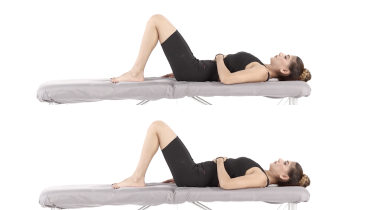 Diaphragmatic breathing
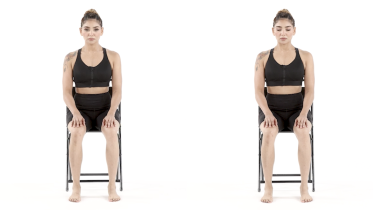 Body scan relaxation
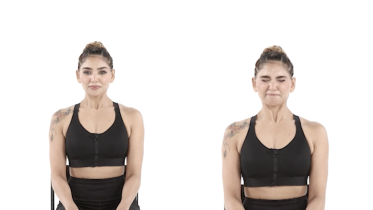 Facial muscle relaxation
There is one thing the research will not give you, and knowing it saves you a lot of reading. The 2023 BMJ clinical practice guideline on TMD is the best piece of evidence in this field, and its strong recommendations go to cognitive behavioral therapy, supervised jaw exercise and stretching, therapist-assisted mobilization, manual trigger point therapy, supervised posture exercise and usual care (Busse and colleagues, 2023). It also states plainly that it covers pain that has lasted at least 3 months and that its recommendations do not apply to acute pain. So none of that list was written for the week you are currently having. It is what a plan between flares is built from, not a flare protocol.
How long does a TMJ flare up last?
Days to a few weeks is our honest answer from clinic, with the jaw doing less throughout. Nobody has published a figure for the length of a single TMJ flare, and we are not going to invent one.
What has been measured is the course of the condition over years. A five year follow-up of 235 people with jaw and chewing muscle pain, two thirds of them patients who had come for treatment and the rest found in a population sample, reported that of the 165 who had muscle pain at the start, 31 percent still had it at five years, 33 percent had settled, and 36 percent had it come and go, which the authors summed up as a predominantly chronic or fluctuating condition (Rammelsberg and colleagues, 2003). Read alongside that, the NHS says TMD is not usually serious and generally gets better on its own, and the NIDCR says many of these problems last only a short time and go away by themselves.
Put together, that gives you a reasonable expectation and one practical rule. Expect this flare to settle. Do not expect it to be the last one, and use the gap between flares rather than waiting for the next.
There is a point where a flare stops being a flare, and it is not about a number of days. If the pain or stiffness is stopping you eating or drinking, or your jaw is locking, the NHS puts both of those on its list of reasons to ask for an urgent GP appointment or get help from NHS 111 rather than to keep managing it at home. Self-care that is not touching it at all is not on that list, and it is a reason to book an assessment rather than to keep waiting.
What causes a TMJ flare up?
The causes the NHS names for TMD are an uneven bite, stress, a blow to the head or face, wear and tear in the joint, and teeth grinding. Those are the background. A flare usually sits on top of them, and in clinic the things that bring one on are duller than people expect: a long dental appointment, a stretch of hard or chewy food, a week of unusual stress with the teeth clamped through it, a cold that had you sleeping badly, or a fortnight of chewing everything on one side because the other side hurts.
Clenching and broken sleep are the two with research behind them, and that research points at the condition rather than at your flare. The OPPERA studies followed 3,258 US adults who did not have TMD and found that about 4 percent a year developed it, with self-reported jaw parafunction, the frequency of other bodily symptoms and worsening sleep quality among the predictors (Slade and colleagues, 2016). That is evidence about getting TMD in the first place. Applying it to a flare is a reasonable inference rather than a proven one.
Three triggers get named a lot and we are leaving all three out: the weather, vitamin D and dehydration. We have no source that supports any of them as a cause of jaw pain flaring, and a trigger with nothing behind it sends you chasing the wrong thing.
Why does TMJ flare up at night?
Because of what the jaw does while you are asleep, most of the time. Grinding and clenching overnight loads the joint and the chewing muscles for hours with no feedback to stop you, which is why a bad night shows up as a tight, aching jaw and temples before you have eaten anything.
The evidence for that link is real without being strong. A review of 39 studies found 33 of them reporting a positive relationship between bruxism and TMD and 6 finding none, with low to moderate quality evidence overall, and the authors noted the sleep laboratory studies were less conclusive than the questionnaire and examination ones (Jimenez-Silva and colleagues, 2017). Their own summing up is that the evidence is inconclusive, while still pointing to an association. The NHS names stress and anxiety as the most common cause of teeth grinding and suggests breathing exercises, music, regular exercise and steady sleep habits.
A dentist may offer a mouth guard or splint worn at night, and it helps to be clear what that is for. The NHS describes it as protecting the teeth from damage. For jaw pain lasting 3 months or more, the 2023 BMJ guideline made a conditional recommendation against reversible occlusal splints, so the tooth protection argument and the pain relief argument are two different conversations with your dentist, not one.
If your jaw is worst in the afternoon rather than the morning, that points at daytime clenching instead, and the main program covers how to catch it. Where the headaches are the biggest part of it, tension-type headache is the better page.
TMJ flare up after dental work
This is one of the most common stories we hear, and we have no study to offer you on how often it happens. The mechanics are easy enough to describe, as reasoning rather than evidence: a long appointment holds the mouth open near the end of its range, often with your head tipped back, while the chewing muscles sit stretched and the joint sits at its limit. That is the exact load you are otherwise being told to keep off the joint, held for an hour.
So the practical work happens before the appointment, not after. Tell the dental team you have a jaw problem, before they start rather than while your mouth is open. Ask whether a long appointment can be split into two shorter ones, and whether you can have breaks to close and rest the jaw. Afterwards, treat it as a flare from the first hour: soft food for a day or two, teeth apart, warmth or cold, and no testing how far it will open.
One thing here matters more than any of the flare advice. Pain after dental work that comes with a swollen face or jaw, a swollen gum, a bad taste, difficulty opening your mouth or a high temperature is not a TMJ flare. The NHS advises an urgent dentist appointment or help from NHS 111 if you think you have a dental abscess, and says not to go to a GP surgery, because they cannot provide dental treatment. It puts trouble breathing, speaking or swallowing, a lot of swelling in the mouth, difficulty opening your mouth, and a swollen or painful eye or sudden eyesight problems at the emergency level.
NHS Toothache adds a swollen neck, or swelling around the eye, alongside toothache. Those lines sit in full on the warning list below, and they are the ones to read before you need them.
A long appointment is also the setting for the rarer problem of a jaw that locks open. A review of jaw dislocation names prolonged dental treatments such as tooth extractions among its less common triggers, alongside intubation and endoscopy, and advises that anyone with a history of dislocation is asked about it before a procedure under general anesthesia (Prechel and colleagues, 2018). If your jaw has ever been stuck open, say so before the next appointment rather than after it.
If the flare has your dentist discussing work that would permanently change your bite, slow down and ask for the reasoning in writing. The 2023 BMJ guideline made a strong recommendation against irreversible oral splints for chronic TMD pain, and the NIDCR advises against treatments that permanently change the jaw joints, teeth or bite.
What to avoid while it settles
The NHS list of things not to do is short and specific: no chewing gum or pen tops, no biting food with your front teeth, no nail biting, no yawning too wide, and no clenching, because apart from eating your teeth should be apart.
Four more come from watching people manage flares badly.
Do not keep testing it. Opening as wide as you can to see whether it is better today is a stretch at end range, repeated, on an irritable joint. It is the single most common self-inflicted setback.
Do not stretch into pain. The chewing muscle stretch and the jaw opening exercise in the main program both belong to the settled phase, and the temporalis stretch in particular is for a tight muscle rather than a sore, swollen joint. If your jaw catches or locks, it is checked in person before you do any jaw exercise at all. If your jaw was dislocated or stuck open in the last 6 weeks, do not start any of it on your own: MedlinePlus says not to open your mouth widely for at least 6 weeks after a jaw dislocates, those 6 weeks are a minimum rather than a finish line, and the team who treated your jaw decides when you open wider.
Resist moving all your chewing to the good side for weeks. It gives the sore side a holiday it does not need and the other side a workload it did not ask for. Cut food smaller instead.
Do not go completely silent and completely still either. A jaw held rigid all day is its own kind of load, which is why the relaxation work is on the list and total jaw rest is not.
Can you prevent the next flare up?
Partly. No trial we can cite shows that a self-care routine prevents the next flare. What the evidence does support is treatment for the pain when it has become persistent, which is a different claim and a useful one.
For pain lasting 3 months or more, the 2023 BMJ guideline strongly recommends cognitive behavioral therapy with or without relaxation or biofeedback, therapist-assisted mobilization, manual trigger point therapy, supervised posture exercise, supervised jaw exercise and stretching, and usual care such as home exercises, stretching, reassurance and education (Busse and colleagues, 2023). Notice how many of those need a person rather than a page. That is the argument for getting assessed between flares instead of riding out each one alone.
Two things you can do yourself in the meantime. Keep a short note of what the day before a flare looked like, because the pattern usually shows up in four or five entries and almost never in one. And keep the teeth apart habit going when nothing hurts, which is when it is hardest to remember and most likely to pay.
When a flare up needs to be seen
The NHS advises asking for an urgent GP appointment or getting help from NHS 111 if you are unable to eat or drink, you have difficulty opening your mouth fully or your jaw is locking, you have frequent severe headaches, you have pain or tenderness at the side of your head or on your scalp, or you have vision problems such as double vision or loss of vision. Wherever you live, read those as today rather than next week.
Its list has two more items on it, and they need handling rather than just repeating: clicking, popping or grinding noises when you move your jaw, and pain around your jaw, ear or at the side of your head. Both of those also appear on the same NHS page as ordinary symptoms of TMD, a condition it opens by calling not usually serious and generally self-settling, so between them the two items cover nearly everyone who has it.
Here is how we read them. Painless clicking by itself is not urgent, and the NIDCR is direct about it: clicking or popping without pain is common, is considered normal and does not need treatment. Jaw and ear pain that behaves like your usual jaw problem is what the self-care above is for. New tenderness at the temple or on the scalp, in anyone of 50 or over, is the exception and keeps the urgent route, because that is the pattern of inflamed arteries in the head rather than of a jaw joint, and it has its own line on the warning list below.
A chewing muscle that is sore when you press it is not the same thing: what counts here is a scalp or temple that has turned tender to ordinary touch, brushing your hair or lying on a pillow. What the two items do mean is that a jaw nobody has assessed should be assessed, and that is an appointment with a dentist, doctor, physio or physical therapist rather than a call to 111.
Some of what is on the warning list below is not a jaw problem at all, and that is why the list comes before any exercise on this site. Jaw pain with chest pain, breathlessness, sweating or feeling sick, and jaw pain that comes on when you exert yourself and eases with rest, are cardiac patterns: the NHS names the jaw among the places angina is felt and lists exercise, stress, emotion and cold as what brings it on. A swollen face or jaw with a high temperature is an infection route and needs advice the same day, from a dentist if a tooth may be the cause. The same swelling with difficulty breathing, speaking, swallowing or opening your mouth is at the emergency level in the NHS advice on dental abscess, so that one is emergency services or an emergency department, not the same day.
NHS Toothache puts a swollen neck, or swelling around the eye, with toothache at that same level, so swelling that has spread past the jaw does not wait either. And a jaw that locked, or will not meet properly, after a blow to the face goes to an emergency department rather than to a physio.
For everything else, a dentist, doctor, physio or physical therapist can assess the jaw and the neck together and set a plan you can run between flares. If your neck is as sore as your jaw, neck pain is the companion page, and red flags in physiotherapy sets out how we handle warning signs across the site.
Related exercise programs
Warning signs
Get emergency help now
- Emergency: any sign of a stroke, even if it goes away. That means a face that droops on one side, an arm you cannot lift or keep up, slurred or muddled speech, weakness or numbness on one side of your body or face, sudden blurred vision, double vision or loss of sight, trouble swallowing, sudden dizziness with unsteadiness or falling over, a sudden severe headache, or a sudden fall where your legs give way but you do not black out (a drop attack). Call emergency services straight away. With neck pain, these can rarely come from a tear in an artery in the neck.
- Emergency: neck, jaw or arm pain that comes with chest pain, shortness of breath, sweating or feeling sick. Call emergency services.
- Emergency: jaw, neck, shoulder or arm pain that comes on when you exert yourself, feel stressed or go out in the cold, and does not ease within a few minutes of rest, or comes with sweating, feeling sick, feeling light-headed or being short of breath. Call emergency services straight away, as this can be a heart attack. If it eases quickly with rest and none of these happen, get medical advice the same day, and do not exercise again until you have been checked. Jaw pain that comes with effort and goes with rest can be a sign of angina, a heart problem, rather than TMD.
- Emergency: you think you have a tooth infection, or your face or jaw is swollen, and you find it hard to breathe, speak, swallow or open your mouth, have a lot of swelling in your mouth, have swelling of your neck or around your eye, or have a swollen or painful eye or sudden problems with your eyesight. Call emergency services or go to an emergency department straight away, and do not drive yourself. This can be a spreading infection, for example from a tooth abscess.
- Emergency: your mouth is stuck open and you cannot close it, for example after a big yawn, or after a blow to your face your jaw looks out of place, your teeth no longer meet as they did or you cannot bite together. Go to an emergency department straight away, supporting your jaw gently with your hand, and do not drive yourself. Call emergency services if you also find it hard to breathe or are bleeding heavily.
- Emergency: your jaw locked, you cannot open or close your mouth properly, part of your lower lip, chin or jaw feels numb, a tooth is loose or broken or your gum or mouth is bleeding, your jaw swings to one side as it opens, or your cheek or jaw has a lump or a changed shape, after a blow to the face, a fall, a sports injury or any other accident, even if your teeth still meet as they did. Go to an emergency department straight away, supporting your jaw gently with your hand, and do not drive yourself. Call emergency services if you also find it hard to breathe, are bleeding heavily or your face is swelling quickly. A jaw can be broken without looking out of place, and jaw stiffness, trouble opening your mouth widely, pain in front of your ear that is worse when you bite or chew, or a numb lower lip can be the main sign.
- Emergency: a new headache, or new pain on one side of your face, jaw or neck, with a drooping eyelid or a smaller pupil on the same side, or with a new pulsing or whooshing sound in one ear that keeps time with your heartbeat. Call emergency services or go to an emergency department straight away, and do not drive yourself. This can be a tear in an artery in the neck (cervical artery dissection), which can lead to a stroke.
- Emergency: a headache or face pain with sudden, intense eye pain, a red eye, blurred vision or rainbow-colored rings around lights, often with feeling or being sick. Call emergency services or go to an emergency department straight away, and do not drive yourself. This can be a sudden rise in pressure inside the eye (acute glaucoma).
Get help today
- New, frequent headaches with pain or tenderness at your temples or on your scalp, or, if you are 50 or over, new jaw pain or aching that comes on as you chew or talk and eases when you stop, or a temple or scalp that has become tender to touch, for example when you brush your hair or rest your head on a pillow. Get medical advice the same day. These can be signs of inflamed arteries in the head (temporal arteritis, also called giant cell arteritis). If your vision changes, call emergency services.
- Your jaw suddenly locks so you cannot open your mouth fully, or the pain or stiffness stops you eating or drinking, without any of the emergency signs above. Get medical advice the same day from your doctor or dentist.
- Frequent, severe headaches alongside your jaw problem, without any of the emergency signs above. Get medical advice the same day.
- Jaw or face pain with a high temperature, a swollen face or gum, or you feel hot, cold, shivery or generally unwell, without any of the emergency signs above. Get medical advice the same day. If you think a tooth is the cause, contact a dentist for an urgent appointment.
- Numbness, tingling or a dead feeling in part of your face, lips, tongue or chin, or weakness in the muscles of your face, that has come on gradually, without any of the emergency signs above. Get medical advice the same day. Changes like these point to a nerve problem rather than TMD and need checking.
- New jaw or face pain and you have had cancer, now or in the past, or you have lost weight without trying. Get medical advice the same day and mention it. If you are being treated for cancer now, contact your cancer team the same day.
- Jaw or face pain that is there all the time and does not ease with rest, or pain at night that keeps getting worse. If you have had cancer, now or in the past, or you have lost weight without trying, get medical advice the same day.
Book an appointment
- Jaw or face pain that is there all the time and does not ease with rest, or pain at night that keeps getting worse. See your doctor within a few days.
- A mouth ulcer that has lasted more than 3 weeks, a lump in your mouth, on your lip, in your neck or in your throat, a red or white patch in your mouth, pain in your mouth that is not going away, difficulty swallowing or speaking, or a hoarse voice that does not go away. See your doctor or dentist within a few days. These are usually caused by something else, but they need checking for mouth cancer.
Common questions
How long does a TMJ flare up last?
Days to a few weeks is what we usually see, and no study we can point to has measured it. Nobody has published a figure for the length of a single flare, so a page that gives you one is guessing. The research is about the condition rather than the episode. A five year follow-up of 235 people with jaw and chewing muscle pain tracked the 165 who had chewing muscle pain at the start: 31 percent still had it at five years, 33 percent had settled and 36 percent had it come and go, which the authors described as a predominantly chronic or fluctuating condition (Rammelsberg and colleagues, 2003). If a flare is not starting to ease with self-care, or the pain or stiffness is stopping you eating or drinking, that is the point to be seen rather than to keep waiting.
What can I take for a TMJ flare up?
The NHS advice for TMD is paracetamol, sold as acetaminophen in the US, or ibuprofen. A pharmacist is the quickest person to ask whether either one suits you alongside your other medicines, and never stop or change a prescribed medicine on your own. If you are pregnant, ask your midwife, doctor or pharmacist before taking anything. What the evidence does not support is a prescription route as the first move in a flare: the 2023 BMJ guideline covers TMD pain that has lasted at least 3 months and says in plain terms that its recommendations do not apply to acute pain, so the drug conclusions in it were not written for the week you are having.
How do you make a TMJ flare up go away?
By taking load off the jaw and leaving it off long enough to count, which is slower than most people want. There is no maneuver, supplement or device with evidence behind it for ending a flare quickly. The self-care steps on this page are the NHS list, and they work by removing the things that keep provoking a sore joint and sore chewing muscles: hard and chewy food, wide opening, gum, and a jaw held clenched through the day. If the same flare keeps coming back, the useful conversation is not about the flare but about a plan between flares, which is what a physio, physical therapist or dentist can set up.
What does a TMJ flare up feel like?
Usually your own jaw problem turned up louder rather than anything new. The NHS lists pain around the jaw, ear and temple, clicking, popping or grinding noises, a headache around the temples, trouble opening your mouth fully and a jaw that locks when you open your mouth. In a flare these get more insistent, often with a tired, aching face by the evening and a jaw that feels stiff first thing. Pain that is there all the time and does not ease with rest, numbness anywhere in the face, or a jaw that locks are different matters, and each has its own line on the warning list on this page.
Why does my TMJ flare up at night?
Night-time clenching and grinding is the usual explanation, and the evidence for it is real but modest. A review of 39 studies found most reported a positive relationship between bruxism and TMD, with low to moderate quality evidence and less convincing results in the studies that measured grinding in a sleep laboratory (Jimenez-Silva and colleagues, 2017). The NHS names stress and anxiety as the most common cause of teeth grinding and suggests relaxation and better sleep habits. Separately, the OPPERA studies found that worsening sleep quality predicted new TMD in people who did not have it, which is about getting the condition rather than about tonight's flare (Slade and colleagues, 2016).
References
- NHS. Temporomandibular disorder (TMD). Page last reviewed 20 June 2023. https://www.nhs.uk/conditions/temporomandibular-disorder-tmd/
- National Institute of Dental and Craniofacial Research (NIDCR). Temporomandibular disorders (TMD). https://www.nidcr.nih.gov/health-info/tmd
- Busse JW, Casassus R, Carrasco-Labra A, Durham J, Mock D, Zakrzewska JM, et al. Management of chronic pain associated with temporomandibular disorders: a clinical practice guideline. BMJ. 2023;383:e076227. https://doi.org/10.1136/bmj-2023-076227
- Rammelsberg P, LeResche L, Dworkin S, Mancl L. Longitudinal outcome of temporomandibular disorders: a 5-year epidemiologic study of muscle disorders defined by research diagnostic criteria for temporomandibular disorders. Journal of Orofacial Pain. 2003;17(1):9-20. https://pubmed.ncbi.nlm.nih.gov/12756926/
- Jimenez-Silva A, Pena-Duran C, Tobar-Reyes J, Frugone-Zambra R. Sleep and awake bruxism in adults and its relationship with temporomandibular disorders: a systematic review from 2003 to 2014. Acta Odontologica Scandinavica. 2017;75(1):36-58. https://doi.org/10.1080/00016357.2016.1247465
- Slade GD, Ohrbach R, Greenspan JD, Fillingim RB, Bair E, Sanders AE, et al. Painful temporomandibular disorder: decade of discovery from OPPERA studies. Journal of Dental Research. 2016;95(10):1084-1092. https://doi.org/10.1177/0022034516653743
- Prechel U, Ottl P, Ahlers OM, Neff A. The treatment of temporomandibular joint dislocation. Deutsches Arzteblatt International. 2018;115(5):59-64. https://doi.org/10.3238/arztebl.2018.0059
- NHS. Teeth grinding (bruxism). Page last reviewed 8 April 2026. https://www.nhs.uk/conditions/teeth-grinding/
- NHS. Dental abscess. Page last reviewed 18 March 2026. https://www.nhs.uk/conditions/dental-abscess/
- NHS. Angina. Page last reviewed 18 March 2025. https://www.nhs.uk/conditions/angina/
- NHS. Temporal arteritis. Page last reviewed 14 August 2023. https://www.nhs.uk/conditions/temporal-arteritis/
- NHS. Glaucoma. Page last reviewed 13 June 2025. https://www.nhs.uk/conditions/glaucoma/
- NHS. Mouth cancer: symptoms. Page last reviewed 19 June 2023. https://www.nhs.uk/conditions/mouth-cancer/symptoms/
- MedlinePlus. Broken or dislocated jaw. US National Library of Medicine. Review date 3 April 2025. https://medlineplus.gov/ency/article/000019.htm
Written and checked by the PocketPhysio editorial team. Last updated 2026-10-23.
This page is general education, not a diagnosis or a personal treatment plan. See a physiotherapist or doctor for advice about your own situation.