
Thoracic outlet syndrome exercises and physiotherapy
What is thoracic outlet syndrome?
The thoracic outlet is the narrow route the nerves and main blood vessels of your arm take from the base of your neck to your armpit. A review by Jones and colleagues (2019) describes three tight spots along the way: between two neck muscles (the scalenes), in the gap between your collarbone and your top rib, and under a small chest muscle (pectoralis minor). Thoracic outlet syndrome is what happens when the nerves or vessels get pressed on somewhere along that route.
There are three types. In more than 9 out of 10 people it is the nerves (neurogenic), about 3 to 5 in 100 have the vein type (venous) and 1 to 2 in 100 the artery type (arterial) (Jones 2019). This page is about the nerve type. The vein and artery types need medical treatment, not an exercise program, and their signs are in the warning list below.
With the nerve type, the most common symptom is tingling in the arm or hand. Pain often comes with it, in the neck, across the top of the shoulder and down the arm (Jones 2019). The tingling tends to run down the inner side of the arm toward the ring and little fingers, though many people feel it across the whole hand. Many notice it more with their arms raised or when carrying something heavy.
How it differs from a pinched nerve in the neck or carpal tunnel
Tingling down the arm has several common causes, and they can look alike. In cervical radiculopathy a single nerve root is pressed on where it leaves the spine. The arm pain then usually changes with neck movement, such as leaning your head back and over toward the sore side. In carpal tunnel syndrome the nerve is squeezed at the wrist, the tingling is on the thumb side of your hand, and it is typically worse at night.
Thoracic outlet syndrome sits in between. The pressure is on the nerves after they have left the neck, so symptoms tend to follow what your arm and shoulder are doing more than how you move your neck. Some people have more than one of these problems at the same time. Jones and colleagues (2019) put both of the others on the list of things a doctor or physio should rule out. Neck pain that stays in the neck and never spreads down the arm is better served by the neck pain program.
Do exercises help thoracic outlet syndrome?
They may, but the evidence is thin. A Cochrane review found only two trials that met its standards, and neither tested physiotherapy. It concluded that there is no evidence from randomized trials for most of the treatments in use (Povlsen 2014). An older review of the non-surgical studies (Vanti 2007) found that non-surgical care seemed to ease symptoms and improve function, and to help people back to work. The authors could not say whether it did better than no treatment or a placebo, or which type of program worked best.
Even so, Jones and colleagues (2019) advise trying non-surgical care first. The care they describe starts with advice on posture and relaxation, and on keeping your weight under control. On top of that come changes to the activities that bring symptoms on, and physiotherapy built around stretching and targeted strengthening. At one US specialist center, everyone with the nerve type started with a 6-week trial of physical therapy, and 27% improved enough to carry on without surgery (Balderman 2019).
How to use this program
Each stage below opens with when it fits. Go by how your arm is today, and if you cannot decide, begin with stage 1. Early on, keep your arms low and the movements slow, and do not hold your breath.
Starting doses differ between exercises, so check each page. As a rough guide, the breathing exercises are often 5 to 10 slow breaths, 1 to 3 times a day. The chin tuck is often 8 to 10 holds, each of 3 to 5 seconds, a few times through the day, and the shoulder blade squeeze 10 to 15 squeezes held for about 5 seconds each, 2 to 3 times a day. For the seated back extension, 5 to 10 slow repetitions once or several times a day is common. The median nerve glide is often 5 to 10 slow glides, 1 to 3 times a day, and the pec minor stretch 3 to 5 holds of 15 to 30 seconds, once or twice a day.
Shrugs, the band exercises and the face-down raises are often 2 to 3 sets of 8 to 15, daily or every other day. The serratus punch is often 2 to 3 sets of 10, once a day. Your physio will adjust this.
Your hand tells you more than your shoulder does. If an exercise brings on tingling, numbness or a heavy feeling in your arm or hand, stop the exercise and rest the arm down by your side. See how it is that evening and again the next morning. If it is clearly worse, do less or go back a stage.
One stop sign needs more than rest. Pins and needles in your arm or hand that do not go away after you stop, or part of your arm or hand goes numb. Get medical advice the same day. If one side of your face or body suddenly goes numb or weak, or your speech becomes slurred or muddled, call emergency services, even if it goes away.
A bit of muscle ache around the neck and shoulder blades is common after these exercises. It is usually fine as long as it settles within a day. When a stage feels easy and your arm stays calm afterward, try the next one. Progress is slow with this condition, so judge it over months, not weeks.
The exercise program
Stage 1: Settle the arm and ease the load on the nerves
For the first weeks, or whenever the arm tingles or aches with everyday tasks. Slow breathing into the belly lets the muscles at the front and side of the neck, which also lift the top ribs when you breathe, do less work. The chin tuck and the shoulder blade squeeze start the posture work with small movements and your arms low by your sides. Draw the shoulder blades back gently, not down hard, because pulling the shoulders down squeezes the space under the collarbone where the nerves pass. Stop an exercise if it brings on tingling, numbness or a heavy feeling in your arm or hand.
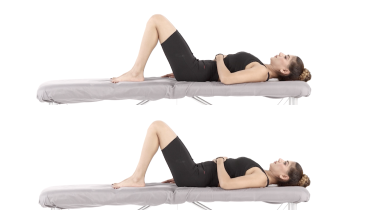 Diaphragmatic breathing
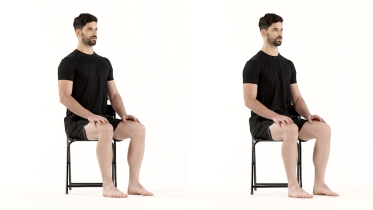 Breathing with shoulder blade movement
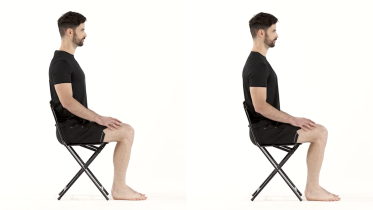 Chin tuck
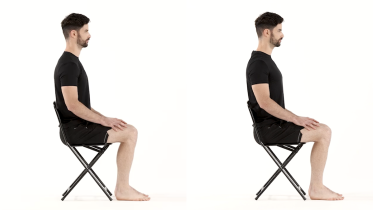 Scapular squeeze
Stage 2: Glide the nerves and build shoulder blade control
When the arm is quieter and the stage 1 exercises no longer stir it up. Shoulder shrugs and the band row work the muscles that lift and hold the shoulder blades; do the shrugs with empty hands at first and add the light weights shown on the page only if your arm stays quiet, because weights hanging from your hands pull the shoulders down. The seated back extension and the serratus punch help your upper back and shoulder blade move well, and the pec minor stretch eases the small chest muscle that the nerves pass under. Keep your arms crossed over your chest for the back extension rather than putting your hands behind your neck, which lifts the elbows high. In the stretch, draw the shoulder blades back gently without pressing the shoulders down, and ease off if your hand tingles. Have a physio check your arm before you try the median nerve glide. The aim is no tingling at all. If you do feel a faint tingle, shrink the movement; it should fade within a few seconds once you stop. Tingling that builds with each glide, or hangs around afterward, means leave the glide out for now.
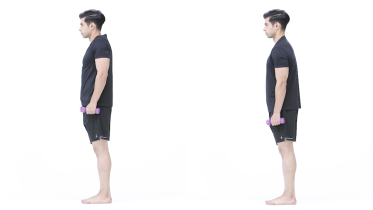 Shoulder shrugs
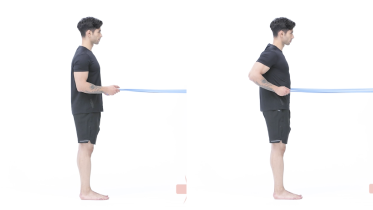 Resistance band row
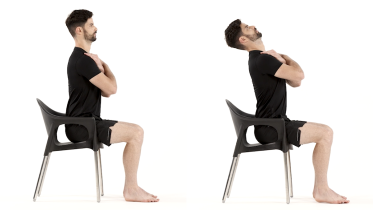 Seated thoracic extension
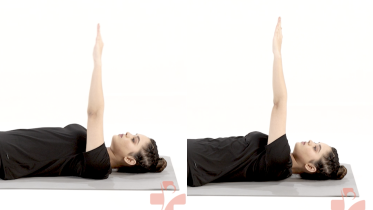 Serratus punch
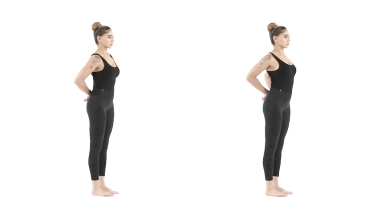 Pec minor stretch
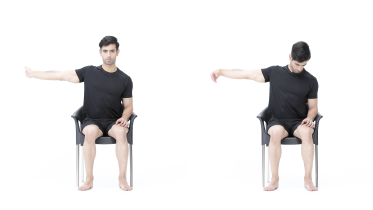 Median nerve glide
Stage 3: Strength and endurance for work and overhead tasks
For getting back to lifting, carrying and reaching overhead once the arm symptoms have settled or only come and go. The band pull-apart and the face-down W and Y raises load the muscles between and under the shoulder blades more, and you keep the band row from stage 2 going alongside them. The pull-apart and W raise pages say to set the shoulder blades back and down. With this condition, draw them back without pressing them down hard, as in the earlier stages. The Y raise takes your arms above shoulder height, which is the position that most often brings symptoms on. Start with small lifts, and leave it out if your hand tingles. Build up the time you spend with your arms raised slowly, over weeks rather than days. If the arm flares up, go back to the stage before.
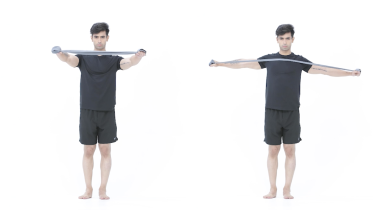 Band pull-apart
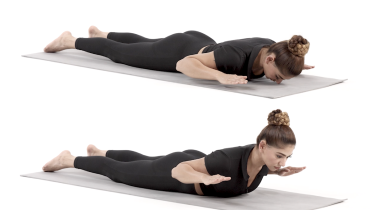 Prone W raise
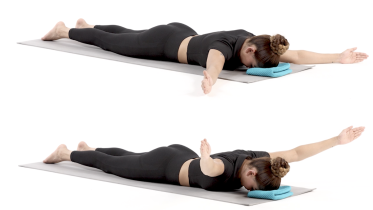 Prone Y raise
What to avoid or change
For a while, notice which positions and tasks bring your symptoms on, and change them. Jones and colleagues (2019) link the nerve type to repeated overhead arm work and heavy lifting. So break up jobs above shoulder height, such as painting a ceiling or putting things away on a top shelf, and bring the work lower where you can. Carry loads close to your body or split them between two bags, rather than letting a heavy bag or a backpack strap drag one shoulder down. If you wake with a tingling or numb hand after sleeping with your arms above your head, try keeping them below shoulder height at night.
This program leaves out the scalene and upper trapezius stretches, which tip the head away from the sore side and hold it there. The nerves to the arm run between the scalene muscles, and holding that stretch can pull on them. Your physio may bring these stretches back in once your arm has calmed down.
If you have had surgery for thoracic outlet syndrome, such as removal of the top rib, follow your surgeon's program rather than this one. If you are pregnant, ask your midwife, doctor or physio before you start. These exercises were chosen for adults. A child or teenager with tingling, pain or swelling in one arm should see a doctor first.
When to see a physio or doctor
Pins and needles in your arm with neck or arm pain, or an arm that feels heavy or weak, should be checked the same day if no one has examined it yet. A physical therapist (physiotherapist) or doctor can then work out which arm and shoulder positions bring your symptoms on, and check for the other causes above. Once the nerve type has been confirmed, see your doctor or physio again if the symptoms are getting worse, are stopping you working or sleeping, or have not started to improve after a few months of steady exercise. Anything on the warning list below needs faster help. A swollen, blue or cold arm is never something to exercise through.
For physiotherapists
This is a starting framework for patients with neurogenic TOS (NTOS), not a full management plan. The Society for Vascular Surgery reporting standards define NTOS as present when 3 of 4 criteria are met: signs and symptoms of pathology at the thoracic outlet; signs and symptoms of nerve compression; absence of another likely diagnosis; and a positive response to a well-performed scalene muscle injection (Illig 2016). They also set separate definitions for venous and arterial TOS. Jones 2019 describes NTOS testing as often equivocal or negative, which makes it largely a diagnosis of exclusion, with cervical radiculopathy, carpal tunnel syndrome, ulnar nerve entrapment and double crush on the differential list. It also names Pancoast (superior sulcus) tumors, which can invade and compress the brachial plexus, so when shoulder or arm pain persists, ask about smoking history as well as cough and weight loss.
Evidence for conservative care is weak. Povlsen 2014 (Cochrane) found two eligible randomized trials (one surgical, one of botulinum toxin) and no randomized evidence for other current treatments. Vanti 2007 covered 10 studies of conservative treatment and 3 comparing it with surgery (1983 to 2001), with no randomized trials among them. Conservative care appeared to reduce symptoms and support return to work, but the authors could not establish superiority over no treatment or placebo, or the best type.
Balderman 2019 is a prospective observational cohort from a US tertiary center. Of 150 patients meeting NTOS criteria, 20 declined further treatment or follow-up, 40 improved with physical therapy alone after an initial 6-week trial, and 90 went on to supraclavicular decompression, with or without pectoralis minor tenotomy. QuickDASH fell by 29.5% in the physical therapy group and 47.9% in the surgery group, and the authors report substantial improvement for about 90% after surgery. Allocation followed the response to the 6-week trial rather than randomization, so the between-group comparison is confounded.
Jones 2019 describes TOS-focused physical therapy as active stretching and targeted strengthening, alongside patient education (postural mechanics, weight control, relaxation) and activity modification, kept up for at least 4 to 6 months before surgery is considered. The program here follows that outline. It is built on scapular control and posture work with diaphragmatic breathing, plus a median nerve slider. An ulnar nerve glide is now in the library if your assessment points to the ulnar side, and cubital tunnel syndrome covers ulnar nerve entrapment at the elbow. Exercise selection rests on clinical reasoning rather than trial data.
Screen for venous and arterial TOS and for cervical myelopathy at every review, and refer on any vascular sign: the same day for venous or chronic arterial signs, and as an emergency for an acutely cold, pale or cyanotic limb.
See a doctor promptly if
- Your arm, hand or fingers turn cold, pale, blue or gray compared with the other side. Call emergency services or go to an emergency department straight away, and do not drive yourself. The blood supply to the arm may be blocked.
- Your arm or hand swells, turns blue, dusky, red or darker than usual, or feels heavy, tight, warm or tender, or has a throbbing or cramping pain that feels different from normal muscle ache. The veins over your shoulder, chest or arm may stand out or be sore to touch, and it often starts after hard or repeated use of the arm. Stop the exercises and go to an emergency department the same day, and do not wait to see if it settles. This can be a blood clot in the main vein under the collarbone (venous thoracic outlet syndrome) or elsewhere in the arm, which needs treatment quickly. If you are also short of breath or have chest pain, call emergency services.
- One hand goes white, blue or pale and cold for a while and then recovers, often when you use or raise the arm, or the arm aches and tires quickly when you use it, or a sore or dark spot appears on a fingertip and does not heal. Get medical advice the same day. These can be signs that the artery under the collarbone is being narrowed (arterial thoracic outlet syndrome), and small clots can break off from a narrowed artery. If the hand stays cold, pale, blue or gray, follow the first warning sign above and call emergency services.
- Emergency: any sign of a stroke, even if it goes away. That means a face that droops on one side, an arm you cannot lift or keep up, slurred or muddled speech, weakness or numbness on one side of your body or face, sudden blurred vision, double vision or loss of sight, trouble swallowing, sudden dizziness with unsteadiness or falling over, a sudden severe headache, or a sudden fall where your legs give way but you do not black out (a drop attack). Call emergency services straight away. With neck pain, these can rarely come from a tear in an artery in the neck.
- Emergency: a sudden, severe headache or neck pain that feels new and unlike anything you have had before. Call emergency services straight away.
- Chest pain or tightness, which may spread to your arm, neck or jaw, or shoulder or arm pain that comes with shortness of breath, sweating or feeling sick. This can be a heart attack. Call emergency services straight away.
- Emergency: new problems walking, for example your legs feel stiff, heavy or weak or you have become unsteady on your feet, new trouble controlling your bladder or bowels, or hands that suddenly become clumsy, for example you can no longer do up buttons. Call emergency services straight away. These can be signs of pressure on the spinal cord in the neck.
- Hands that have slowly become clumsy, for example trouble doing up buttons or dropping things, or numbness in both hands. Get medical advice the same day. These can be signs of pressure on the spinal cord in the neck (cervical myelopathy). If the clumsiness or numbness gets worse quickly, call emergency services straight away.
- Pain or tingling in both arms at the same time, rather than in one. Get medical advice the same day. This can also be a sign of pressure on the spinal cord in the neck.
- An arm or hand that is getting weaker, or muscles in your hand that look thinner or flatter than on the other side. Get medical advice the same day.
- Severe neck or arm pain that comes on suddenly or is getting worse quickly, without any of the emergency signs above. Get medical advice the same day.
- Pins and needles in an arm together with neck or arm pain, or an arm that feels heavy or weak, and nobody has checked it yet. Get medical advice the same day.
- Emergency: neck pain straight after a high-energy accident, such as a crash at high speed, a car that rolled over, being thrown from a vehicle, being hit by a vehicle while walking or cycling, a motorbike or quad bike accident, a horse riding accident, a diving injury, or a fall from a height or down several stairs. Keep still and call emergency services. If the neck pain only starts later and nobody has checked your neck since, go to an emergency department straight away, and do not drive yourself.
- Your arm symptoms started after a fall, a car accident or a blow to the neck, shoulder or collarbone, and nobody has checked them yet. Get medical advice the same day before you start these exercises, unless the next warning sign applies. If your shoulder or collarbone has changed shape or swollen very quickly since the injury, or you find it hard to breathe, call emergency services or go to an emergency department straight away, and do not drive yourself.
- Emergency: in the first days after the accident, numbness, tingling, pins and needles or weakness in your arms or legs, or a sudden electric shock feeling in your neck and back that runs into your arms or legs. If it starts straight after the accident, keep still and call emergency services. If it starts later, call emergency services or go to an emergency department straight away, and do not drive yourself.
- Neck, shoulder or arm pain with a fever or chills, or you feel generally unwell. Get medical advice the same day, and go to an emergency department if you feel very unwell. If you have shoulder pain with a fever, or the shoulder is also hot, red and swollen, go to an emergency department the same day, as this can be a joint infection.
- Shoulder or arm pain together with a cough that has lasted more than 3 weeks or breathlessness that is getting worse, especially if you smoke or used to smoke. See your doctor within a few days and mention it. Rarely, a growth at the top of the lung can press on the nerves to the arm. If you cough up a few spots or streaks of blood, get medical advice the same day. If it is more than that, or you also find it hard to breathe, have a very fast heartbeat or have pain in your chest or upper back, call emergency services.
- New neck, shoulder or arm pain and you have had cancer, now or in the past, or you have lost weight without trying. Get medical advice the same day and mention it. If you are being treated for cancer now, contact your cancer team the same day.
- Emergency: you have had cancer, now or in the past, and your back or neck pain feels like a tight band around your body, or comes with pain spreading down an arm or leg, weakness, numbness or pins and needles in your arms or legs, trouble walking, or trouble controlling your bladder or bowels. Call your cancer team's emergency number straight away, or go to an emergency department if you do not have one or cannot get through. This can be cancer pressing on the spinal cord (metastatic spinal cord compression), which needs treatment straight away.
- Pain that is there all the time and does not ease with rest or changing position, or pain at night that keeps getting worse. See your doctor within a few days. If you have had cancer, now or in the past, or you have lost weight without trying, get medical advice the same day. If you are being treated for cancer now, contact your cancer team the same day.
Common questions
What causes thoracic outlet syndrome?
Often it is a mix of things rather than one cause. A review by Jones and colleagues (2019) links the nerve type to differences in the bones and muscles at the base of the neck, such as an extra rib (cervical rib), to injuries, and to repeated overhead arm work and heavy lifting. The same review notes that the nerve type is more common in women, and that the clearest form of it most often affects women from their teens to about 60.
Can thoracic outlet syndrome go away without surgery?
For some people, yes. A review by Jones and colleagues (2019) advises trying non-surgical care first and keeping it up for at least 4 to 6 months before surgery is considered. In a US specialist surgical center, 40 of the 150 people diagnosed with the nerve type (27%) improved enough with physical therapy alone that they did not have surgery (Balderman 2019). Everyone in that study had been referred to surgeons, so the figure may not match what happens with people seen in everyday practice.
How is thoracic outlet syndrome diagnosed?
Mostly from what you describe and what the examination shows, along with tests that rule out other causes. For the nerve type, scans and nerve tests are often normal or unclear, so it is largely a diagnosis made once other problems, such as a pinched nerve in the neck or carpal tunnel syndrome, have been ruled out (Jones 2019). The vein and artery types are different: scans can show the narrowed or blocked vessel. Because there is no single test, the diagnosis can take time, and doctors do not always agree on it.
What exercises should I avoid with thoracic outlet syndrome?
Mainly the positions that bring your own symptoms on. For most people that means long spells with the arms above shoulder height, heavy weights that pull the shoulders down, such as heavy shrugs or farmer's carries, and stretches that tip the head away from the sore side and hold it there. These are not banned for good. Your physio can add them back gradually once the arm has settled.
Is thoracic outlet syndrome serious?
The nerve type, which most people have, is not dangerous, but it can be painful and get in the way of work and sleep. The vein and artery types are rarer and more serious, because they can lead to blood clots (Jones 2019). That is why a swollen, blue or heavy arm, or a cold, pale hand, needs urgent help rather than exercises.
Do I need surgery for thoracic outlet syndrome?
Most people with the nerve type start with physiotherapy, and surgery is mainly for people with a clear cause whose symptoms have not settled with it (Jones 2019). In the US specialist center study, most of those who did have surgery improved a lot, and their arm function scores improved more than in the group who improved with physical therapy alone, but the study was not randomized (Balderman 2019). A Cochrane review found very little good evidence comparing treatments of any kind (Povlsen 2014). Whether to operate is something you and your surgeon decide together.
References
- Povlsen B, Hansson T, Povlsen SD. Treatment for thoracic outlet syndrome. Cochrane Database of Systematic Reviews. 2014;(11):CD007218. https://doi.org/10.1002/14651858.CD007218.pub3
- Vanti C, Natalini L, Romeo A, Tosarelli D, Pillastrini P. Conservative treatment of thoracic outlet syndrome. A review of the literature. Europa Medicophysica. 2007;43(1):55-70. https://pubmed.ncbi.nlm.nih.gov/16955064/
- Balderman J, Abuirqeba AA, Eichaker L, et al. Physical therapy management, surgical treatment, and patient-reported outcomes measures in a prospective observational cohort of patients with neurogenic thoracic outlet syndrome. Journal of Vascular Surgery. 2019;70(3):832-841. https://doi.org/10.1016/j.jvs.2018.12.027
- Jones MR, Prabhakar A, Viswanath O, et al. Thoracic outlet syndrome: a comprehensive review of pathophysiology, diagnosis, and treatment. Pain and Therapy. 2019;8(1):5-18. https://doi.org/10.1007/s40122-019-0124-2
- Illig KA, Donahue D, Duncan A, et al. Reporting standards of the Society for Vascular Surgery for thoracic outlet syndrome. Journal of Vascular Surgery. 2016;64(3):e23-e35. https://doi.org/10.1016/j.jvs.2016.04.039
- NHS. Symptoms of a stroke. https://www.nhs.uk/conditions/stroke/symptoms/
- NHS. DVT (deep vein thrombosis). https://www.nhs.uk/conditions/deep-vein-thrombosis-dvt/
- NHS. Cervical spondylosis. https://www.nhs.uk/conditions/cervical-spondylosis/
- NHS. Shoulder pain. https://www.nhs.uk/symptoms/shoulder-pain/
- NHS. Symptoms of lung cancer. https://www.nhs.uk/conditions/lung-cancer/symptoms/
- NHS. Coughing up blood. https://www.nhs.uk/symptoms/coughing-up-blood/
Written and checked by the PocketPhysio editorial team. Last updated 2026-09-28.
This page is general education, not a diagnosis or a personal treatment plan. See a physiotherapist or doctor for advice about your own situation.