Shoulder shrugs
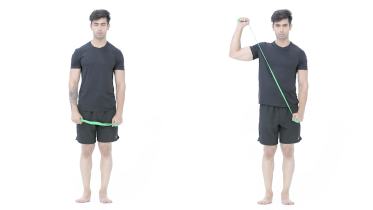
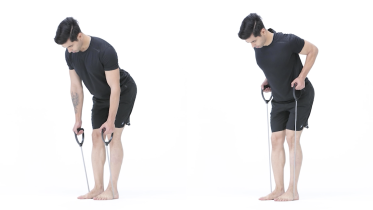
Shoulder shrugs are simple: you lift your shoulders up toward your ears and lower them slowly, here with a light dumbbell in each hand. They work the muscles across the top of the shoulders and neck (upper trapezius). Physios often include them in shoulder and neck strengthening programs.
How to do the shoulder shrugs
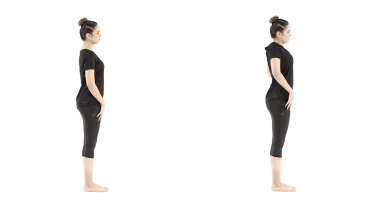
- Stand tall with your feet hip width apart, a light dumbbell in each hand and your arms hanging by your sides.
- Tuck your chin in a little, as if making a small double chin. Keep it there for the whole set.
- Lift both shoulders toward your ears, drawing them slightly back as they go up.
- Pause briefly at the top.
- Lower your shoulders slowly all the way down, then repeat.
What you should feel
Work across the top of the shoulders and up the sides of the neck.
Common mistakes
- Rolling the shoulders in circles. Go up and a little back, then straight down.
- Poking the chin forward as you lift.
- Dropping the shoulders quickly. The lowering should take at least as long as the lift.
- Bending the elbows to help. The arms just hang and the shoulders do the work.
How often
Programs often use 2 to 3 sets of 10 to 15 with a light weight, once a day or every other day. Your physio may change the weight or the reps.
Stop and check with your physio if
- The shoulder catches or gives a sharp pain during the lift.
- Pain or tingling spreads into the arm.
- Pins and needles in your arm or hand that do not go away after you stop, or part of your arm or hand goes numb. Get medical advice the same day. If one side of your face or body suddenly goes numb or weak, or your speech becomes slurred or muddled, call emergency services, even if it goes away.
- A headache or dizziness comes on while you are doing them. If you faint while exercising, call emergency services, even if you feel fine again quickly.
From the clinic
Start light. For plenty of people a full water bottle in each hand is enough in the first week, and the weight can go up once the movement is smooth.
Some people with neck pain find that shrugs stir up tension across the top of the shoulders. If that happens, tell your physio rather than pushing through. If you have had shoulder or neck surgery, ask your surgeon or physio before you pick up weights.
Reviewed by the PocketPhysio by VirtueLife expert physiotherapy team. Last reviewed 2026-09-25.
This page is general education, not a diagnosis or a personal treatment plan. If you have pain, an injury or a health condition, see a physiotherapist or doctor before starting new exercises.