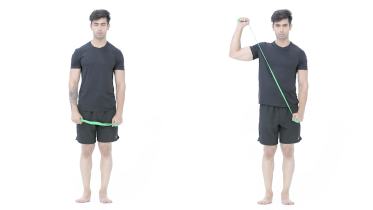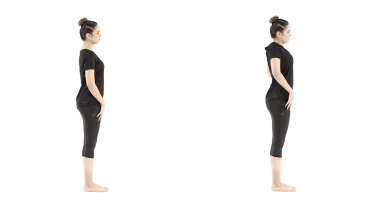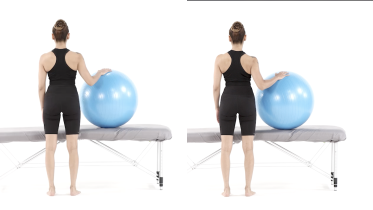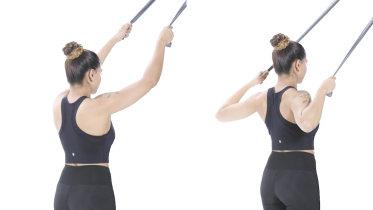
Behind the back shoulder stretch
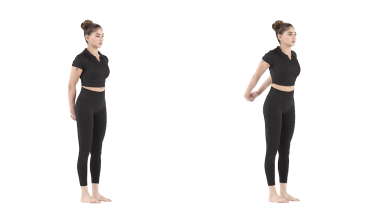
The behind the back shoulder stretch works on the top and outer side of the shoulder, mainly the rotator cuff muscle that helps lift the arm out to the side (supraspinatus). You take one hand behind your back, hold that wrist with your other hand and gently draw it across toward the opposite hip. You do it standing, and the only thing you hold is your own wrist.
How to do the behind the back shoulder stretch
- Stand upright with your feet hip width apart and your arms relaxed by your sides.
- Take the hand of the side you want to stretch behind your back, at about waist level or a little lower. In the video it is the left arm.
- Reach behind with your other hand and hold the wrist of the first arm.
- Slowly draw that wrist across your back toward the opposite hip until you feel a mild stretch at the top of the shoulder. Keep your chest facing forward.
- Hold it there, breathing steadily, then let go and bring both arms back to your sides. Change sides if both shoulders need it.
What you should feel
A gentle stretch over the top and outer side of the shoulder on the arm being pulled, sometimes running a little way down the upper arm. The voice guide describes it as easy and comfortable, and it should stay that way.
Common mistakes
- Twisting your trunk or dropping one shoulder to make the hand travel further.
- Leaning forward from the hips as you pull.
- Tugging on the wrist in quick jerks instead of one slow, steady draw.
- Letting the shoulder of the pulled arm hike up toward your ear.
How often
Holds of 15 to 30 seconds, repeated 2 to 4 times, once or twice a day, are a typical range. Your physio will adjust this.
Stop and check with your physio if
- A sharp pain or a catch deep in the shoulder, or a pinch at its front or top.
- Pins and needles or numbness comes on in your arm, hand or fingers as you pull.
- Pins and needles in your arm or hand that do not go away after you stop, or part of your arm or hand goes numb. Get medical advice the same day. If one side of your face or body suddenly goes numb or weak, or your speech becomes slurred or muddled, call emergency services, even if it goes away.
- A sudden pop or tearing feeling in the shoulder that brings sharp pain, new weakness or trouble lifting the arm. Stop and contact your surgical team the same day, or get medical advice the same day if you have not had surgery.
From the clinic
Filmed from behind, the video shows how low the hands sit and how little the arm really moves. It is a small stretch. A light pull is all it needs. If you cannot reach your wrist, loop a towel around it and hold the towel with your other hand. Programs often pair it with the cross body shoulder stretch and the sleeper stretch, which reach the back of the shoulder.
Drawing the arm down and across behind you also pulls the shoulder blade down, which can stretch the nerves running into the arm. If your hand or fingers tingle, let the pull off at once, and if it keeps happening, ask your physio before you try again.
After shoulder surgery, including a rotator cuff repair, or after a shoulder fracture or dislocation, follow your surgeon's or physio's plan, and do only the movements and range they have cleared. Many plans allow only passive movement at first, where the arm is moved for you and its muscles stay relaxed. Reaching behind the back puts the rotator cuff tendons on stretch, so after a rotator cuff repair or a shoulder replacement it is usually not allowed for at least the first 6 weeks. Ask your surgeon or physio before you try it.
Written and checked by the PocketPhysio editorial team. Last updated 2026-09-28.
This page is general education, not a diagnosis or a personal treatment plan. If you have pain, an injury or a health condition, see a physiotherapist or doctor before starting new exercises.