Backward shoulder rolls
Backward shoulder rolls are an easy loosening movement: you lift your shoulders toward your ears, draw them back and let them drop, in one smooth circle. They need no equipment and you can do them standing at a desk or a kitchen counter. Physios often suggest them as a warm-up, or as a quick break when your shoulders and upper back feel tight after sitting for a long time.
How to do the backward shoulder rolls
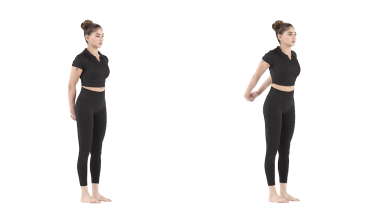
- Stand tall with your feet about hip width apart and your arms hanging loose at your sides.
- Keep your chin level and look straight ahead.
- Lift both shoulders up toward your ears.
- Roll them back, drawing your shoulder blades gently toward each other.
- Let them drop down, then ease them forward to where you started, so you make one smooth circle. Go straight on into the next roll.
What you should feel
Gentle movement and warmth around the tops of the shoulders and between the shoulder blades. It should feel easy, not strained.
Common mistakes
- Going fast and making small, jerky circles. Slow and smooth is the aim.
- Poking the chin forward or tipping the head back as the shoulders move.
- Arching your lower back as the shoulders go back.
- Swinging the arms or bending the elbows. The arms just hang.
How often
Many people do 10 to 15 slow rolls at a time, a few times through the day. Your physio will adjust this.
Stop and check with your physio if
- Sharp pain or a painful catch in the shoulder.
- Tingling or numbness spreading down your arm.
- Pins and needles in your arm or hand that do not go away after you stop, or part of your arm or hand goes numb. Get medical advice the same day. If one side of your face or body suddenly goes numb or weak, or your speech becomes slurred or muddled, call emergency services, even if it goes away.
- Dizziness or a headache that comes on as you move. If you faint while exercising, call emergency services, even if you feel fine again quickly.
From the clinic
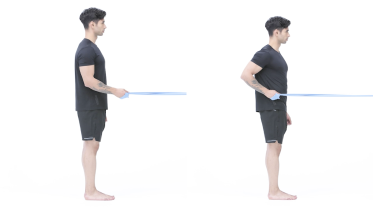
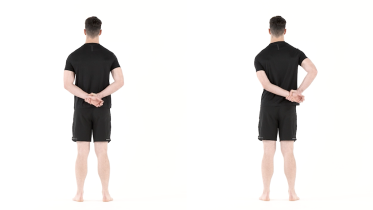
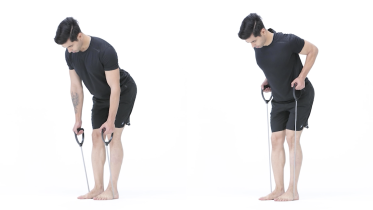
The video is filmed from the side. The circles are steady and fairly small, and the arms stay loose throughout. You can do exactly the same thing sitting at your desk.
When they feel easy, the seated scapular squeeze and shoulder shrugs work the same area with more effort. After shoulder or neck surgery, or a recent collarbone fracture, get the go-ahead from your surgeon or physio before you start.
Written and checked by the PocketPhysio editorial team. Last updated 2026-09-28.
This page is general education, not a diagnosis or a personal treatment plan. If you have pain, an injury or a health condition, see a physiotherapist or doctor before starting new exercises.