Pec minor stretch
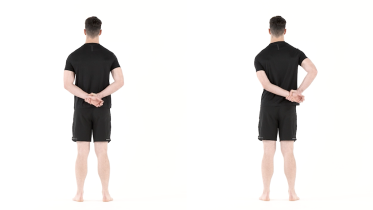
The pec minor stretch is for the small chest muscle that runs from the front of your upper ribs to a bony point at the front of the shoulder blade (pectoralis minor). You stand with your hands linked loosely behind you and draw your shoulder blades back and toward each other, so the front of each shoulder opens out. It is a common pick when the shoulders sit rounded forward, say after long hours at a desk.
How to do the pec minor stretch
- Stand up straight, feet about hip width apart, with your weight spread evenly over both feet.
- Reach both hands behind you and link them loosely at the level of your lower back or just below. Your elbows can stay softly bent, as in the video.
- Draw your shoulder blades back and toward each other so the fronts of your shoulders open out. Keep the shoulders low, away from your ears.
- Once you feel a stretch high on the front of the chest, just below the collarbone, hold still and breathe normally.
- Let the shoulder blades relax forward again, unlink your hands and rest your arms by your sides.
What you should feel
A stretch high on the front of the chest, under the collarbone and toward the front of the shoulder, with some work between the shoulder blades as they squeeze back.
Common mistakes
- Lifting your hands up behind you instead of drawing the shoulder blades back.
- Leaning back through the lower back, or pushing the ribs forward, to get more stretch.
- Letting the chin jut forward while the shoulders go back.
- Shrugging the shoulders up toward the ears as they move back.
How often
A common starting point is 3 to 5 holds of 15 to 30 seconds, once or twice a day. Your physio will adjust this.
Stop and check with your physio if
- Pins and needles, numbness or a heavy feeling comes on in your arm or hand while you hold.
- Pins and needles in your arm or hand that do not go away after you stop, or part of your arm or hand goes numb. Get medical advice the same day. If one side of your face or body suddenly goes numb or weak, or your speech becomes slurred or muddled, call emergency services, even if it goes away.
- A sharp pain, pinch or catch in the front or top of your shoulder.
From the clinic
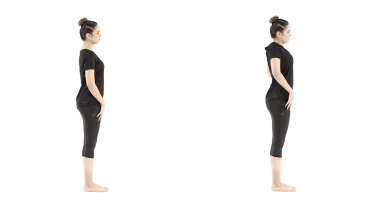
The camera is side on, so you can see how far the shoulders go back and that the lower back does not arch. If linking your fingers behind you is uncomfortable, hold a small towel between your hands instead. The chest opener stretch uses a similar grip but takes straighter arms back and away from you, which reaches more of the large chest muscle. The pec stretch does one side at a time, with the forearm on a wall.
The nerves that supply your arm pass just underneath this muscle and under the collarbone on their way down from the neck, and drawing the shoulders back and down can press on them or stretch them. If your hand or fingers start to tingle, let the shoulder blades ease forward until it settles. If it comes back every time, stop the stretch and check with your physio before you do it again.
After shoulder surgery, including a rotator cuff repair, or after a shoulder fracture or dislocation, follow your surgeon's or physio's plan, and do only the movements and range they have cleared. Many plans allow only passive movement at first, where the arm is moved for you and its muscles stay relaxed. The same goes for a broken collarbone.
Written and checked by the PocketPhysio editorial team. Last updated 2026-09-28.
This page is general education, not a diagnosis or a personal treatment plan. If you have pain, an injury or a health condition, see a physiotherapist or doctor before starting new exercises.