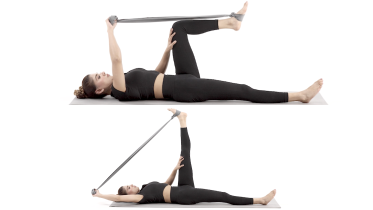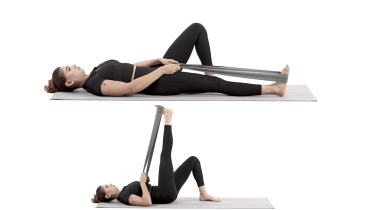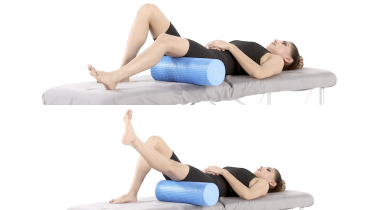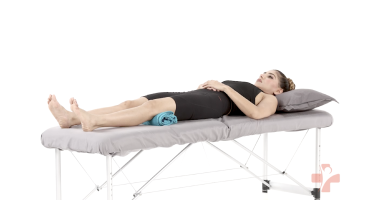
Knee to chest stretch
The knee to chest stretch is a gentle stretch for the lower back and buttock. You lie on your back and pull one knee in toward your chest with your hands, while the other leg rests on the floor, bent or straight. Many people reach for it when the back feels stiff.
How to do the knee to chest stretch
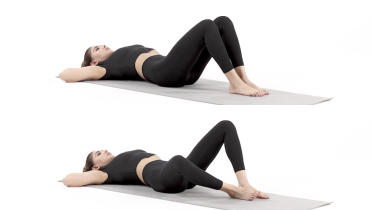
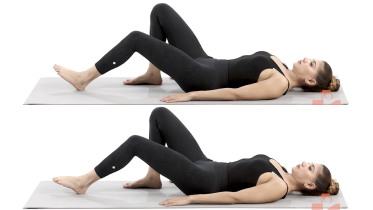
- Lie on your back with both knees bent and feet flat. A pillow under your head is fine.
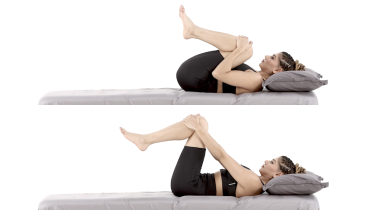
- Bring one knee up and hold the front of the shin with both hands, just below the kneecap.
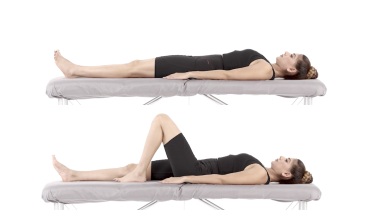
- Leave the other leg resting on the bed or floor. It can stay bent with the foot flat, or lie out straight if that is more comfortable.
- Pull the knee gently toward your chest until you feel a stretch in your lower back or buttock. Your head and shoulders stay relaxed on the pillow.
- Hold the stretch steadily, without bouncing. Then let go and lower the foot back down. Repeat, then do the same with the other leg.
What you should feel
A mild stretch low in the back and in the buttock on the side you are holding. It should feel easy. If you are straining, you are pulling too hard.
Common mistakes
- Pulling hard, or bouncing at the end of the stretch.
- Lifting your head and shoulders off the pillow to reach the knee.
- Holding your breath. Let it out slowly as the knee comes in.
How often
Many programs use 3 to 5 gentle holds of about 15 to 30 seconds on each leg, once or twice a day, often at times when the back feels stiff. Your physio may change the timing to suit your back.
Stop and check with your physio if
- Pain spreads down the leg or you get numbness or tingling.
- Your back pain gets sharper or worse during the stretch instead of easing.
- You feel pinching in the front of the hip or groin as the knee comes in. Hold the knee less close.
From the clinic
Sore knee? Hold behind the thigh instead of on the shin. The stretch in your back stays much the same, and the knee does not have to bend as far.
This is a forward bending stretch, and not every back likes that. If bending forward makes your symptoms worse, or you have low bone density (osteoporosis), check with your physio before you carry on. Repeated or long held forward bending of the spine is usually limited with osteoporosis. In either case your physio may choose a different movement for you.
If you have had a hip replacement, get the go-ahead from your surgeon or physio before you try this stretch. Pulling the knee in bends the hip well past a right angle, and many surgeons ask you to avoid that for the first months after some operations. From the second trimester of pregnancy on, check with your physio about lying flat on your back.
When one knee at a time feels easy, the double knee to chest stretch is a common next step.
Reviewed by the PocketPhysio by VirtueLife expert physiotherapy team. Last reviewed 2026-09-25.
This page is general education, not a diagnosis or a personal treatment plan. If you have pain, an injury or a health condition, see a physiotherapist or doctor before starting new exercises.