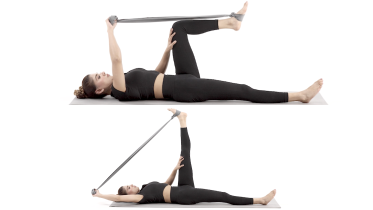
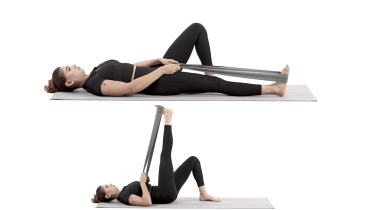
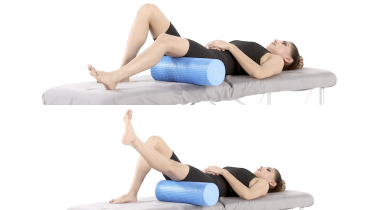
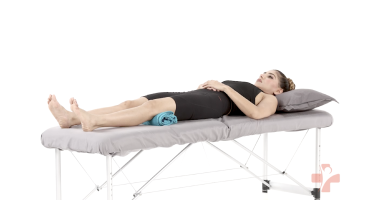
Bent knee fall out
The bent knee fall out is a gentle core control exercise done lying on your back. One knee slowly lowers out to the side and comes back, while your deep stomach muscles and pelvic floor keep your pelvis still. It is a common early step in programs for the lower back and pelvis.
How to do the bent knee fall out
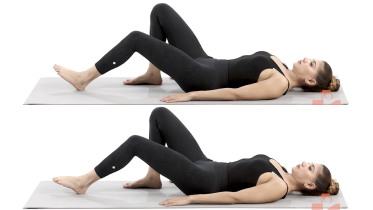
- Lie on your back with your knees bent, feet flat and about hip width apart. Rest your arms by your sides or on the floor above your head, as in the video.
- Gently tighten your deep stomach muscles and your pelvic floor, as if you were stopping yourself passing wind. Keep breathing normally.
- Slowly let one knee fall out to the side. Go only as far as you can while your pelvis stays level and does not roll with the leg.
- Keep the other knee still and pointing at the ceiling.
- Bring the knee back to the middle with control. Repeat, then do the same with the other leg.
What you should feel
Light, steady work low in your stomach and around the pelvis. You may feel a mild stretch in the inner thigh as the knee lowers. The movement should feel slow and easy.
Common mistakes
- Letting the pelvis tip or roll toward the knee that is lowering. Make the movement smaller.
- Letting the knee drop out quickly instead of lowering it.
- Squeezing so hard that you hold your breath. A gentle tightening is enough.
How often
Many programs start with 8 to 12 slow movements on each side, 1 to 3 sets, once or twice a day. Your physio will adjust this.
Stop and check with your physio if
- Sharp pain in the groin or the front of the hip as the knee lowers.
- Back pain that builds during the set, or pain, numbness or tingling spreading down a leg.
From the clinic
The aim is control, not range. If you can only lower the knee a little before the pelvis starts to move, that small range is the right one for now. Some people find it easier to learn the stomach tightening first with transverse abdominis activation or a pelvic tilt. The dead bug is a common next step.
If you have had a hip replacement, get the go-ahead from your surgeon or physio before you try bent knee fall outs. Letting the knee drop out to the side turns the thigh outward, and many surgeons ask you to avoid that for the first months after some operations. After groin surgery, ask your surgeon or physio how far the knee is allowed to drop out to the side. From the second trimester of pregnancy onward, ask your physio whether exercising flat on your back is right for you.
Written and checked by the PocketPhysio editorial team. Last updated 2026-09-26.
This page is general education, not a diagnosis or a personal treatment plan. If you have pain, an injury or a health condition, see a physiotherapist or doctor before starting new exercises.