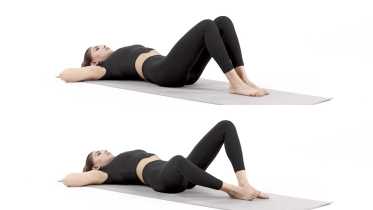
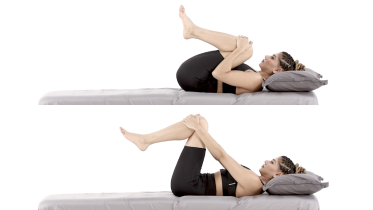
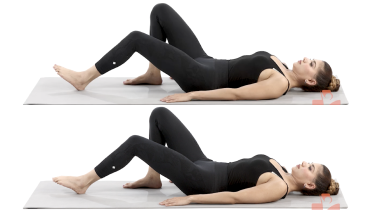
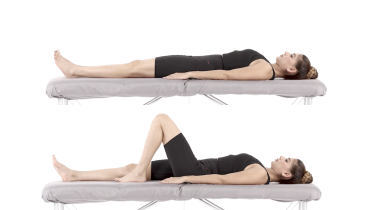
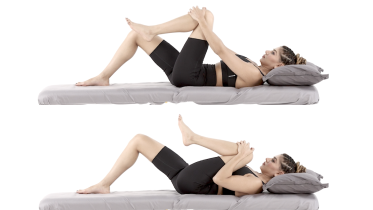
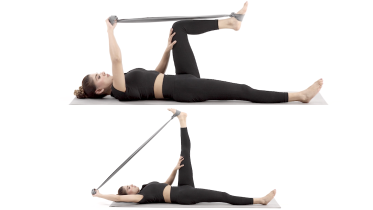
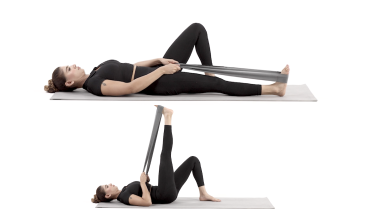
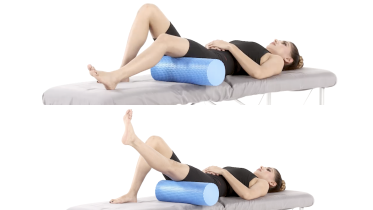
Quad sets (towel under knee)
A quad set means tightening the thigh muscle while the knee barely moves. It is one of the first exercises after a knee injury or surgery, because it gets the thigh muscle (quadriceps) working again.
How to do the quad sets (towel under knee)
- Lie on your back with both legs straight. Put a small rolled towel under the knee of the leg you are exercising.
- Let your heel rest on the bed and keep your toes pointing up toward the ceiling.
- Tighten the muscle on the front of your thigh and press the back of your knee down into the towel. Keep the rest of your body still.
- Hold for about 5 seconds and breathe normally.
- Relax fully, then repeat.
What you should feel
The front of the thigh going firm. Put your fingers on the muscle just above the kneecap on the inside to feel it switch on.
Common mistakes
- Holding your breath.
- Squeezing the buttocks instead of the thigh.
- Not relaxing fully between reps.
How often
In early rehab, often 10 reps with a 5 to 10 second hold, several times a day. Your physio will adjust this, and after surgery you follow the plan from your surgeon and physio.
From the clinic
A sore, swollen knee makes the thigh muscle hard to switch on, and the muscle fades fast once it stops being used. That is the problem this exercise is built for. The knee hardly moves, so the muscle can be worked within days of an injury or an operation, long before bending or standing on the leg is on the cards.
This one is small and a bit dull, and patients often skip it. Do it anyway. A quadriceps that will not switch on makes every later knee exercise harder.
Size the roll properly. A rolled hand towel is about right, as in the video. Anything bigger, a pillow or a bolster, holds the knee in too much bend for you to press into it, and then the muscle never goes properly hard under your fingers. Heel on the bed, toes up.
Trust your eyes here rather than the feeling, and watch the kneecap. A thigh muscle that has come on properly drags it a short way up toward the hip. If it sits still while your buttock grips or your breath stops, those are the two substitutes we see most. Doing a few on the good leg first, to feel what switching on is like, usually gets the sore side there faster than trying harder.
When the thigh tightens reliably and the kneecap moves, the next steps are commonly short arc quads and then the straight leg raise, with hamstring sets doing the same early job for the back of the thigh. After an operation, the timing of that move up comes from your surgeon's and physio's plan rather than from how the knee feels on the day.
Take the towel out when you finish. After knee surgery, do not rest for long with a pillow or roll under the knee, because the knee can stiffen in a bent position.
Before you start
- After a knee fracture or knee surgery, including a knee replacement, follow your surgeon's or physio's plan, and start this exercise only when they have cleared you.
When to stop and get help
- Your knee pain goes up sharply.
- Your calf or thigh is getting more swollen, or becomes warm, tender, red or darker than usual, or has a new throbbing or cramping pain. This can be a blood clot, especially after an operation, an injury, time in a cast, boot or brace, or a spell of being much less mobile than usual, and after an operation it can also be an infection. Stop and contact your medical team or get medical advice the same day. If you are also short of breath or have chest pain, call emergency services.
Written and checked by the PocketPhysio editorial team. Last updated 2026-10-29.
This page is general education, not a diagnosis or a personal treatment plan. If you have pain, an injury or a health condition, see a physiotherapist or doctor before starting new exercises.