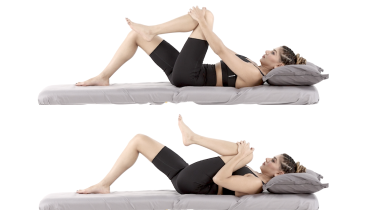
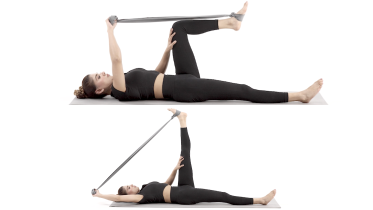
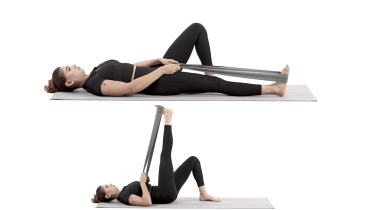
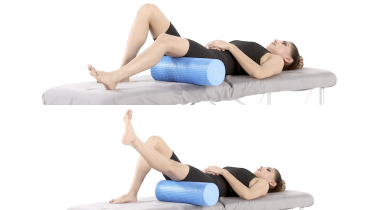
Straight leg raise
A straight leg raise strengthens the front of the thigh and hip while the knee stays straight. It is common in knee rehab because it builds strength without bending the joint.
How to do the straight leg raise
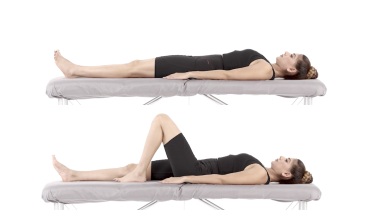
- Lie on your back. Bend one knee with the foot flat, and keep the other leg straight.
- Tighten the thigh of the straight leg first, as in a quad set, and pull your toes toward you.
- Keeping the knee straight, lift the leg until it is about level with the bent knee, roughly 45 degrees.
- Pause for 1 to 2 seconds at the top.
- Lower slowly, and relax before the next rep.
What you should feel
Effort in the front of your thigh and the front of your hip.
Common mistakes
- The knee bending as the leg lifts. Tighten the thigh before you lift.
- Lifting too high or too fast.
- The lower back arching. The bent opposite knee helps prevent this.
How often
Programs often use 2 to 3 sets of 10 on each leg, once a day. Your physio may change the numbers and add a light ankle weight later on. If you have had knee or hip surgery, stick to the plan from your surgeon and physio.
Stop and check with your physio if
- Your lower back hurts.
- Knee pain increases during the set.
- You feel sharp pain in the front of the hip or groin.
- Your calf or thigh is getting more swollen, or becomes warm, tender, red or darker than usual, or has a new throbbing or cramping pain. This can be a blood clot, especially after an operation, an injury, time in a cast, boot or brace, or a spell of being much less mobile than usual, and after an operation it can also be an infection. Stop and contact your medical team or get medical advice the same day. If you are also short of breath or have chest pain, call emergency services.
- Your wound becomes more red, hot, swollen or painful, or starts to leak. Contact your medical team the same day.
From the clinic
If the knee bends as you lift, you are not ready for this one yet. Go back to quad sets for a few days and try again.
If you are pregnant and past the first three months, check with your physio before exercising flat on your back.
Written and checked by the PocketPhysio editorial team. Last updated 2026-09-26.
This page is general education, not a diagnosis or a personal treatment plan. If you have pain, an injury or a health condition, see a physiotherapist or doctor before starting new exercises.