
Bunion surgery recovery: a week by week guide
Warning signs, and when to get help
What bunion surgery recovery actually involves
This page is for the period after the operation. If you have not had surgery and are weighing it up, our bunion page covers the condition, what exercises can and cannot do, and shoes, and we will not repeat any of that here.
There is no single bunion operation, which is why there is no single recovery. OrthoInfo describes several. An osteotomy cuts and realigns the bones, fixed with pins, screws or plates, usually with soft-tissue repair alongside. A soft-tissue repair alone shortens the tight side and lengthens the loose side and is rarely done without an osteotomy.
An arthrodesis, or fusion, removes the arthritic joint surfaces and holds the joint with screws, wires or plates, and is used for severe bunions, for arthritis, or after a previous operation has failed. An exostectomy shaves off the bump, which OrthoInfo says is rarely used alone, because without an osteotomy the deformity often returns. There is also minimally invasive surgery through small incisions, which OrthoInfo describes as not yet widely accepted and needing more long-term research.
The NHS says the most common procedure in the UK is an osteotomy, done through a small incision over the big toe, with the toe bone straightened and held with screws or staples that are often left in permanently. It says it is usually done under general anesthetic, sometimes local, and that most people go home the same day.
Why all that detail matters to you: the single biggest thing in your recovery, how much weight you may put through the foot and when, is set by which of those operations you had. A fusion and a minimally invasive osteotomy do not share a protocol.
How long does bunion surgery recovery take?
The figures worth writing on the fridge come from two sources.
OrthoInfo says dressings or a brace are needed for 6 to 12 weeks, that full recovery can take up to 6 months, and that swelling is common for 6 months to 1 year. The NHS says to rest and keep the feet raised as much as possible for at least 2 weeks, to avoid driving for 6 to 8 weeks, to stay off work for 2 to 12 weeks, and to avoid sport for 3 to 6 months.
OrthoInfo also sets the two early markers: sutures come out about 2 weeks after surgery, and follow-up visits carry on for several months and sometimes up to a year.
Those two sources are describing the same thing from different angles, and neither one disagrees with the other. Put together: a fortnight of sitting with your foot up, six to twelve weeks of being managed in a dressing or a brace, several months before the foot feels like yours, and up to a year before the last of the puffiness goes.
Bunion surgery recovery week by week
Treat the weeks below as the usual shape, not as your dates. Your surgeon's protocol is the one that applies, and if it differs from this, theirs is right.
The first 2 weeks are about the wound and the swelling. OrthoInfo says the toe is kept in position by the bandages, not to change them without consulting your doctor, to keep them dry, and to cover the foot with a plastic bag when bathing. The NHS says to rest and keep the feet raised as much as possible for at least 2 weeks. Whether you may walk at all in this period, and in what, depends on the operation. Stage 1 of the program is the exercise for this period, and none of it touches the operated foot.
Weeks 2 to 6 begin with the stitches coming out. OrthoInfo says sutures are removed about 2 weeks after surgery, and that support from dressings or a brace is needed for 6 to 12 weeks in total, so coming out of stitches is not coming out of protection. This is usually when gentle toe movement starts, on your surgeon's instruction, and stage 2 is written for it. Swelling will still build through the day.
Weeks 6 to 12 are when most people come out of the surgical shoe into a wide, soft ordinary shoe and start walking more normally. One randomized trial in the hallux valgus review compared footwear over exactly this window, six weeks after surgery, and found higher satisfaction with mobility in a rigid flat-soled shoe than in a reverse-camber one, with no difference in pain (Gumuskaya and colleagues, 2025). Stage 3 of the program belongs here. The bone is still healing underneath, which is why loading comes from your team rather than from how good the foot feels.
Months 3 to 6 are the strength and push-off period, and stage 4. OrthoInfo puts full recovery at up to 6 months and the NHS puts return to sport at 3 to 6 months. The big toe bending upward under your body weight is the last thing to come back.
Months 6 to 12 are the tail. Swelling that comes and goes, a toe that is a bit stiff, and an ache after a long day are all common this far out, and OrthoInfo's 6 months to 1 year figure for swelling is the reason we say so. If the bunion pain itself has come back, or the toe is drifting, that is different and the warning signs say what to do.
How to use these exercises
Read the warning signs at the foot of this page before you start, and do not begin any stage without your surgeon's agreement. Nothing in stage 1 is meant to load the operated foot, and the one exercise in it that presses through a heel is flagged inside the stage. Stage 2 onward needs their say-so, because the timing of toe movement and of weight bearing is set by what was cut, moved or fused and by how it was held.
Two things worth settling before you start, because they change what this program means for you. The first is which operation you had, in words you can repeat. If nobody has told you, or you cannot remember, ask for it, and until you have it treat the foot as a foot that may take no weight and a toe that may not be stretched. The restriction is the safe default, not the freedom.
The second is whether the big toe joint itself was fused. If it was, that joint is not meant to bend again, so the toe range of movement parts of stages 2 and 4 do not apply to you and stage 4 becomes push-off through a stiff toe rather than a bending one. Toe walking comes out of your program altogether, for the reason stage 4 gives. A fusion lower down, at the joint at the base of the first metatarsal, is a different operation and leaves the big toe joint able to bend, so ask which one you had rather than assuming. Tell your physio the answer at the first appointment.
OrthoInfo says specific exercises restore strength and range of motion and should start slowly under guidance. The evidence behind any particular program is limited: the 2025 systematic review found five randomized trials with 279 participants in total, no trials of anything done before surgery, and limited low-quality evidence that continuous passive motion and dynamic splinting improve the range at the big toe joint, with all five trials judged at high risk of bias (Gumuskaya and colleagues, 2025). We would rather tell you that than present a protocol as proven.
Each exercise page gives a typical starting dose, and as a rough guide many programs use 2 to 3 sets of 10 to 15 repetitions. Your physio will adjust the exercises and the numbers to suit you. Short and frequent beats long and occasional with a swollen foot, so a few minutes three or four times a day works better than one long session.
Breathe normally through every repetition rather than holding your breath, especially if you have high blood pressure. If you have fallen in the past year, feel unsteady, or take medicines that make you dizzy, keep a hand on a counter for all the standing work, practice only when someone else is at home, and ask your doctor or physio about a falls check. That matters more than usual while you are walking on a foot that is partly protected.
The exercise program
Stage 1: The first weeks, while the foot is dressed
Nothing in this stage is meant to load the operated foot, and that is deliberate. OrthoInfo says the toe is held in position by the bandages, that you should not change them without consulting your doctor, and that you should keep them dry. So these are the exercises for the rest of you: ankle pumps and circles on the uninjured side and, if your surgeon allows it, gently on the operated side to keep the circulation moving, and the three hip and thigh exercises so the whole leg does not waste while you are sitting with your foot up. The ankle pumps page shows them sitting with both feet flat on the floor, which presses the ball of the foot down as the heel lifts, so on the operated side do them one leg at a time, with that leg resting on a stool or a bed and the foot in the air. If your foot is in a cast or a boot rather than a dressing, the ankle and foot exercises here are not open to you on that side at all, so ask your surgical team which movements you may do and work the hip and thigh in the meantime. One caution about the bridge, because it is the only thing here that presses through your heels: if you have been told to keep all weight off the operated foot, leave the bridge out until your surgical team confirms that heel pressure is allowed, and do the straight leg raise and the clamshell instead. If you are pregnant and past the first three months, check with your physio before exercising flat on your back. Many programs use 2 to 3 sets of 10 to 15, most days. Your physio will adjust this. Do not put weight through the operated foot, and do not stop using the shoe, boot, brace or crutches you were given, until your surgeon has said you may.
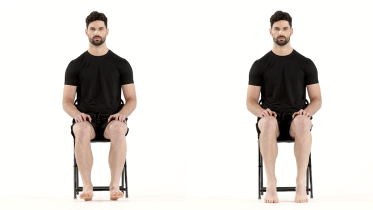 Ankle pumps
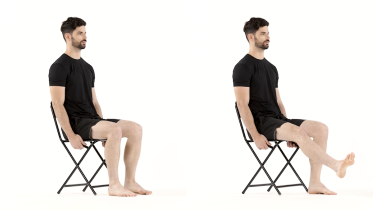 Ankle circles
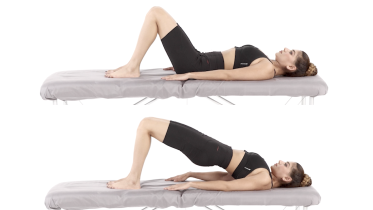 Glute bridge
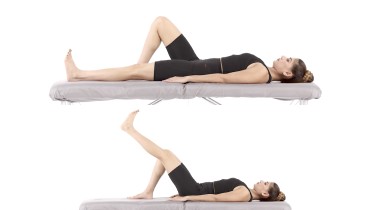 Straight leg raise
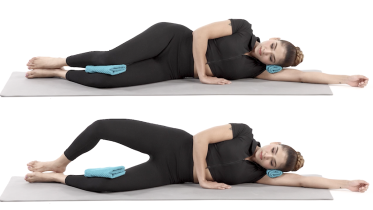 Clamshell
Stage 2: When your surgeon allows the toe to move and the foot to load
This stage begins on your surgeon's word, not on a week number, and for most people that is after the dressings come off and the stitches are out. Until then, do not pull on the big toe, stretch it or test how far it goes, and do not take the dressing off to look. Toe curls, towel scrunches and towel sweeps are the first gentle work for the muscles of the foot and the lower leg, which have done nothing for weeks. All three ask your toes to curl and grip, and their exercise pages push for a full, strong curl and a towel dragged as far as it will go. Read them more quietly than that at this stage: active movement only, inside the range your surgeon has allowed, a light grip rather than your hardest one, and no pulling or levering on the big toe. If the big toe joint itself was fused, it is not meant to bend, so keep it out of the gripping and let the smaller toes do that work. The seated calf raise starts loading the foot again in a controlled way, and it is the one to clear specifically, because it presses through the ball of the foot right over the bone that was cut. Permission to move the toe is not the same as permission to load it, so if you have been told to keep all weight off the operated foot, leave the seated calf raise out until your surgical team says the ball of that foot may take weight, and do the three toe and foot exercises on their own in the meantime. Do it with no weight on your knees at this stage, even though the exercise page shows a dumbbell resting there, because anything you put on your knees travels straight down through the ball of the foot. Sit to stand comes in at stage 3 rather than here, because standing up from a chair puts your full body weight through both feet, which is more than a partial weight bearing instruction allows. Many programs start this stage at 1 to 2 sets of 10 for the toe curls and the scrunches, a pass or two of the towel for the sweeps, and 2 sets of 10 for the seated calf raise, once or twice a day. Your physio will adjust this. Keep it short and frequent rather than long: a few minutes several times a day is better tolerated than one session. Stop if a movement is sharply painful at the operation site rather than stiff.
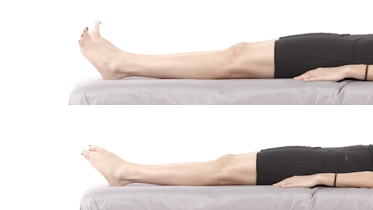 Toe curls
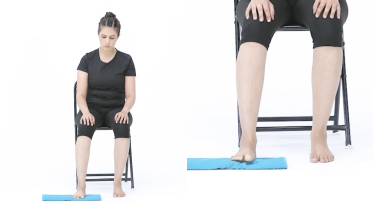 Towel scrunches
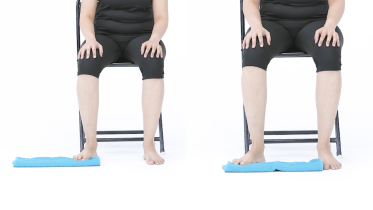 Foot towel sweeps
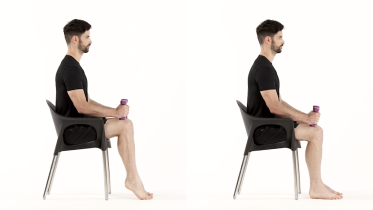 Seated calf raise
Stage 3: Walking properly again, calf and balance
For when you are walking in a normal or wide shoe and your surgeon is happy for you to take full weight. Calf raises on both feet rebuild the muscle that disappeared while you were in a surgical shoe. Be clear with yourself about what they ask of the toe, because a full calf raise already takes the big toe joint into some upward bend at the top, so this stage is not entirely off the operation site even though the harder toe work waits for stage 4. Rise only as high as the toe allows without sharp pain where the bone was cut, keep the weight spread across the ball of the foot rather than rolled to the outer edge, and treat a forefoot that is sorer the next morning as too much rather than as progress. The two calf stretches address the stiffness that comes from weeks of walking flat-footed. Balance work goes from feet together to heel to toe to standing on the operated leg, with a counter within reach, and step ups and sit to stand bring stairs and getting out of a chair back. Sit to stand belongs here rather than earlier because standing up from a chair is full weight through both feet. Many programs use 2 to 3 sets of 10 to 15 for the calf raises, 2 to 3 sets of 8 to 12 for the step ups and sit to stand, stretch holds of about 30 seconds repeated 2 to 3 times on each leg, and balance holds of 10 to 30 seconds. Strength work is often 3 days a week with a day between, and the balance work most days. Your physio will adjust this.
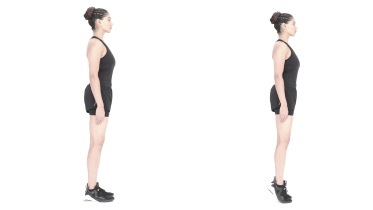 Calf raises
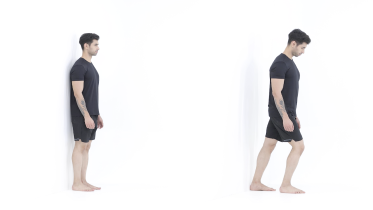 Calf stretch
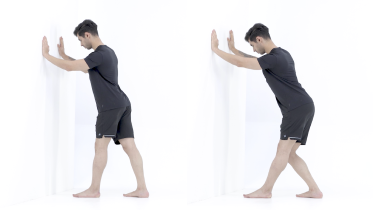 Soleus stretch
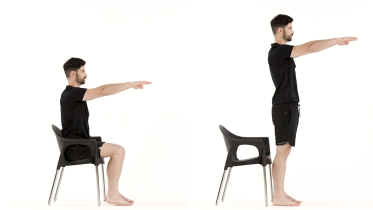 Sit to stand
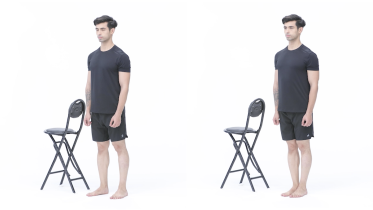 Standing with feet together
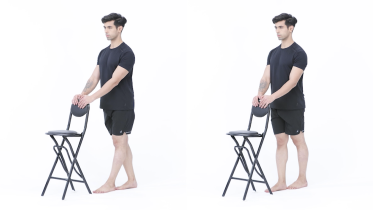 Tandem stance
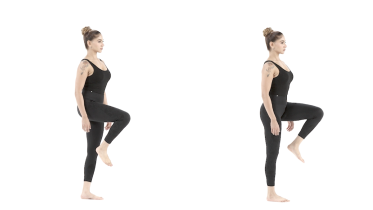 Single leg stance
 Step up
Stage 4: Push-off, and getting back to what you do
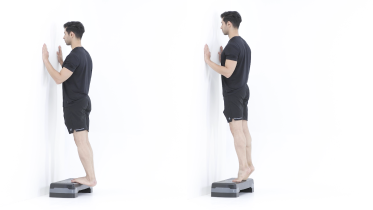
Start this stage when you are walking in an ordinary shoe without pain, the calf raises on both feet from stage 3 are comfortable for 2 to 3 sets of 10 to 15, and your surgeon is happy for you to work the toe and the front of the foot under your full weight. This is the stage that asks the operated joint to bend upward under your body weight, which is the last thing to come back after a bunion correction. The single leg heel raise is the measure to aim for, heel and toe raises and toe walking build the range under load, walking with longer steps undoes the short, flat stride you have got used to, and the calf raise on a step is the hardest version. Take them in that order rather than all at once: heel and toe raises first, then the longer steps, then the single leg heel raise, then toe walking, and the calf raise on a step last. Build into it over weeks. Two of these ask the most of the big toe bending upward with your weight on it: toe walking, and the calf raise on a step if the heels drop below the step. Clear both with your surgeon, and keep your heels level with the step rather than letting them sink below it until they say otherwise. If the big toe joint itself was fused, leave toe walking out of your program. That joint cannot bend upward at all, so the exercise cannot build the range it exists for, and what is left of it is your whole body weight held on the front of a fused joint and the smaller toe bones behind it, step after step. Get the calf work from the raises instead, and add toe walking only if your own surgeon asks for it by name rather than because the foot feels ready. The single leg heel raise page also tells you to push through the big toe side of the foot, which a fused joint cannot do: keep the weight spread across the ball of the foot instead, and still not rolled onto the outer edge. Many programs use 2 to 3 sets of 8 to 15 for the heel raises and 2 to 3 walks of 10 to 20 steps for the toe walking, on 2 to 3 days a week with a day between. Your physio will adjust this. If the toe is stiff rather than sore, keep working at it within the range your team has set rather than forcing it, and if it is getting stiffer week by week instead of looser, use the warning sign for that at the foot of this page. If it is sharply painful at the bone that was cut, back off and ask your team.
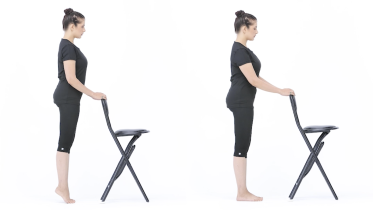 Heel and toe raises
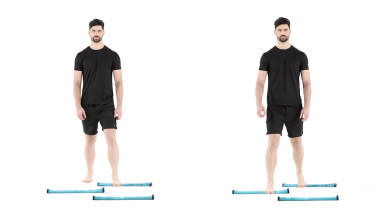 Walking with longer steps
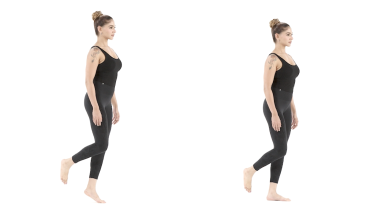 Single leg heel raise
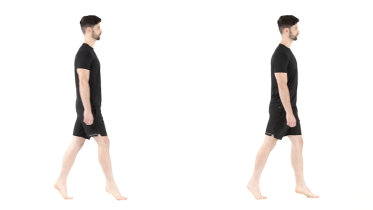 Toe walking
 Calf raise on a step
Weight bearing: the one question only your surgeon can answer
OrthoInfo is explicit that weight bearing varies by procedure, that some procedures let you walk on the foot right after surgery but only in a special surgical shoe, and that a spell with no weight through the foot at all, on crutches or a knee walker, is what many bunion operations need before the bone will heal. Its instruction has two halves, and the second one gets dropped: do not put weight on the foot, and do not stop using the supportive devices you were given, until your doctor approves. It says that weight applied too early, or without the support you were given, can shift the bones, which means the correction is lost or the bone does not heal, and it lists failure of the bone to heal fully among the complications.
So here is the floor, and it holds whatever operation you had. Until you have an instruction you are sure of, put no weight through the operated foot, keep using the shoe, boot, brace, crutches or knee walker you were given, and ring the team to ask.
How you load matters as much as how much. Weight bearing in a rigid surgical shoe is not the same as weight bearing in a trainer, so swapping footwear early changes the load you were cleared for. Comfort is not the test either, because the restriction exists to protect bone that is healing whether or not it hurts, and a foot can feel fine weeks before the bone has knitted. And a lost correction is usually quiet rather than dramatic, which is why the warning signs below include a toe that is drifting and a cast that has gone roomy as well as a crack or a sudden give.
Where surgeons genuinely differ is the speed, not the principle, and the review that looked at this says so in passing: it notes, citing work on foot and ankle surgery more widely, that weight bearing recommendations vary a great deal and that there is limited evidence to guide them (Gumuskaya and colleagues, 2025). The one trial it found compared early weight bearing, 2 weeks with no weight then 10 weeks partial, against delayed weight bearing, 6 weeks with no weight then 6 weeks partial. Both arms reached full weight bearing at 12 weeks, so the trial compared how to get there and not whether the foot needs protecting.
Foot and ankle outcome scores favored the early group at 12 weeks but the difference had gone by 26 weeks, and complications did not rise in the early group. Read it narrowly: 50 people, all having an endoscopic assisted distal soft tissue correction rather than an open osteotomy or a fusion, a single trial judged at high risk of bias, and nothing known past 26 weeks. It is a reason your surgeon may load you sooner than this page's weeks suggest. It is not a reason to load yourself.
What shoes can you wear after bunion surgery?
A surgical shoe or boot comes first, and the rest follows. OrthoInfo says you may need to restrict the types of shoes you wear permanently and that returning to tight shoes can cause the bunion to come back, which is the one piece of footwear advice on this page that is really about the long term.
What works in practice is a wide, deep shoe with a soft upper and a firm sole, bought late in the day when the foot is at its most swollen. Lace-ups or straps let you adjust as the swelling changes through the day, which slip-ons do not. Expect to need a size up or a wider fitting on the operated side for several months.
If pain has settled over the ball of the foot rather than at the big toe, read metatarsalgia, and if it has moved to the top of the foot or the arch, our pages on top of foot pain and arch pain both cover the post-operative versions of those.
What can go wrong after bunion surgery?
OrthoInfo names the risks plainly, and they are worth reading once rather than discovering one by one.
The bunion can return, particularly if the dressings are disturbed or you go back to tight shoes. Infection, with persistent fever, chills, redness or warmth around the dressing, and pain that is increasing or will not settle, which OrthoInfo describes as a sunburn type pain. Nerve injury. Stiffness of the big toe joint. Failure of the bone to heal fully. And failure to relieve the pain, which is the one nobody mentions beforehand.
The NHS adds that toes may end up weaker or stiffer, may not be perfectly straight, and that feet may still hurt.
Two of those deserve a number, because both get taken as personal failures. The bunion coming back is common, not rare: a meta-analysis of 23 studies covering 2,914 people who had hallux valgus surgery found the deformity had returned in about 1 in 4 feet, 24.9% pooled, with a confidence interval of 19.2 to 30.6% and wide variation between studies, and the predictors it could measure were the angles: how big they were before surgery, which showed a moderate relationship with recurrence, and more strongly, how fully the angle and the sesamoid bones under the joint were corrected (Ezzatvar and colleagues, 2021). Those studies measured angles on X-ray, so the figure counts toes that have drifted back whether or not they hurt, and footwear and rehabilitation were not among the things the review could measure at all. The toe can also end up over-corrected and drift the other way, away from the second toe, which is why the warning sign below says in either direction: a series of 90 feet in 60 people aged 60 or over having a distal chevron osteotomy found it in 4 feet (Seo and colleagues, 2021).
The warning signs at the foot of this page include the routes for the ones that need acting on: a wound that is not behaving, a correction that may be slipping, an infected foot, and a blood clot. Two of them are written specifically for an operated foot and go to your surgical team the same day. If you are in a cast or a boot, read the tight cast and skin under a cast lines carefully, because those two problems cannot be seen from the outside.
If the big toe joint was fused rather than realigned, the joint will not bend afterward by design, and our hallux rigidus page explains what that means for walking. If your operation involved a cast and weight bearing restrictions over several weeks, the boot, swelling and weight bearing material on our ankle fracture rehab page covers that ground in more detail.
When to see your surgeon or physio
Go back to your surgical team for anything on the warning list, and for the three things people tend to put up with instead: pain that has not begun to improve at all in the first days, a toe getting stiffer from week to week rather than looser, and bunion pain that has come back months later. All three are easier to help early.
Ask for a physio referral if you are three months out and still walking differently, if the calf on that side is visibly smaller, or if you cannot rise onto the operated foot. Check with your doctor before you start any of this if you have a heart or lung condition, or blood pressure that is not under control. If you have diabetes or reduced feeling in your feet, have the foot and the wound checked by your foot team rather than watching it yourself.
For physiotherapists
The protocol belongs to the operating surgeon and varies by construct, so get the operation note or the protocol before progressing loading, and say so to the patient rather than improvising. Establish at the first contact whether the fusion, if there was one, was the first metatarsophalangeal joint or the first tarsometatarsal joint, because the first makes big toe extension a non-goal and the second does not, and patients routinely report both as a fusion. The evidence base is five small trials at high risk of bias and nothing at all before surgery, which is worth knowing when a patient asks what the program is based on. And the deficit that persists is loaded first metatarsophalangeal extension and calf strength, so stage 4 is where the outcome is won: single leg heel raise repetitions compared side to side and weight bearing first ray extension are the two measures worth recording. Expect swelling to confound progress for months, and set that expectation at the first appointment using OrthoInfo's own 6 months to 1 year figure.
Warning signs
Get emergency help now
- Emergency: sudden, severe pain in your lower leg that is much worse than you would expect, especially after an injury or with a plaster cast or tight bandage on the leg. It may come with a tight, swollen leg, pain that gets worse when the muscle is stretched, numbness, pins and needles or weakness. Call emergency services or go to an emergency department straight away, and do not drive yourself. This can be acute compartment syndrome, which needs urgent surgery.
- Emergency: while you are in a cast or boot, your toes turn blue, white or pale, or feel cold. Do not wait to see if raising your leg helps. Go to an emergency department straight away, and do not drive yourself. The cast or boot may be cutting off the blood supply, or pressure may be building up inside the leg (compartment syndrome), and both need checking quickly.
- Part of your foot or a toe turns cold, pale, blue or black. Call emergency services or go to an emergency department straight away, and do not drive yourself, as the blood supply to the foot may be blocked.
Get help now, day or night
- In a cast or boot, the pain gets worse, your toes feel numb, tingle or burn or look more swollen, or the cast or boot feels too tight. Stop, raise your foot to about hip level and no higher, keep moving your toes and contact your surgical team or fracture clinic or get medical advice straight away. If you wear a boot, loosen the straps but keep it on. Do not prop the foot higher than that and do not put ice on it, because if pressure is building up inside the lower leg both of those cut down the blood reaching your foot. If you cannot move your toes, the pain is severe even after painkillers, or the numbness, tingling, burning or swelling has not settled within 30 minutes of raising your foot, go to your fracture clinic or an emergency department straight away, and do not drive yourself.
- Your cast or boot rubs painfully, or there is a blister-like soreness under it, or there is a bad smell, discharge or liquid coming from under the cast, or something has dropped down inside it. Contact your fracture clinic, plaster room or surgical team straight away, and out of hours go to an emergency department rather than waiting for the morning. Skin under a cast can break down where you cannot see it.
Get help today
- Same day: since your operation, your wound is oozing, leaking or has pus coming out of it, or its edges start to come apart, or your foot is tender, swollen, painful or red and it is not getting better or is getting worse, or you have a high temperature or feel hot and cold or shivery. Redness can be harder to see on brown or black skin. Contact your surgical team the same day, or get urgent medical advice if you cannot reach them. These can be signs of an infection in the wound, or deeper in a joint, a bone or around metalwork in the foot. If you feel very unwell, go to an emergency department. If you have a very high or very low temperature, shivering you cannot control, you are breathing very fast or finding it hard to breathe, you are confused or your speech is slurred, your skin, lips or tongue look blue, gray, pale or blotchy (on brown or black skin this can be easier to see on the palms of the hands or soles of the feet), or you have a rash that does not fade when you press it, call emergency services, as this can be sepsis.
- Same day: your dressing loosens, slips, comes off or gets wet, or it is soaked with blood or other fluid. Do not re-wrap it, pad it or replace it yourself, and keep your weight off that foot until you have been seen. Contact your surgical team the same day, or get urgent medical advice if you cannot reach them. The bandages are holding your toe in the position it was corrected into, which is why OrthoInfo says to contact your doctor if a dressing loosens, comes off or gets wet, or is moistened with blood or drainage, and says that interfering with proper healing could cause the bunion to come back.
- Same day: you have a plate, screws or a wire in your foot and the skin over the metal is thinning, shiny, dusky or darkening, has blistered or opened, is weeping fluid, or you can see or feel bare metal through it. Contact your surgical team the same day, or get urgent medical advice if you cannot reach them, and keep the area clean, dry and covered until you are seen. Skin that is breaking down over metalwork can let infection reach the bone. If you also have a high temperature or feel hot, cold or shivery, or redness is spreading up your foot or leg, go to an emergency department.
- Same day: since your operation, you felt a crack, snap or sudden give in the operated foot, or it has started to give way under you, or you suddenly cannot put weight through it when you could before, or the shape of the foot is changing, with the arch dropping again, a toe that was straightened shifting back, or the foot starting to look out of line or to sit differently in a boot or cast, or a boot or cast that fitted starts to feel loose and roomy. Bones that were cut, moved or fused, and tendons that were repaired or moved, are held in place by screws, plates, wires or stitches while they knit, and a correction can slip without any new injury and without a snap. It is put right more easily when it is found early. Stop the exercises, keep your weight off that foot and contact your surgical team the same day, or get urgent medical advice if you cannot reach them. If the foot looks clearly out of shape, or you cannot stand on it and cannot reach anyone, go to an urgent care center or an emergency department.
- The ankle or foot is hot, red and swollen, or you have a fever or feel unwell. Get medical help the same day, and go to an emergency department if you feel very unwell. If you have a very high or very low temperature, shivering you cannot control, you are breathing very fast or finding it hard to breathe, you are confused or your speech is slurred, your skin, lips or tongue look blue, gray, pale or blotchy (on brown or black skin this can be easier to see on the palms of the hands or soles of the feet), or you have a rash that does not fade when you press it, call emergency services, as this can be sepsis.
- A calf or thigh that is newly swollen or getting more swollen, warm, tender, red or darker than usual, has swollen veins that are sore to touch, or has a throbbing or cramping pain that does not fit your injury or condition, or that feels different from normal muscle soreness after exercise. This can be a sign of a blood clot (deep vein thrombosis), especially after surgery, an injury, time in a cast or boot, a long trip or a spell of being much less mobile than usual. Get medical advice the same day. If you are also short of breath or have chest pain, call emergency services.
- Same day: you have diabetes or numb feet and find a new blister, cut or sore on your foot, especially one you did not feel, a wound that smells or is leaking, or new pain in your foot that you cannot explain. Get it seen by your doctor or foot team the same day. If you also have a fever or feel very unwell, redness is spreading up your foot or leg, or part of your foot or a toe turns black, go to an emergency department.
- Same day: your cast feels too loose or uncomfortable, cracks, softens, gets wet or itches badly. Ring your surgical team, fracture clinic or plaster room and ask to be seen, and go to an emergency department if they cannot see you that day. A cast that has gone loose or soft may no longer be holding the bones that were cut or fused in the position they were set in, so keep your weight off that leg until you have been seen, and do not cut, pad or adjust it yourself.
Book an appointment
- Since your operation, your foot or ankle is getting more painful rather than less, often with a burning pain that feels far worse than the operation would explain, the skin becomes very sensitive to light touch, bedclothes or a change in temperature, or the foot changes color, temperature, swelling or sweating compared with the other one, or looks shiny. See your doctor or physio as soon as you can, within a few days at most, as this can be complex regional pain syndrome (CRPS) and early treatment may help.
- Within a few days: your pain has not started to improve at all in the first days after your operation, or it is easing and then getting worse again, and you have none of the wound or infection signs above. This is not an emergency, but speak to your surgical team within the next few days rather than waiting for your next appointment, because OrthoInfo's own advice is to raise it with your doctor when pain has not begun to settle a few days after the operation. Pain that is not settling on the expected curve is worth a look rather than something to get through.
- Within a few days: your big toe is getting stiffer from week to week rather than looser, or it will not bend as far as your surgeon or physio expects and is not improving. This is not an emergency, but contact your surgical team or physio within the next few days. Stiffness of the big toe joint is one of the complications OrthoInfo names after bunion surgery, and it is easier to work on early than late. Do not force the toe or stretch it harder on your own: bone that has been cut, moved or fused is still knitting for weeks, and the movement you get back comes from graded work your team sets, not from pulling on the toe. If the big toe joint itself was fused, it is not meant to bend at all, so ask your team what movement you should expect before you judge it as stiff.
- Months after the operation, the bunion pain has come back, the toe is drifting out of line again in either direction, or ordinary shoes still hurt. This is not an emergency, but ask your surgical team for a review in the next week or two rather than assuming nothing more can be done. A bunion coming back is one of the recognised complications of the operation and not a sign you have done something wrong: OrthoInfo lists recurrence of the bunion among them and the NHS says bunions sometimes come back after surgery. Going back to tight or pointed shoes, and disturbing the dressings while they are still holding the toe in position, are the two parts of it you can affect yourself.
Common questions
How long does bunion surgery recovery take?
Longer than the operation suggests, and the two main sources agree on the shape of it. OrthoInfo says full recovery can take up to 6 months, that dressings or a brace are needed for 6 to 12 weeks, that sutures come out about 2 weeks after surgery, and that swelling is common for 6 months to 1 year. The NHS advises resting with the feet raised as much as possible for at least 2 weeks, staying off work for 2 to 12 weeks, and avoiding sport for 3 to 6 months. OrthoInfo also says follow-up visits run for several months and sometimes up to a year. So the honest summary is weeks to be comfortable, months to be normal, and up to a year for the last of the swelling.
When can I walk after bunion surgery?
It depends on which operation you had, and nobody can answer it from a page. OrthoInfo says weight bearing varies by procedure: some people walk right after surgery but only in a special surgical shoe, while others must not put weight on the foot at all and use crutches or a knee walker. It is clear on the key point, which is not to put weight on the foot and not to stop using the supportive devices you were given until your doctor approves, and it says that weight too early or without proper support can shift the bones, so the correction is lost or the bones do not heal. If you are not sure what you were told, the safe default is the restriction: no weight through that foot, keep using the shoe, boot or crutches, and ring the team rather than guessing. Comfort is not evidence the bone has healed.
When can I drive after bunion surgery?
The NHS advises avoiding driving for 6 to 8 weeks after bunion surgery. OrthoInfo says driving may be restricted until the bones heal and notes this particularly after right-foot surgery, without giving a number of weeks. Treat both as a starting point rather than a permission, because the test is whether you can brake hard with that foot, without pain and without hesitating, and because in several countries your insurance and your licensing authority have their own view on driving after an operation. Two things rule it out before you even get to the test: you cannot brake properly in a surgical shoe, a boot or a cast, and strong painkillers affect driving, so both have to be behind you first. Ask your surgeon to put the date in writing and check it with your insurer if you need to drive for work.
How long will I be off work after bunion surgery?
The NHS gives a range of 2 to 12 weeks, which is wide because the answer depends on your job and on which operation you had. A desk job you can reach without driving, and where you can keep the foot raised, is at the short end. Work that involves standing all day, walking on hard floors, safety boots or driving is at the long end. The thing that catches people out is the foot swelling by the afternoon once they go back, so a phased return with the foot up at lunchtime works better than a full week on day one.
What shoes can I wear after bunion surgery?
A surgical shoe or boot first, then a wide, deep, soft shoe, and quite possibly not your old ones ever again. OrthoInfo says you may need to restrict the types of shoe you wear permanently, and that going back to tight shoes can make the bunion come back. One randomized trial in the systematic review of hallux valgus rehabilitation compared a reverse-camber shoe with a rigid flat-soled shoe for six weeks after a scarf and Akin osteotomy or a big toe joint fusion: pain scores did not differ, and neither did overall satisfaction, but satisfaction with mobility was 86% with the rigid flat-soled shoe against 61% with the reverse-camber one, and with stability and falls risk 90.7% against 69.6% (Gumuskaya and colleagues, 2025). Buy shoes late in the day when your foot is at its most swollen, and buy for the wider foot.
Can you have bunion surgery on both feet at the same time?
It is done routinely, and the honest answer is that what has been published comparing it is retrospective rather than a randomized trial. Neither the NHS page nor the OrthoInfo page on bunion surgery addresses doing both feet together, and the 2025 review of rehabilitation after hallux valgus surgery is about rehabilitation rather than surgical timing, so it does not speak to the question either way. The nearest evidence we have found is a retrospective comparison of 90 feet in 60 people aged 60 or over having a distal chevron osteotomy, which found the correction achieved and the complications much the same whether one foot or both were done in one operation (Seo and colleagues, 2021). That is one center, one procedure and one age group, so read it as a reason the question is reasonable to ask rather than as an answer for your foot. The practical side is the part nobody warns you about: with both feet operated on you cannot offload one onto the other, so if you are told to keep weight off, you are keeping it off both, which usually means a wheelchair or a walking frame rather than crutches, and someone at home. Getting to the bathroom, standing at a sink and managing stairs all become harder. Ask your surgeon how they handle it and what help you will need.
What exercises should I do after bunion surgery?
The ones your surgeon and physio clear, starting with the rest of the leg and moving to the foot. OrthoInfo says specific exercises restore strength and range of motion and that they should start slowly under guidance. The published evidence is thin: a 2025 systematic review found five randomized trials with 279 participants between them, no trials at all of exercise before surgery, and limited low-quality evidence that continuous passive motion and dynamic splinting improve the range of movement at the big toe joint (Gumuskaya and colleagues, 2025). Its quality appraisal is blunt: all five trials returned a high risk of bias, with the problems being departures from the intended treatment, how outcomes were measured, and which results got reported. So this program follows the principles, not a proven protocol.
Is it normal for my foot to still be swollen months after bunion surgery?
Yes, and this is the single most common worry we hear. OrthoInfo says swelling is common for 6 months to 1 year after surgery. It is usually worse by the end of the day and after a long spell standing, and raising the foot when you sit still helps. What is not ordinary swelling is a foot that is hot, red and getting worse, or swelling with a temperature or with a wound that is leaking, and the warning signs on this page say what to do about those. A newly swollen, warm or tender calf is different again and needs advice the same day.
Should I have exercises before bunion surgery?
There is no evidence either way, which is an unusual thing to be able to say so cleanly. The 2025 systematic review of preoperative and postoperative rehabilitation in hallux valgus looked for trials of interventions before surgery and found none, and concluded that no evidence supports preoperative physical or mechanical interventions (Gumuskaya and colleagues, 2025). That is an absence of research, not a finding that it does not help. In practice, getting the calf and hip strong and sorting out how you will get around at home are both sensible, and neither costs you anything.
References
- NHS. Bunions. https://www.nhs.uk/conditions/bunions/
- American Academy of Orthopaedic Surgeons. Bunion Surgery. OrthoInfo. https://www.orthoinfo.org/en/treatment/bunion-surgery/
- Gumuskaya O, Peterson B, Donnelly H, Unver B, Lafferty D, Tehan P. Preoperative and Postoperative Physical and Mechanical Rehabilitation Interventions in Hallux Valgus: A Systematic Review. Journal of Foot and Ankle Research. 2025;18(3):e70083. https://doi.org/10.1002/jfa2.70083
- Ezzatvar Y, Lopez-Bueno L, Fuentes-Aparicio L, Duenas L. Prevalence and Predisposing Factors for Recurrence after Hallux Valgus Surgery: A Systematic Review and Meta-Analysis. Journal of Clinical Medicine. 2021;10(24):5753. https://doi.org/10.3390/jcm10245753
- Seo JH, Lee HS, Choi YR, Park SH, Lee JH, Chun H. Outcomes of Simultaneous Bilateral vs Unilateral Distal Chevron Metatarsal Osteotomy in Hallux Valgus Patients Aged 60 Years and Over. Foot and Ankle International. 2021;42(7):919-928. https://doi.org/10.1177/1071100721996707
- NHS. DVT (deep vein thrombosis). Page last reviewed 30 April 2026. https://www.nhs.uk/conditions/deep-vein-thrombosis-dvt/
- NHS. Compartment syndrome. Page last reviewed 4 September 2026. https://www.nhs.uk/conditions/compartment-syndrome/
- North Bristol NHS Trust. Care of plaster casts. Patient information, October 2024. https://www.nbt.nhs.uk/care-of-plaster-casts
Written and checked by the PocketPhysio editorial team. Last updated 2026-10-28.
This page is general education, not a diagnosis or a personal treatment plan. See a physiotherapist or doctor for advice about your own situation.