Toe walking
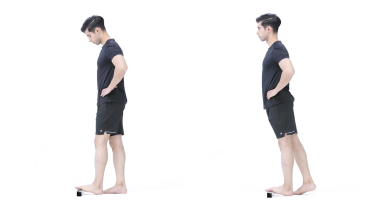
Toe walking as an exercise means walking with your heels lifted, up on the balls of your feet. Your calves get no rest for the whole walk, and your ankles make small corrections with every step to keep you steady. All you need is a clear floor. It usually comes into ankle and calf programs once ordinary calf raises feel easy.
How to do the toe walking
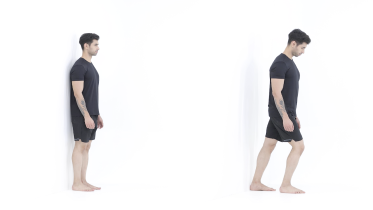
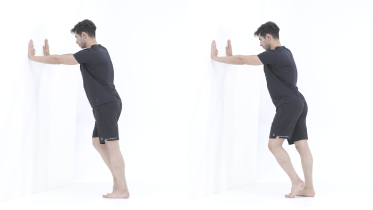
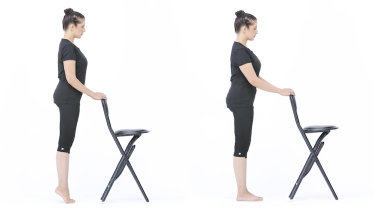
- Stand tall on a clear, flat floor. If your balance is unsure, walk alongside a kitchen counter or a hallway wall so you can hold on.
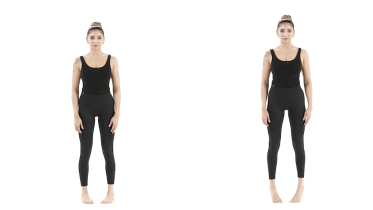
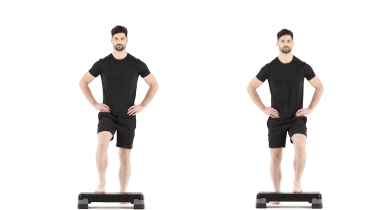
- Rise up onto the balls of your feet, lifting your heels as high as you comfortably can.
- Walk forward with short, steady steps, keeping your heels off the floor the whole way.
- Stay upright, with your arms relaxed by your sides and your eyes looking ahead rather than down at your feet.
- At the end of the walk, lower your heels slowly and rest before the next length.
What you should feel
Your calves working harder as the walk goes on, and your ankles making small adjustments to keep you balanced. A mild burn in the calves toward the end is normal.
Common mistakes
- Letting the heels sink lower and lower as the calves tire.
- Leaning forward from the hips or bending the knees.
- Rolling onto the outer edge of the foot.
- Taking long, rushed steps instead of short controlled ones.
How often
Many programs start with 2 to 3 walks of 10 to 20 steps, or about 20 to 30 seconds, with a rest in between, once a day or a few days a week. Your physio will adjust this.
Stop and check with your physio if
- Sharp pain in the Achilles tendon, heel, arch or ball of the foot.
- Your ankle gives way, or you feel close to falling.
- Heel or Achilles pain that is clearly worse the morning after.
- A sudden pop or snap at the back of your ankle or heel, a feeling that someone kicked you there, or sudden pain there after which you cannot push off or rise onto your toes on that leg. Stop, take the weight off that leg carefully and go to an urgent care center or emergency department the same day, even if you can still walk, as this can be a torn Achilles tendon.
From the clinic
The person in the video walks without support, while the voice guide suggests holding on to something stable if you need it. Start next to a counter or along a wall and let go only when you feel steady. Calf raises build the calf strength first, and single leg stance trains the balance. If you have osteoporosis, numbness in your feet, or have fallen in the past year, keep a hand on the support the whole time and ask your physio before you walk without it.
This page covers toe walking as an exercise for adults. If a child walks on tiptoe most of the time, or an adult has started walking that way and cannot easily bring the heels down, see a doctor.
Written and checked by the PocketPhysio editorial team. Last updated 2026-09-28.
This page is general education, not a diagnosis or a personal treatment plan. If you have pain, an injury or a health condition, see a physiotherapist or doctor before starting new exercises.