
Turf toe: recovery, taping and rehab exercises
Warning signs, and when to get help
What is turf toe?
Turf toe is a sprain of the main joint of the big toe, the one where the long bone of the foot meets the first bone of the toe. OrthoInfo describes it as happening when the toe is forced upward into hyperextension, such as pushing off in a sprint with the toe caught flat on the ground.
The tissue that gets injured has a name worth knowing, because it explains everything else on this page. OrthoInfo calls it the plantar complex, and it is made up of the plantar plate, a thick fibrous pad under the joint that limits upward bending, the collateral ligaments either side, the flexor hallucis brevis tendon that gives you strength at push-off, and the two sesamoids, small bones sitting inside that tendon that help carry your weight. Push the toe up too far and the pad under it takes the strain.
The name comes from American football, and OrthoInfo links its rise there to artificial turf, which is harder and less shock absorbent than grass, and to the more flexible shoes made for those surfaces, which give agility at the cost of forefoot stability. But it is not a football injury only. OrthoInfo says it can happen in any sport or activity where the forefoot is fixed on the ground, the heel is raised and force pushes the big toe upward, which covers sprinting, dancing, martial arts, soccer, rugby and gymnastics.
The incidence in elite sport is lower than its reputation suggests. In five seasons of American college football, the rate was 0.062 injuries per 1000 athlete-exposures, and injuries were nearly 14 times more likely in games than in practices, with running backs and quarterbacks most affected (George and colleagues, 2014). The same study found a higher rate on third generation artificial turf, 0.087, than on natural grass, 0.047.
What are the grades of turf toe?
OrthoInfo sets out three, and the grade is the single most useful thing to know about your own injury.
Grade 1 is a stretch of the plantar complex: pinpoint tenderness, slight swelling. In grade 2 it is partially torn, with more widespread tenderness, moderate swelling and bruising, and movement that is limited and painful. Grade 3 is a complete tear, with severe tenderness, swelling and bruising, and moving the big toe is difficult and painful.
The grade tells you more than how sore the toe is. It sets how long this takes and how much protection the joint needs. A grade 1 is often a stiff shoe and some tape. A grade 3 is a boot or cast that holds the toe partly pointed down for weeks.
How long does turf toe take to heal?
The sources genuinely disagree, which is worth saying plainly rather than averaging into one tidy number.
OrthoInfo says grade 1 injuries often allow athletes to keep playing in a stiff-soled shoe, grade 2 injuries typically need 3 to 14 days of rest before a return to play, and grade 3 injuries usually need several weeks of immobilization in a walking boot or cast, without giving a figure for how many weeks. A 2023 review of turf toe in athletes gives expected time lost as about 3 to 5 days for grade 1, 2 to 4 weeks for grade 2, and 4 to 6 weeks or more for grade 3, and sets non-operative rehabilitation at three phases lasting up to 10 weeks (Gupta and colleagues, 2023). An older review puts a partial tear at about 2 weeks to recover and a complete tear at a minimum of 10 to 16 weeks (McCormick and Anderson, 2010).
Only one of these numbers was actually measured in a population rather than estimated by experts. Across five NCAA seasons of men's college football, the mean time lost per turf toe injury was 10.1 days, or somewhere between about 8 and 12 days once the uncertainty around that average is allowed for, taking all grades together (George and colleagues, 2014). An average built mostly from mild and middling sprains is not the figure for a bad one, and it describes young male athletes in a sport with medical staff on hand, which may not be you.
The practical version: days for a mild sprain, a few weeks for a partial tear, and months for a complete one. Get it graded, then plan from the grade.
How is turf toe diagnosed?
By examination first. OrthoInfo describes the clinician asking how the injury happened, checking swelling, bruising and range of motion, and testing for instability by moving the toe in several directions, sometimes comparing it with the healthy side and sometimes using a numbing injection if the examination is too painful.
Then imaging. X-rays look for bony pull-off fractures and for fractures or displacement of the sesamoids. OrthoInfo says MRI is used for grade 2 or 3 injuries, or when the X-rays show something abnormal, because it shows the soft tissue and cartilage far better. If somebody has offered you an MRI for a sore big toe, that is usually because they suspect the pad under the joint has torn, not because they are being thorough.
How to use this program
Read the warning signs at the foot of this page before you start. If your toe was operated on, follow the plan from your surgeon and physio instead of this one. If you have not had the toe looked at and you cannot put weight on the foot, or it is a different shape, get that done first.
Pick the stage that matches you today, and start at stage 1 if you are not sure. Move up when the current stage feels easy and the toe settles well by the next morning. Each exercise page gives a typical starting dose, and as a rough guide many programs use 2 to 3 sets of 10 to 15 repetitions. Your physio will adjust the exercises and the numbers to suit you.
The pain rule here is about location. Muscle fatigue in the calf or the arch is what you want. Sharp pain under the big toe joint, where the injury is, means the load reached the healing tissue. OrthoInfo says physical therapy for a grade 3 injury should start as soon as symptoms allow and describes early joint movement as important, so this is not a case for waiting until it is completely pain free before doing anything.
Breathe normally through every repetition rather than holding your breath, especially if you have high blood pressure. For the balance work, keep a hand on a kitchen counter if you are not steady, and practice only when somebody else is at home if you have fallen in the past year.
The exercise program
Stage 1: Protect it and keep the foot alive
For the first days to weeks, depending on the grade. The injured tissue sits under the joint and is loaded by the toe bending upward, so nothing here bends the toe back. Ankle pumps keep the calf and the circulation working, toe curls and towel scrunches ask the small muscles under the foot to work in a shortened position, and the wall press loads the calf with the foot flat. Many programs use 2 to 3 sets of 10, or holds of 5 to 10 seconds, once or twice a day. Your physio will adjust this. Keep a stiff-soled shoe on for walking, and if you were given a boot, wear it as your team asked. If you are in a boot or a cast that holds the big toe partly pointed down for a grade 3, ask your team which of these they want you doing, because holding the joint still is part of the treatment at that point and the toe curls and the towel scrunches work the very tendon that runs under the injured joint.
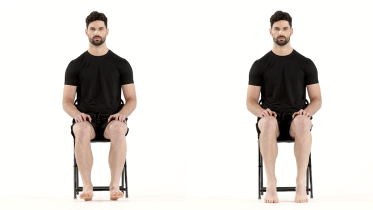 Ankle pumps
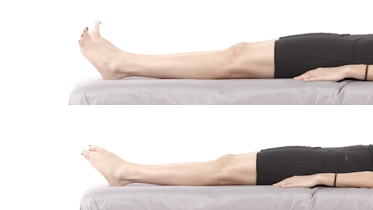 Toe curls
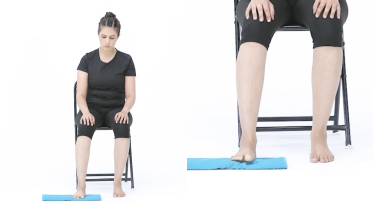 Towel scrunches
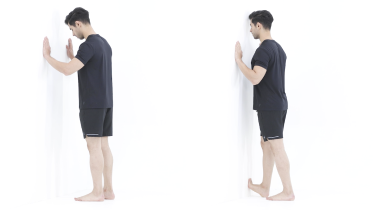 Isometric calf press against a wall
Stage 2: Get the calf and the arch loading again
When the sharp pain has settled and walking in a stiff shoe is comfortable. Towel sweeps work the arch, the two calf raises rebuild the muscle you lost, and the two calf stretches matter more than people expect here: a tight calf makes you roll over the big toe sooner and harder in every step. Be aware that a full calf raise on both feet already takes the big toe into some upward bend at the top, so this stage is not completely off the injured tissue. That is why the order matters: start with the knee bent and the heel barely leaving the floor, and only go to a full rise on both feet once that is comfortable. Many programs use 2 to 3 sets of 10 to 15, three days a week for the strength work. Your physio will adjust this.
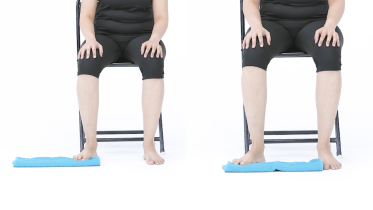 Foot towel sweeps
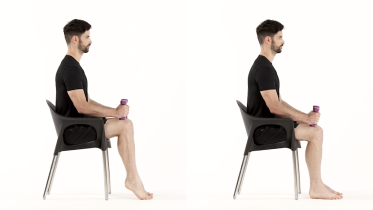 Seated calf raise
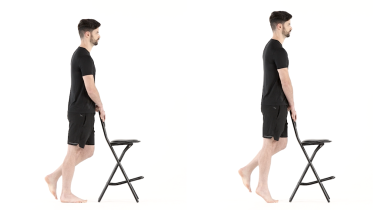 Bent-knee calf raise
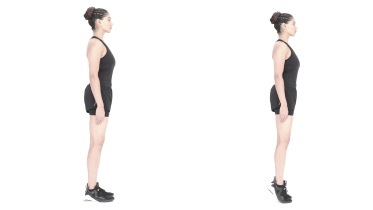 Calf raises
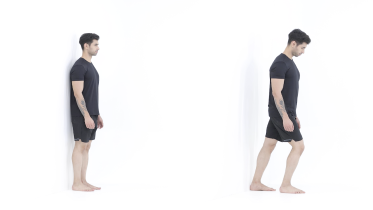 Calf stretch
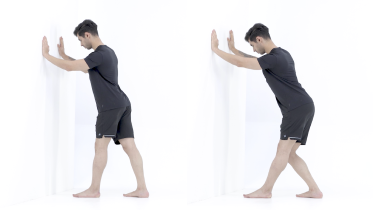 Soleus stretch
Stage 3: Push-off, balance and taking the toe back into bend
Start when you can walk normally in an ordinary shoe without thinking about the toe. This is the first stage that deliberately asks the big toe to bend upward under your full weight on one leg, which is the movement the injury does not like, so build into it over two to three weeks rather than testing it in one session. The single leg heel raise is the key exercise: rising fully onto one foot puts your weight through the big toe joint. Heel and toe raises and toe walking add controlled range, and the balance work restores the steadiness that goes missing when you have been favoring one side. Work through the stage in this order rather than all at once: the heel and toe raises and the balance work first, then the single leg heel raise, then toe walking and the calf raise on a step last, because those two keep the toe at the far end of its upward bend for the longest. Many programs use 2 to 3 sets of 8 to 12 for the loaded work, on 2 to 3 days a week with a day between, and balance holds of 20 to 30 seconds a few times on each leg. Your physio will adjust this. Stop a set if you get sharp pain under the joint rather than muscle effort.
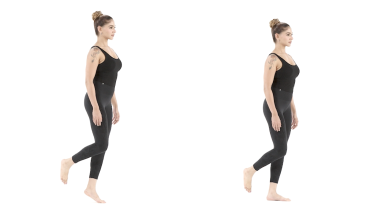 Single leg heel raise
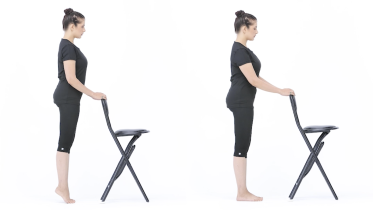 Heel and toe raises
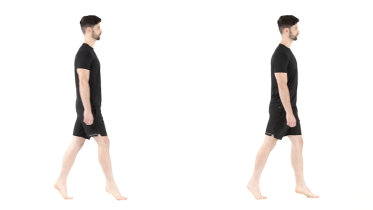 Toe walking
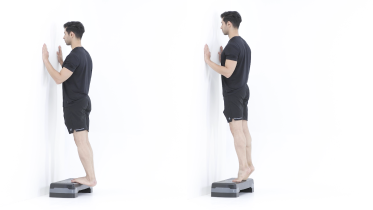 Calf raise on a step
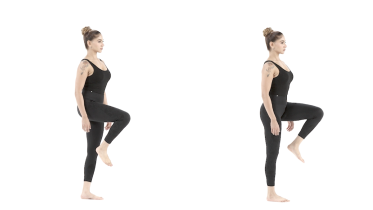 Single leg stance
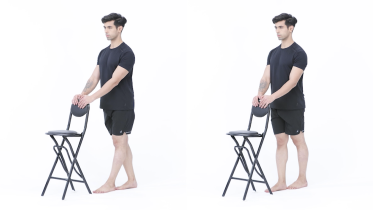 Tandem stance
Stage 4: Hopping, sprinting and back to sport
For when you can do repeated single leg heel raises on the injured side without pain and the toe is no worse the next morning. Pogo hops teach a quiet, stiff landing, the single leg hop and hold tests whether you can absorb it on one leg, and fast feet and skater hops bring in the push-off and change of direction that a sprint start demands. Start with two sessions a week, well apart, and add volume before you add speed. Many programs begin at 2 to 3 sets of 10 to 20 landings for the hopping work and 3 to 5 rounds of 15 to 30 seconds for the fast feet, resting fully between sets. Your physio will adjust this, and each exercise page carries its own numbers. Keep the stiff insert or the taping in your boot for the first few weeks back: it is support while you build, not a sign of failure. Jumping and hopping also load the joints, the bones and the pelvic floor. If you have osteoporosis or have had a fall in the past year, ask your physio before you do any hopping. If you have had a hip or knee replacement, get the go-ahead from your surgeon before you try hopping. Many surgeons advise against jumping and hopping after a joint replacement for good, not just for the first months, because each landing sends high impact through the new joint. If you are pregnant, have had a baby in the past year, or leak urine when you jump, cough or sneeze, check with your midwife or physio before you start this stage. Stop the hopping and speak to your physio if urine leaks while you are doing it, or if you feel pressure or heaviness low in your pelvis. After having a baby, postnatal guidance usually leaves jumping and hopping until at least 3 months after the birth, once a pelvic floor check shows you are ready. With a heart condition or high blood pressure, check with your doctor before you start.
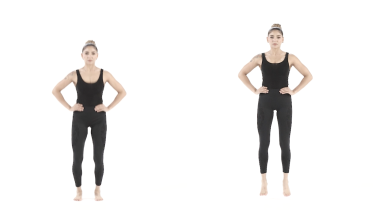 Pogo hops
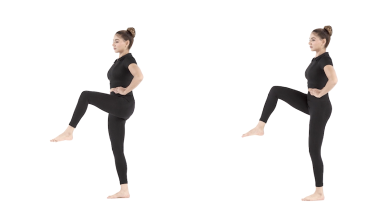 Single leg hop and hold
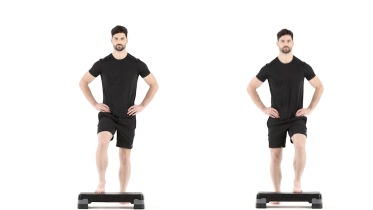 Fast feet forward and back
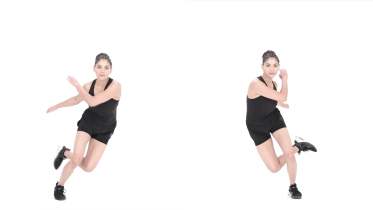 Skater hops
Taping, a stiff sole and what they are actually for
Both do the same job: they stop the big toe bending upward so the healing tissue is not stretched with every step. OrthoInfo describes taping the big toe to the smaller toes for a grade 1 injury, along with a stiff-soled shoe and a thin graphite insert with a rigid forefoot to add stability.
A few things we would tell you in clinic. The insert is more reliable than the tape, because it does not come loose and does not need redoing before every session. A stiff shoe you already own, such as a walking boot or a firm-soled work shoe, often beats anything you buy. And the point of all of it is to let you keep walking and keep training around the injury, not to let you train through it.
If you were given a walking boot, that is a step up from a stiff sole. OrthoInfo describes a boot keeping the joint still for up to a week in a grade 2, and several weeks for a grade 3, with the toe held partly pointed down. When it comes off is your team's decision.
When turf toe needs surgery
It usually does not. Fewer than 2% of these injuries end up being operated on, in both the college football surveillance data and the 2023 review (George and colleagues, 2014; Gupta and colleagues, 2023).
OrthoInfo says surgery may be considered when symptoms persist or athletic performance is affected, and that it is most often recommended for larger grade 3 injuries, naming a severe tear of the plantar complex, a sesamoid fracture, vertical instability of the joint, a loose bony chip, cartilage damage, and a new or worsening bunion. The procedure depends on what is damaged, and the goal is to repair the soft tissue and restore joint motion.
This page does not carry a post-operative program, and that is deliberate. The 2023 review describes operative rehabilitation as four phases lasting up to 20 weeks, and the dates in it belong to the surgeon who did the repair. If you have had the operation, ask your team for their protocol and work from that.
Other things that cause big toe pain
Turf toe is not the only thing that hurts there, and some of the others change what you should do.
Pain under the big toe rather than on top of the joint, especially after a build-up in running or dancing rather than one event, can be the sesamoids, and the warning signs on this page say what to do about that. A big toe joint that has got stiff and sore gradually over years, with a bony lump on top, is more likely to be arthritis, covered on our hallux rigidus page. A toe drifting sideways with a bump on the inner edge is a bunion, and our bunion page has its own program.
If the pain is spread across the ball of the foot rather than at the big toe joint, read metatarsalgia and Morton's neuroma. Pain across the top of the foot after a jump in training is covered on top of foot pain, and pain under the arch and heel on our plantar fasciitis page.
Getting back to sport
Impact comes back on what the toe can do, not on the date. The gates are walking normally in an ordinary shoe, then repeated single leg heel raises on the injured side without sharp pain under the joint, then hopping, then straight line running, then cutting and sprint starts. Each one earns the next.
Two details save people from going round again. Keep the stiff insert or the taping in for the first few weeks back, because the loads in a game are much higher than in training. And look at the shoe you got hurt in: if it bends easily at the ball of the foot and you play on artificial turf, that is part of the story. Our return to running protocols guide covers the build-up in more detail.
When to see a physio or doctor
Get it seen within a day or two of the injury if you cannot push off, the toe is badly swollen and bruised, or it feels unstable, because grading it early is what makes the rest of the plan sensible. Get it seen the same day if you cannot put weight on the foot or the toe looks a different shape.
Later on, go back if push-off is still painful after six weeks, if the toe will not bend as far as the other one, or if it has started to drift out of line or to cock upward. Check with your doctor before you start if you have a heart or lung condition, or blood pressure that is not under control, and if you have diabetes or reduced feeling in your feet, have the foot looked at rather than managing it at home.
For physiotherapists
Grade the injury and set expectations from it, because the published timelines run from days to months across the grades and patients will have read the shortest one. The rehabilitation question that decides the outcome is tolerance to loaded first metatarsophalangeal extension, so progress it deliberately in stage 3 rather than avoiding it and then discovering the deficit at return to sport. Check the sesamoids and the medial collateral ligament as well as the plantar plate: a retrospective MRI series found that grade 2 or 3 plantar ligamentous complex injury, grade 2 or 3 medial collateral ligament injury and collegiate or professional sport participation were each associated with surgical management (Edwards and colleagues, 2023). Footwear and playing surface belong in the plan, not in the advice sheet.
Warning signs
Get emergency help now
- Part of your foot or a toe turns cold, pale, blue or black. Call emergency services or go to an emergency department straight away, and do not drive yourself, as the blood supply to the foot may be blocked.
Get help today
- The foot is hot, red and swollen, or you have a fever or feel unwell. Get medical help the same day, and go to an emergency department if you feel very unwell. If you have a very high or very low temperature, shivering you cannot control, you are breathing very fast or finding it hard to breathe, you are confused or your speech is slurred, your skin, lips or tongue look blue, gray, pale or blotchy (on brown or black skin this can be easier to see on the palms of the hands or soles of the feet), or you have a rash that does not fade when you press it, call emergency services, as this can be sepsis.
- The big toe joint suddenly becomes hot, red, swollen and very painful, even if you did not hurt it, or you have big toe pain with a high temperature or feel hot, cold or shivery. Get medical advice the same day, and go to an emergency department if you feel very unwell. This is often gout, but it can be a sign of infection in the joint, which needs treatment quickly. Do not exercise the toe until it has been checked.
- The pain started with a fall, a knock or a stubbed toe, and the toe is swollen, bruised or a different shape, or you cannot put weight on the foot. Get it checked the same day.
- Same day: you have diabetes or numb feet and find a new blister, cut or sore on your foot, especially one you did not feel, a wound that smells or is leaking, or new pain in your foot that you cannot explain. Get it seen by your doctor or foot team the same day. If you also have a fever or feel very unwell, redness is spreading up your foot or leg, or part of your foot or a toe turns black, go to an emergency department.
- A calf or thigh that is newly swollen or getting more swollen, warm, tender, red or darker than usual, has swollen veins that are sore to touch, or has a throbbing or cramping pain that does not fit your injury or condition, or that feels different from normal muscle soreness after exercise. This can be a sign of a blood clot (deep vein thrombosis), especially after surgery, an injury, time in a cast or boot, a long trip or a spell of being much less mobile than usual. Get medical advice the same day. If you are also short of breath or have chest pain, call emergency services.
Book an appointment
- Pain focused under your big toe, on the ball of the foot, rather than on top of the joint, especially after a sudden increase in running, dancing, walking or standing, or if you have thin bones (osteoporosis). Stop running and jumping, cut down on walking and standing, and see a doctor within a few days, as this can be the two small bones in the tendon under the joint (the sesamoids) rather than the joint itself, and they can be inflamed or cracked (OrthoInfo, Sesamoiditis and Sesamoid Fracture). Those two bones are hard to read on an X-ray, so ask what the plan is if the first one looks normal. If the pain started with a knock, or with the toe being bent sharply backward, use the same-day line above instead.
- You have new numbness, tingling, burning or loss of feeling in the foot or toes. Book an assessment with a doctor or physio in the next week or two. If it came on over hours or days, started after an injury, is spreading, or comes with weakness in the foot or toes, get medical advice the same day.
- The big toe has become weak at push-off, is drifting out of line, has started to cock upward, or will not bend as far as the other one, weeks or months after the injury. This is not an emergency, but ask your doctor or physio for a review in the next week or two, because lack of push-off strength, stiffness, a bunion and a cocking up of the big toe are the long-term problems OrthoInfo names after a turf toe, and a review can check whether the toe needs more protection, a different plan or a surgical opinion.
Common questions
How long does turf toe take to heal?
The grade sets the answer and the published figures do not agree closely. OrthoInfo says a grade 1 injury often lets an athlete keep playing in a stiff-soled shoe, that a grade 2 typically needs 3 to 14 days of rest before returning to play, and that a grade 3 usually needs several weeks of immobilization. A 2023 review of turf toe in athletes puts expected time lost at about 3 to 5 days for grade 1, 2 to 4 weeks for grade 2, and 4 to 6 weeks or more for grade 3 (Gupta and colleagues, 2023), and an earlier review gives at least 10 to 16 weeks for a complete tear (McCormick and Anderson, 2010). The one figure actually counted rather than estimated comes from five seasons of American college football, where the mean time lost was 10.1 days across all grades (George and colleagues, 2014). Take the spread seriously: this is an injury where the grade matters more than the calendar.
How do I know if my big toe is sprained or broken?
You do not, from the outside, and this is one worth getting an X-ray for. A sprain and a break can both give you a swollen, bruised, painful toe. OrthoInfo says X-rays are taken in suspected turf toe to look for bony pull-off fractures and for fractures or displacement of the sesamoids, the two small bones in the tendon under the joint. If the toe is a different shape, you cannot put weight on the foot, or the pain started with a direct knock, get it checked the same day rather than taping it and hoping.
What does taping do for turf toe?
It limits how far the toe can bend upward, which is the movement that hurts the injured tissue. OrthoInfo describes taping the big toe to the smaller toes as part of treating a grade 1 injury, alongside a stiff-soled shoe and a thin graphite insert with a rigid forefoot. So taping is protection rather than healing. Two practical points: the tape has to stop the upward bend to be doing anything, and a stiff insert in the shoe does the same job all day without being reapplied. If taping is the only reason you can train, the toe is not ready for that training.
Is turf toe the same as gout?
No, and they are confused often enough that it is worth knowing the difference. Turf toe follows a clear event, usually the toe being forced upward during push-off, and it hurts most where the joint was loaded. Gout tends to come on over hours with no injury at all, often overnight, and the joint goes hot, red, shiny and exquisitely tender. A big toe joint that suddenly becomes hot, red and very painful without an injury needs medical advice the same day, as the warning signs on this page say, because gout and an infected joint feel much the same from the inside.
What can I do with turf toe in the meantime?
Protect the toe, keep the rest of you working, and change the shoe before you change anything else. OrthoInfo advises rest, ice, compression and elevation early, with over-the-counter anti-inflammatories such as ibuprofen or naproxen, and ice applied through a cloth for 20 minutes at a time, several times a day. A firm, stiff-soled shoe is the single most useful thing you own for this, because it stops the shoe bending at the ball of your foot. Cycling with the pedal under your heel, swimming and upper body work keep your fitness while the toe settles.
Does turf toe need surgery?
Rarely. Both the NCAA surveillance study of college football and a 2023 review put the figure at fewer than 2% of injuries (George and colleagues, 2014; Gupta and colleagues, 2023). OrthoInfo says surgery is most often recommended for larger grade 3 injuries, and lists a severe tear of the tissue under the joint, a sesamoid fracture, vertical instability of the joint, a loose bony chip, cartilage damage, and a new or worsening bunion. If an operation has been suggested, the questions to ask your surgeon are what is being repaired, how long you are in a boot, and when push-off and running are allowed, because this page does not stage that recovery.
What are the long term effects of turf toe?
OrthoInfo says injuries treated early generally heal fairly well, and names the common complications as mild to moderate persistent pain and joint stiffness, with weak push-off strength, a bunion and a cocking up of the big toe among the possible long-term problems. The 2023 review reports that athletes with low-grade injuries typically return to their previous level, and that about 70% of those with higher-grade injuries are expected to maintain their performance (Gupta and colleagues, 2023). A big toe joint that stays stiff and sore for years can also become arthritic, which is a different condition called hallux rigidus.
Can I run with turf toe?
Not while push-off still hurts, because running asks the toe for exactly the movement the injury cannot take. The practical test is the single leg heel raise in stage 3: if you can rise fully onto the injured foot repeatedly without sharp pain under the joint, and the toe is no worse the next morning, you are close. Then hop before you run, and run straight before you turn. Going back too early is how a two week injury becomes a two month one.
References
- American Academy of Orthopaedic Surgeons. Turf Toe. OrthoInfo. https://www.orthoinfo.org/en/diseases--conditions/turf-toe/
- American Academy of Orthopaedic Surgeons. Sesamoiditis and Sesamoid Fracture. OrthoInfo. https://orthoinfo.aaos.org/en/diseases--conditions/sesamoiditis/
- Gupta A, Singh PK, Xu AL, Bronheim RS, McDaniel CM, Aiyer AA. Turf Toe Injuries in the Athlete: an Updated Review of Treatment Options, Rehabilitation Protocols, and Return-to-Play Outcomes. Current Reviews in Musculoskeletal Medicine. 2023;16(11):563-574. https://doi.org/10.1007/s12178-023-09870-y
- McCormick JJ, Anderson RB. Turf toe: anatomy, diagnosis, and treatment. Sports Health. 2010;2(6):487-494. https://doi.org/10.1177/1941738110386681
- George E, Harris AH, Dragoo JL, Hunt KJ. Incidence and risk factors for turf toe injuries in intercollegiate football: data from the national collegiate athletic association injury surveillance system. Foot and Ankle International. 2014;35(2):108-115. https://doi.org/10.1177/1071100713514038
- Edwards CR, Ahmad ZY, Vosseller JT, Moy MP, Wong TT. First MTP joint injuries: MR imaging findings in surgically managed patients. Skeletal Radiology. 2023;52(9):1729-1738. https://doi.org/10.1007/s00256-023-04327-2
- NHS. Sprains and strains. https://www.nhs.uk/conditions/sprains-and-strains/
- NHS. DVT (deep vein thrombosis). Page last reviewed 30 April 2026. https://www.nhs.uk/conditions/deep-vein-thrombosis-dvt/
Written and checked by the PocketPhysio editorial team. Last updated 2026-10-28.
This page is general education, not a diagnosis or a personal treatment plan. See a physiotherapist or doctor for advice about your own situation.