
Hallux rigidus exercises and physiotherapy
What is hallux rigidus?
Hallux rigidus means a stiff big toe. It is arthritis in the joint at the base of the big toe (the first metatarsophalangeal joint). The American Academy of Orthopaedic Surgeons (AAOS), on its OrthoInfo site, calls it the most common arthritic condition in the foot. It usually starts in adults between the ages of 30 and 60. When it is milder and the toe still bends a fair way, you may hear it called hallux limitus.
OrthoInfo puts it down to ordinary wear and tear or repeated injuries to the toe, to foot alignment that strains the joint (flat feet or a bunion, for example), and partly to genes. As the joint wears, a bone spur can grow on top of it and block the toe from bending. People usually notice pain in the big toe joint when they walk, a bump on top of the joint that shoes press on, thickening around it, and a toe that will not bend up or down as far as it used to. Some people start walking on the outside of the foot to keep weight off the toe.
How hallux rigidus differs from a bunion
Both cause pain at the base of the big toe, but they are different problems. With a bunion (hallux valgus), the big toe drifts in toward the other toes and a lump forms on the inside of the foot. With hallux rigidus, the toe usually stays pointing straight, the bump sits on top of the joint, and the main complaint is stiffness and pain when the toe bends up. You can have both at once. If your big toe is angling in toward the others, see the bunions page instead.
Shoes and changes to your activities
Shoes are the first thing to change. OrthoInfo suggests a shoe with a large toe box to take pressure off the bump, and a stiff-soled shoe with a rocker or roller bottom, which lets your foot roll forward without the big toe having to bend as far. A stiff carbon fiber insert or a metal plate in the sole of an ordinary shoe, which OrthoInfo also lists, limits the bend in the same way. OrthoInfo does not recommend high heels.
The evidence for these shoe changes is mixed. In a trial of 102 people with big toe arthritis, rocker-sole shoes and ready-made insoles eased pain by a similar amount, but the insole group used them more, had fewer side effects and were more likely to say their symptoms had improved overall (Menz and colleagues, 2016). Neither group was compared with no treatment. The 2024 Cochrane review found moderate-certainty evidence that arch-shaped insoles and shoe-stiffening inserts made little or no difference to pain compared with sham inserts (Munteanu and colleagues, 2024). So try what OrthoInfo suggests, but judge it by how your own toe feels over a few weeks.
Activity works the same way. Anything that bends the big toe back hard, such as running, jumping, squatting on your toes and kneeling with your toes tucked under, often makes the toe sorer. Cutting back on these for a while, and swapping some for cycling or swimming, can keep you active while the toe settles.
For pain, OrthoInfo also mentions anti-inflammatory painkillers and ice. Wrap the ice pack in a cloth rather than putting it straight on the skin, and do not use ice on a numb foot unless your doctor or physio says it is safe. If you are not sure a painkiller suits you, a pharmacist can check.
Injections and surgery
OrthoInfo says a steroid injection into the joint can relieve pain for a while. A single injection of hyaluronic acid did no better than a placebo injection in the one trial the Cochrane review found (Munteanu and colleagues, 2024).
When pain still limits your daily life, surgery is an option. OrthoInfo describes removing the bone spurs and a small part of the bone at the joint (cheilectomy), which leaves more room for the toe to bend. After it, people usually wear a wooden-soled sandal for at least 2 weeks and are asked to start moving the toe early so it does not stiffen. For more severe arthritis, the joint can be fused (arthrodesis): the toe then no longer bends at that joint, a splint or cast is usually worn for the first 6 weeks, and swelling can last 3 to 6 months. Joint replacement is used less often, according to OrthoInfo, because the implants can loosen and need another operation.
Why exercise may help, and what the evidence says
Exercise will not rebuild worn cartilage, and the research on it is thin. The first Cochrane review of this condition, in 2010, found a single small trial of 20 people that added sesamoid mobilization, where the physio moves the small bones under the big toe joint, big toe muscle strengthening and walking practice to usual physiotherapy (Zammit and colleagues, 2010). Pain, big toe movement and toe strength improved more in that group after 4 weeks, but the review rated the trial at high risk of bias. The 2024 update still found the evidence for nonsurgical treatment limited overall (Munteanu and colleagues, 2024).
So this program aims at what is realistic: keeping the big toe moving as far as it comfortably goes, stronger small muscles in the foot, a strong and flexible calf, and steadier balance, so that you can walk further in comfort. It works alongside the right shoes, not instead of them.
How to use this program
Choose your stage by how the toe feels now, and begin at stage 1 if you are in doubt. Go up a stage when your present stage is easy and the big toe is no worse the following morning. Pain mostly under the heel points to the plantar fasciitis program instead. For an arch that aches or is flattening, try the flat feet program.
Nothing in stage 1 should hurt. From stage 2 on, mild discomfort while you exercise is usually fine if it fades soon after and the big toe is no worse the next morning. When the toe is clearly sorer or more swollen the day after, you did too much. Ease back to the previous step instead of stopping. Never force the big toe back into a sharp, pinching pain on top of the joint.
As a rough guide, many programs hold each calf stretch about 30 seconds, 2 to 3 times per leg, and do this once or twice a day. Toe curls often begin at 1 to 3 sets of 10 to 15, and towel scrunches at 2 to 3 sets of 10 to 20 grips. For calf raises, a common start is 2 to 3 sets of 10 to 15 standing, or 2 to 3 sets of 10 to 20 seated. Walks often begin at 10 to 20 minutes, most days of the week. The exercise pages list a typical starting dose for each one, and your physio will adjust the numbers for your foot and the walking or sport you want to get back to.
People with diabetes or numb feet should check both feet for any skin damage once each session is done. Before any exercise that pushes or rolls on the sole of the foot, check with your doctor, podiatrist or physio. Unsteady on your feet? Stand beside a counter or wall and hold on to it while you do the standing and balance exercises.
The exercise program
Stage 1: Ease the big toe and calf
Start here if the joint is sore or stiff right now, or if you are new to the program. Toe curls move all the toes with no weight on the foot, and you can do them sitting on a chair if lying down is awkward. The plantar fascia stretch draws the big toe back, which is the movement a stiff big toe finds hardest, so take it only as far as it goes without pain on top of the joint, even if that is not far. If even a gentle pull hurts the joint, leave this stretch out for now. For the calf, do one stretch with the back knee straight (calf stretch) and one with it bent (soleus stretch). Keep this whole stage pain free.
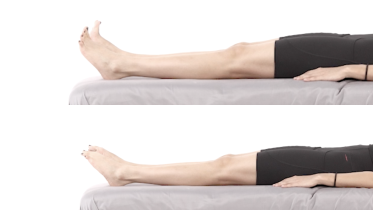 Toe curls
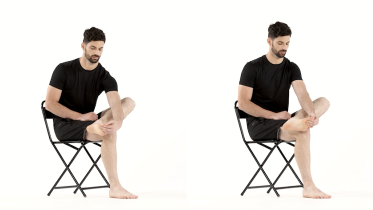 Plantar fascia stretch
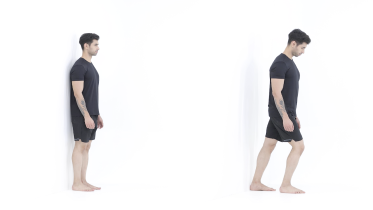 Calf stretch
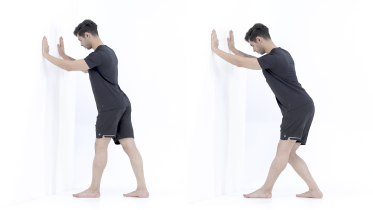 Soleus stretch
Stage 2: Build strength in the foot and calf
When stage 1 feels easy and your big toe is no worse the next morning. Sitting down, use towel scrunches and towel sweeps to train the short muscles under the arch and toes. The seated calf raise works the deep calf muscle with your body weight off the foot. Start without the weight on your knees, and lift your heels only as high as your big toe allows without pain on top of the joint. Standing calf raises come next. Rise only as high as your big toe allows without sharp pain, because the higher you go, the further the joint has to bend.
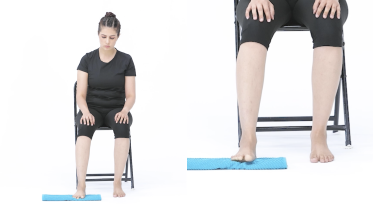 Towel scrunches
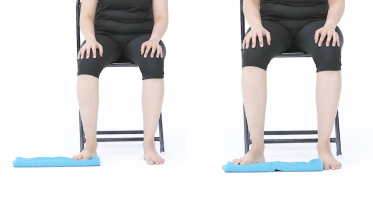 Foot towel sweeps
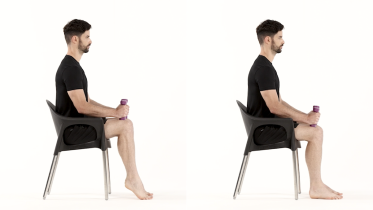 Seated calf raise
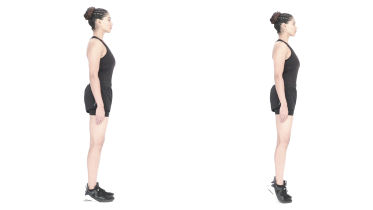 Calf raises
Stage 3: Balance and walking further
Move on once calf raises feel easy for 2 to 3 sets and everyday walking is more comfortable. Single leg stance and tandem stance train the small corrections your foot and ankle make on uneven ground, so keep a hand on a counter until you feel steady. Wear flat shoes that fit well and grip the floor, not socks, tights or bare feet. For walking, build up time before speed, on flat ground first and in your stiff-soled or rocker shoes, and take shorter steps if the big toe complains as you push off. Stay at a length of walk that leaves the toe no worse the next morning.
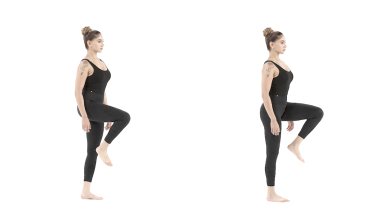 Single leg stance
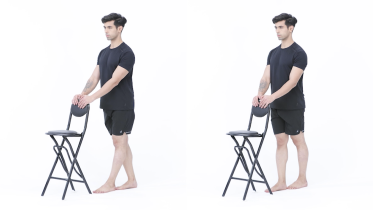 Tandem stance
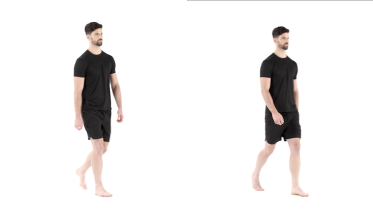 Brisk walking
When to see a physio or doctor
OrthoInfo advises seeing a doctor if you have trouble bending your big toe up and down, or find you are walking on the outside of your foot because of pain in the big toe, as hallux rigidus can be easier to treat when it is found early. A doctor can examine the toe and may arrange an X-ray, which shows the bone spurs and how much of the joint is worn. A physio or podiatrist can check how your foot and big toe move, set your starting stage and advise on shoes and inserts.
If the toe keeps limiting your walking or sleep despite the right shoes and a few months of the program, ask to see a foot and ankle specialist about the options above. If you have had big toe surgery, follow your surgeon's program instead of this one.
For physiotherapists
The program here is for adults with painful first MTP joint osteoarthritis who are not having surgery. Rule out gout and septic arthritis in an acute hot, swollen first MTP joint, and consider inflammatory arthritis, sesamoid pathology and a plantar plate or capsular injury after trauma when the picture does not fit. Coexisting hallux valgus is common and is covered on the bunions page. Before loading a diabetic or neuropathic foot, exclude active Charcot neuroarthropathy and skin breakdown.
The trial evidence is sparse. Munteanu and colleagues (2024) included 6 trials (547 participants) and found moderate-certainty evidence, from three single placebo or sham-controlled trials, of no clinically important benefit from arch-contouring orthoses, shoe-stiffening inserts or a single intra-articular hyaluronic acid injection. The only exercise-based comparison was sesamoid mobilization, flexor hallucis strengthening and gait training added to physical therapy, the small trial described in the 2010 version at high risk of bias. Menz and colleagues (2016) randomized 102 participants to prefabricated orthoses or rocker-sole footwear and found similar pain reduction, with better adherence and fewer adverse events in the orthoses group.
With no firm dosing evidence, base progression on first MTP pain and swelling over 24 hours. Keep end-range dorsiflexion work short of dorsal impingement pain, and use calf raise height and walking time as practical markers over weeks.
See a doctor promptly if
- You have diabetes or numb feet, and one foot becomes hot, swollen or red, or changes color or shape, with or without pain. Take your weight off that foot straight away and get advice the same day from your doctor or your diabetes foot team. This can be Charcot foot, where the bones and joints of the foot are damaged and the foot can collapse. Do not exercise that foot until it has been checked. If you also have a fever or feel very unwell, or redness is spreading up your foot or leg, go to an emergency department.
- The foot is hot, red and swollen, or you have a fever or feel unwell. Get medical help the same day, and go to an emergency department if you feel very unwell. If you have a very high or very low temperature, shivering you cannot control, you are breathing very fast or finding it hard to breathe, you are confused or your speech is slurred, your skin, lips or tongue look blue, gray, pale or blotchy (on brown or black skin this can be easier to see on the palms of the hands or soles of the feet), or you have a rash that does not fade when you press it, call emergency services, as this can be sepsis.
- The big toe joint suddenly becomes hot, red, swollen and very painful, even if you did not hurt it, or you have big toe pain with a high temperature or feel hot, cold or shivery. Get medical advice the same day, and go to an emergency department if you feel very unwell. This is often gout, but it can be a sign of infection in the joint, which needs treatment quickly. Do not exercise the toe until it has been checked.
- You have diabetes or numb feet and find a new blister, cut or sore on your foot, especially one you did not feel, a wound that smells or is leaking, or new pain in your foot that you cannot explain. Get it seen by your doctor or foot team the same day. If you also have a fever or feel very unwell, redness is spreading up your foot or leg, or part of your foot or a toe turns black, go to an emergency department.
- Part of your foot or a toe turns cold, pale, blue or black. Call emergency services or go to an emergency department straight away, and do not drive yourself, as the blood supply to the foot may be blocked.
- The pain started with a fall, a knock or a stubbed toe, and the toe is swollen, bruised or a different shape, or you cannot put weight on the foot. Get it checked the same day.
- A calf or thigh that is newly swollen, warm, tender, red or darker than usual, has swollen veins that are sore to touch, or has a throbbing or cramping pain that does not fit your injury or condition, or that feels different from normal muscle soreness after exercise. This can be a sign of a blood clot (deep vein thrombosis), especially after surgery, an injury, time in a cast or boot, a long trip or a spell of being much less mobile than usual. Get medical advice the same day. If you are also short of breath or have chest pain, call emergency services.
- The pain is there at night or at rest as well as when you stand and walk, and it is getting worse. See your doctor within a few days. If you have had cancer, now or in the past, or are losing weight without trying, see your doctor sooner, within a day or two, and mention it. This applies even if the pain is not getting worse. If you are being treated for cancer now, contact your cancer team the same day.
- You have new numbness, tingling, burning or loss of feeling in the foot or toes. Get medical advice the same day.
Common questions
Can hallux rigidus be treated without surgery?
Many people manage it without an operation, with shoes that limit how far the toe bends, a break from the activities that flare it, painkillers when needed and a home program. Be realistic about what the research shows, though. A 2024 Cochrane review found only 6 trials of nonsurgical treatment and called the evidence limited (Munteanu and colleagues, 2024). Exercise will not rebuild worn cartilage, but it can help the foot and calf work better around a stiff joint, and your physio will adjust the program as your foot responds.
What shoes are best for hallux rigidus?
The AAOS OrthoInfo page suggests a shoe with a large toe box to take pressure off the top of the toe, and a stiff-soled shoe with a rocker or roller bottom. It also mentions a stiff carbon fiber insert or a metal plate in the sole of a standard shoe, and advises against high heels. In one trial, rocker-sole shoes and ready-made insoles eased pain by a similar amount (Menz and colleagues, 2016). In another, stiff shoe inserts did no better than sham inserts (Munteanu and colleagues, 2024). So try a change for a few weeks and go by how your toe feels by evening.
Is walking good for hallux rigidus?
Walking is usually fine, and keeping active matters for your general health. The joint bends most as you push off, so the shoes you walk in make a big difference, and shorter steps on flat ground are easier on the toe than long strides, hills or stairs. Build your walks up gradually and judge them by how the toe feels the next morning.
Is hallux rigidus the same as gout?
No. Hallux rigidus is wear in the big toe joint that builds up over months and years, with stiffness and pain when you walk. Gout brings sudden, severe pain in a joint, usually the big toe, with hot, swollen, red skin over it (NHS). A big toe that flares up like that needs checking the same day, as an infection in the joint can look similar.
Do injections help hallux rigidus?
OrthoInfo says a steroid injection into the joint can relieve pain for a while. A single injection of hyaluronic acid, a gel-like fluid sometimes injected into arthritic joints, did no better than a placebo injection in a trial of 151 people, and the Cochrane review rated that finding as moderate certainty (Munteanu and colleagues, 2024). Ask your doctor what an injection might add for you.
References
- American Academy of Orthopaedic Surgeons. Hallux Rigidus (Stiff Big Toe). OrthoInfo. https://www.orthoinfo.org/en/diseases--conditions/stiff-big-toe-hallux-rigidus/
- NHS. Gout. Page last reviewed 24 August 2023. https://www.nhs.uk/conditions/gout/
- Munteanu SE, Buldt A, Lithgow MJ, Cotchett M, Landorf KB, Menz HB. Non-surgical interventions for treating osteoarthritis of the big toe joint. Cochrane Database of Systematic Reviews. 2024;6:CD007809. https://doi.org/10.1002/14651858.CD007809.pub3
- Zammit GV, Menz HB, Munteanu SE, Landorf KB, Gilheany MF. Interventions for treating osteoarthritis of the big toe joint. Cochrane Database of Systematic Reviews. 2010;(9):CD007809. https://doi.org/10.1002/14651858.CD007809.pub2
- Menz HB, Auhl M, Tan JM, Levinger P, Roddy E, Munteanu SE. Effectiveness of foot orthoses versus rocker-sole footwear for first metatarsophalangeal joint osteoarthritis: randomized trial. Arthritis Care and Research. 2016;68(5):581-589. https://doi.org/10.1002/acr.22750
- Diabetes UK. Charcot foot and diabetes. Last reviewed 8 November 2024. https://www.diabetes.org.uk/about-diabetes/looking-after-diabetes/complications/feet/charcot-foot
- Diabetes UK. Serious foot problems and diabetes. Last reviewed 24 December 2024. https://www.diabetes.org.uk/about-diabetes/looking-after-diabetes/complications/feet/serious-foot-problem
- NHS. Sepsis. Page last reviewed 14 May 2026. https://www.nhs.uk/conditions/sepsis/
- NHS. Deep vein thrombosis (DVT). Page last reviewed 30 April 2026. https://www.nhs.uk/conditions/deep-vein-thrombosis-dvt/
Written and checked by the PocketPhysio editorial team. Last updated 2026-09-28.
This page is general education, not a diagnosis or a personal treatment plan. See a physiotherapist or doctor for advice about your own situation.