Toe curls
Toe curls work the muscles that bend your toes (the toe flexors), including the small muscles under the foot. In the video you lie on your back with your legs straight and curl your toes down, as if trying to grip something with your feet. Then you pull your toes and feet back up toward you, and keep changing between the two. You need no equipment, and no weight goes through the foot. Physios often use it early in foot programs, and it works just as well sitting on a chair.
How to do the toe curls
- Lie on your back on a bed or mat with your legs straight and your arms resting by your sides. Use a pillow for your head if you like.
- Let your feet and toes go loose for a moment.
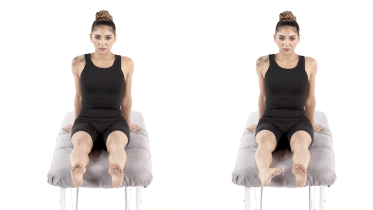
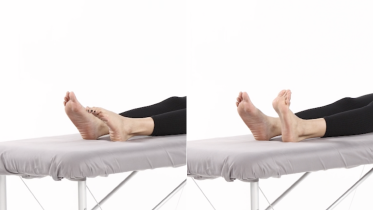
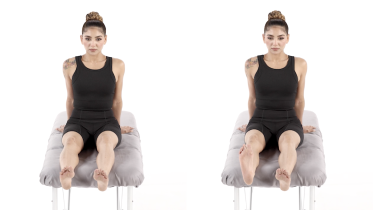
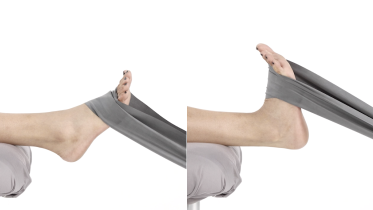
- Curl all your toes down toward the soles of your feet, as though you were trying to grip something with them. Your feet point a little as the toes curl, as in the video. Both feet work at the same time.
- Hold the curl for a few seconds.
- Then pull your toes and the fronts of your feet up toward your shins, and hold for a few seconds.
- Keep changing between the curl and the pull up at a steady pace, with your legs resting still on the bed.
What you should feel
Effort under the arch and the ball of each foot and in the toes as they curl, and at the front of your shins as you pull them up. A small cramp in the arch can come on at first.
Common mistakes
- Clawing only the tips of the toes instead of curling each whole toe down.
- Pressing your legs down into the bed or lifting them, when only your feet and toes need to move.
- Rushing, so you never fully reach the curl or the pull up.
- Holding your breath while you curl.
How often
Many programs use 1 to 3 sets of 10 to 15 curls, holding each curl and each pull up for 3 to 5 seconds, once or twice a day. Your physio will adjust this.
Stop and check with your physio if
- Sharp pain in the toes, the ball of the foot or the arch, or a cramp that does not ease when you straighten your toes and rest.
- Burning, pins and needles or numbness in your feet that is new or getting worse.
- You have diabetes or numb feet and find a new blister, cut or sore on your foot, or one foot becomes hot, swollen or red, or changes color or shape. Stop, keep your weight off that foot and get it seen by your doctor or diabetes foot team the same day. If you also have a fever or feel very unwell, redness is spreading up your foot or leg, or part of your foot or a toe turns black, go to an emergency department.
From the clinic
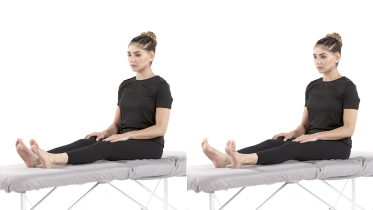
If lying down is awkward, do the same curls sitting on a chair with your feet flat on the floor. Once they feel easy, towel scrunches give your toes something to pull against. A few ankle pumps before you start can help if your feet feel stiff.
With diabetes or reduced feeling in your feet, look over both feet when you finish, including between the toes, since a small mark or blister can go unnoticed. After foot or toe surgery, such as bunion surgery, or a broken bone in the foot or toes, ask your surgeon or physio when to start. If your leg is in a cast or boot, ask your fracture clinic which toe movements to do. If you are pregnant and past the first three months, check with your physio before exercising flat on your back. The sitting version is an easy swap.
Written and checked by the PocketPhysio editorial team. Last updated 2026-09-26.
This page is general education, not a diagnosis or a personal treatment plan. If you have pain, an injury or a health condition, see a physiotherapist or doctor before starting new exercises.