Ankle pumps
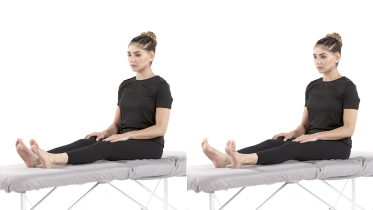
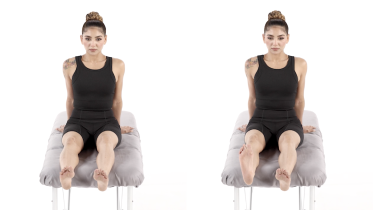
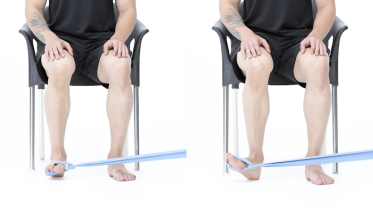
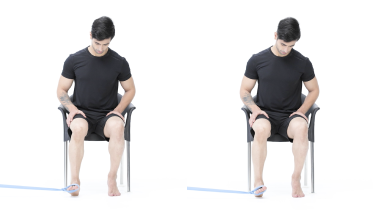
Ankle pumps move your feet up and down at the ankle. In this seated version you lift your toes with the heels down, then your heels with the toes down. Physios often give them after an injury or operation, or for long spells of sitting, to keep the ankles and calves moving.
How to do the ankle pumps
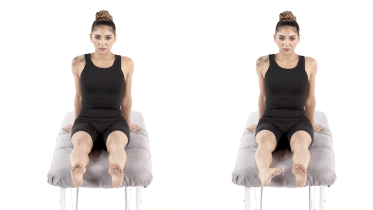
- Sit upright on a chair with your feet flat on the floor, about hip width apart, and your hands resting on your thighs.
- Keep your heels on the floor and lift the front of both feet, toes as high as they will go. Lower them back down.
- Now switch. Balls of the feet stay down while both heels lift as high as you can. Lower them again.
- One toes up and one heels up together count as one repetition. Keep it smooth and steady.
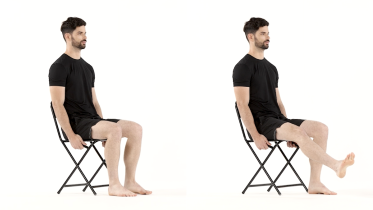
- The voice guide also has an alternating version: lift the toes of one foot and the heel of the other at the same time, then swap and keep going.
What you should feel
The front of your shin works as the toes come up, and the calf works as the heels come up. Feeling a bit stiff at first, then easier as you go, is common.
Common mistakes
- Tiny movements. Use as much range as you comfortably can.
- Hitching the whole leg up from the hip. The movement happens at the ankle.
- Rushing, so the feet slap back onto the floor.
How often
The voice guide counts rounds of 5. Many programs build up to 10 to 20 at a time, several times a day, especially while you are sitting or resting a lot. Your physio will set the number for you.
Stop and check with your physio if
- Your calf or thigh is getting more swollen, or becomes warm, tender, red or darker than usual, or has a new throbbing or cramping pain. This can be a blood clot, especially after an operation, an injury, time in a cast, boot or brace, or a spell of being much less mobile than usual, and after an operation it can also be an infection. Stop and contact your medical team or get medical advice the same day. If you are also short of breath or have chest pain, call emergency services.
- You suddenly become short of breath, get chest pain or pain in your upper back that may be worse when you breathe in, cough up blood, your heart beats very fast, or you faint. Call emergency services straight away, even if your leg looks normal, as this can be a blood clot in the lungs (pulmonary embolism).
- Any sharp pain in the foot or ankle.
- Emergency: while you are in a cast or boot, your toes turn blue, white or pale, or feel cold. Do not wait to see if raising your leg helps. Go to an emergency department straight away, and do not drive yourself. The cast or boot may be cutting off the blood supply, or pressure may be building up inside the leg (compartment syndrome), and both need checking quickly.
- In a cast or boot, the pain gets worse, your toes feel numb, tingle or burn or look more swollen, or the cast or boot feels too tight. Stop, raise your foot above your hip, keep moving your toes and contact your fracture clinic or get medical advice straight away. If you wear a boot, loosen the straps but keep it on. If you cannot move your toes, the pain is severe even after painkillers, or the numbness, tingling, burning or swelling has not settled within 30 minutes of raising your foot, go to your fracture clinic or an emergency department straight away, and do not drive yourself.
- Since the fracture or cast, the foot or ankle is getting more painful rather than less, the skin becomes very sensitive to light touch, or the foot changes color, temperature, swelling or sweating compared with the other one, or looks shiny. See your doctor or physio as soon as you can, within a few days at most, as this can be complex regional pain syndrome (CRPS) and early treatment may help.
From the clinic
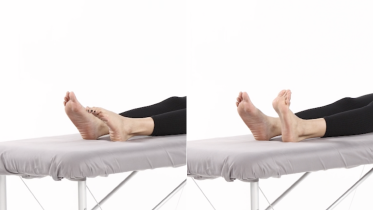
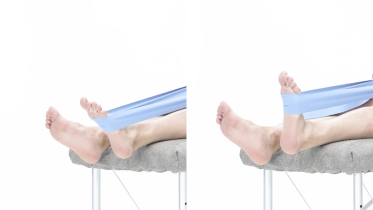
In bed, or straight after an operation, ankle pumps are often done lying down with the legs out straight. You pull your foot up toward you, then point it away. It is the same up and down idea, just without the floor, and your physio or ward team will show you which version to use.
Had surgery on your foot or ankle, or wearing a cast or boot? Check which movements are allowed before you start. If the ankle is stiff, the ankle alphabet takes it through more directions.
Written and checked by the PocketPhysio editorial team. Last updated 2026-09-26.
This page is general education, not a diagnosis or a personal treatment plan. If you have pain, an injury or a health condition, see a physiotherapist or doctor before starting new exercises.