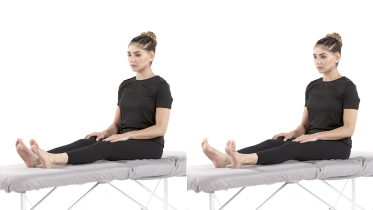
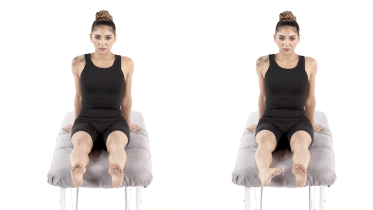
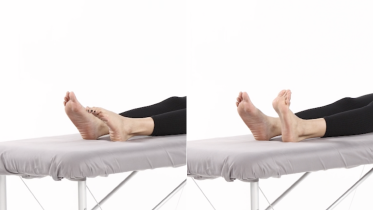
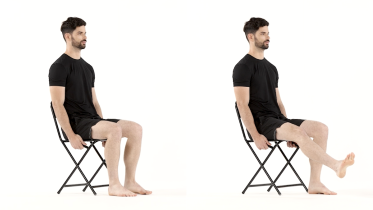
Ankle eversion with band
Ankle eversion with a band strengthens the muscles on the outside of your lower leg (the peroneals, also called fibularis) that turn your foot outward. Seated on a chair with a band around the front of your foot, you turn the foot out against it while the heel stays in place. It is a common part of rehab after an ankle sprain. These muscles pull the foot the opposite way to how the ankle rolls in a typical sprain.
How to do the ankle eversion with band
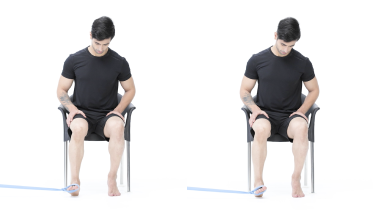
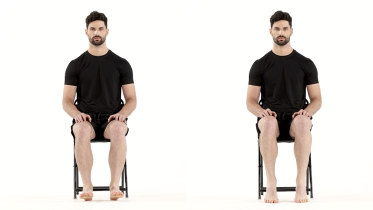
- Sit upright on a firm chair, feet flat on the floor and about hip width apart.
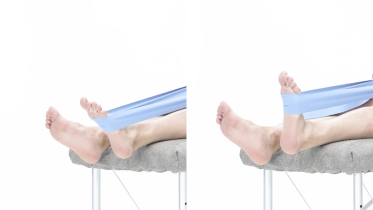
- Put the band around the front of your working foot, near the base of the toes. Tie the other end low down to something heavy on the side of your other foot, such as a table leg, so the band pulls your foot inward.
- Move your chair or foot until the band has some tension. Keep your heel on the floor and your knee pointing straight ahead.
- Turn the front of your foot outward, away from your other foot, as far as is comfortable. The heel acts as a pivot and stays in the same spot.
- Pause, then bring the foot back slowly to the middle.
What you should feel
You should feel the outside of your lower leg working, somewhere between the knee and the ankle. Some people feel it most just behind the bony bump on the outside of the ankle.
Common mistakes
- Turning the knee or whole leg outward instead of the foot. That is the hip doing the work.
- The heel coming up, or sliding across the floor instead of staying planted.
- Letting the band whip the foot back in.
How often
Many programs begin with a light band: 2 to 3 sets of 10 to 15 slow repetitions, once a day. Your physio will pick the band and the numbers for you.
Stop and check with your physio if
- Sharp pain on the outside of the ankle or behind the ankle bone, or pain that gets steadily worse as the set goes on.
- A snapping or slipping feeling behind the bony bump on the outside of the ankle. Stop and get it checked.
- Your ankle gives way, or it is swollen after the session.
From the clinic
If your knee keeps swinging out as the foot turns, rest a hand on the outside of it to hold it still. The movement at the ankle gets smaller, and that is fine.
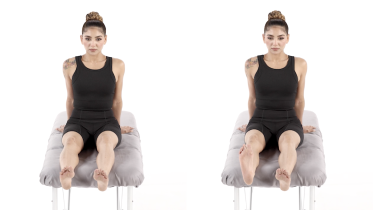
No anchor nearby? Tie the band in a loop around the front of both feet and move the feet apart until it has some tension. The other foot stays still while the working foot turns out.
Many sprain programs pair this with ankle inversion with a band, which trains the opposite direction. In the first days after a sprain, when the ankle is still swollen and sore, a physio will often start with gentle movement such as ankle circles before adding a band. After a fracture or surgery on the ankle, get your physio's go-ahead first.
Written and checked by the PocketPhysio editorial team. Last updated 2026-09-25.
This page is general education, not a diagnosis or a personal treatment plan. If you have pain, an injury or a health condition, see a physiotherapist or doctor before starting new exercises.