Ankle plantar flexion with band
Ankle plantar flexion with a band strengthens the calf muscles that point your foot down (gastrocnemius and soleus). You sit with your legs straight, loop a band around the ball of your foot, hold the ends and point your toes away from you against the band, then come back slowly. It is a gentle way to start calf strengthening when standing calf raises are still too much, for example early after an ankle injury.
How to do the ankle plantar flexion with band
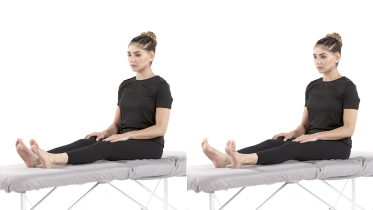
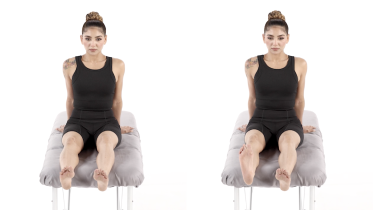
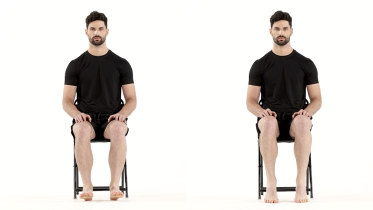
- Sit on a bed or on the floor with both legs straight out in front of you. In the video the heels rest near the end of the bed so the feet can move freely over the edge.
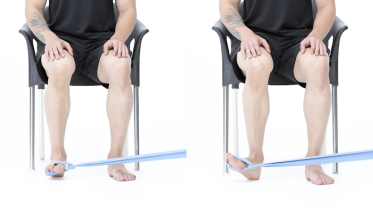
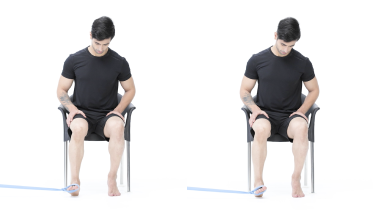
- Loop the middle of the band around the ball of your working foot and hold one end in each hand. Sit tall and draw the ends back until the band has some tension with your foot upright.
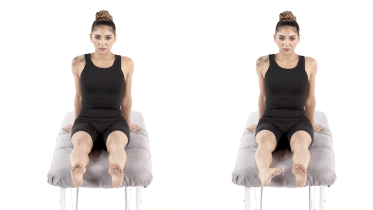
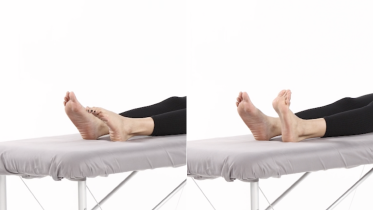
- Point your foot and toes down, away from you, pushing against the band as far as is comfortable.
- Come back slowly to the start, controlling the band all the way.
- Keep your knee straight and your arms still the whole time, so the ankle does the work.
What you should feel
The calf muscles at the back of your lower leg working. They may feel tired or warm toward the end of a set.
Common mistakes
- Bending the knee as you push.
- Pulling with your arms instead of holding them still.
- Only curling the toes instead of moving the whole foot at the ankle.
- Letting the band pull the foot back up quickly.
How often
Many programs start with 2 to 3 sets of 10 to 15 slow repetitions, once a day, with a band light enough that you finish each set with good control. Your physio will adjust this and choose the band for you.
Stop and check with your physio if
- Sharp pain in the Achilles tendon or at the back of the heel.
- Your calf or thigh becomes swollen, warm, tender, red or darker than usual, or has a throbbing or cramping pain that feels different from normal muscle ache. Stop and get medical advice the same day, as this can be a blood clot. If you are also short of breath or have chest pain, call emergency services.
- Pain that builds with each repetition, or is still there the next morning.
From the clinic
Check the band for small nicks or tears before you start, and wrap each end once around your hand so it cannot slip. A band that slides off the ball of the foot can flick back toward your face. If sitting upright with straight legs pulls on your back or the backs of your legs, lean against a wall or headboard and bend the other knee.
Once this is easy, many programs move on to standing calf raises. After an Achilles tendon repair or an ankle fracture, follow your surgeon's and physio's plan for when resisted calf work can start and how hard to push.
Written and checked by the PocketPhysio editorial team. Last updated 2026-09-26.
This page is general education, not a diagnosis or a personal treatment plan. If you have pain, an injury or a health condition, see a physiotherapist or doctor before starting new exercises.