
Ankle sprain exercises and physiotherapy
What is an ankle sprain?
An ankle sprain is an injury to the ligaments, the tough bands that hold the ankle bones together. The most common type happens when the foot rolls inward and the ligaments on the outside of the ankle are stretched or torn. That is a lateral ankle sprain, and it is what this page covers.
The ankle usually hurts straight away, then swells and bruises over the next day or so. The NHS lists pain, tenderness, swelling, bruising and trouble putting weight on the foot as the usual signs. How bad it looks in the first day is not a reliable guide to how badly the ligament is damaged. The Dutch guideline found that an examination 4 to 5 days after the injury gives a more reliable picture than one done straight away (Vuurberg and colleagues, 2018).
This page is for adults and teenagers aged 16 and over. A child with an ankle injury should be assessed by a doctor or physio before starting any program. If your ankle is broken, or you have had ankle surgery, follow the plan from your surgical team and physio rather than this program.
Do you need an X-ray for an ankle sprain?
Most sprained ankles do not need one. Doctors and physios decide using the Ottawa ankle rules, a short checklist developed and tested in emergency departments (Stiell and colleagues, 1993). A systematic review of 27 studies found the rules are very good at ruling out a fracture (Bachmann and colleagues, 2003).
For pain around the ankle bones, the rules say an X-ray is needed if either of these applies:
- Either ankle bone is tender to press at its very tip, or along its back edge in the bottom 6 cm.
- You could not take 4 steps right after the injury, and still cannot when you are seen. Steps taken with a limp still count as steps.
For pain in the middle of the foot, an X-ray is needed if either of these applies:
- The bony bump halfway along the outer edge of your foot (the base of the fifth metatarsal) or the bony bump on the inner side of the midfoot (the navicular) is tender to press.
- You could not take 4 steps right after the injury, and still cannot when you are seen.
The rules are meant for the doctor or physio examining you. If any of these seem to apply to you, get checked the same day rather than starting the program.
Why does exercise help after an ankle sprain?
After a sprain the ankle is usually stiff and weak, and your balance on that leg is worse. All of that needs to come back before the ankle can cope with sport again. The US clinical practice guideline for physical therapists recommends support such as a brace or tape, putting weight through the ankle progressively, and an exercise program. That program covers movement, stretching, balance and coordination training, both in the clinic and at home (Martin and colleagues, 2021). The Dutch guideline also prefers supervised exercise programs over passive treatments (Vuurberg and colleagues, 2018).
Starting early seems to help. In a trial of 101 people with mild to moderate sprains, those who began exercises in the first week had better ankle function in the first couple of weeks than a group who only followed the standard PRICE advice described below (Bleakley and colleagues, 2010). There was no difference in pain or swelling.
The bigger reason for doing the full program is to avoid spraining it again. A review of systematic reviews found strong evidence that bracing lowers the chance of another sprain, and moderate evidence that balance and coordination training (neuromuscular training) does too (Doherty and colleagues, 2017). In a Dutch trial of 522 athletes who had sprained an ankle in sport, adding an 8 week unsupervised home balance training program (proprioceptive training) to usual care lowered the share who reported another sprain within a year from 33% to 22% (Hupperets and colleagues, 2009). The repeat sprains were reported by the athletes themselves, and the result may not carry over in the same way to people who do not play sport.
The first few days after an ankle sprain
For the first 2 to 3 days, the NHS advises PRICE: protection, rest, ice, compression and elevation. Protect the ankle with a support or shoes that hold the foot well. Stop exercise and sport, and try not to put weight on it. Put an ice pack or a bag of frozen vegetables wrapped in a tea towel on the ankle for up to 20 minutes every 2 to 3 hours. Wrap a bandage around it for support during the day, and keep it raised on a pillow as much as you can.
To help prevent swelling, avoid hot baths, heat packs, alcohol and massage for the first couple of days.
After that, the aim is to get walking again. The US guideline advises support such as a brace or tape and putting weight through the ankle progressively, as pain allows. Crutches can help while walking is still very painful. After a severe sprain a doctor may use a stiffer brace or a short cast, and the US guideline suggests up to 10 days in that case (Martin and colleagues, 2021).
For pain relief, ask a pharmacist or doctor what suits you. The NHS mentions paracetamol for pain and ibuprofen gel or spray for swelling. Both guidelines say anti-inflammatory tablets such as ibuprofen may be used to ease pain and swelling. The Dutch guideline adds a caution: they can have side effects, and they may hold back the body's natural healing process (Vuurberg and colleagues, 2018).
How to use this program
Pick the stage that matches your ankle today. If you are unsure, start at stage 1, and move up when the current stage feels easy and your ankle is no more swollen or sore the next morning. The signs given for each stage are a rough guide used in common practice, not fixed rules.
Each exercise page gives a typical starting dose. As a rough guide, many programs do the early movement exercises little and often, 2 to 3 times a day or more, and use 2 to 3 sets of 10 to 15 for the band exercises, once a day. Balance holds often start at 5 to 30 seconds, a few times on each leg. Your physio will adjust the exercises and the numbers to suit your ankle and what you need to get back to.
Some aching or stiffness during and after the exercises is common. It is usually fine if it is mild and settles within a day. Sharp pain on the outside of the ankle, pain that builds with every repetition, or an ankle that is more swollen the next morning means the load was too much. Drop back a step rather than stopping altogether.
The exercise program
Stage 1: Protect the ankle and keep it moving
For the first days after the sprain, while the ankle is swollen and walking is sore. Rest it from sport and exercise, keep it raised when you sit, and for the first 2 to 3 days try to keep weight off it as much as you can. Then put a little more weight through it each day as pain allows, with the brace, tape or crutches you were given. Move the ankle gently a few times a day in the range that feels comfortable. Keep the circles and letters well inside a comfortable range at first, and go easy on pointing the toes while turning the sole of your foot inward, because that is the position the ankle rolled into and it stretches the injured ligaments.
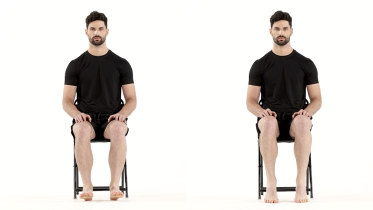 Ankle pumps
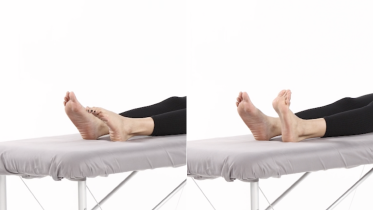 Ankle alphabet
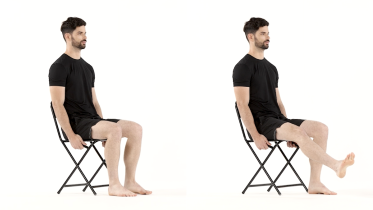 Ankle circles
Stage 2: Start strengthening the ankle
When the swelling is going down and you can walk around the house with little or no limp. The two isometric exercises come first: you press your foot into a ball against a wall without the ankle moving, which is a gentle way to wake up the muscles on the outside and inside of your lower leg. The band exercises follow and train the ankle in all four directions. Use a light band and move slowly, in a range that does not bring back the sharp pain on the outside of the ankle. For inversion with the band, keep the inward turn small at first, because it moves the foot toward the position the ankle rolled into.
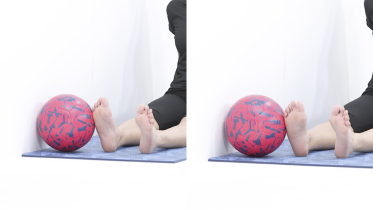 Isometric ankle eversion
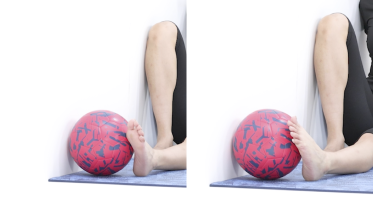 Isometric ankle inversion
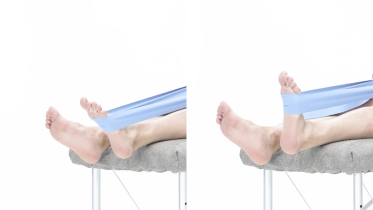 Ankle plantar flexion with band
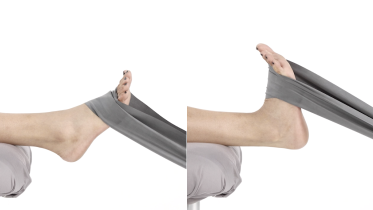 Ankle dorsiflexion with band
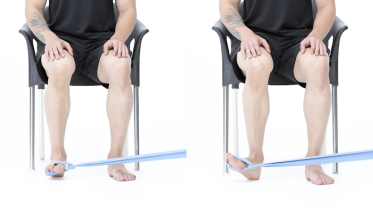 Ankle eversion with band
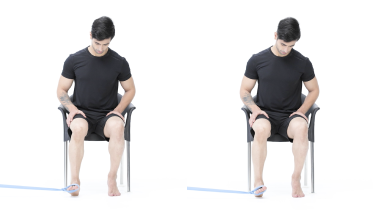 Ankle inversion with band
Stage 3: Get your balance and full movement back
When you can walk normally and the band exercises feel easy. Calf raises on both feet rebuild the calf. The two calf stretches and the band mobilization are for an ankle that still feels stiff when your knee moves forward over your toes, for example on stairs or in a squat. Tandem stance and single leg stance start the balance training that guidelines recommend to lower the chance of another sprain. Stand next to a kitchen counter or a sturdy chair you can hold.
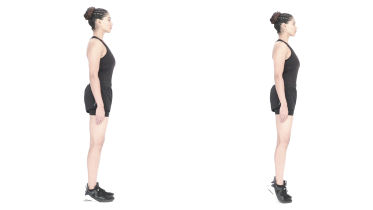 Calf raises
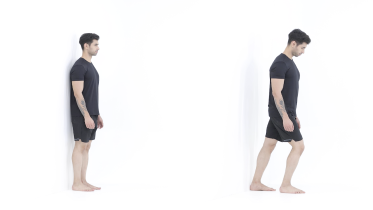 Calf stretch
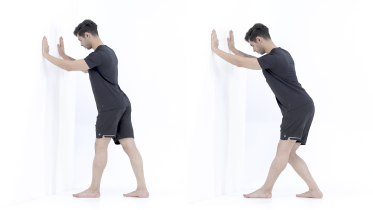 Soleus stretch
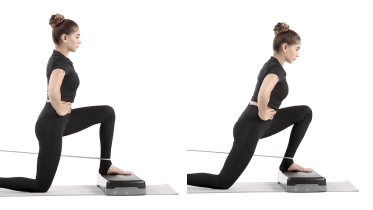 Ankle dorsiflexion mobilization with band
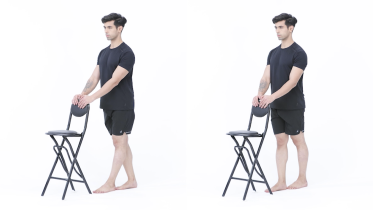 Tandem stance
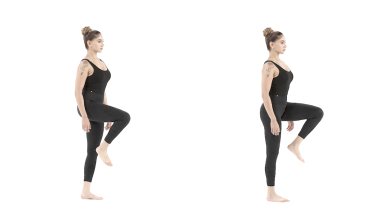 Single leg stance
Stage 4: Harder balance work and hopping
When you can balance on the injured leg about as steadily as on the other one. Single leg heel raises build the calf strength you need for running and jumping. Balancing with your eyes closed, and then on a cushion, makes the ankle correct itself without help from your eyes or a firm floor, so keep the counter or chair within reach for these too. Hops over a line are one of the last steps before running and sport: start them only when single leg balance and heel raises feel solid, and if you have osteoporosis or have had a fall in the past year, ask your physio before you do any hopping. Keep the balance work going after you are back at sport: in one large trial in athletes, the home balance program ran for 8 weeks.
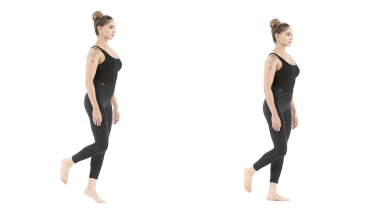 Single leg heel raise
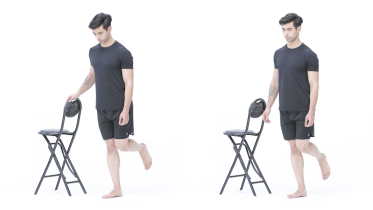 Single leg balance with eyes closed
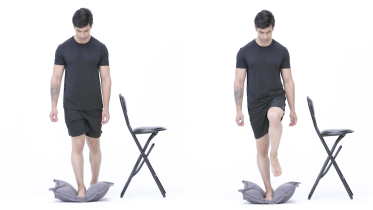 Single leg balance on a cushion
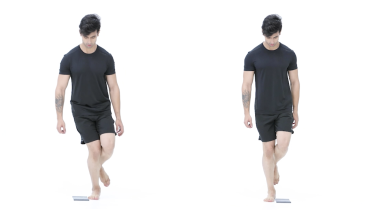 Single leg hops over a line
How to prevent another ankle sprain
A brace or tape protects the healing ligaments in the early weeks. The Dutch guideline found that people do best with tape or a brace combined with an exercise program (Vuurberg and colleagues, 2018). To lower the chance of another sprain, the Dutch guideline says a brace should be considered, and the US guideline recommends a brace together with balance training (Martin and colleagues, 2021).
A brace is not the whole answer, though. For an ankle that keeps giving way, the US guideline advises against relying on a brace or tape alone to improve balance, and recommends balance and coordination exercises instead.
The US guideline also recommends training that matches what you need to go back to, whether that is a job on your feet or a sport. Many physios build people back up from jogging in straight lines to running with turns before full training. That is common practice rather than a tested plan. A physio can test your balance and hopping against the other leg and help you decide when you are ready.
When to see a physio or doctor
See a physio or doctor if your ankle is getting worse, is not feeling better after looking after it yourself, if you cannot put weight on it, or if the pain is severe. The NHS adds that physiotherapy may help if a sprain is taking longer than usual to get better. If you are unsure how bad the sprain is, that is a good reason to get it looked at too. A physio can check the ligaments, especially once the first swelling has settled, and set the stages to your ankle. A sprain can also injure other parts of the ankle, such as the ligament that joins the two shin bones just above the joint (a high ankle sprain) or the tendons behind the outer ankle bone, so an ankle that is not improving as expected is worth having checked.
It is also worth getting help if you have sprained the same ankle before, if it keeps giving way, or if you play a sport with a lot of jumping and turning. The warning signs below need prompt medical attention.
For physiotherapists
This page gives patients a starting framework for a first-time or recurrent lateral ankle sprain without fracture. The 2021 JOSPT guideline recommends the reverse anterolateral drawer test and anterolateral talar palpation alongside the anterior drawer test. It recommends documenting swelling, range of motion, talar translation and inversion, and single leg balance at baseline and follow-up.
The guideline names the weight-bearing lunge test, single-limb balance on a firm surface with eyes closed, the Star Excursion Balance Test and timed single-limb hopping as measures (Martin and colleagues, 2021). Suggested patient-reported outcomes include the PROMIS physical function and pain interference scales, plus the FAAM and the LEFS. The Dutch guideline adds that delayed examination at 4 to 5 days after injury is the most reliable way to judge ligament damage (Vuurberg and colleagues, 2018).
For acute and postacute sprains, the US guideline supports external support with progressive weight bearing, and immobilization for up to 10 days in severe cases. It supports therapeutic exercise covering protected active range of motion, stretching, neuromuscular training and balance, in the clinic and at home. Manual therapy within pain-free movement (lymphatic drainage, soft tissue and joint mobilization, anterior-to-posterior talar glides) is supported alongside exercise, and therapeutic ultrasound is not recommended. NSAIDs are a grade C option in the US guideline. The overview by Doherty and colleagues (2017) reported strong evidence for NSAIDs and early mobilization for the combined outcomes of pain, swelling and function, and moderate evidence for exercise and manual therapy, while the Dutch guideline cautions that NSAIDs may suppress natural healing.
For secondary prevention, the US guideline recommends prophylactic bracing plus proprioceptive and balance training. For chronic ankle instability, it recommends proprioceptive and neuromuscular exercise, and manual therapy, including mobilization with movement, to improve weight-bearing dorsiflexion and dynamic balance in the short term. The Dutch guideline reserves surgery for people who do not respond to a full exercise-based program.
Screen for fracture with the Ottawa rules, applied in full, and keep an Achilles rupture and a deep vein thrombosis in mind when the history or calf findings do not fit a simple sprain. The US guideline lists other injuries to consider alongside or instead of a lateral sprain, including syndesmotic injury, osteochondral lesions, deltoid ligament sprain, fibularis tendon and retinacular injury, midfoot sprains and, in younger patients, growth plate injuries, and advises referral when symptoms or function do not fully recover. NICE advises considering drug prophylaxis for VTE in people with lower limb immobilization, defined as any management that prevents normal weight bearing or use of the limb, when their VTE risk outweighs their bleeding risk (NICE NG89).
See a doctor promptly if
- Emergency: the ankle or foot looks deformed or out of place, you heard a crack when you were injured, or the foot is numb, tingling, cold, pale or blue. Go to an emergency department straight away.
- You could not take 4 steps right after the injury and still cannot, or the back edge or tip of either ankle bone is tender to press. Get it checked for a fracture the same day. These are part of the Ottawa ankle rules, explained on this page.
- The pain is in the middle of your foot, and the bony bump halfway along the outer edge of the foot or the bony bump on the inner side of the midfoot is tender to press. Get it checked for a fracture the same day.
- You felt a pop or snap at the back of your heel or lower calf, or it felt as if someone kicked you there, even if you can still walk and push off. Go to an urgent care center or emergency department the same day, as this can be a torn Achilles tendon rather than a sprain.
- A calf or thigh that is newly swollen, warm, tender, red or darker than usual, has swollen veins that are sore to touch, or has a throbbing or cramping pain that does not fit your injury or condition, or that feels different from normal muscle soreness after exercise. This can be a sign of a blood clot (deep vein thrombosis), especially after surgery, an injury, time in a cast or boot, a long trip or a spell of being much less mobile than usual. Get medical advice the same day. If you are also short of breath or have chest pain, call emergency services.
- The pain is severe and getting worse, or the swelling or bruising is very large. Get medical advice the same day.
- The ankle or foot is hot, red and swollen, or you have a fever or feel unwell. Get medical help the same day, and go to an emergency department if you feel very unwell. If you have a very high or very low temperature, shivering you cannot control, you are breathing very fast or finding it hard to breathe, you are confused or your speech is slurred, your skin, lips or tongue look blue, gray, pale or blotchy (on brown or black skin this can be easier to see on the palms of the hands or soles of the feet), or you have a rash that does not fade when you press it, call emergency services, as this can be sepsis.
- The ankle keeps giving way or rolling over, even on flat ground, weeks or months after the sprain. This is not an emergency, but book an assessment with a physio or doctor in the next week or two.
Common questions
How long does a sprained ankle take to heal?
It depends on how badly the ligaments are damaged. The NHS says most sprains feel better after 2 weeks, that you should avoid strenuous exercise such as running for up to 8 weeks, and that a bad sprain can take months to get back to normal. Feeling better is not quite the same as being ready for sport, which is why the balance and hopping stages matter.
Should I walk on a sprained ankle?
If you cannot take 4 steps, get it checked for a fracture first. Otherwise, the advice is little weight at first, then more as pain allows. The NHS advises trying not to put weight on the ankle for the first 2 to 3 days. The US physical therapy guideline advises support such as a brace or tape, and putting weight through the ankle progressively, with the amount of support and any crutches matched to how bad the sprain is. Your physio will tell you how much walking suits your ankle.
Do I need an X-ray for a sprained ankle?
Often not. Doctors and physios use the Ottawa ankle rules to decide. An X-ray is needed if you could not take 4 steps both right after the injury and at the time you are seen, or if specific spots on the ankle or foot bones are tender to press. A systematic review found the rules are very good at ruling out a fracture and could cut unnecessary X-rays by 30 to 40% (Bachmann and colleagues, 2003).
Should I put ice or heat on a sprained ankle?
Ice, not heat, for the first couple of days. The NHS advises an ice pack or a bag of frozen vegetables wrapped in a tea towel, for up to 20 minutes every 2 to 3 hours. It also says to keep away from heat, such as hot baths and heat packs, and from alcohol and massage for the first couple of days, to help prevent swelling. The US physical therapy guideline says ice may be used alongside an exercise program. Ice on its own will not rebuild the ankle, so the exercises still matter.
Should I wear an ankle brace after a sprain?
Many people do in the early weeks. The Dutch guideline found that people do best with tape or a brace combined with an exercise program, and says a brace should be considered to prevent another sprain (Vuurberg and colleagues, 2018). A brace does not replace the balance and strength work. A physio can help you pick one that fits your sport.
Why does my ankle keep giving way after a sprain?
Some people are left with an ankle that feels unstable and rolls easily, often called chronic ankle instability. The US physical therapy guideline notes that most people recover but that complaints of instability can continue. Balance and coordination exercises are the main treatment it recommends, and a brace or tape on its own is not enough to improve balance. If it keeps happening, see a physio for an assessment.
References
- Martin RL, Davenport TE, Fraser JJ, et al. Ankle Stability and Movement Coordination Impairments: Lateral Ankle Ligament Sprains Revision 2021. Journal of Orthopaedic and Sports Physical Therapy. 2021;51(4):CPG1-CPG80. https://doi.org/10.2519/jospt.2021.0302
- Vuurberg G, Hoorntje A, Wink LM, et al. Diagnosis, treatment and prevention of ankle sprains: update of an evidence-based clinical guideline. British Journal of Sports Medicine. 2018;52(15):956. https://doi.org/10.1136/bjsports-2017-098106
- Doherty C, Bleakley C, Delahunt E, Holden S. Treatment and prevention of acute and recurrent ankle sprain: an overview of systematic reviews with meta-analysis. British Journal of Sports Medicine. 2017;51(2):113-125. https://doi.org/10.1136/bjsports-2016-096178
- Bleakley CM, O'Connor SR, Tully MA, et al. Effect of accelerated rehabilitation on function after ankle sprain: randomised controlled trial. BMJ. 2010;340:c1964. https://doi.org/10.1136/bmj.c1964
- Hupperets MDW, Verhagen EALM, van Mechelen W. Effect of unsupervised home based proprioceptive training on recurrences of ankle sprain: randomised controlled trial. BMJ. 2009;339:b2684. https://doi.org/10.1136/bmj.b2684
- Stiell IG, Greenberg GH, McKnight RD, et al. Decision rules for the use of radiography in acute ankle injuries. Refinement and prospective validation. JAMA. 1993;269(9):1127-1132. https://doi.org/10.1001/jama.269.9.1127
- Bachmann LM, Kolb E, Koller MT, Steurer J, ter Riet G. Accuracy of Ottawa ankle rules to exclude fractures of the ankle and mid-foot: systematic review. BMJ. 2003;326(7386):417. https://doi.org/10.1136/bmj.326.7386.417
- NHS. Sprains and strains. Page last reviewed 23 April 2024. https://www.nhs.uk/conditions/sprains-and-strains/
- NHS. Tendonitis. Page last reviewed 9 June 2023. https://www.nhs.uk/conditions/tendonitis/
- Cambridge University Hospitals NHS Foundation Trust. Achilles tendon rupture. Patient information. https://www.cuh.nhs.uk/patient-information/achilles-tendon-rupture/
- NHS. Deep vein thrombosis (DVT). Page last reviewed 30 April 2026. https://www.nhs.uk/conditions/deep-vein-thrombosis-dvt/
- National Institute for Health and Care Excellence. Venous thromboembolism in over 16s: reducing the risk of hospital-acquired deep vein thrombosis or pulmonary embolism. NICE guideline NG89. Published 21 March 2018, last updated 13 August 2019. https://www.nice.org.uk/guidance/ng89
Written and checked by the PocketPhysio editorial team. Last updated 2026-09-28.
This page is general education, not a diagnosis or a personal treatment plan. See a physiotherapist or doctor for advice about your own situation.