Isometric ankle eversion
Isometric ankle eversion trains the muscles on the outside of your lower leg (the peroneals, also called fibularis) without the ankle moving. You sit with your leg straight beside a wall, a ball between the outside of your foot and the wall, and press your foot outward into the ball and hold. Because the joint stays still, it often appears early in ankle sprain rehab, before band exercises are added.
How to do the isometric ankle eversion
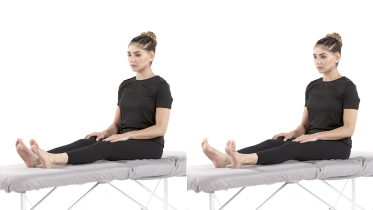
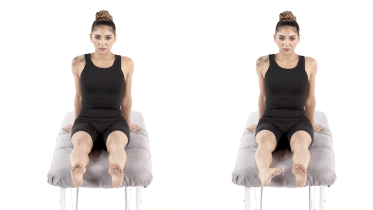
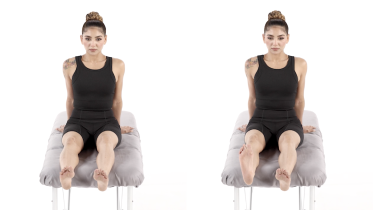
- Sit on the floor or a mat with both legs straight out in front of you and your hands on the floor behind you for support. Your working leg is the one closest to the wall.
- Place a soft ball between the outside of your working foot and the wall.
- Shift sideways until your leg is parallel to the wall and the ball is held lightly in place. Your toes point up and your knee stays straight.
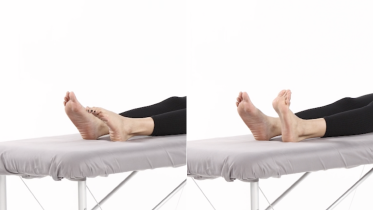
- Press the outside of your foot into the ball, as if turning the sole outward. Build the push up over a second or two, then hold it steady while you keep breathing.
- Let the push go slowly, rest for a moment and repeat.
What you should feel
Effort along the outside of your lower leg, somewhere between the knee and the ankle. The foot and the ball barely move.
Common mistakes
- Sliding the whole leg sideways toward the wall, or rolling it outward from the hip, instead of pushing from the ankle.
- Bending the knee as you press.
- Pushing hard straight away instead of building up the pressure.
- Holding your breath during the hold.
How often
Many programs use holds of 5 to 10 seconds, repeated 5 to 10 times, once or twice a day, starting with a gentle push. Your physio will adjust this, including how hard to press.
Stop and check with your physio if
- Sharp pain on the outside of the ankle or behind the ankle bone, or pain that builds with each hold.
- A snapping or slipping feeling behind the bony bump on the outside of the ankle. Stop and get it checked.
- Your ankle is more swollen after the session.
From the clinic
A soft ball about the size of a football works well. A firm cushion or a rolled towel against the wall does the same job. The push does not need to be hard to be useful, especially early on. Start with one you could hold comfortably for the full count.
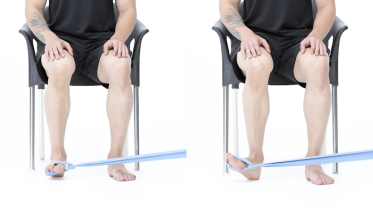
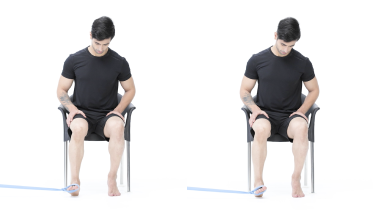
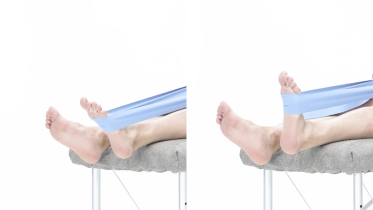
Once holding the push feels easy, many programs move on to ankle eversion with a band, where the foot moves against resistance. The same setup in the opposite direction is isometric ankle inversion. After an ankle fracture or ankle surgery, check with your physio before you start.
Written and checked by the PocketPhysio editorial team. Last updated 2026-09-25.
This page is general education, not a diagnosis or a personal treatment plan. If you have pain, an injury or a health condition, see a physiotherapist or doctor before starting new exercises.