
Ankle arthritis (ankle osteoarthritis) exercises and physiotherapy
Warning signs, and when to get help
What is ankle arthritis?
Ankle arthritis is wear and damage in the joint between the lower end of the shin and the talus, the bone at the top of the foot. The cartilage lining thins, the bone underneath changes, and bony spurs can form at the front, which is why the joint often feels blocked rather than simply sore when you try to bend it forward.
The ankle is unusual among big joints. OrthoInfo describes post-traumatic arthritis, which develops after injuries that damaged the joint surface, most often dislocations and fractures, and says it can appear years later. It also says an injured joint is about seven times more likely than an uninjured one to become arthritic, even when the injury was treated properly. The Cochrane reviewers put it more bluntly: the cause of ankle osteoarthritis is usually trauma, and patients are relatively young because ankle injuries happen at a young age (Witteveen and colleagues, 2015). So a worn ankle in a fifty year old is usually a story about a break or a bad sprain decades earlier, not about getting old, and that is a different conversation from the one people have about knees.
Two other kinds turn up here: osteoarthritis, the wear-and-tear type, and rheumatoid arthritis, which OrthoInfo says often starts in the foot and ankle and is usually symmetrical. If both ankles went at once, or other joints are involved, or the joint is hot and puffy rather than stiff and achy, that points away from simple wear and is worth a blood test. Our rheumatoid arthritis page covers that side.
What are the symptoms of ankle arthritis?
OrthoInfo lists pain with motion that flares after vigorous activity, tenderness on pressing the joint, swelling, warmth and redness, more pain and swelling in the morning or after sitting, and trouble walking.
What people describe in clinic is narrower than that list. The first ten steps out of bed or out of a chair are the worst part of the day. Flat pavement is manageable and slopes, curbs, stairs and sand are not. Pushing off at the end of a step is where the pain sits, and standing still is often more uncomfortable than walking. Swelling builds through the day rather than appearing suddenly.
Weight-bearing X-rays are what a surgeon wants, because OrthoInfo rates a standing view the most useful one for judging how bad the joint is and whether it has gone out of line. An X-ray taken lying down can look better than the joint behaves. You do not need one to get started, though. NICE advises that osteoarthritis is diagnosed from the symptoms in people aged 45 or over who have activity-related joint pain and either no morning stiffness or stiffness that clears within 30 minutes, and that imaging is not used routinely for the diagnosis unless something atypical points at another problem.
Does exercise help ankle arthritis?
It is the standard first step. How much is actually known about it at this joint is a different matter, and we will come to that. OrthoInfo lists physical therapy, with exercises for range of motion, flexibility and strength, among the first treatments for arthritis of the foot and ankle. The reasoning is the same as at the knee: a stronger calf and better control around a worn joint means less of each step landing on the damaged surface.
The trials behind that are thin at this joint. A Cochrane review of conservative treatment options for ankle osteoarthritis found six randomized trials with 240 adults in total, all of them involving hyaluronic acid, and reported that no randomized trial of any other conservative treatment for ankle osteoarthritis existed to include. Its authors concluded there was not enough data to combine into a basis for guidelines, and added that because the cause of ankle arthritis is different, the guidelines written for hip and knee osteoarthritis may not apply here (Witteveen and colleagues, 2015). The large body of exercise evidence sits at the knee, and even there it is less settled than you might expect: an overview of 58 systematic reviews of exercise for knee osteoarthritis found that 87% of those reviews were rated critically low quality, although nearly two thirds of them reported that exercise improved every outcome they measured and the number of exercise-related adverse events was small. The authors described the current evidence as inadequate while still regarding exercise as a reasonable option (Kitagawa and colleagues, 2025).
Exercise is still the first thing to try. It is low risk, and it is what the specialist bodies advise. NICE treats therapeutic exercise and weight management, where weight is a factor, as the core treatments for osteoarthritis, alongside information and support, and that recommendation covers osteoarthritis wherever it sits rather than only the hip and the knee. What has not been measured properly is the size of the benefit at the ankle specifically. That is a reason to expect modest gains and to keep the shoe and brace options in view, not a reason to skip it.
There is one more finding worth knowing, because it tells you what to ask for. When Australian researchers looked at 583,900 general practice encounter records, foot and ankle osteoarthritis was managed 621 times, and medication was used at a rate of 64.6 per 100 problems against 17.7 for counselling or advice and 10.1 for a referral to allied health such as physiotherapy or podiatry (Paterson and colleagues, 2018). If you want the exercise and footwear side of this, you may well have to ask for it.
How to use this program
Read the warning signs at the foot of this page before you start. If your ankle has been operated on, follow the plan from your surgical team and physio instead of this one.
Pick the stage that matches you today, and start at stage 1 if you are not sure. Move up when the current stage feels easy and the ankle settles well afterwards. Each exercise page gives a typical starting dose, and as a rough guide many programs use 2 to 3 sets of 8 to 15 repetitions, with the sitting work most days and the harder strength work 3 days a week so the muscle can recover. Your physio will adjust the exercises and the numbers to suit you.
Some discomfort during and after these is normal, and NICE says so to patients directly: joint pain may increase when you start therapeutic exercise, and doing it regularly and consistently is still worth it, because sticking with it over the long run reduces pain and improves function. The test is the next morning: if the ankle is no worse, the dose was right. If it is more painful or more swollen, do less next time rather than dropping the exercise.
There is a limit on that, and it is the half most exercise pages leave out. OrthoInfo says that in some cases physical therapy makes an arthritic joint hurt more, because movement increases the friction between the worn surfaces, and that when joint pain is aggravated by physical therapy the doctor stops that treatment. So if the ankle keeps being left worse even after you have cut the dose right back, stop and have it reviewed rather than pushing on.
Breathe normally through every repetition rather than holding your breath, especially if you have high blood pressure. If you have fallen in the past year, feel unsteady on your feet, or take medicines that make you dizzy, keep a hand on a kitchen counter throughout the standing exercises, practice only when someone else is at home, and ask your doctor or physio about a falls check.
The exercise program
Stage 1: Get it moving without standing on it
For a painful or very stiff ankle, and for anyone new to exercise. All of these are done sitting or lying, so the joint is not carrying your body weight. Pumps, circles and the alphabet take the ankle through the range it still has, which is what makes the first walk of the morning easier. Toe curls wake up the small muscles under the foot, and the two calf exercises start loading the muscle without a full rise. Many programs use 10 to 15 slow repetitions of each movement, or 2 to 3 sets of 10, once or twice a day. Your physio will adjust this. Little and often beats one long session with a stiff ankle.
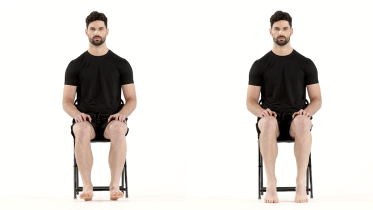 Ankle pumps
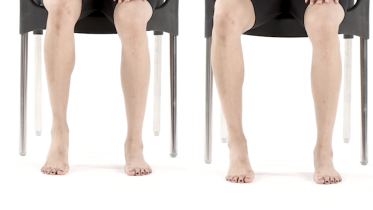 Seated ankle circles with the foot on the floor
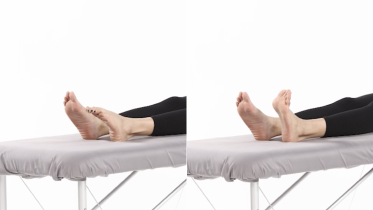 Ankle alphabet
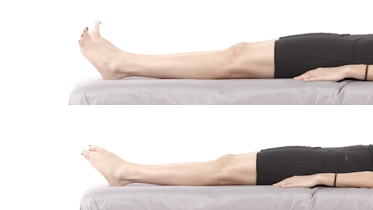 Toe curls
 Isometric calf press against a wall
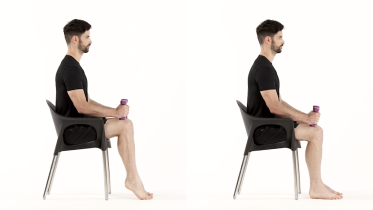 Seated calf raise
Stage 2: Build strength in the four directions, then stand up
When stage 1 feels easy, often after one to three weeks. The four band directions give the ankle resistance in a position you control, and they are the backbone of this program because the calf and the muscles that steady the ankle are what take load off a worn joint. Calf raises on both feet and sit to stand then bring your body weight back in. Hold a counter for the standing work if your balance is not steady. Many programs use 2 to 3 sets of 10 to 15 with the band, most days, and the strength work 3 days a week with a day between. Your physio will adjust this.
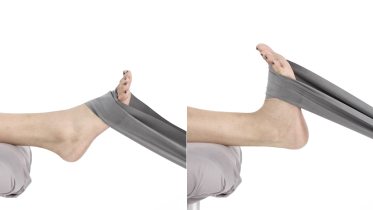 Ankle dorsiflexion with band
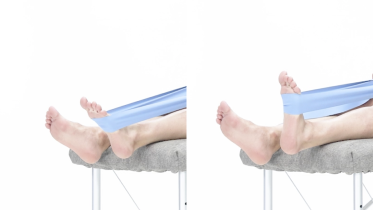 Ankle plantar flexion with band
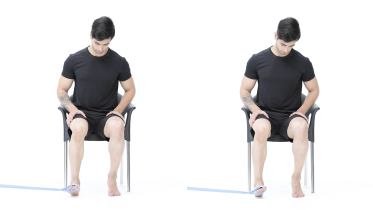 Ankle inversion with band
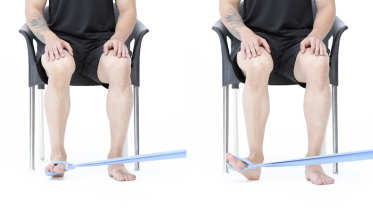 Ankle eversion with band
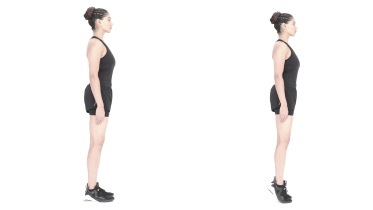 Calf raises
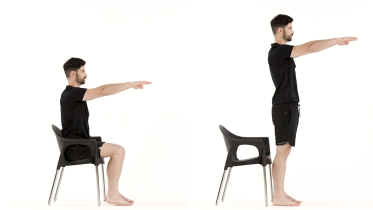 Sit to stand
Stage 3: Balance, stairs and walking better
When stage 2 feels easy and the ankle settles well afterwards. A worn ankle gives poorer information about the ground than a healthy one, so balance work earns its place here rather than being an extra. It goes from feet together to heel to toe to standing on the affected leg, with a counter or a sturdy chair within reach. Step ups practice stairs, and walking with longer steps is for the short, careful step people fall into when push-off hurts. The two calf stretches are for an ankle that will not bend forward enough for a slope, and they are worked gently: a worn joint that is blocked by bone will not stretch out, and forcing it makes it sore. Many programs use 2 to 3 sets of 8 to 12 step ups on each leg, balance holds of 10 to 30 seconds, or several shorter ones if that is all you can hold, 2 to 3 times on each leg, and stretch holds of about 30 seconds, 2 to 3 times each side. Your physio will adjust this.
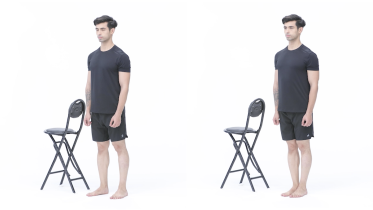 Standing with feet together
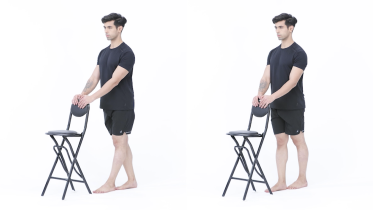 Tandem stance
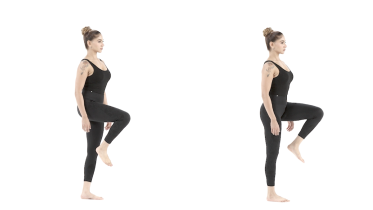 Single leg stance
 Step up
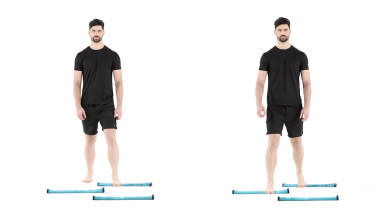 Walking with longer steps
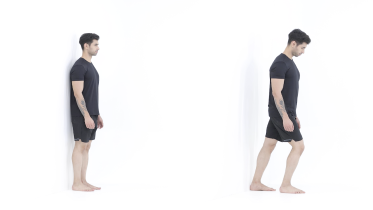 Calf stretch
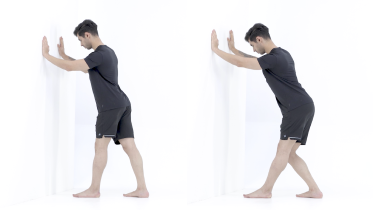 Soleus stretch
Shoes, braces and insoles for ankle arthritis
Footwear does more work at this joint than at most, and it usually gets a sentence when it deserves a section. OrthoInfo says shoe inserts or custom shoes with stiff soles and rocker bottoms can reduce pressure and pain, and that an ankle-foot orthosis may improve mobility, saying a custom-molded leather brace can be effective in minimizing the pain and discomfort of ankle and hindfoot arthritis.
NICE sets a higher bar for the same devices, and it is worth knowing before you spend money. It advises against routinely offering insoles, braces, tape, splints or supports for osteoarthritis, unless the joint is unstable or being loaded abnormally, exercise is not working or is not suitable without the device, and the device is likely to improve movement and function. Those conditions are met more often at a worn, stiff, out of line ankle than at a knee, so the two sources end up closer in practice than they look on paper. NICE also suggests considering a walking aid such as a stick for people with lower limb osteoarthritis, which is worth asking about if the ankle gives way or long walks are the problem.
The reason a firmer shoe helps is mechanical. A stiff sole stops the shoe bending at the ball of the foot, and a rocker bottom lets your weight roll forward through the step. Between them they let you walk through a step without asking the ankle for the forward bend it has lost. That is why a cushioned, bendy running shoe sometimes feels worse than a firmer boot.
Test any footwear change on a short walk before you commit to it. A lace-up boot that comes above the ankle often does more for a stiff, achy ankle than any insole. And get a brace fitted rather than bought online, because a brace that rubs gets worn for a week and then put in a cupboard.
What to change rather than avoid
You do not need a list of banned movements. You need to know what your own ankle settles from. OrthoInfo advises minimizing the activities that aggravate it and swapping high-impact exercise for low-impact, naming swimming and cycling, and says to lose weight if you are carrying extra, which reduces the load the joint takes. NICE puts a number on the weight side for people living with overweight or obesity: it says weight loss improves quality of life and physical function and reduces pain, that any amount of it is likely to help, and that losing 10% of your body weight is likely to be better than losing 5%. If a big target is what puts you off, that first sentence is the one to hold on to.
In practice the usual culprits are a sudden jump in walking distance, long spells standing on a hard floor, and hills. Running on a worn ankle is not forbidden, but it is the first thing to reduce when the joint is flaring. Cycling and swimming are useful while standing work is too sore, and neither replaces the strength work, so keep the program going alongside.
Where fusion and ankle replacement fit
OrthoInfo describes three operations for this joint. Arthroscopic debridement clears loose cartilage, inflamed lining and bone spurs, and it says this is most useful early, when the pain comes from spurs and the joint space is not yet badly narrowed. Fusion joins the bones so that no painful movement is left, held with pins, plates and screws or rods. Total ankle replacement resurfaces the joint with metal or plastic components, which it says preserves more motion than fusion and is most often recommended for advanced arthritis with destroyed joint surfaces or pain that limits daily activities.
All three have real downsides that OrthoInfo names. It says arthroscopy can make an arthritic joint deteriorate more rapidly, because taking the spurs away can increase the motion in the joint and let the cartilage wear through faster. Fusion can fail to unite, the hardware can break, and the loss of movement loads the neighboring joints, which can leave them arthritic years later. A replacement can loosen or fail over the years and may need revising or converting to a fusion, and that later fusion is harder than a fusion done first. For surgery done for arthritis of the foot and ankle, OrthoInfo says full recovery can take 4 to 9 months, depending on how bad the joint was beforehand and how complex the operation is, and that most people get back to their daily activities in 3 to 4 months.
We do not carry a post-operative program for these here. The weight bearing dates, the range limits and when exercise starts come from the surgeon who did the operation. What is worth doing before an operation is getting the calf and the hip as strong as you can, which the program above does, because that work is not wasted either way. If your arthritis followed a break, our ankle fracture rehab page covers that recovery, and if it followed repeated sprains, chronic ankle instability and high ankle sprain are the two to read.
When to see a physio or doctor
See one if the ankle is not improving after 6 to 8 weeks of regular exercise, or if pain is stopping you sleeping or getting about. An ankle that locks, catches or gives way has its own line in the warning signs with its own timing, and that one is not a routine appointment. It is worth asking at the start too, if only to have the footwear and brace options set up properly rather than guessed at.
A hot, swollen, red ankle with a fever is not an exercise question and needs advice the same day, as the warning signs say. So does a foot that has changed shape or color if you have diabetes or reduced feeling in your feet. Check with your doctor before you start if you have a heart or lung condition, or blood pressure that is not under control.
For physiotherapists
Two things set this joint apart from the knee and hip programs on this site. The evidence base is almost empty, so patient expectations need setting honestly at the first appointment. And the mechanical options carry more weight: a rocker sole or a custom brace will often do more for a badly worn, stiff ankle than another four weeks of band work, and OrthoInfo's advice supports offering them rather than holding them back. NG226 recommendation 1.3.11 does not block that, but it sets three conditions that all have to be met: joint instability or abnormal biomechanical loading, therapeutic exercise ineffective or unsuitable without the device, and an expected gain in movement and function. Record that reasoning rather than assume it.
Side to side weight bearing dorsiflexion range, single leg heel raise repetitions and a timed walk give something to track over the first 6 to 12 weeks. Post-traumatic cases are often younger and still working, so the conversation about load management at work matters as much as the program.
Warning signs
Get emergency help now
- Emergency: the ankle or foot looks deformed or out of place, you heard a crack when you were injured, or the foot is numb, tingling, cold, pale or blue. Go to an emergency department straight away.
- Part of your foot or a toe turns cold, pale, blue or black. Call emergency services or go to an emergency department straight away, and do not drive yourself, as the blood supply to the foot may be blocked.
Get help today
- The ankle or foot is hot, red and swollen, or you have a fever or feel unwell. Get medical help the same day, and go to an emergency department if you feel very unwell. If you have a very high or very low temperature, shivering you cannot control, you are breathing very fast or finding it hard to breathe, you are confused or your speech is slurred, your skin, lips or tongue look blue, gray, pale or blotchy (on brown or black skin this can be easier to see on the palms of the hands or soles of the feet), or you have a rash that does not fade when you press it, call emergency services, as this can be sepsis.
- Same day: you have diabetes or numb feet, and one foot becomes hot, swollen or red, or changes color or shape, with or without pain. Take your weight off that foot straight away and get advice the same day from your doctor or your diabetes foot team. This can be Charcot foot, where the bones and joints of the foot are damaged and the foot can collapse. Do not exercise that foot until it has been checked. If you also have a fever or feel very unwell, or redness is spreading up your foot or leg, go to an emergency department.
- Same day: you have diabetes or numb feet and find a new blister, cut or sore on your foot, especially one you did not feel, a wound that smells or is leaking, or new pain in your foot that you cannot explain. Get it seen by your doctor or foot team the same day. If you also have a fever or feel very unwell, redness is spreading up your foot or leg, or part of your foot or a toe turns black, go to an emergency department.
- The pain is severe and getting worse, or the swelling or bruising is very large. Get medical advice the same day.
- A calf or thigh that is newly swollen or getting more swollen, warm, tender, red or darker than usual, has swollen veins that are sore to touch, or has a throbbing or cramping pain that does not fit your injury or condition, or that feels different from normal muscle soreness after exercise. This can be a sign of a blood clot (deep vein thrombosis), especially after surgery, an injury, time in a cast or boot, a long trip or a spell of being much less mobile than usual. Get medical advice the same day. If you are also short of breath or have chest pain, call emergency services.
- A leg or foot that is getting weaker, for example your foot drags, catches on the ground or slaps down when you walk (foot drop). Get medical advice the same day. If the weakness is getting worse by the hour, go to an emergency department.
- The pain is there at night or at rest as well as when you stand and walk, and it is getting worse. If you are being treated for cancer now, contact your cancer team the same day.
- Same day: the ankle locks and you cannot move it out of that position, you cannot put your weight on it, it keeps giving way under you, or it gives way or catches and is also very painful or much more swollen than usual. Get medical advice the same day. If it only catches or gives way now and then, with no new injury and no new swelling, it is not an emergency, but book an appointment with a doctor or physio within a few days. Until it has been checked, leave out the exercises you do standing on one leg, hold the rail on stairs and take care on uneven ground, because an ankle that gives way without warning is how people fall.
Book an appointment
- The pain is there at night or at rest as well as when you stand and walk, and it is getting worse. If you have had cancer, now or in the past, or are losing weight without trying, see your doctor sooner, within a day or two, and mention it. This applies even if the pain is not getting worse.
- The pain is there at night or at rest as well as when you stand and walk, and it is getting worse. See your doctor within a few days.
- You have new numbness, tingling, burning or loss of feeling in the foot or toes. Book an assessment with a doctor or physio in the next week or two. If it came on over hours or days, started after an injury, is spreading, or comes with weakness in the foot or toes, get medical advice the same day.
Common questions
What are the symptoms of ankle arthritis?
OrthoInfo lists pain with movement that flares with vigorous activity, tenderness when the joint is pressed, swelling, warmth and redness, more pain and swelling in the morning or after sitting, and difficulty walking. In practice the two that bring people in are the first few minutes after getting up and the end of a long day on their feet. Slopes, curbs and uneven ground tend to be worse than flat pavement, because they ask the ankle for the forward bend it has lost.
Does exercise help ankle arthritis?
It is the usual first step, and the evidence behind it is thinner than most pages admit. OrthoInfo lists physical therapy to improve range of motion, flexibility and strength among the first treatments for foot and ankle arthritis, and NICE tells clinicians to offer therapeutic exercise, tailored to the person, to everyone with osteoarthritis, giving local muscle strengthening and general aerobic fitness as the examples. NICE does not carve the ankle out of that. But a Cochrane review of conservative treatments for ankle osteoarthritis found only six trials with 240 adults between them, every one of them involving hyaluronic acid, and reported that it found no randomized trial of any other conservative treatment for this joint and not enough data to pull the evidence together (Witteveen and colleagues, 2015). The large exercise trials were done on knees and hips. So this program is built on sound principles, on guideline advice written for osteoarthritis in general, and on what works at other joints, and we would rather say that than pretend otherwise.
What is the treatment for ankle arthritis?
OrthoInfo describes the first approach as non-surgical: cutting back the activities that aggravate it, swapping high-impact exercise for low-impact such as swimming or cycling, losing weight if you are carrying extra, physical therapy, braces, shoe inserts or stiff-soled shoes with a rocker bottom, anti-inflammatory medication, and a steroid injection into the joint whose relief it describes as often temporary. NICE puts the same two things at the center for osteoarthritis at any joint, calling therapeutic exercise and weight management, where that applies, the core treatments alongside information and support. Fusion and ankle replacement come later, for joints that are badly worn. Treatment is usually a combination rather than one thing.
Does a brace or an insole help ankle arthritis?
Both are standard options for this joint, and the two main sources set a different bar for them. OrthoInfo says an ankle-foot orthosis may improve mobility, says a custom-molded leather brace can be effective in minimizing the pain and discomfort of ankle and hindfoot arthritis, and says shoe inserts or custom shoes with stiff soles and rocker bottoms can reduce pressure and pain. NICE is more restrictive and its restriction is not knee-specific: it advises against routinely offering insoles, braces, tape, splints or supports for osteoarthritis unless the joint is unstable or being loaded abnormally, exercise is not working or is not suitable without one, and the aid is likely to improve your movement and function. A badly worn ankle, often stiff and out of line after an old fracture, is one of the joints that commonly meets that test, which is why these come up here more than at the knee. Get it fitted rather than guessing, and keep the strength work going alongside.
Is walking good or bad for ankle arthritis?
Walking in amounts your ankle settles from is good for you, and a sudden increase is the usual reason it flares. The NHS advises aiming for at least 150 minutes of moderate aerobic activity a week, such as cycling or fast walking, plus strength exercises on two or more days that work the major muscle groups, to keep generally healthy. If one long walk leaves the ankle sore for two days, split the same distance across the day and build it up slowly. Shoes matter more here than at most joints, so test any change in footwear on a short walk first.
What is the difference between ankle arthritis and arthritis in the big toe?
They are different joints with different answers, and they get confused because both hurt when you push off. Ankle arthritis sits in the joint between the shin and the foot, so the pain is around the bony bumps and the front of the ankle. Arthritis of the big toe joint is called hallux rigidus and is covered on our hallux rigidus page, which has its own program. If pressing the front of the ankle is sore, you are in the right place.
Why did I get ankle arthritis when I am not old?
Because in the ankle, an old injury is the common cause. OrthoInfo describes post-traumatic arthritis developing after dislocations and fractures that damaged the joint surface, says it can appear years after the injury, and says an injured joint is about seven times more likely than an uninjured one to become arthritic even with proper treatment. That is why people turn up with a worn ankle in their forties after a break in their twenties. Rheumatoid arthritis and other inflammatory types also often start in the foot and ankle, and those need a different kind of treatment, so a hot, swollen joint or several joints at once is worth a blood test rather than a program.
When should I think about ankle fusion or an ankle replacement?
When the joint is badly worn and non-surgical treatment has stopped being enough, and that is a conversation with a foot and ankle surgeon rather than a line you cross. OrthoInfo describes fusion as joining the bones so there is no painful movement left, and total ankle replacement as resurfacing the joint, which it says is most often recommended for advanced ankle arthritis with destroyed joint surfaces or pain that limits daily activities. For surgery done for arthritis of the foot and ankle, it says full recovery can take 4 to 9 months, depending on how bad the joint was beforehand and how complex the operation is, and that most people are back to their daily activities in 3 to 4 months. We do not stage that rehab here, because it belongs to the surgeon who operates and the physio who sees you afterwards.
References
- American Academy of Orthopaedic Surgeons. Arthritis of the Foot and Ankle. OrthoInfo. https://www.orthoinfo.org/en/diseases--conditions/arthritis-of-the-foot-and-ankle/
- Witteveen AG, Hofstad CJ, Kerkhoffs GM. Hyaluronic acid and other conservative treatment options for osteoarthritis of the ankle. Cochrane Database of Systematic Reviews. 2015;(10):CD010643. https://doi.org/10.1002/14651858.CD010643.pub2
- Paterson KL, Harrison C, Britt H, Hinman RS, Bennell KL. Management of foot/ankle osteoarthritis by Australian general practitioners: an analysis of national patient-encounter records. Osteoarthritis and Cartilage. 2018;26(7):888-894. https://doi.org/10.1016/j.joca.2018.03.013
- Kitagawa T, Isaji Y, Sasaki D, Onishi K, Hayashi M, Okuyama W. Effectiveness of exercise therapy in patients with knee osteoarthritis: an overview of systematic reviews. BMJ Open. 2025;15(7):e093163. https://doi.org/10.1136/bmjopen-2024-093163
- National Institute for Health and Care Excellence. Osteoarthritis in over 16s: diagnosis and management. NICE guideline NG226. Published 19 October 2022. Read 28 October 2026. https://www.nice.org.uk/guidance/ng226/chapter/Recommendations
- NHS. Osteoarthritis. https://www.nhs.uk/conditions/osteoarthritis/
- NHS. DVT (deep vein thrombosis). Page last reviewed 30 April 2026. https://www.nhs.uk/conditions/deep-vein-thrombosis-dvt/
Written and checked by the PocketPhysio editorial team. Last updated 2026-10-28.
This page is general education, not a diagnosis or a personal treatment plan. See a physiotherapist or doctor for advice about your own situation.