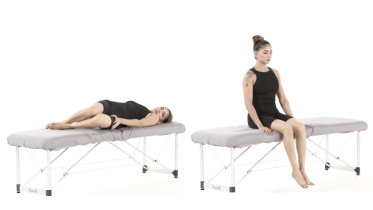
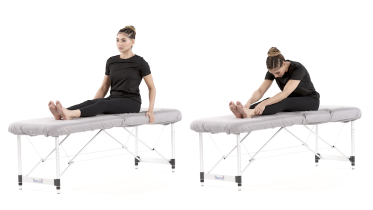
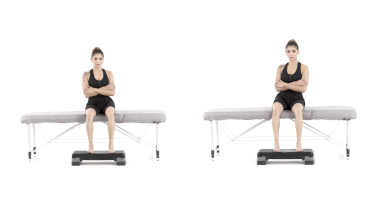
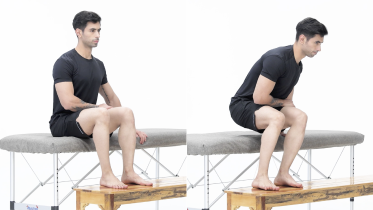
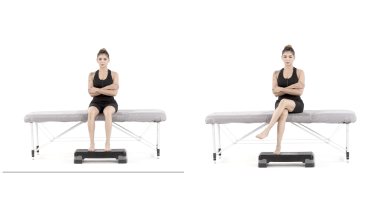
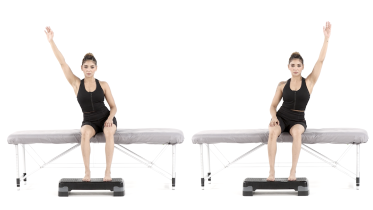
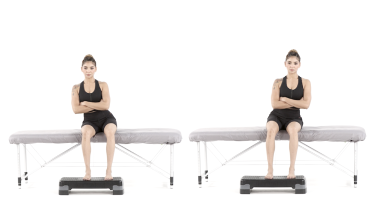
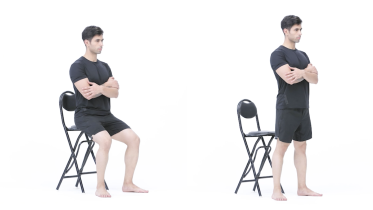
Sit to stand
Sit to stand is what it sounds like: you sit down onto a chair and stand up again, over and over, with your arms held out in front of you. The thighs and buttocks do most of the work, and you practice the forward lean that gets you out of a seat. Physios often give it to older adults, after knee or hip surgery, and to anyone who finds getting up from a chair hard.
How to do the sit to stand
- Stand in front of a sturdy chair with the seat just behind your legs. Keep your feet about hip width apart and flat on the floor.
- Lift both arms straight out in front of you to about shoulder height.
- Bend at your hips and knees and lower yourself slowly onto the seat. Aim to land gently rather than drop the last few inches.
- Once you are sitting, lean forward from the hips until your head is roughly over your toes.
- Push through both feet and stand up tall, arms still out in front. Try not to favor one leg or push off with your hands.
- Keep repeating at a pace you can control.
What you should feel
Work in the front of your thighs and in your buttocks, mostly as you rise. Your breathing may pick up after a few rounds, which is normal.
Common mistakes
- Dropping onto the seat instead of lowering with control.
- Trying to stand straight up without leaning forward first, so you rock back or need a push from your hands.
- Shifting your weight onto the stronger leg so the other one does less.
- Letting the knees fall inward as you stand.
How often
Many programs start with 2 to 3 sets of 5 to 10, once a day or on most days. Your physio will adjust the chair height and the numbers to suit you.
Stop and check with your physio if
- You feel dizzy, lightheaded or faint as you get up. Sit back down and wait for it to pass. If it does not pass within a minute or two, or it keeps happening, get medical advice the same day before you practice again. If you faint, or it does not settle within a few minutes of keeping still, call emergency services.
- Sharp pain in the knee, hip or lower back.
- Your knee gives way or you feel you might fall.
- Chest pain or pressure, dizziness or feeling faint, a racing or irregular heartbeat, or being far more out of breath than the effort should cause.
- You are pregnant and notice bleeding or fluid leaking from your vagina, regular painful tightenings, tummy pain that does not settle when you rest or comes with lower back pain, or a change in your baby's usual movements, such as moving less than usual. Stop and contact your midwife or maternity unit straight away. Do the same for a severe headache, problems with your vision such as blurring or flashing lights, pain just below your ribs, or sudden swelling of your face, hands or feet, which can be signs of pre-eclampsia. Call emergency services if the bleeding is heavy, the tummy pain is severe, bleeding or tummy pain comes with pain in your shoulder or feeling sick, faint or dizzy, or a headache comes on suddenly and is very severe.
From the clinic
Seat height makes a big difference. A higher seat, or a firm cushion on the seat, makes the exercise easier, and a lower one makes it harder. Use a chair that will not slide, ideally with its back against a wall.
If you cannot stand up without your hands yet, push off your thighs for now and work toward keeping the arms out in front. The voice guide suggests going as fast as you can while staying balanced and in control. Get the movement steady first, then pick up the pace.
Not sure of your balance? Have someone nearby, or set the chair beside a kitchen counter you can reach. Wear flat shoes that fit well and grip the floor, not socks, tights or bare feet.
If you have had a hip replacement, get the go-ahead from your surgeon or physio before you try sit to stand. Standing up from a low seat bends the hip past a right angle, and many surgeons ask you to avoid that for the first months after some operations. Ask them how high your seat should be. If you are pregnant, check with your midwife or physio before you start. The bodyweight squat is the next step once sit to stand feels easy.
If chest pain, pressure or tightness does not ease quickly when you rest, spreads to your arm, neck, jaw, stomach or back, or comes with sweating, feeling sick, feeling light-headed or being short of breath, call emergency services straight away, as this can be a heart attack. If it eases quickly and none of these happen, get medical advice the same day, and do not exercise again until you have been checked.
Written and checked by the PocketPhysio editorial team. Last updated 2026-09-28.
This page is general education, not a diagnosis or a personal treatment plan. If you have pain, an injury or a health condition, see a physiotherapist or doctor before starting new exercises.