
Strength training for older adults
What is sarcopenia?
Sarcopenia is the medical name for losing muscle strength and muscle to the point where it causes problems. The European working group on sarcopenia (EWGSOP2) describes it as a muscle disease, a kind of muscle failure, that builds up from changes in the muscles over a lifetime (Cruz-Jentoft 2019). Low muscle strength is now its main sign. Doctors often check it with a grip strength test, or by timing how long it takes to stand up from a chair 5 times without using your arms. Sarcopenia is common in older age, but it can start earlier in life.
When a doctor also finds low muscle mass or poor muscle quality, the diagnosis is confirmed. If physical performance, such as walking speed, is low as well, it is called severe. Sarcopenia can come from aging alone. Other things can add to it, such as another illness, being inactive, or not eating enough energy or protein.
Why strength training matters for older adults
The UK Chief Medical Officers call the loss of muscle strength in later life the main limit on staying independent. They also note that muscle mass and bone density start to decline from around age 50, and that strength activities can help slow this. The ACSM position stand makes a similar point: exercise cannot stop the body aging, but regular exercise can limit the effects of an inactive life (Chodzko-Zajko 2009).
A Cochrane review pooled 121 trials with 6,700 older people (Liu and Latham 2009). Progressive resistance training, meaning strength work that gets harder as you get stronger, had a large effect on muscle strength and a moderate to large effect on getting out of a chair. Walking speed improved a little, and overall physical ability improved by a small amount. Most trials trained 2 to 3 times a week at a high intensity. Side effects were poorly recorded, so the authors advised some caution in applying the results to people with health conditions.
The NSCA position statement concludes that a well-designed strength program can improve mobility and everyday function in older adults and help them stay independent (Fragala 2019). It also says programs can be adapted for people with frailty, memory problems or long-term conditions, including seated versions for people living in care homes.
How often to do strength training
The WHO guidelines advise muscle-strengthening activity at moderate or greater intensity, working all the major muscle groups, on 2 or more days a week (Bull 2020). For people aged 65 and over, they add varied activity that focuses on balance and strength on 3 or more days a week, to improve everyday function and prevent falls. The UK guidelines ask for activities that improve or maintain strength, balance and flexibility on at least 2 days a week.
Both also advise regular aerobic activity. The UK guidelines suggest building up to at least 150 minutes a week of moderate activity, and brisk walking is an easy way to start. They also suggest breaking up long spells of sitting with light activity, or at least by standing up. If all of this sounds like a lot, both guidelines say some activity is better than none.
How to use this program
Pick the stage that matches you today. If you are not sure, start at stage 1. Move up a stage when the current one feels easy and you have recovered by the next day.
Start light enough to learn each movement well. After that, the NHS advice is to work to the point where you need a short rest before you repeat the activity. In practice, the last few repetitions of a set should feel hard while you can still keep good form. Rest between sets until your breathing settles.
The WHO advises starting small and building up gradually. Change one thing at a time. Add repetitions first, then make the exercise harder with a lower chair, a firmer band, a slightly heavier weight or less help from your hands. The NSCA statement also includes power training, which means lifting quickly with a moderate load. At home, that can simply mean standing up from the chair a little faster once the slow version is steady, as long as you stay in control.
How often depends on the exercise, and each page gives its own. Lighter moves such as sit to stand and the chair squat are often done on most days, while work with weights, such as the shoulder press and the biceps curl, is usually done 2 or 3 days a week with a rest day in between.
Muscle soreness for a day or two after a new exercise is common. Joint pain and muscle soreness were the side effects reported in many of the trials that checked for them (Liu and Latham 2009). Sharp pain during an exercise means stop that exercise for today. A joint that is more painful or swollen the next day means the load was too much for now, so do less next time rather than stopping altogether. A calf or thigh that is swollen, warm or red is not normal soreness: see the warning signs below.
Each exercise page gives a typical starting dose. As a rough guide, most strength exercises here start at 2 to 3 sets of 5 to 15 repetitions, and the hand exercises at 5 to 15 repetitions, 1 to 3 times a day. Your physio will adjust the exercises and the numbers to suit you.
If you have high blood pressure, breathe steadily through every repetition and never hold your breath.
The exercise program
Stage 1: Start seated or with support
For anyone new to strength work, coming back after an illness, or unsteady on their feet. The armrests take some of your weight as you stand, the row and knee extension are done sitting, and wall push-ups keep most of your body weight on your feet. The hand exercises train grip for jobs like opening jars and wringing out a cloth. Hold a kitchen counter for calf raises.
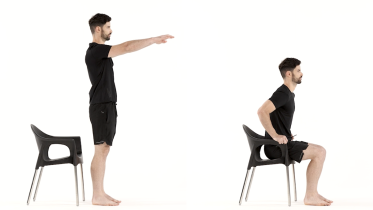 Sit to stand using armrests
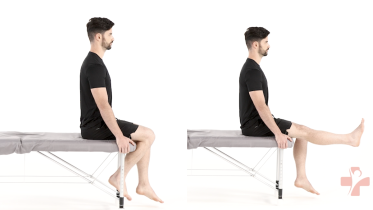 Seated knee extension
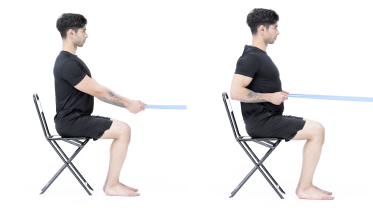 Seated row with band
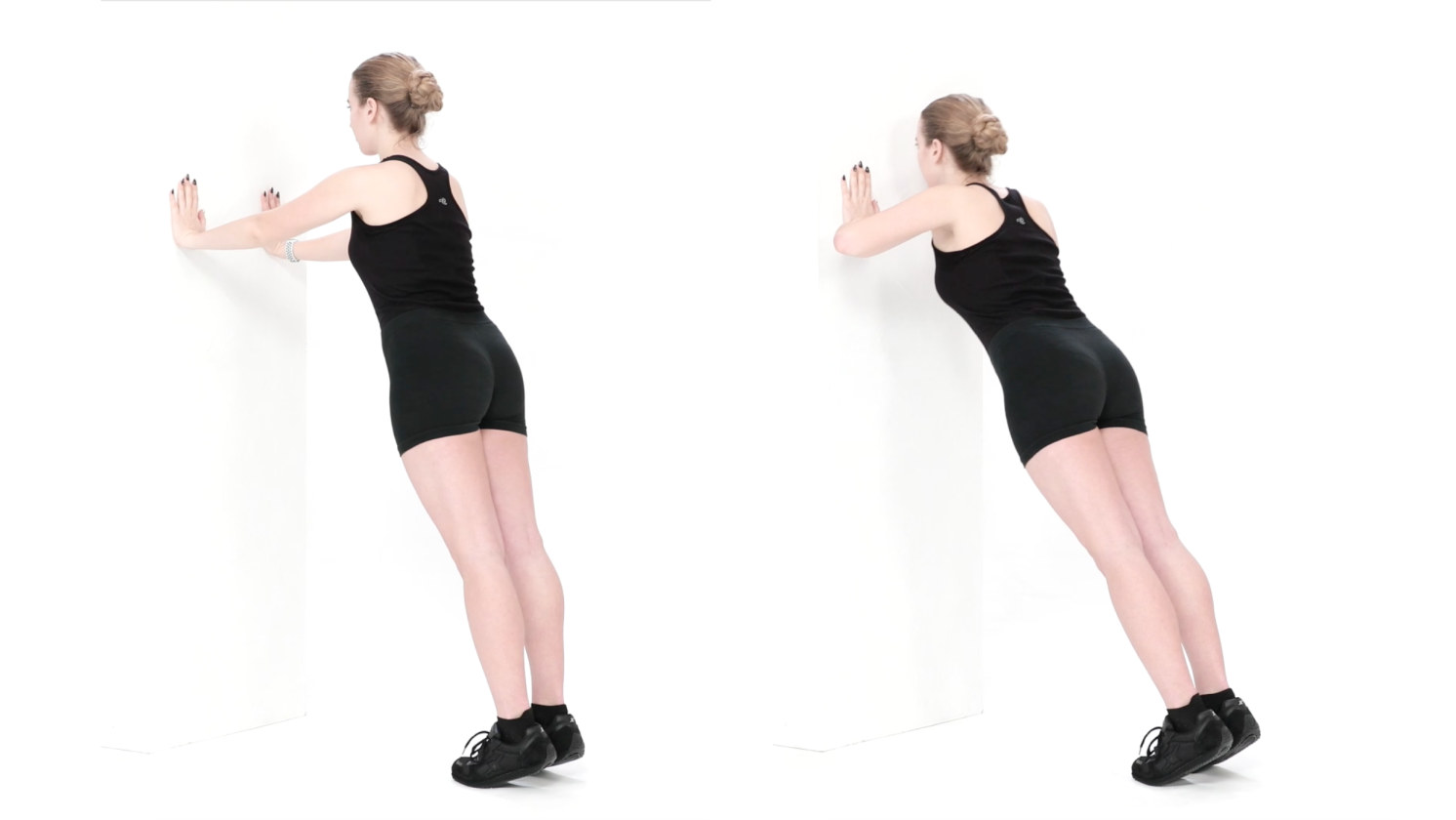 Wall push-ups
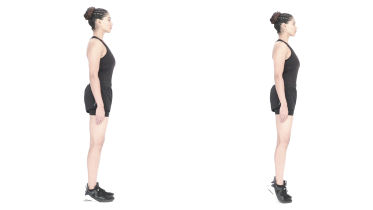 Calf raises
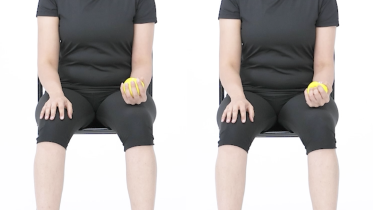 Hand grip squeeze
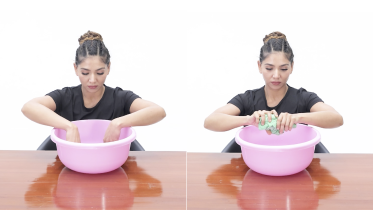 Towel wringing
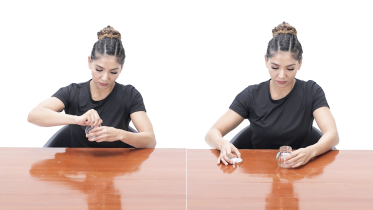 Opening a jar
Stage 2: Stand up and add load
When stage 1 feels easy and you have recovered by the next day. Sit to stand without your hands and the chair squat build the leg strength for getting up from low seats. The shoulder press and biceps curl train reaching up and lifting, and the lawnmower pull trains pulling. Use a light weight or none to start. Keep a sturdy chair or counter within reach for the standing ones.
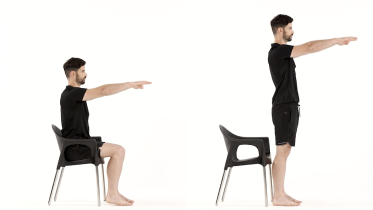 Sit to stand
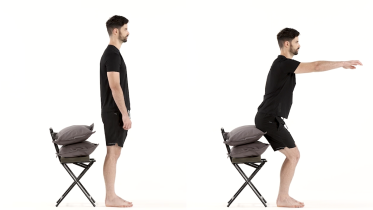 Chair squat
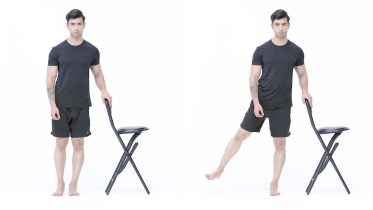 Standing hip abduction
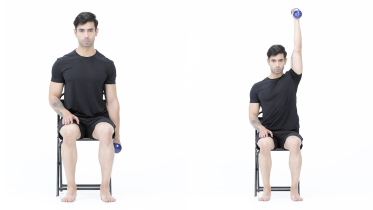 Seated dumbbell shoulder press
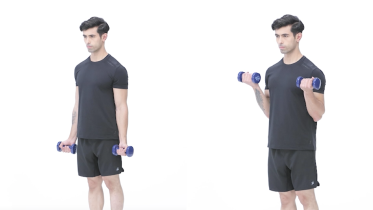 Biceps curl
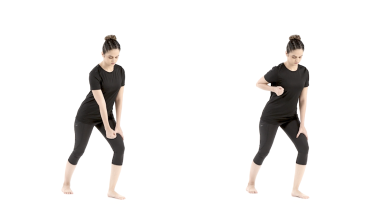 Lawnmower pull
Stage 3: Stairs, lunges and getting up from the floor
When stage 2 feels easy and your balance is steady. Stair climbing and step ups train your legs the way the stairs at home do, so use a handrail. The supported lunge loads one leg at a time with a hand on a chair. Keep doing the stage 2 arm exercises, adding a little weight as they get easier. Practice getting up from the floor with someone nearby, and if you have fallen in the past year or feel unsteady, go through it with your physio first.
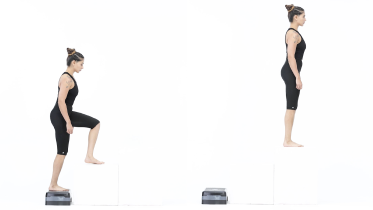 Stair climbing
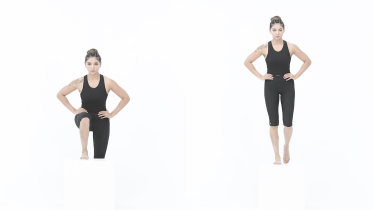 Step up
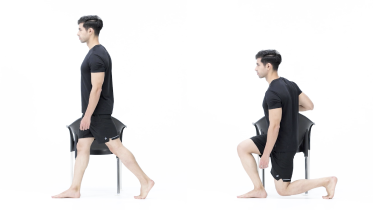 Supported lunge
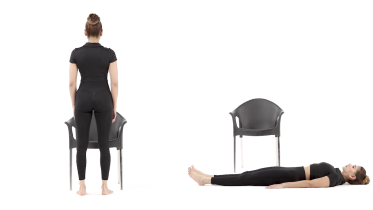 Getting up from the floor
Strength, balance and falls
For falls, strength work is usually paired with balance work. The UK guidelines state that evidence-based strength and balance programs reduce the rate and risk of falls. If you are worried about falling, the NHS says exercises to improve your strength, balance and flexibility will help you feel stronger and more confident on your feet.
For the balance side, see the balance and falls prevention program and the balance and walking exercises, such as tandem stance and single leg stance. Hold a kitchen counter until each one feels steady. The getting up from the floor page also explains what to do if you fall and cannot get up.
Food, protein and weight
Muscle needs food as well as exercise. EWGSOP2 lists not getting enough energy or protein among the causes of sarcopenia, for example because of a poor appetite, trouble eating or trouble getting healthy food (Cruz-Jentoft 2019). The NHS notes that people aged 65 and over are particularly at risk of malnutrition. How much protein and energy you need depends on you and your health, so discuss it with your GP or a dietitian. If you are losing weight without trying, see the warning signs below.
Check with your doctor before you start
With a heart condition or high blood pressure, check with your doctor before you start. This matters most if your blood pressure is not under control. The NHS also advises speaking to a GP first if you have not exercised for some time, or if you have medical conditions or concerns. If you have had an operation recently, follow the program from your surgeon and physio rather than this one.
If you have had a hip or knee replacement, get the go-ahead from your surgeon or physio before you try the sit to stand exercises, the chair squat, standing hip abduction, stair climbing, step ups, the supported lunge or getting up from the floor. Some operations limit this kind of work for the first months, so the timing depends on your surgery.
With low bone density (osteoporosis) or a past fracture in your spine, check with your physio before you add the twist to the lawnmower pull, and again before you hold a weight in it. The osteoporosis program covers strength, impact and balance work for weak bones, and how to bend and lift safely.
The UK guidelines suggest that for people with frailty, moderate to severe dementia, past fractures of the spine or regular falls, new exercises may be better supervised by a trained professional at first. A physio or a falls service can help with this.
While you exercise, stop straight away if you have any of these: chest pain or pressure, dizziness or feeling faint, a racing or irregular heartbeat, or being far more out of breath than the effort should cause. What to do next is in the warning signs below.
When to see a physio or doctor
See a physio or your GP if everyday things like getting out of a chair or climbing stairs are getting harder, if you feel unsteady, or if you are not sure which stage suits you. Get checked too if a joint stays painful or swollen after exercise even when you cut back. A GP can look for causes of weakness and falls, such as weak bones or eyesight problems, and can refer you to a falls service (NHS). Some signs need help faster, from an emergency call to a doctor's appointment within a few days. They are listed in the warning signs below.
For physiotherapists
EWGSOP2 uses grip strength (below 27 kg (60 lb) for men and 16 kg (35 lb) for women) or the 5-times chair stand test (over 15 seconds) to flag probable sarcopenia. Low muscle quantity or quality then confirms it, and low physical performance marks it as severe (Cruz-Jentoft 2019). The 30-second chair stand test is a different test with its own norms, and it is a simple way to track leg strength over time.
For loading, the NSCA position statement recommends an individualized, periodized approach. It works toward 2 to 3 sets of 1 to 2 multijoint exercises per major muscle group at 70 to 85% of 1RM, 2 to 3 times a week, plus power exercises done faster with moderate loads of 40 to 60% of 1RM (Fragala 2019). Its summary table starts beginners and people with frailty on 1 set, advises lighter loads for beginners, frailty, cardiovascular disease and osteoporosis, and suggests stopping sets short of failure to reduce joint stress. The one rep max calculator estimates 1RM from a set of 1 to 10 repetitions, so you do not need a true maximal lift. The program here is only a starting point for patients, and most older adults need it adjusted to their health and to how they respond.
See a doctor promptly if
- If chest pain, pressure or tightness does not ease quickly when you rest, spreads to your arm, neck, jaw, stomach or back, or comes with sweating, feeling sick, feeling light-headed or being short of breath, call emergency services straight away, as this can be a heart attack. If it eases quickly and none of these happen, get medical advice the same day, and do not exercise again until you have been checked.
- Emergency: any sign of a stroke, even if it goes away. That means a face that droops on one side, an arm you cannot lift or keep up, slurred or muddled speech, weakness or numbness on one side of your body or face, sudden blurred vision, double vision or loss of sight, trouble swallowing, sudden dizziness with unsteadiness or falling over, a sudden severe headache, or a sudden fall where your legs give way but you do not black out (a drop attack). Call emergency services straight away.
- Emergency: after a fall, you cannot get up, or you may have hurt your head, neck, back or hip. Stay where you are, keep warm and call emergency services, or get someone to call for you.
- Emergency: you fell and cannot remember the fall or how it happened. Go to an emergency department straight away, and do not drive yourself. You may have blacked out or hit your head without knowing it.
- Emergency: you have had a fall or an injury and now have severe hip pain, or you cannot walk or put weight on the leg. Call emergency services or go to an emergency department. This can be a sign of a broken hip (hip fracture).
- Same day: you blacked out or fainted, even for a moment. Get medical advice the same day. Call emergency services instead if the person cannot be woken within 1 minute, has not fully recovered or has trouble speaking or moving, has chest pain or a pounding, fluttering or irregular heartbeat, fainted while exercising or lying down, is shaking or jerking, or was badly hurt.
- Same day: dizziness or feeling faint during or after exercise, without any of the emergency signs above. Stop the exercises and get medical advice the same day. If you faint, it does not settle within a few minutes of sitting still, or you cannot stand or walk steadily, call emergency services.
- Same day: after a fall, you are in pain, have hurt yourself or feel unwell, or you were on the floor for an hour or more, without any of the emergency signs above. Get medical advice the same day, even if you managed to get up.
- Same day: a calf or thigh that is newly swollen, warm, tender, red or darker than usual, has swollen veins that are sore to touch, or has a throbbing or cramping pain that does not fit your injury or condition, or that feels different from normal muscle soreness after exercise. This can be a sign of a blood clot (deep vein thrombosis), especially after surgery, an injury, time in a cast or boot, a long trip or a spell of being much less mobile than usual. Get medical advice the same day. If you are also short of breath or have chest pain, call emergency services.
- Same day: new hip or groin pain after a fall, even a small one, if you are older, have low bone density (osteoporosis) or have taken steroid tablets for a long time, even if you can still walk. Get medical advice the same day. A broken hip is not always obvious at first.
- Emergency: new neck or back pain after a fall, a knock or a jolt, even a minor one such as a trip or a sudden stop in a car, if you have a condition that stiffens the spine, such as ankylosing spondylitis. Call emergency services or go to an emergency department straight away, do not drive yourself, and tell the staff about your spine condition, so they keep your neck and back in their usual position. A stiff spine can break after a small injury, and the break is easy to miss at first. If the pain started straight after the injury, or you also have numbness, tingling or weakness in your arms or legs, keep still and call emergency services.
- Back pain after a minor fall or strain if you are older, have low bone density (osteoporosis) or have taken steroid tablets for a long time. Get medical advice the same day.
- Neck pain after a car accident or a fall, even a minor one, if you are 65 or older, have low bone density (osteoporosis) or have taken steroid tablets for a long time. Get your neck checked by a doctor the same day, for example at an emergency department, before you start these exercises. At 65 or older, doctors usually want an X-ray or scan of the neck after an accident.
- A new fall, even if you were not hurt. If none of the lines above apply, book an appointment with your GP within a few days and tell your physio before your next session. A GP can check for causes such as muscle weakness, weak bones or eyesight problems, and may refer you to a falls service.
- Losing weight without trying. See your doctor within a day or two and mention it. If you also have new back or neck pain, get medical advice the same day. If you are being treated for cancer now, contact your cancer team the same day.
Common questions
Is it safe for older adults to lift weights?
For most healthy older adults, yes, when the program is well designed and the technique is taught properly. That is the first conclusion of the NSCA position statement on strength training for older adults (Fragala 2019). In the Cochrane review, serious side effects were rare and none was reported as caused directly by the exercise, although many trials recorded side effects poorly (Liu and Latham 2009). With a heart condition or high blood pressure, check with your doctor before you start.
How often should older adults do strength training?
On at least 2 days a week, according to both the WHO and the UK Chief Medical Officers. For people aged 65 and over, the WHO also advises activity that focuses on balance and strength on 3 or more days a week, to help prevent falls. Many programs spread the harder sessions out with a rest day between them. Your physio will adjust this to you.
Is it too late to start strength training in older age?
The trials say no. In the Cochrane review of 121 trials in older people, strength training that got harder over time had a large effect on muscle strength (Liu and Latham 2009). Start at a level you can control and build up slowly. If you are frail or fall often, the UK guidelines suggest having a trained professional supervise new exercises at first.
How much protein do older adults need?
It depends on you and your health, so this page does not give a figure. The European sarcopenia group lists not eating enough energy or protein as one cause of muscle loss (Cruz-Jentoft 2019). Discuss it with your GP or a dietitian, especially if your appetite is small or you are losing weight without trying.
Do I need a gym or weights?
No. The NHS lists everyday strength activities such as carrying heavy shopping bags, heavy gardening, working with resistance bands and exercises that use your own body weight. Most of this program needs only a sturdy chair, a wall, a resistance band and a light dumbbell.
References
- World Health Organization. WHO guidelines on physical activity and sedentary behaviour. 2020. https://www.who.int/publications/i/item/9789240015128
- Bull FC, Al-Ansari SS, Biddle S, et al. World Health Organization 2020 guidelines on physical activity and sedentary behaviour. British Journal of Sports Medicine. 2020;54(24):1451-1462. doi:10.1136/bjsports-2020-102955
- UK Chief Medical Officers. UK Chief Medical Officers' physical activity guidelines. Department of Health and Social Care. 2019. https://www.gov.uk/government/publications/physical-activity-guidelines-uk-chief-medical-officers-report
- Cruz-Jentoft AJ, Bahat G, Bauer J, et al. Sarcopenia: revised European consensus on definition and diagnosis. Age and Ageing. 2019;48(1):16-31. doi:10.1093/ageing/afy169
- Fragala MS, Cadore EL, Dorgo S, et al. Resistance training for older adults: position statement from the National Strength and Conditioning Association. Journal of Strength and Conditioning Research. 2019;33(8):2019-2052. doi:10.1519/JSC.0000000000003230
- Liu CJ, Latham NK. Progressive resistance strength training for improving physical function in older adults. Cochrane Database of Systematic Reviews. 2009;(3):CD002759. doi:10.1002/14651858.CD002759.pub2
- American College of Sports Medicine, Chodzko-Zajko WJ, Proctor DN, et al. American College of Sports Medicine position stand. Exercise and physical activity for older adults. Medicine and Science in Sports and Exercise. 2009;41(7):1510-1530. doi:10.1249/MSS.0b013e3181a0c95c
- NHS. Physical activity guidelines for older adults. https://www.nhs.uk/live-well/exercise/physical-activity-guidelines-older-adults/
- NHS. Falls. https://www.nhs.uk/conditions/falls/
- NHS. Malnutrition. https://www.nhs.uk/conditions/malnutrition/
- NHS. Unintentional weight loss. https://www.nhs.uk/symptoms/unintentional-weight-loss/
- NHS. Fainting. https://www.nhs.uk/symptoms/fainting/
- NHS. Deep vein thrombosis (DVT). https://www.nhs.uk/conditions/deep-vein-thrombosis-dvt/
- NHS. Symptoms of a stroke. https://www.nhs.uk/conditions/stroke/symptoms/
Written and checked by the PocketPhysio editorial team. Last updated 2026-09-26.
This page is general education, not a diagnosis or a personal treatment plan. See a physiotherapist or doctor for advice about your own situation.