
Part of Hip osteoarthritis
Seated exercises for hip arthritis, and standing ones with support
Warning signs, and when to get help
Do seated exercises help hip arthritis?
Yes, and the limit is better said now than discovered in six weeks. What a chair does is take your body weight off the hip. That is useful twice over. It lets a hip that cannot tolerate standing work keep moving and keep its muscles active, and it gives you something to fall back on during a bad spell instead of stopping altogether. For a lot of people it is the only way the first fortnight is going to happen at all.
What a chair also does is remove the load, and load is what makes muscle stronger. So seated exercise asks less of the hip than the condition eventually needs. NICE recommends local muscle strengthening alongside general aerobic fitness, and OARSI names structured land-based exercise programs as a core treatment for hip osteoarthritis (Bannuru and colleagues, 2019). Both of those words carry weight: structured means a dose and a progression, and land-based means on your feet rather than only in a pool.
The plan, then, is a staircase and not a destination. Seated work while the hip is irritable or while you are finding your feet. Standing work with a hand on the counter as soon as that is manageable. Then the full program when it is.
Nothing here is claimed to slow the arthritis, protect the joint or delay an operation. The exercise trials in hip osteoarthritis measured pain, function and quality of life, and the latest Cochrane review found the average changes slight (Hall and colleagues, 2026). What seated and supported work does reliably buy is strength in the leg, confidence on your feet and an easier time standing up, which are worth having on their own terms.
Seated exercises for a sore hip
Two checks before the first one, because the links in this section go straight to the exercises.
If you have had a hip replacement, or a broken hip fixed with screws, a nail or a plate, or with part or all of the hip replaced, do not start any of these, the seated ones included, until your surgeon or physio has told you which you may do. Lifting the knee from a chair bends the hip, and the knee squeezes draw the operated leg toward the middle of your body, and both of those are directions a surgeon's limits are usually about. If you have a heart or lung condition, or blood pressure that is not under control, check with your doctor before you start. What to be careful with has the rest of it, and it is written to be read before the first session.
Past those two, these are the ones to start with, each with a video on its own page. Set up first: a firm chair that will not slide or tip, ideally with its back against a wall, feet flat, and sit tall.
Seated hip flexion lifts the knee a short way up from the chair. Small and slow beats high and fast, and the aim is to feel the front of the hip working without the back rocking.
Seated isometric hip adduction and the adductor ball squeeze both work the muscles on the inside of the thigh with nothing moving. Use a ball or a firm cushion between the knees for the squeeze. Press, hold, breathe, release. If you have no ball, a rolled towel does the job.
Seated knee extension straightens the knee out in front of you and works the thigh, which is doing a lot of the work every time you stand up.
Once the first ones feel easy, a few more go in. Seated ball marching alternates the legs and asks a bit more of the trunk, and the seated hip hike trains the muscles at the side of the hip from a chair, which is the group that keeps your pelvis level when you walk. Seated isometric hip flexion is the no-movement version of the first exercise, useful on a day when lifting the knee is too much.
Do not try all of them on day one. Pick three or four, get a week of them behind you, then change the mix.
Standing exercises with support
The standing tier is the one that matters most, and a kitchen counter is all it takes. Keep a hand on it, or on the back of a sturdy chair, for the whole of every exercise in this section if you have fallen in the past year, feel unsteady on your feet or take medicines that make you dizzy, and do them when someone else is at home.
Stop here if you have had a hip replacement or a broken hip fixed. Do not start the standing exercises until your surgeon or physio has cleared them, and ask two things when you do: how much of your weight may go through that leg, and which of these movements are inside your limits. The ones to name are the forward lean in the next paragraph, rising from a low seat, standing on one leg, and the long stride of the hip flexor stretch. If you have been told to put only part of your weight through the leg, or none of it, or to keep using a frame or crutches for now, the standing tier is not yours yet, whatever the hip feels able to do, because every exercise in it needs your full weight through both legs. Stay with the seated set above in the meantime, and ask about those too. What to be careful with explains each of these movements and why it matters.
Sit to stand is where we start almost everybody, because it is both an exercise and the movement you need most. Sit to stand using armrests is the easiest version, sit to stand from a high surface is next, and plain sit to stand from a dining chair is the target. Slide the sore foot slightly forward, lean your nose over your toes, and push up through both feet.
Then the hip itself. Standing hip abduction takes the leg out to the side and works both hips, the moving one and the one you are standing on. Standing hip extension takes it backward. In both, stand tall instead of leaning away from the moving leg, which is the mistake that empties the exercise of value. Standing marching is the simplest of the three and a reasonable first one.
Standing balance at a chair is where most of the falls benefit lives, and it is the one exercise here whose whole point is the hand. Both feet stay on the floor about hip width apart. You rest the nearer hand on the chair back, settle your weight, and then take the hand off and hold still with the chair still beside you, putting it back the moment you sway. If you have fallen in the past year, feel unsteady, take medicines that make you dizzy, or are on your own in the house, do not take the hand off: keep your fingertips resting on the chair, which is still worth doing, and leave the hand-off version for when someone else is there and your physio has said it is reasonable.
When those are comfortable, side stepping along a counter and a mini squat or chair squat add load. The hip flexor stretch works the front of the hip, which gets short in a hip that has been sore for years. It uses a long narrow stance, so hold on to something solid for it, and it is held rather than counted in repetitions, with the hold time on its own page.
Clear the floor before any of this. Rugs, cables, the cat, and a phone within reach and not in another room. Flat shoes that grip, not socks, tights or bare feet.
While you exercise, stop straight away if you have any of these: chest pain or pressure, dizziness or feeling faint, a racing or irregular heartbeat, or being far more out of breath than the effort should cause. What to do next is in the warning signs below. If you have high blood pressure, breathe steadily through every repetition and never hold your breath. Check with your doctor before you start if you have a heart or lung condition, or blood pressure that is not under control.
If you have fallen in the past year, feel unsteady on your feet, or take medicines that make you dizzy, keep a hand on a kitchen counter or the back of a sturdy chair for the whole of the standing exercises, practice only when someone else is at home, and ask your doctor or physio about a falls check. If you live alone, that rule still stands, so plan around it rather than ignoring it. Do the exercises that ask for someone to be at home at your physio appointments or in a class instead, keep to the seated and supported work when you are on your own, and ask your physio which of the standing exercises you may do alone. Keep your phone in a pocket rather than in another room, so you can reach it from the floor, and ask about an alarm you wear.
If you do fall and cannot get up, or you think you may have hurt your head, neck, back or hip, stay where you are, keep warm and call emergency services, or get someone to call for you. Do not let anyone haul you up first. That line and the rest of the fall routes, including what to do if you got up fine and only hurt later, are in the warning signs below.
Exercises that can help
The first four are done sitting, with nothing going through the hip. The last four are the next tier, standing with a hand on a kitchen counter or the back of a sturdy chair. Standing balance at a chair is the exception, because that is the one where the hand comes off once you are steady, and it stays on if you have fallen in the past year, feel unsteady or are on your own in the house. As a rough guide, many programs use 2 to 3 sets of 8 to 15 repetitions for the moving exercises, each leg in turn where one leg works at a time, and the squeeze and hold exercises are often 5 to 10 holds of 5 to 10 seconds. Sit to stand using armrests often starts at 5 to 10 repetitions and builds toward 2 sets of 10. Standing balance at a chair is timed rather than counted, often 3 to 5 holds of 10 to 30 seconds. Start at the bottom of every range for the first week. Read the precautions just above this list before your first session. Each exercise page gives its own numbers, and your physio will adjust this.
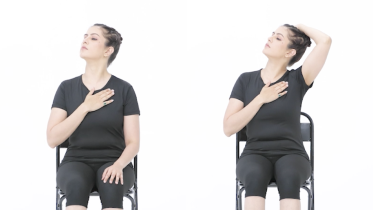 Seated hip flexion
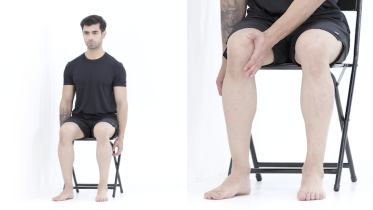 Seated isometric hip adduction
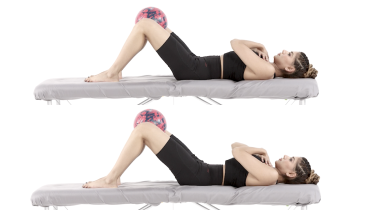 Adductor ball squeeze
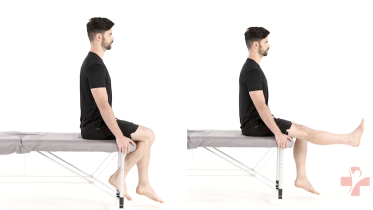 Seated knee extension
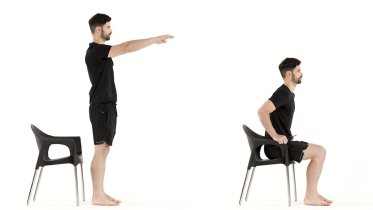 Sit to stand using armrests
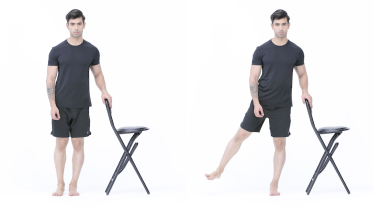 Standing hip abduction
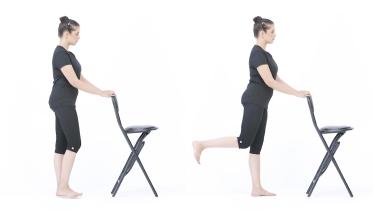 Standing hip extension
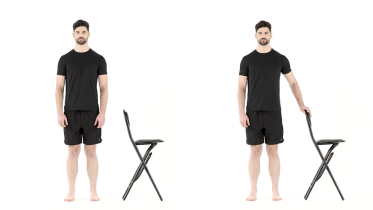 Standing balance at a chair
How often, how many, and how to make them harder
As a rough guide, many programs use 2 to 3 sets of 8 to 15 repetitions for the moving exercises, each leg in turn where the exercise works one leg at a time, and 5 to 10 holds of 5 to 10 seconds for the squeezes and isometric holds. Three of them are counted differently, so take the number from the exercise page rather than from that range: standing balance at a chair is timed, often 3 to 5 holds of 10 to 30 seconds; the squats sit lower, around 8 to 12; and the hip flexor stretch is held for 20 to 30 seconds and repeated 2 to 3 times on each side rather than counted in repetitions. Sit to stand often starts at 5 to 10 and builds toward 2 sets of 10.
The seated work can usually be done most days. The harder standing work is often done 2 to 3 days a week rather than daily, so the muscles can recover between sessions. Each exercise page gives its own numbers, and your physio will adjust this.
Start at the bottom of every range for the first week, whatever you think you can manage. Nothing is lost by a cautious first week and a flared hip costs you a fortnight.
Progression has an order to it, and only one change at a time:
- More repetitions, up to the top of the range.
- More sets, up to 3.
- Slower, so that three seconds out and three seconds back replaces your usual speed. It is much harder than it sounds and it needs no equipment.
- Less support, moving from fingertips on the counter instead of a grip, to one finger, then to nothing, and only when the exercise is steady at the stage before. Not this one if you have fallen in the past year, feel unsteady or are on your own in the house. Keep your hand where it is and progress the other four instead, and take that step with your physio rather than at home.
- A harder version: a lower chair for sit to stand, a squat instead of a stand, a band for the hip work. Lower the seat only as far as you can still stand up from without pulling on anything and sit back down slowly under control, with the chair against a wall. Not a sofa, not a low soft armchair, and not so low that your knees finish higher than your hips.
Go up a step when the current one feels easy and the hip settles well afterward. If a step does not stick after a fortnight, stay where you are. There is no schedule you are behind on.
How long before any of this shows? Give it several weeks. The GLA:D program, for example, runs 12 supervised exercise sessions, twice a week for 6 weeks. People with hip osteoarthritis in it reported less pain on average at their 3-month check (Skou and Roos 2017). That report had no comparison group, so it cannot show how much of the change was due to the program itself.
Should these exercises hurt, and what does the next day tell you?
A little discomfort while you are doing them is common and usually fine. Sharp pain during a repetition is not: stop that exercise, and either make the movement smaller or leave it out for now.
The reading that counts is taken the next morning, before you have moved much. If the hip is no worse when you get out of bed than it usually is, the amount was right and you can do the same again. If it is clearly sorer, stiffer for longer, or your limp is worse, the load was too much for now. Do fewer repetitions or a smaller movement next time rather than stopping altogether. Our guide to the pain monitoring model explains how physios use that 24-hour window.
A tired, working ache in the thigh and buttock muscles during and just after the session is what you want. A deep ache in the groin that builds through the session is a signal to make it easier.
On a genuinely bad day, drop to the seated set and cut the numbers. Hip arthritis flare ups covers what to do with the whole program when the hip is having a bad fortnight.
What to be careful with, and who should check first
Read this section before the first session, not after it. The stop signs, the falls precautions and the set-up are above the exercise list, with the rest of it here.
If you have had a hip replacement, get the go-ahead from your surgeon or physio before you try these exercises, and that means all of them, the seated ones included, not just the standing tier. It helps to know which movements the question is about, because they are spread through this page.
Bending the hip past a right angle: lifting the knee up from a chair does that, and so do rising from a low seat and squatting. Drawing the knees together toward the midline: that is the ball and cushion squeezes. Turning the leg inward or outward, including twisting your body over a planted foot, which is what happens every time you turn away from the chair. Taking the operated leg backward into a long stride, which is the hip flexor stretch, and which some front-of-hip (anterior) operations limit instead of the bending. Which of those apply to you, and for how long, depends on how your hip was operated on, so only the team who did it can tell you, and some operations limit this kind of work for the first months. You are not looking for a modified version of this page: hip replacement rehab describes the usual stages, and the program your surgical team gave you comes first.
The same applies after a hip fracture. Hip fracture rehab is your page, and how much weight may go through the leg, and when that changes, is set by your own team, not here.
This matters for the standing half of this page in particular. Every standing exercise here puts your full body weight through both legs, the hip work puts most of it through the leg you are standing on, and the balance work asks you to take your hand off the chair. So if you have been told to put only part of your weight through that leg, or none of it, or to keep using a frame or crutches for now, the standing tier is not yours yet, whatever your hip feels able to do. A chair takes your weight off the leg altogether, so the seated exercises are the ones your team is most likely to clear first, but ask them which of those you may do as well, because a lifted knee still pulls on the top of the thigh bone. They will tell you when the standing work opens up.
If you have low bone density, ask your physio before deep bending, loaded twisting, hopping or jumping. None of those is in the set above, which is part of why this set suits you, and it is worth checking before you add anything from elsewhere.
Age by itself is not a reason to do less, and a slower build up is a different thing from a smaller one. If you are helping a parent with this instead of doing it yourself, the most useful thing you can do is set the chair up properly, be in the room for the standing work, and resist the urge to progress them faster than their hip is going.
For general strength work beyond the hip, strength for older adults covers the whole body, and balance and falls prevention covers balance training in its own right.
When to see a physio or doctor
Book a routine appointment with a doctor or physio if hip pain is stopping you sleeping or doing what you normally do, if it keeps coming back, or if the hip is stiff for more than 30 minutes after waking. New hip pain that has not improved after 2 weeks of looking after it at home is worth getting checked (NHS). If you have been doing these regularly for 6 to 8 weeks and nothing has changed, ask for a review of the dose as much as the diagnosis.
One appointment is often enough to be worth it. A physio can check the chair height, watch you stand up, tell you whether your standing hip work is doing anything, and set the load where it needs to be, not where it feels comfortable. Treating hip arthritis without surgery sets out what else is on the table.
Some signs need help faster, from an emergency visit to a doctor within a few days. They are listed under the warning signs below.
Related exercise programs
Warning signs
Get emergency help now
- Emergency: if chest pain, pressure or tightness does not ease quickly when you rest, spreads to your arm, neck, jaw, stomach or back, or comes with sweating, feeling sick, feeling light-headed or being short of breath, call emergency services straight away, as this can be a heart attack. If it eases quickly and none of these happen, get medical advice the same day, and do not exercise again until you have been checked.
- Emergency: any sign of a stroke, even if it goes away. That means a face that droops on one side, an arm you cannot lift or keep up, slurred or muddled speech, weakness or numbness on one side of your body or face, sudden blurred vision, double vision or loss of sight, trouble swallowing, sudden dizziness with unsteadiness or falling over, a sudden severe headache, or a sudden fall where your legs give way but you do not black out (a drop attack). Call emergency services straight away.
- Emergency: a racing, pounding, fluttering or irregular heartbeat that does not settle when you rest, or that comes with dizziness, feeling faint or fainting, chest pain or shortness of breath. Call emergency services straight away. If it has already stopped, get medical advice the same day.
- Emergency: you have just fallen and cannot get up, or you think you may have hurt your head, neck, back or hip. Stay where you are, keep warm and call emergency services, or get someone to call for you. If you got up and walked without trouble and only notice pain later, use the same-day lines in this list instead.
- Emergency: you fell and cannot remember the fall or how it happened. Go to an emergency department straight away, and do not drive yourself. You may have blacked out or hit your head without knowing it.
- Emergency: you have had a fall or an injury and now have severe hip pain, or you cannot walk or put weight on the leg. Call emergency services or go to an emergency department. This can be a sign of a broken hip (hip fracture).
- Emergency: after a knock to the head, being very drowsy or finding it hard to keep your eyes open, confusion, a fit (seizure), new weakness or numbness anywhere in your body, new trouble understanding, speaking, walking or keeping your balance, new problems seeing or hearing, clear fluid coming from your ears or nose, bleeding from your ears or bruising behind them, a black eye when your eye was not hit, a dent in your head or a wound with something stuck in it, or a change in behavior. Call emergency services straight away. These can be signs of an injury to the brain.
- Emergency: after a knock to the head, you were knocked out, even for a moment, you cannot remember what happened just before or after, you have had a headache ever since, or you are being sick (vomiting). The same applies, even if you feel fine, if you take medicine that thins your blood, other than aspirin on its own, have a bleeding or clotting condition, have had brain surgery in the past, or had been drinking alcohol or taking drugs when it happened. Go to an emergency department straight away, and do not drive yourself.
- Emergency: tingling or loss of feeling in the hip or leg after a fall or injury. Call emergency services or go to an emergency department.
- Emergency: you have had a hip replacement and have sudden severe pain in your hip or groin, sometimes with a clunk or pop, and you cannot move the leg or put weight on it, or the leg suddenly looks shorter or turned in or out. Do not try to walk on it or push it back into place. Keep still and call emergency services or go to an emergency department, and do not drive yourself. Your new hip may have come out of its socket (dislocated), and a medical team needs to put it back.
- Emergency: your operated leg looks shorter than it did, or its foot turns in or out more than before, or the hip moves in an unusual way, even if the pain is not severe. Keep your weight off it and go to an emergency department straight away, and do not drive yourself. If you are in severe pain or cannot move the leg, call emergency services.
- Emergency: since your operation, you suddenly become short of breath, you get chest pain or pain in your upper back that may be worse when you breathe in, you cough up blood, your heart is beating very fast, or you faint. Call emergency services straight away, even if your leg looks normal. These can be signs of a blood clot in the lungs (pulmonary embolism).
- Emergency: pain, tingling, numbness or weakness in both legs, numbness or altered feeling around your genitals or bottom, or new trouble peeing or controlling your bladder or bowels. The same applies if you lose feeling in one leg. Call emergency services or go to an emergency department straight away. These can be signs of pressure on the nerves at the base of the spine (cauda equina syndrome).
Get help today
- Same day: the hip is hot and swollen, or the skin over it has changed color, or you have hip pain with a high temperature or feel hot, cold or shivery. Get medical help the same day, and go to an emergency department if you feel very unwell. A joint infection needs treatment quickly. If you have a very high or very low temperature, shivering you cannot control, you are breathing very fast or finding it hard to breathe, you are confused or your speech is slurred, your skin, lips or tongue look blue, gray, pale or blotchy (on brown or black skin this can be easier to see on the palms of the hands or soles of the feet), or you have a rash that does not fade when you press it, call emergency services, as this can be sepsis.
- Same day: at any time after your operation, even years later, new pain in your new hip along with a high temperature or feeling hot, cold or shivery, or a hip that becomes hot, red or swollen, which counts on its own, with or without pain and with or without a temperature. Contact your surgical team or get medical advice the same day. A new joint can become infected long after the operation, and that needs treating quickly. A normal temperature is not an all clear: OrthoInfo says fever is no longer considered a sign of an infection after a joint replacement, that the signs can be as little as mild redness and swelling and sometimes there are none at all, and that increased pain or stiffness in a joint that had been working well is one of them. So do not wait for a temperature before you report new or increasing pain in your new hip to your surgical team.
- Same day: you have had a hip replacement and your hip clunks and feels as if it partly slipped out of place and went back, even if it settles straight away and your leg looks normal. Stop the exercises, avoid the movement that brought it on, go back to your crutches or frame, and keep away from deep bending, crossing your legs and twisting on that leg until you have been seen. Contact your surgical team or get medical advice the same day. If the leg then looks shorter or turned, or you cannot move it or put weight on it, call emergency services.
- Same day: severe hip pain that came on suddenly without a fall, or pain that is getting worse quickly over a few days. Get medical advice the same day.
- Same day: you have had a hip replacement, or a broken hip fixed with screws, a nail or a plate, and after a fall or a knock, even a small one, your hip, groin or thigh is newly painful, bruised or swollen, even if you can still walk and your leg looks normal. Stop the exercises and keep your full weight off that leg, using your stick, frame or crutches if you have them and asking someone for help to move about, then contact your surgical team or get medical advice the same day. A break in the bone around a new hip, or around metalwork left in the bone, is not always obvious at first, and walking normally on one can move the broken ends apart.
- Same day: new hip or groin pain after a fall, even a small one, if you are older, have low bone density (osteoporosis) or have taken steroid tablets for a long time, even if you can still walk. Get medical advice the same day. A broken hip is not always obvious at first.
- Same day: after a fall, you are in pain, have hurt yourself or feel unwell, or you were on the floor for an hour or more, without any of the emergency signs above. Get medical advice the same day, even if you managed to get up.
- Same day: a leg or foot that is getting weaker, for example your foot drags, catches on the ground or slaps down when you walk (foot drop). Get medical advice the same day. If the weakness is getting worse by the hour, go to an emergency department.
- Same day: you blacked out or fainted, even for a moment. Get medical advice the same day. Call emergency services instead if the person is not breathing, cannot be woken within 1 minute, has not fully recovered or has trouble speaking or moving, has chest pain or a pounding, fluttering or irregular heartbeat, fainted while exercising or lying down, is shaking or jerking, or was badly hurt.
- Same day: dizziness, lightheadedness, blurred vision or feeling faint when you stand up that is new for you, does not pass within a minute or two, keeps happening, or has made you fall. Sit or lie down, and get medical advice the same day. This can be a drop in blood pressure on standing (postural hypotension), a type of low blood pressure, which the NHS lists among the causes of falls, and your doctor can check it. Tell them about your medicines, because some can cause it. If it does not settle within a few minutes of sitting or lying still, call emergency services. If you faint, use the fainting line above.
- Same day: dizziness or feeling faint during or after exercise, other than the brief lightheadedness as you stand up covered in the line above, without any of the emergency signs above. Stop the exercises and get medical advice the same day. If you faint, it does not settle within a few minutes of sitting still, or you cannot stand or walk steadily, call emergency services.
- Same day: a calf or thigh that is newly swollen or getting more swollen, warm, tender, red or darker than usual, has swollen veins that are sore to touch, or has a throbbing or cramping pain that does not fit your injury or condition, or that feels different from normal muscle soreness after exercise. This can be a sign of a blood clot (deep vein thrombosis), especially after surgery, an injury, time in a cast or boot, a long trip or a spell of being much less mobile than usual. Get medical advice the same day. If you are also short of breath or have chest pain, call emergency services.
- Same day: a child or teenager has sudden pain in the hip, thigh or knee, is limping, or cannot put weight on one leg. Get an urgent appointment with a doctor the same day. If they have a high temperature or seem very unwell, go to an emergency department. This page is for adults, and hip pain in children has different causes.
- Same day: hip or groin pain that is worse at night or does not ease with rest, and keeps getting worse. If you are being treated for cancer now, contact your cancer team the same day.
Book an appointment
- Within a day or two: hip or groin pain that is worse at night or does not ease with rest, and keeps getting worse. If you have had cancer, now or in the past, or are losing weight without trying, see your doctor sooner, within a day or two, and mention it. This applies even if the pain is not getting worse.
- Within a few days: hip or groin pain that is worse at night or does not ease with rest, and keeps getting worse. See your doctor within a few days.
- Within a few days: new groin or hip pain and you take steroid tablets long term, or have in the past, or you regularly drink a lot of alcohol. This can be a sign of a problem with the blood supply to the top of the thighbone (avascular necrosis). Book an appointment with your doctor within a few days and mention the steroids or alcohol.
- Routine: pain in your new hip that had settled and has come back, or pain that is getting worse month by month, for example in the groin or thigh when you first stand up and start to walk. This is not an emergency, but ask your surgical team for a review, as the parts of a new joint can loosen or wear over the years. Get medical advice the same day instead, not a routine appointment, if the hip also becomes hot, red or swollen, or you have a high temperature or feel hot, cold or shivery, or the pain is building week by week rather than month by month. A new joint can become infected years after the operation, and the two can feel similar at first.
Common questions
What exercises can I do for arthritis in my hip while sitting down?
These cover the hip well from a chair: lifting the knee a little way up, squeezing the knees inward against a ball or a cushion, straightening the knee out in front of you, and marching the feet. Each one has a video on its own page below. Use a chair that will not slide or tip, ideally with its back against a wall, and keep your feet flat when you are not moving them.
Are chair exercises enough for hip arthritis?
Enough to start with, and not enough to finish with. Muscle responds to load, and sitting removes the load, which is the point when the hip is sore and the limit when it is not. Both guidelines behind this page ask for structured, progressive exercise. So treat the seated set as week one and the bad-day version, and add the standing tier with a hand on the counter as soon as the hip tolerates it.
How often should I do them?
The seated exercises can usually be done most days. As a rough guide, many programs use 2 to 3 sets of 8 to 15 repetitions, with the squeeze and hold exercises done as 5 to 10 holds of 5 to 10 seconds and the standing balance hold as 3 to 5 holds of 10 to 30 seconds. The harder standing work is often done 2 to 3 days a week rather than daily, so the muscles can recover in between. Each exercise page gives its own numbers, and your physio will adjust this.
What exercises should older adults avoid with hip arthritis?
There is no list that applies to everybody, and the honest answer is that it depends on your own hip and on your balance, not on your age. What we take out while a hip is sore is deep bending, anything on one leg without a hand on something solid, and jumping or hopping. If you have had a hip replacement, a hip fracture or low bone density, the restrictions are specific to you and your own team sets them.
Should these exercises hurt?
A little discomfort during them is common and usually fine. The reading that matters is the next morning: if the hip is no worse when you get out of bed, the amount was right. Sharp pain during a repetition means stop that one, and a hip that is clearly worse the next day means the load was too much for now, so do fewer repetitions rather than stopping altogether.
What if I cannot get down on the floor?
Then you do not need to. Everything on this page is done from a chair or standing next to one, and none of it needs a mat, the floor or getting up off it. The full staged hip osteoarthritis program includes some lying exercises, and this page is the version for a reader who is skipping those.
Are these safe for someone who has had a hip replacement?
Not without the go-ahead from their own team, and not from this page. After a hip replacement some positions and some loading are limited for a while, the limits depend on the operation, and only the surgeon and physio who know which operation it was can set them. Hip replacement rehab describes the usual stages, and the program from the surgical team comes first. The same goes after a hip fracture: see hip fracture rehab.
References
- Bannuru RR, Osani MC, Vaysbrot EE, et al. OARSI guidelines for the non-surgical management of knee, hip, and polyarticular osteoarthritis. Osteoarthritis and Cartilage. 2019;27(11):1578-1589. https://doi.org/10.1016/j.joca.2019.06.011
- Hall M, Lawford BJ, Hinman RS, et al. Exercise for osteoarthritis of the hip. Cochrane Database of Systematic Reviews. 2026;(7):CD007912. https://doi.org/10.1002/14651858.CD007912.pub3
- Skou ST, Roos EM. Good Life with osteoArthritis in Denmark (GLA:D): evidence-based education and supervised neuromuscular exercise delivered by certified physiotherapists nationwide. BMC Musculoskeletal Disorders. 2017;18:72. https://doi.org/10.1186/s12891-017-1439-y
- National Institute for Health and Care Excellence. Osteoarthritis in over 16s: diagnosis and management (NG226). 2022. https://www.nice.org.uk/guidance/ng226
- American Academy of Orthopaedic Surgeons. Osteoarthritis of the hip. OrthoInfo. https://www.orthoinfo.org/en/diseases--conditions/osteoarthritis-of-the-hip/
- NHS. Hip pain in adults. https://www.nhs.uk/symptoms/hip-pain/
- NHS. Head injury and concussion. https://www.nhs.uk/conditions/head-injury-and-concussion/
- NHS. Complications of a hip replacement. Page last reviewed 6 March 2024. https://www.nhs.uk/tests-and-treatments/hip-replacement/complications-of-a-hip-replacement/
- NHS. Low blood pressure (hypotension). Page last reviewed 11 July 2023. https://www.nhs.uk/conditions/low-blood-pressure-hypotension/
Written and checked by the PocketPhysio editorial team. Last updated 2026-10-18.
This page is general education, not a diagnosis or a personal treatment plan. See a physiotherapist or doctor for advice about your own situation.