Seated hip hike
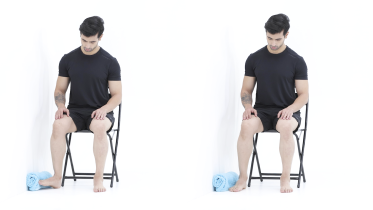
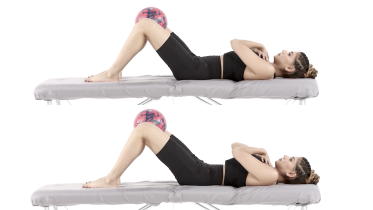
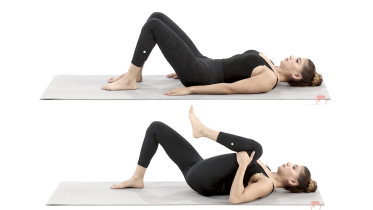
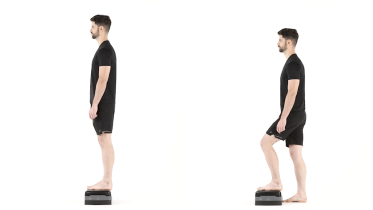
The seated hip hike is a small movement done sitting on a chair at a table. You lift one buttock just off the seat by drawing that side of your pelvis up toward your ribs, keep your upper body upright, then lower it again. It works the muscles at the side of your waist and lower back (quadratus lumborum and the obliques). With your weight on the chair and your arms on the table, it asks for far less balance than the standing hip hike on a step.
How to do the seated hip hike
- Sit on a firm chair without arms, close to a table, with your feet flat and hip width apart. Rest your forearms on the table.
- Sit up straight, with your weight spread evenly over both buttocks and your shoulders level.
- Tighten the muscles at the side of your waist on one side and lift that buttock a little off the seat. Think of drawing your hip up toward your armpit.
- Keep your chest upright and your shoulders level. Do not push down through your hands or lean toward the other side.
- Lower the buttock slowly back onto the chair. Repeat, then do the same on the other side.
What you should feel
Effort at the side of the waist and lower back on the side that lifts. The buttock only rises a little, sometimes just enough to take the weight off it.
Common mistakes
- Leaning the whole upper body sideways instead of lifting the pelvis.
- Pushing through the arms or the opposite foot to get the lift.
- Holding your breath.
How often
A usual starting range is 2 to 3 sets of 8 to 12 lifts on each side, once a day. Your physio will adjust this.
Stop and check with your physio if
- Sharp or pinching pain in the lower back, hip or groin.
- Pain, pins and needles or numbness running into the buttock or down the leg.
From the clinic
The table is there to steady you, not to lift you, so let your forearms rest on it lightly. Use a chair that does not roll or tip. To check the movement, you can rest a hand on each hip instead and feel one side of the pelvis rise while the other stays down. Once this is easy, the hip hike on a step works the same area standing, and the seated side bend moves the waist from above.
If you have had a hip replacement, get the go-ahead from your surgeon or physio before you try seated hip hikes. Some operations limit this kind of work for the first months, so the timing depends on your surgery. If your surgical team has asked you to keep your hips above your knees when sitting, pick a chair high enough for that.
If you have had surgery on your spine, chest or heart in recent months, get the go-ahead from your surgical team or physio first. The same applies after stomach surgery, including a hernia repair, as the lift works the muscles along the side of your stomach. If you are pregnant and have pain at the front or back of your pelvis, check with your physio before you start, as each lift puts your weight on one buttock.
Written and checked by the PocketPhysio editorial team. Last updated 2026-09-26.
This page is general education, not a diagnosis or a personal treatment plan. If you have pain, an injury or a health condition, see a physiotherapist or doctor before starting new exercises.