Seated knee extension
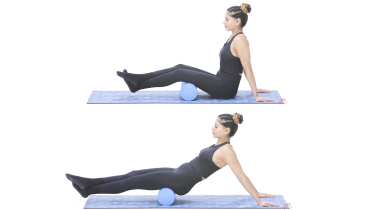
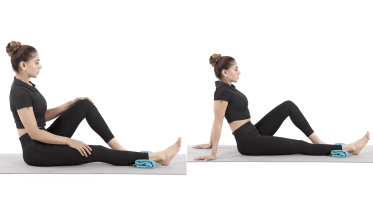
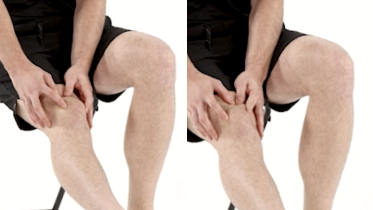
The seated knee extension is done sitting on a high bed or chair: you straighten one knee until the leg is level, then bend it right back again. It strengthens the muscles at the front of the thigh (quadriceps) and is a regular in knee rehab and simple home leg strengthening.
How to do the seated knee extension
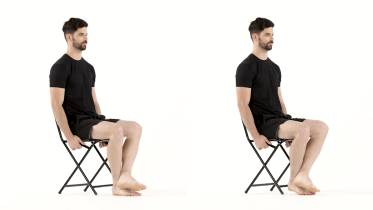
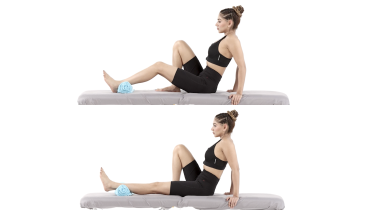
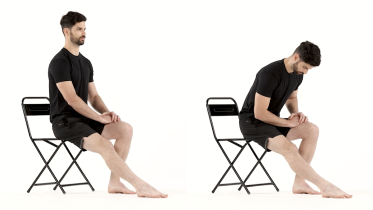
- Sit tall toward the edge of a firm table, high bed or chair, high enough that your feet are off the floor. Your thighs are fully supported and your lower legs hang down. Rest your hands on the edge beside you.
- Start with the knee you are working bent as far as it will go, tucking the heel back under the seat toward your buttocks.
- Pull the toes of that foot up toward you.
- Slowly straighten the knee fully, until the leg is straight out in front, level with your thigh.
- Hold for 2 to 3 seconds, keeping the front of the thigh tight.
- Bend the knee slowly all the way back, heel tucked under the seat again, then repeat. Keep your upper body upright the whole time. Swap legs if your program includes both.
What you should feel
Work in the front of the thigh, strongest when the knee is fully straight.
Common mistakes
- Leaning back to help swing the leg up.
- Kicking the leg up quickly and letting it drop.
- Stopping before the knee is fully straight.
How often
Programs often use 2 to 3 sets of 10 to 15 on each leg with a short hold, once a day. Your physio will adjust the numbers and may add an ankle weight later on.
Stop and check with your physio if
- You feel sharp pain at the front of the knee or under the kneecap.
- The knee swells up or is clearly more painful later that day or the next morning.
- Chest pain or pressure, dizziness or feeling faint, a racing or irregular heartbeat, or being far more out of breath than the effort should cause.
From the clinic
You can do this almost anywhere, so it ends up in a lot of home programs. A firm dining chair works if it is high enough for your foot to stay clear of the floor as the knee bends and straightens. Sit back far enough that your thighs are supported and your back stays upright.
Go slowly, especially on the way down. Taking 3 seconds to lower the leg makes a light exercise much harder work without adding any weight.
After knee ligament surgery, such as an ACL reconstruction, get the go-ahead from your surgeon or physio before you do this one. Many protocols limit how far the knee may straighten against resistance in sitting during the early stage.
If chest pain, pressure or tightness does not ease quickly when you rest, spreads to your arm, neck, jaw, stomach or back, or comes with sweating, feeling sick, feeling light-headed or being short of breath, call emergency services straight away, as this can be a heart attack. If it eases quickly and none of these happen, get medical advice the same day, and do not exercise again until you have been checked. If you faint while exercising, call emergency services, even if you feel fine again quickly.
Reviewed by the PocketPhysio by VirtueLife expert physiotherapy team. Last reviewed 2026-09-25.
This page is general education, not a diagnosis or a personal treatment plan. If you have pain, an injury or a health condition, see a physiotherapist or doctor before starting new exercises.