Seated hamstring stretch
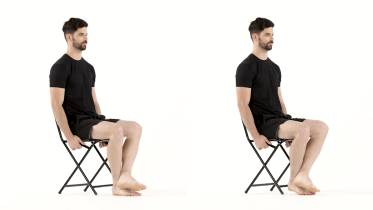
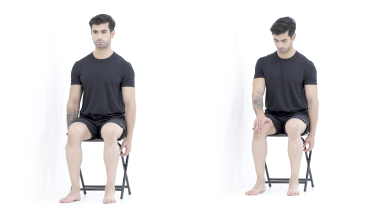
The seated hamstring stretch is done sitting on a chair with one leg stretched out in front and the foot resting on the floor. You lean forward from the hips until you feel a stretch at the back of that thigh (hamstrings). It suits people who find it hard to get down to the floor and back up.
How to do the seated hamstring stretch
- Sit toward the front edge of a sturdy chair that will not roll or tip, with both feet flat on the floor.
- Slide one foot forward and straighten that knee as far as is comfortable, letting the ankle relax so the foot rests on the floor, as in the video. Leave the other knee bent with the foot flat.
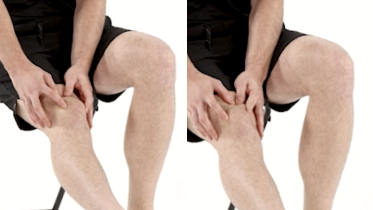
- Rest both hands on the thigh of the straight leg, above the knee. Do not press down on the kneecap.
- Sit tall, then lean forward from the hips, leading with your chest, until you feel a stretch at the back of the straight thigh.
- Hold and breathe slowly. Sit back up, then swap legs.
What you should feel
A gentle, even pull at the back of the thigh of the straight leg. It often eases a little as you hold.
Common mistakes
- Slumping and dropping the head to get lower, instead of bending at the hips.
- Pushing down on the knee to force it straight.
- Bouncing forward and back.
How often
Many stretching programs use holds of 20 to 30 seconds, done 2 to 4 times on each leg, most days of the week. Your physio will adjust this.
Stop and check with your physio if
- Tingling, numbness, burning or pain running down the leg or into the foot.
- A sudden sharp pain, pop or snap at the back of your thigh. Stop straight away. If you then get large bruising spreading down the back of the thigh, a gap or dip you can feel, a stiff-legged walk, or clear weakness when you bend the knee, get assessed the same day at urgent care or an emergency department, as the tendon may have pulled away from the bone near the buttock.
- Pain in your lower back.
From the clinic
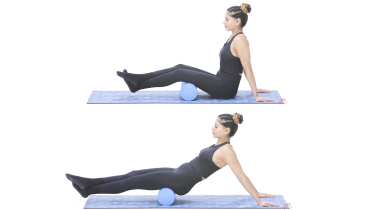
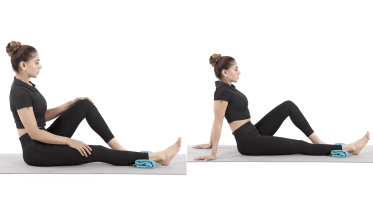
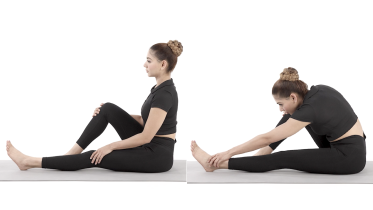
The voice guide describes a floor version, with one leg straight and the other foot tucked against its inner thigh. The video shows the chair version, and the steps here follow the video. In the video the head also drops and the upper back rounds as the model leans. Keep your head in line with your spine instead.
That matters most if you have sciatica or other leg symptoms that come from the back. Rounding the spine, tucking the chin and pulling the toes up all add stretch to the sciatic nerve, which runs down the back of the leg. If the stretch brings on tingling or pain down the leg, sit up, let the toes relax and lean less. If it keeps happening, ask your physio.
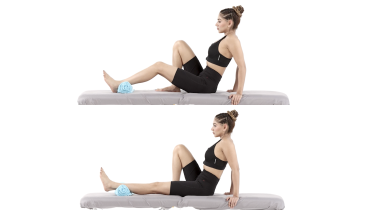
After a recent hamstring strain, stretch only once your physio says so, and keep it gentle. The supine hamstring stretch is a lying option with your back supported.
If you have had a hip replacement, get the go-ahead from your surgeon or physio before you try the seated hamstring stretch. Leaning forward from the hips while you sit bends the hip past a right angle, and many surgeons ask you to avoid that for the first months after some operations.
Written and checked by the PocketPhysio editorial team. Last updated 2026-09-28.
This page is general education, not a diagnosis or a personal treatment plan. If you have pain, an injury or a health condition, see a physiotherapist or doctor before starting new exercises.