Hamstring foam rolling
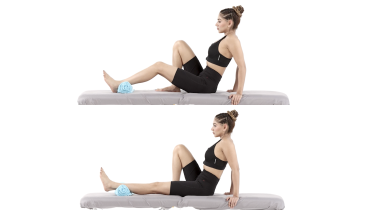
Hamstring foam rolling means sitting on the floor with a foam roller under the back of one thigh and slowly rolling along the muscle, from the crease under your buttock down to a hand's width short of the knee. Crossing the other leg over the top adds pressure. People use it before or after exercise when the back of the thigh feels tight and heavy. Keep stretching and strengthening too. Rolling does not replace either.
How to do the hamstring foam rolling
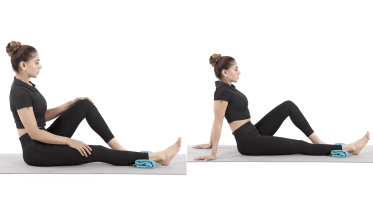
- Sit on the floor with your legs out straight and place the foam roller under the back of one thigh, near the top.
- Cross the other leg over the top at the ankle for more pressure, as in the video. For a lighter pressure, leave both legs side by side on the roller.
- Put your hands flat on the floor behind your hips and press through them to lift your buttocks off the mat.
- Push and pull with your arms to shift your body slowly forward and back, letting the roller glide along the back of your thigh. Stop before it reaches the soft hollow behind your knee.
- Breathe steadily. If the thigh can stay soft on the roller, the pressure is about right. Then swap legs.
What you should feel
A firm, broad pressure along the back of the thigh. Some tenderness is common, but it should ease as you roll, never become sharp and never feel like pins and needles.
Common mistakes
- Rolling into the hollow behind the knee.
- Shrugging the shoulders up toward the ears while holding yourself up.
- Rushing the passes back and forth.
- Tensing the thigh against the roller rather than letting it relax.
How often
Rolling usually lasts 30 to 60 seconds per leg in slow passes, done 1 to 3 times, before or after exercise. Your physio will adjust this.
Stop and check with your physio if
- Sharp pain, or numbness, tingling or burning running down the leg.
- The back of the thigh feels worse after rolling rather than easier.
- Your calf or thigh becomes swollen, warm, tender, red or darker than usual, or has a throbbing or cramping pain that feels different from normal muscle ache. Do not massage or roll it. Stop and get medical advice the same day, as this can be a blood clot. If you are also short of breath or have chest pain, call emergency services.
- New bruising after rolling. Stop, and ask your physio before you roll again.
From the clinic
Keep the roller on the muscle in the back of the thigh. The hollow behind the knee has nerves and blood vessels close to the surface, so stay out of it, and pass over any spot that is bruised, swollen or sore to touch. If you have a clotting or bleeding disorder, take blood-thinning medicine, have varicose veins, or have ever had a blood clot in the leg, check with your doctor or physio before you use a roller on it.
Do not roll a leg that shows any of the blood clot signs in the stop list on this page. Get medical advice the same day, and call emergency services if you are also short of breath or have chest pain. After a recent hamstring tear, or knee or hip surgery, ask your physio when it is fine to press on the back of the thigh.
Rolling does not stretch or lengthen the hamstrings. The back of the thigh often feels easier afterward, but nobody fully knows why, and some people notice much more difference than others. Many programs pair it with a stretch such as the seated hamstring stretch or the supine hamstring stretch, and with strengthening such as the hamstring bridge.
Your wrists and shoulders take a fair bit of weight while you hold yourself up. If they ache, uncross your legs, bend the free knee and put that foot on the floor to take some of your weight, or rest between passes.
Written and checked by the PocketPhysio editorial team. Last updated 2026-09-26.
This page is general education, not a diagnosis or a personal treatment plan. If you have pain, an injury or a health condition, see a physiotherapist or doctor before starting new exercises.