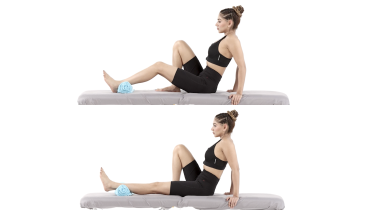
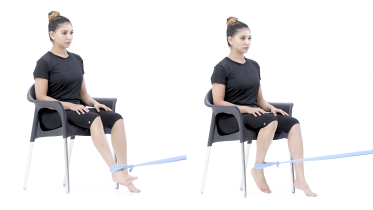
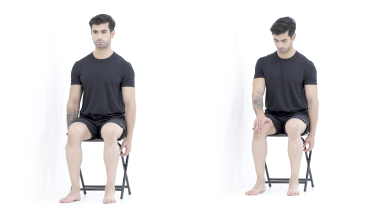
Long sitting hamstring stretch
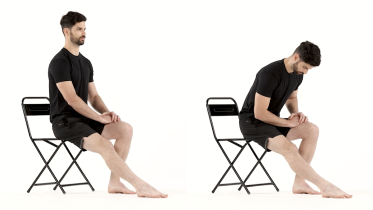
The long sitting hamstring stretch is done on the floor with one leg straight out in front and the other knee bent, foot flat. You sit tall, then lean forward over the straight leg and reach toward your ankle until you feel a stretch along the back of that thigh (hamstrings). Working one leg at a time also lets you compare the two sides.
How to do the long sitting hamstring stretch
- Sit on a mat with one leg straight out in front of you, toes pointing up, and your back upright. This is the leg you are stretching.
- Bend the other knee and set that foot flat on the floor beside the straight knee, as in the video.
- Sit tall, then lean forward from your hips over the straight leg, sliding your hands down toward the shin or ankle.
- Stop at the first clear pull behind the thigh and hold it, breathing slowly. The model in the video reaches her toes, but stopping at the knee or shin is fine.
- Walk your hands back up to sitting tall. Rest, then change legs.
What you should feel
A pull along the back of the straight thigh, sometimes spreading behind the knee. A mild stretch in the back is common too, but most of the feeling should be in the leg.
Common mistakes
- Rounding the whole back and dropping the head to get the hands further down.
- Letting the straight knee bend as you lean.
- Bouncing toward your toes.
- Holding your breath while you stay in the stretch.
How often
Programs often use holds of 20 to 30 seconds, 2 to 4 times on each leg, on most days. Your physio will adjust this.
Stop and check with your physio if
- Pain, tingling, numbness or burning spreading down the leg or into the foot.
- Your lower back starts to ache or pinch as you lean, or stays sore once you sit up.
- A sudden sharp pain, pop or snap at the back of your thigh. Stop straight away. If you then get large bruising spreading down the back of the thigh, a gap or dip you can feel, a stiff-legged walk, or clear weakness when you bend the knee, get assessed the same day at urgent care or an emergency department, as the tendon may have pulled away from the bone near the buttock.
From the clinic
Lead with your chest and let the fold come from your hips. In the video the upper back rounds and the head drops as the model reaches her toes. Most people do that. But curling the spine and tucking the chin also stretch the large nerve that runs down the back of the leg (sciatic nerve), so if the leg starts to tingle, sit up a little and lift your head.
For a lying version with a strap, see the lying hamstring stretch with strap. If getting down to the floor is hard, the seated hamstring stretch works the same muscles from a chair.
If you have had a hip replacement, get the go-ahead from your surgeon or physio before you try this stretch. Leaning your chest toward a straight leg bends that hip well past a right angle, and many surgeons ask you to avoid that for the first months after some operations. If you have low bone density (osteoporosis) or have had a fracture in your spine, check with your physio before you start, since people with fragile bones are usually advised to avoid rounding the spine forward as far as it goes. Keep the lean small with a long back rather than curling down toward your foot. After a recent hamstring strain, wait until your physio says stretching can start, and go only to a mild pull.
Written and checked by the PocketPhysio editorial team. Last updated 2026-09-28.
This page is general education, not a diagnosis or a personal treatment plan. If you have pain, an injury or a health condition, see a physiotherapist or doctor before starting new exercises.