Kneecap glides
Kneecap glides are a gentle way to move your own kneecap (patella) from side to side with your fingers. You sit with the leg straight out and the thigh fully relaxed, then ease the kneecap a short way to one side and back, then to the other. Physios often teach it as a self-mobilization when the kneecap feels stiff.
How to do the kneecap glides
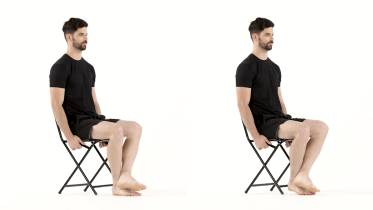
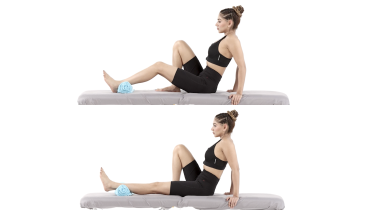
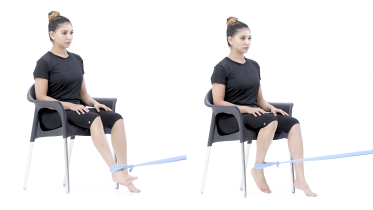
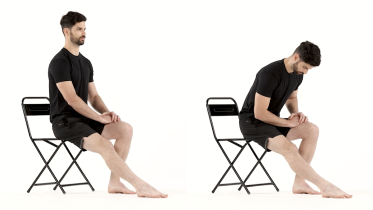
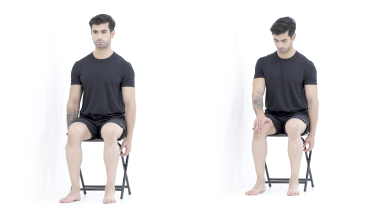
- Sit on a chair and straighten the knee you are working out in front of you, with the heel resting on the floor.
- Let the front of your thigh go completely soft. If that muscle is tight, the kneecap will barely move.
- Place your fingers on each side of the kneecap, as in the video.
- Gently push the kneecap a short way toward the outside of the knee, then back and a short way toward the inside.
- Keep the movements slow and small, and repeat from side to side.
What you should feel
The kneecap sliding a little under your fingers, perhaps with a mild stretch along its edges. It should not hurt.
Common mistakes
- Tensing the thigh, which holds the kneecap in place.
- Pressing the kneecap down into the knee instead of sliding it sideways.
- Pushing hard or fast. Small, gentle movements are all this needs.
How often
A common range is 10 to 15 slow glides to each side, 1 to 3 times a day. Your physio will adjust this.
Stop and check with your physio if
- The kneecap feels as if it might slip out of place, or you feel a sudden sharp pain.
- The knee becomes more swollen, warm or painful after the glides.
- Your calf or thigh is getting more swollen, or becomes warm, tender, red or darker than usual, or has a new throbbing or cramping pain. This can be a blood clot, especially after an operation, an injury, time in a cast, boot or brace, or a spell of being much less mobile than usual, and after an operation it can also be an infection. Stop and contact your medical team or get medical advice the same day. If you are also short of breath or have chest pain, call emergency services.
From the clinic
The video and voice guide both show a relaxed, straight knee with the heel on the floor. Resting the leg on a stool or along the edge of a bed works too, as long as the thigh can switch off completely. If you are unsure how much movement is normal for you, try the same glides on your other knee and compare. Your physio may pair this with thigh exercises such as quad sets or heel slides.
If you have had knee surgery, or your kneecap has ever dislocated or partly slipped out of place, check with your surgeon or physio before you try this. Kneecaps usually dislocate toward the outside of the knee, so your physio may ask you to leave out the outward glide. Leave a knee that is hot, red and swollen alone, and get medical advice the same day, especially if you also feel feverish or unwell.
Written and checked by the PocketPhysio editorial team. Last updated 2026-09-26.
This page is general education, not a diagnosis or a personal treatment plan. If you have pain, an injury or a health condition, see a physiotherapist or doctor before starting new exercises.