Assisted seated knee bend
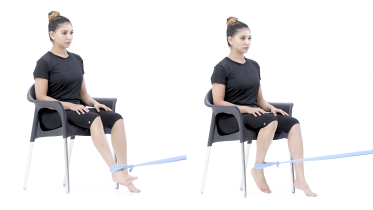
The assisted seated knee bend is a chair exercise for a knee that will not bend as far as it should. You slide the foot of the stiff leg back toward the chair as far as it goes on its own, then cross your other ankle in front of it and use that leg to press the knee into a little more bend. Physios often give it to win back bend, for example after a knee operation or a long spell of stiffness.
How to do the assisted seated knee bend
- Sit upright on a firm chair with both feet on the floor and your hands resting on your thighs or the sides of the seat. A chair with open space underneath lets your foot slide further back.
- Slide the foot of your stiff leg back along the floor toward the chair, bending the knee as far as it will comfortably go by itself.
- Cross your good leg in front so the back of its ankle rests against the front of the stiff leg's ankle.
- Use the good leg to press the stiff leg gently further back, until you feel a firm stretch at the front of the knee. Stop there, short of pain.
- Hold the position while breathing normally and sitting tall. Then ease the pressure off, uncross your legs and slide the foot forward to rest.
What you should feel
A firm stretch or tight pull at the front of the knee and lower thigh that fades soon after you let go. It should not be a sharp or pinching pain inside the joint.
Common mistakes
- Shoving hard with the good leg, or bouncing in and out of the bend.
- Letting your hips slide forward on the seat, which takes the bend out of the knee.
- Slumping or leaning back as you push.
- Holding your breath while the good leg presses.
How often
Programs often use holds of 10 to 30 seconds, repeated 3 to 5 times, 2 or 3 times a day. Your physio will adjust this.
Stop and check with your physio if
- Sharp or stabbing pain in the knee, or pain that stays much worse for hours afterward.
- The knee becomes more swollen, hot or red, or it locks or catches.
- Your calf or thigh is getting more swollen, or becomes warm, tender, red or darker than usual, or has a new throbbing or cramping pain. This can be a blood clot, especially after an operation, an injury, time in a cast, boot or brace, or a spell of being much less mobile than usual, and after an operation it can also be an infection. Stop and contact your medical team or get medical advice the same day. If you are also short of breath or have chest pain, call emergency services.
- Your wound becomes more red, hot, swollen or painful, or starts to leak. Contact your medical team the same day.
From the clinic
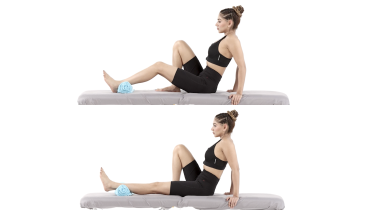
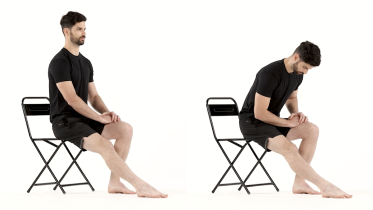
Using the good leg means you control the push yourself. Aim for a steady stretch you could hold while chatting. If the knee is very stiff, heel slides lying on your back are a gentler way to start bending it. Many knee programs pair this with the knee extension stretch, which works on straightening instead.
After knee surgery, follow the range your surgeon and physio have set. Some operations, such as a meniscus repair, come with a limit on how far the knee may bend in the first weeks. If you have had a hip replacement, get the go-ahead from your surgeon or physio before you try this exercise. Crossing your legs takes one leg across the middle of your body, even when only the ankles cross, and many surgeons ask you to avoid that for the first months after some operations. Until they say yes, skip this exercise.
Written and checked by the PocketPhysio editorial team. Last updated 2026-09-26.
This page is general education, not a diagnosis or a personal treatment plan. If you have pain, an injury or a health condition, see a physiotherapist or doctor before starting new exercises.