Sit to stand using armrests
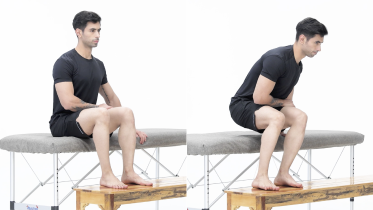
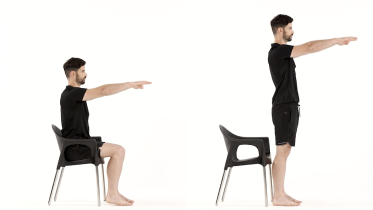
This is sit to stand with help from the arms of the chair. You lower yourself into an armchair with your hands on the armrests to control the way down, then lean forward and push through your legs and hands to stand back up. The video shows both halves, sitting down and standing up. Physios often start here with older adults, or after an illness or operation, before moving on to the hands-free version.
How to do the sit to stand using armrests
- Stand with a sturdy armchair just behind you, the backs of your legs close to the seat and your feet roughly hip width apart. The man in the video starts with his arms stretched out in front.
- Reach back and take hold of both armrests. Bend at your hips and knees and lower yourself slowly, using your arms to control the last part so you land gently.
- To stand up, shuffle toward the front of the seat if you are sitting far back. Keep your hands on the armrests and hinge forward at the hips, bringing your head forward over your toes.
- Push down through both feet, with help from your hands, and rise until you are standing tall. Let go of the armrests once you are upright and steady.
- Repeat, using your arms only as much as you need and keeping your weight even on both legs.
What you should feel
Work in the thighs and buttocks, with some effort in the backs of the arms as you push on the armrests. Breathing a little harder after several rounds is normal.
Common mistakes
- Letting yourself drop the last part of the way into the seat.
- Trying to rise straight up without leaning forward first, which makes it much harder.
- Pulling on a walking frame or anything else that can move to get up. Push from the fixed armrests instead.
- Leaning to one side so the stronger leg does all the work.
How often
Many programs start with 2 to 3 sets of 5 to 10, once a day or on most days. Your physio will adjust this.
Stop and check with your physio if
- You feel dizzy, lightheaded or faint as you get up. Sit back down and wait for it to pass. If it does not pass within a minute or two, or it keeps happening, get medical advice the same day before you practice again. If you faint, or it does not settle within a few minutes of keeping still, call emergency services. A drop in blood pressure on standing, or a side effect of a medicine, can cause this, so mention your medicines when you get advice.
- Your knee, hip or back hurts sharply, or a wrist or shoulder hurts as you push on the armrests.
- A leg buckles, or you feel close to falling.
- Chest pain or pressure, dizziness or feeling faint, a racing or irregular heartbeat, or being far more out of breath than the effort should cause.
From the clinic
Use a firm, heavy armchair that will not tip or roll, with armrests that reach well forward. Wheeled office chairs are not safe for this. Wear flat shoes that fit well and grip the floor, not socks, tights or bare feet.
The voice guide suggests building up speed while staying balanced, though smooth, controlled movement comes first. If balance is a worry, you have osteoporosis, or you have fallen before, have someone nearby and place the chair next to a counter or wall you can reach once upright. Pause for a few seconds after you stand before you walk off, as a quick rise can make some people light-headed.
If you have had a hip replacement, get the go-ahead from your surgeon or physio before you try sit to stand using armrests. Lowering into a chair and rising from it takes the hip beyond a right angle when the seat is low, and many surgeons ask you to avoid that for the first months after some operations. A firm cushion raises the seat and lessens that bend, and it also takes some load off sore knees. If knee pain builds as you go, or you have had knee surgery, check with your physio what seat height to use. When you can get up without pushing on the armrests, move on to the hands-free sit to stand.
If chest pain, pressure or tightness does not ease quickly when you rest, spreads to your arm, neck, jaw, stomach or back, or comes with sweating, feeling sick, feeling light-headed or being short of breath, call emergency services straight away, as this can be a heart attack. If it eases quickly and none of these happen, get medical advice the same day, and do not exercise again until you have been checked.
Written and checked by the PocketPhysio editorial team. Last updated 2026-09-28.
This page is general education, not a diagnosis or a personal treatment plan. If you have pain, an injury or a health condition, see a physiotherapist or doctor before starting new exercises.