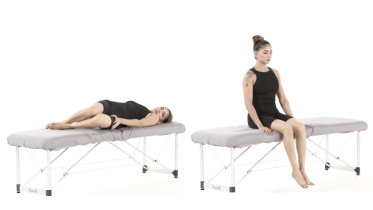
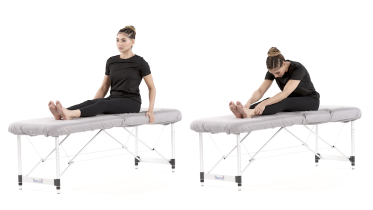
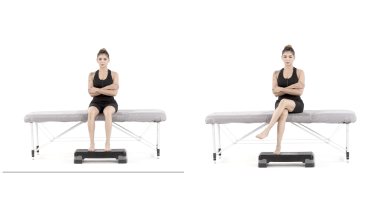
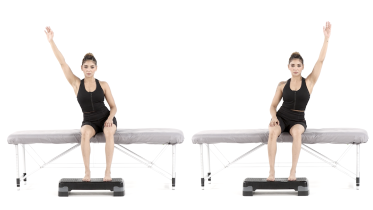
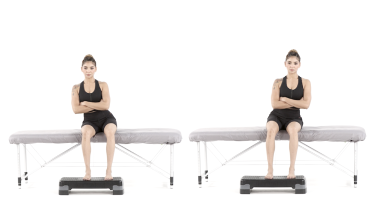
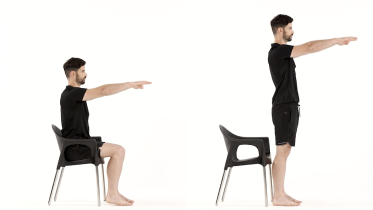
Sit to stand from a high surface
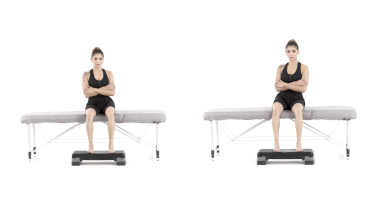
Starting from a raised seat, with your hips higher than your knees, makes standing up easier because your legs begin partly straightened. You cross your arms, lean forward and push through your legs to stand tall, then sit back down under control. Physios often use it as a first step for people who cannot yet rise from a normal chair without their hands, and lower the seat bit by bit as strength improves.
How to do the sit to stand from a high surface
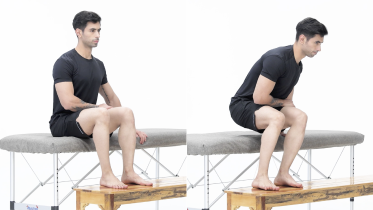
- Sit on a firm, steady seat that is higher than a normal chair, such as a stool, a raised chair or a bed that cannot roll, so your hips sit above your knees.
- Set your feet flat, about hip width apart, and slide them back until they are just under your knees.
- Cross your arms over your chest so your hands cannot help.
- Tip your trunk forward from the hips until your weight moves over your feet, then drive through both legs to stand.
- Finish upright with your hips fully straight, rather than staying slightly bent at the top.
- Bend at the hips and knees to lower yourself back onto the seat slowly, then go again.
What you should feel
A moderate effort in your thighs and buttocks, less than you would feel rising from a standard chair. Straightening your hips at the top should bring a squeeze in your buttocks.
Common mistakes
- Leaving your feet out in front of your knees, which makes it hard to bring your weight over them.
- Coming up with your hips still bent, so you finish leaning forward.
- Using a seat that wobbles, tips or rolls.
- Unfolding your arms halfway up to grab the seat or your thighs.
How often
A common starting point is 2 or 3 sets of 5 to 10 stands on most days. When that gets easy, the usual next step is a slightly lower seat, not more repetitions. Your physio will adjust this.
Stop and check with your physio if
- You feel dizzy, lightheaded or faint as you get up. Sit back down and wait for it to pass. If it does not pass within a minute or two, or it keeps happening, get medical advice the same day before you practice again. If you faint, or it does not settle within a few minutes of keeping still, call emergency services.
- A sharp pain in your hip, knee or back as you rise or sit.
- Your legs buckle, or you lose your balance as you come up.
- Chest pain or pressure, dizziness or feeling faint, a racing or irregular heartbeat, or being far more out of breath than the effort should cause.
From the clinic
The seat must stay put: a bed on wheels needs its brakes on, and an office chair on castors is not suitable. Set it beside a kitchen counter or with its back to a wall, and keep someone nearby if your balance is uncertain or you have fallen in the past year. Wear flat shoes that fit well and grip the floor, not socks, tights or bare feet. If you feel yourself tipping, sit straight back down. Do not try to step away.
A sudden loss of balance is different. Call emergency services straight away for any sign of a stroke, even if it goes away: sudden dizziness with unsteadiness or falling over, a face that droops on one side, an arm you cannot lift or keep up, slurred or muddled speech, weakness or numbness on one side of your body or face, sudden blurred vision, double vision or loss of sight, or a sudden severe headache.
If you still need your hands to get up, rest them on your thighs for now, or practice sit to stand using armrests. Once the high seat feels easy, lower it a little at a time until you can manage sit to stand from an ordinary chair.
If you have had a hip replacement, get the go-ahead from your surgeon or physio before you try sit to stand from a high surface. Leaning forward to rise from a seat that is too low bends the hip past a right angle, and many surgeons ask you to avoid that for the first months after some operations. A raised seat lessens that bend, and your surgical team can tell you how tall yours needs to be. After a knee fracture or knee surgery, including a knee replacement, follow your surgeon's or physio's plan, and start this exercise only when they have cleared you.
If chest pain, pressure or tightness does not ease quickly when you rest, spreads to your arm, neck, jaw, stomach or back, or comes with sweating, feeling sick, feeling light-headed or being short of breath, call emergency services straight away, as this can be a heart attack. If it eases quickly and none of these happen, get medical advice the same day, and do not exercise again until you have been checked.
Written and checked by the PocketPhysio editorial team. Last updated 2026-09-26.
This page is general education, not a diagnosis or a personal treatment plan. If you have pain, an injury or a health condition, see a physiotherapist or doctor before starting new exercises.