Towel wringing
Towel wringing is an everyday task practiced as a hand exercise. You sit at a table, soak a small towel or washcloth in a bowl of water, then twist it with both hands to squeeze the water out. Because the hands turn in opposite directions, your grip has to work with the forearm muscles that turn and bend the wrist. Physios often add it once simpler grip exercises are going well.
How to do the towel wringing
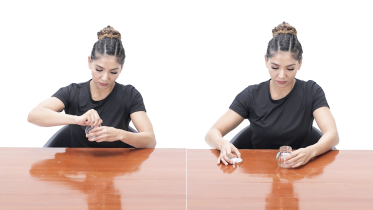
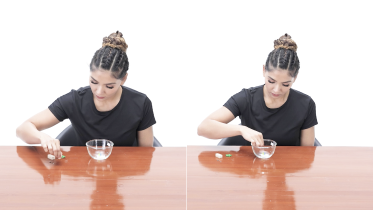
- Sit at a table with a bowl of water in front of you and a small towel or washcloth beside it.
- Dip the cloth into the water until it is soaked. Lift it out and hold it over the bowl with both hands side by side, palms down.
- Twist your hands in opposite directions to wring the cloth, letting your wrists and forearms turn as you squeeze.
- Keep wringing until you have pressed out as much water as you comfortably can. Your shoulders stay relaxed and low.
- Drop the cloth back into the water and repeat.
What you should feel
Work in the palms, fingers and both forearms, and a tired grip after a few wrings. Stiff fingers may ache a little while you work, but that should settle soon after you stop.
Common mistakes
- Starting with a large, thick towel that is too hard to twist. A thin washcloth is easier.
- Hunching your shoulders or holding your breath as you squeeze.
- Forcing the twist through sharp pain in the thumb or wrist.
- Always twisting the same way round.
How often
There is no fixed dose for a task like this. A common starting point is 5 to 10 wrings, once or twice a day, stopping while your hands still feel comfortable. Your physio will adjust this.
Stop and check with your physio if
- Sharp pain at the base of the thumb, on the thumb side of the wrist or at the outer elbow.
- Your fingers tingle or go numb, during or after wringing. If one side of your face or body suddenly goes numb or weak, or your speech becomes slurred or muddled, call emergency services, even if it goes away.
- Your finger or thumb joints swell, feel hot or stay stiffer for hours afterward.
From the clinic
Room temperature or lukewarm water is fine. Begin with a thin cloth and a gentle twist, and only move to a thicker towel or a harder wring once the easier version feels comfortable. Now and then, swap which hand turns toward you, so both forearms work in both directions. If your grip needs building up first, the hand grip squeeze and forearm supination with a band train parts of this movement on their own.
Wringing puts a strong twist through the thumb, the knuckles and the wrist, and it pushes the fingers toward the little finger side. Joint protection advice for rheumatoid arthritis asks you to avoid wringing for that reason. If you have rheumatoid arthritis or another inflammatory arthritis in your hands, only do this exercise if your physio or occupational therapist has given it to you, and let cloths drip dry at home. With other arthritis in your hands, such as osteoarthritis at the base of the thumb, check with your physio before you start, and leave it out on days when a joint is flaring, hot or swollen.
With carpal tunnel syndrome, gripping hard with a bent wrist can bring on tingling, so ask first and stop if your fingers tingle. After a broken wrist, hand or forearm, or surgery on any of them such as a tendon repair, start only when your doctor, surgeon, physio or hand therapist says the bone or repair is ready for this, and follow their plan for how much to do. The same applies after a carpal tunnel release.
Written and checked by the PocketPhysio editorial team. Last updated 2026-09-28.
This page is general education, not a diagnosis or a personal treatment plan. If you have pain, an injury or a health condition, see a physiotherapist or doctor before starting new exercises.