
Wrist sprain exercises and physiotherapy
What is a wrist sprain?
A wrist sprain is an injury to the ligaments, the tough bands that hold the small wrist bones together. It usually happens when the wrist is bent or twisted hard, most often in a fall onto an outstretched hand (OrthoInfo). In a mild sprain the ligaments are stretched, in a moderate one they are partly torn, and in a severe one a ligament is torn right through or pulled off the bone. The NHS lists pain, tenderness, swelling and bruising as the usual signs, and names the wrist and thumb among the places sprains are most common.
This page is for adults with a mild or moderate sprain, where any X-ray showed no break. For a broken wrist, follow your fracture clinic's plan and the broken wrist program. Thumb side wrist pain that built up slowly with gripping or lifting, with no fall, may be De Quervain's tenosynovitis instead, and that has its own program. Children and teenagers still have growing bones, so a young person's wrist injury should be checked by a doctor or physio rather than managed from this page.
After a broken wrist, hand or forearm, or surgery on any of them such as a tendon repair, start only when your doctor, surgeon, physio or hand therapist says the bone or repair is ready for this, and follow their plan for how much to do. A ligament that is torn right through is a different injury, so follow the plan from your hand surgeon or hand therapist.
Is my wrist sprained or broken?
You often cannot tell by looking or by how much it hurts. The NHS says it can be hard to tell if a wrist is broken, dislocated or badly sprained, and that you will probably need an X-ray. UK hand surgeons also say that when the pain is severe or goes on, an X-ray may be taken to look for broken bones (BSSH).
The break most often mistaken for a sprain is in the scaphoid, a small bone on the thumb side of the wrist. To find the spot, hold your thumb up as if giving a thumbs-up: the scaphoid sits at the base of the small hollow the thumb tendons make on the back of the wrist, called the anatomical snuffbox (OrthoInfo). Pain and swelling at or near that hollow after a fall is the typical sign, and OrthoInfo notes the pain may not be severe, so the break can pass for a sprain. If that sounds like your wrist, get medical advice the same day and ask about an X-ray.
A scaphoid break does not always show on the first X-ray. If your doctor still suspects one, you may wear a splint or cast for 2 to 3 weeks and then have another X-ray, or have an MRI or CT scan (OrthoInfo). Keep that follow-up appointment even if the wrist feels better. The scaphoid has a poor blood supply, so a missed break can fail to heal, and OrthoInfo notes that this can lead to an operation that early treatment might have avoided.
The first few days after a wrist sprain
For the first 2 to 3 days, the NHS advises PRICE: protection, rest, ice, compression and elevation. Rest the wrist from heavy use and sport, use a support or a light bandage in the day, and keep the hand raised on a pillow when you sit. Put an ice pack or a bag of frozen vegetables wrapped in a tea towel on the wrist for up to 20 minutes every 2 to 3 hours. To help keep the swelling down, the NHS advises no hot baths or heat packs for the first couple of days, and no alcohol or massage either.
UK hand surgeons add that paracetamol or ibuprofen can ease the pain, and that the wrist should be rested, which may mean changing how you work, avoiding sport that uses the wrist and not driving until the pain eases (BSSH). Ask a pharmacist or doctor which painkiller suits you. If you were given a splint, take the wrist out of it several times a day to move it within the limits of pain, and wear it less as the pain eases (BSSH). A more severe sprain is sometimes held in a plaster cast for a short time, and then your clinic's plan comes first.
How long does a sprained wrist take to heal?
The NHS says most sprains feel better after 2 weeks, but advises avoiding strenuous exercise for up to 8 weeks, and a bad sprain can take months. UK hand surgeons say recovery takes days or weeks, and only rarely months, and that the wrist should get back a full range of movement without pain (BSSH). OrthoInfo notes that mild sprains often recover fully over several weeks.
Some weakness is normal after a few days of rest. BSSH says it comes back with everyday use and that exercises can help it come back sooner. A wrist that is not clearly getting better after 2 weeks needs checking, because a torn ligament or a missed break can look like a simple sprain at first (OrthoInfo; BSSH).
How to use this program
Start at the stage that fits how your wrist is today. Go up one when that stage feels easy and the wrist has been no worse the morning after. A mild sprain can move through the early stages in a few days, while a moderate one may take weeks. There is very little research on exercise for wrist sprains. These stages follow NHS and BSSH self-care advice and common physio practice, not a tested protocol.
The starting numbers for each exercise are on its own page. Roughly speaking, you do the finger and wrist movements a few times a day and the holds and grip work once or twice a day. The strength work in stage 4 is once a day or every other day. Your physio will adjust this. They will fit it to your wrist and to what you use it for, such as typing all day or lifting a small child.
Stage 1 should not hurt at all. From stage 2, mild discomfort is acceptable as long as it fades soon after you stop and the wrist feels no worse the next morning. Sharp pain, pain that climbs with each repetition or a wrist that is more swollen or sore the following day means you did too much, so go back a stage for a few days. Pain that stays in the hollow at the base of the thumb, on the thumb side of the wrist, needs checking, so do not push on through it.
The exercise program
Stage 1: Protect the wrist and keep the fingers moving
This stage covers the first few days, while the wrist is swollen and sore and you may be wearing a support or splint. Look after the wrist as set out under the first few days above. The fingers and thumb still need to move or they stiffen too, so close your hand and open it again, go through the tendon glides and bring your thumb round to meet each fingertip in turn. A common start is 5 to 10 slow rounds of each, 2 to 4 times a day. None of it should hurt. Keep the wrist still and let the fingers do the work. Tenderness on the thumb side of the wrist after a fall needs medical advice the same day. If the pain and swelling last more than 2 days, see a doctor before you go on (the warning signs below explain why).
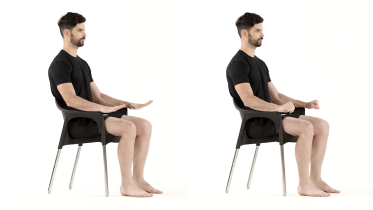 Open and close the hands
 Tendon glides
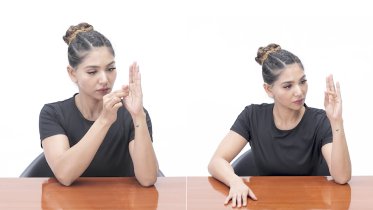 Thumb opposition
Stage 2: Get the wrist moving again
Start once the worst of the swelling has settled and you can move the wrist a little without sharp pain, which for a mild sprain is often within the first few days. If you have a splint, keep coming out of it several times a day to move the wrist within the limits of pain, and wear it less as the pain eases (BSSH). Bend the wrist forward and back, tilt it toward the thumb and then the little finger, and turn the palm to face up and then down. Slow circles come in once those feel easy. The first three usually start at 10 to 15 slow movements each way, 1 to 3 times a day. For the circles it is 5 to 10 each way, 2 to 3 times a day. Sets and the finer details are on each exercise page. The wrist will feel stiff at the end of each movement for a while, and that is expected. Mild discomfort should fade soon after you stop, and the wrist should be no worse by the next morning.
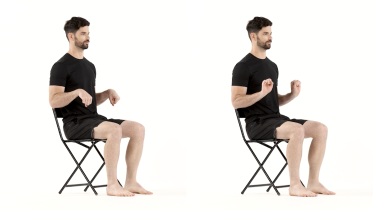 Wrist flexion and extension
 Wrist radial and ulnar deviation
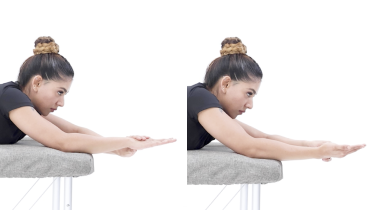 Forearm rotation lying face down
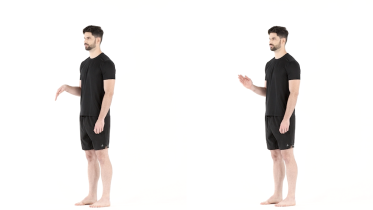 Wrist circles
Stage 3: First strength, grip and a gentle stretch
Move on when the wrist moves most of the way without pain and light everyday tasks feel easier. In the holds the wrist muscles work but the joint does not move. Press gently to begin with, holding each one for 5 to 10 seconds, 5 to 10 times, once or twice a day. For grip, squeeze a soft ball and hold each squeeze for 3 to 5 seconds, often 10 to 15 times, 1 to 3 times a day. If the wrist still feels stiff when it bends back, the forearm stretch can ease it, often held 15 to 30 seconds and repeated 2 to 4 times. Take care with this one. It bends the wrist back, the position most sprains happen in, so keep it gentle and stop short of any pain. The same next-morning check from stage 2 applies here.
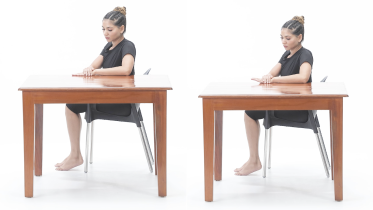 Isometric wrist extension
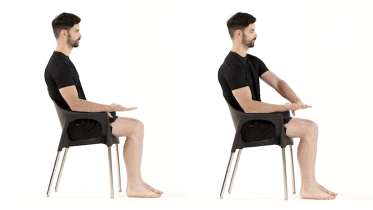 Isometric wrist flexion
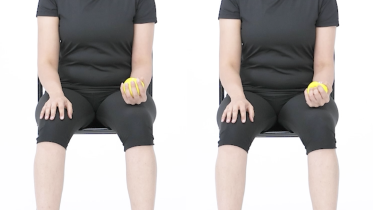 Hand grip squeeze
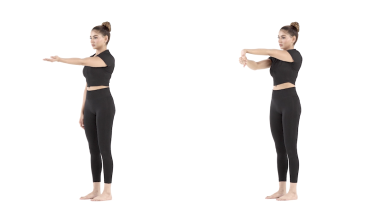 Wrist flexor stretch
Stage 4: Build strength for everyday tasks
Start when the holds and the ball squeeze feel easy and the wrist settles well by the next day. Now the wrist works against some resistance. Lift the hand against a light band, curl something light such as a small water bottle, and turn the forearm while holding a light dumbbell. These usually begin at 2 to 3 sets of 10 to 15, once a day or every other day. The gripper and towel wringing bring back the grip you need to open a jar or turn a tap. Set the gripper as light as it goes and start with 2 to 3 sets of 8 to 15 slow squeezes, and wring the towel 5 to 10 times once or twice a day. Add load in small steps, and only when the current level feels easy. Some ache after harder work is common, but pain that builds from week to week needs checking.
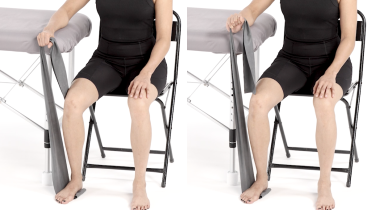 Wrist extension with band
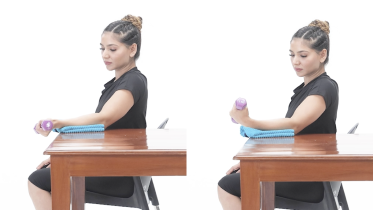 Wrist curl
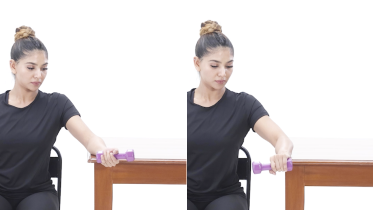 Forearm rotation with a dumbbell
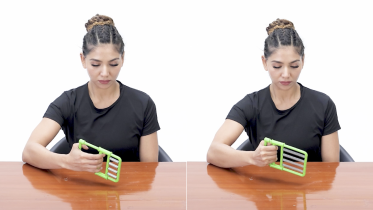 Hand gripper exercise
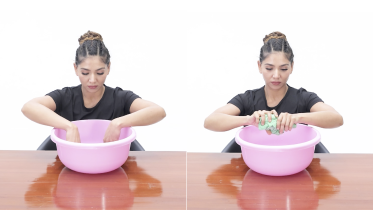 Towel wringing
Stage 5: Weight through the hands and back to sport
You are ready for this stage when gripping and lifting no longer hurt, the wrist bends back nearly as far as the other one, and you can lay your palm flat on a table with no discomfort. Begin by leaning onto a table, often 5 to 10 holds of 10 to 30 seconds once or twice a day. Wall push-ups come next, often 2 to 3 sets of 10 to 15 a few days a week. The last step is the shoulder blade push-up on your hands and knees. Your elbows stay straight in it, so it is not a full push-up, and it often starts at 2 to 3 sets of 8 to 12. These steps get the wrist ready for push-ups, yoga, gymnastics or pushing yourself up off the floor. If taking weight through the hand hurts on the thumb side of the wrist, stop and get it checked rather than push on. Go back to your full sport only when the wrist copes with this stage and feels about as strong as the other one.
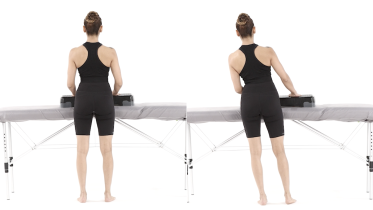 Standing weight shift onto the hands
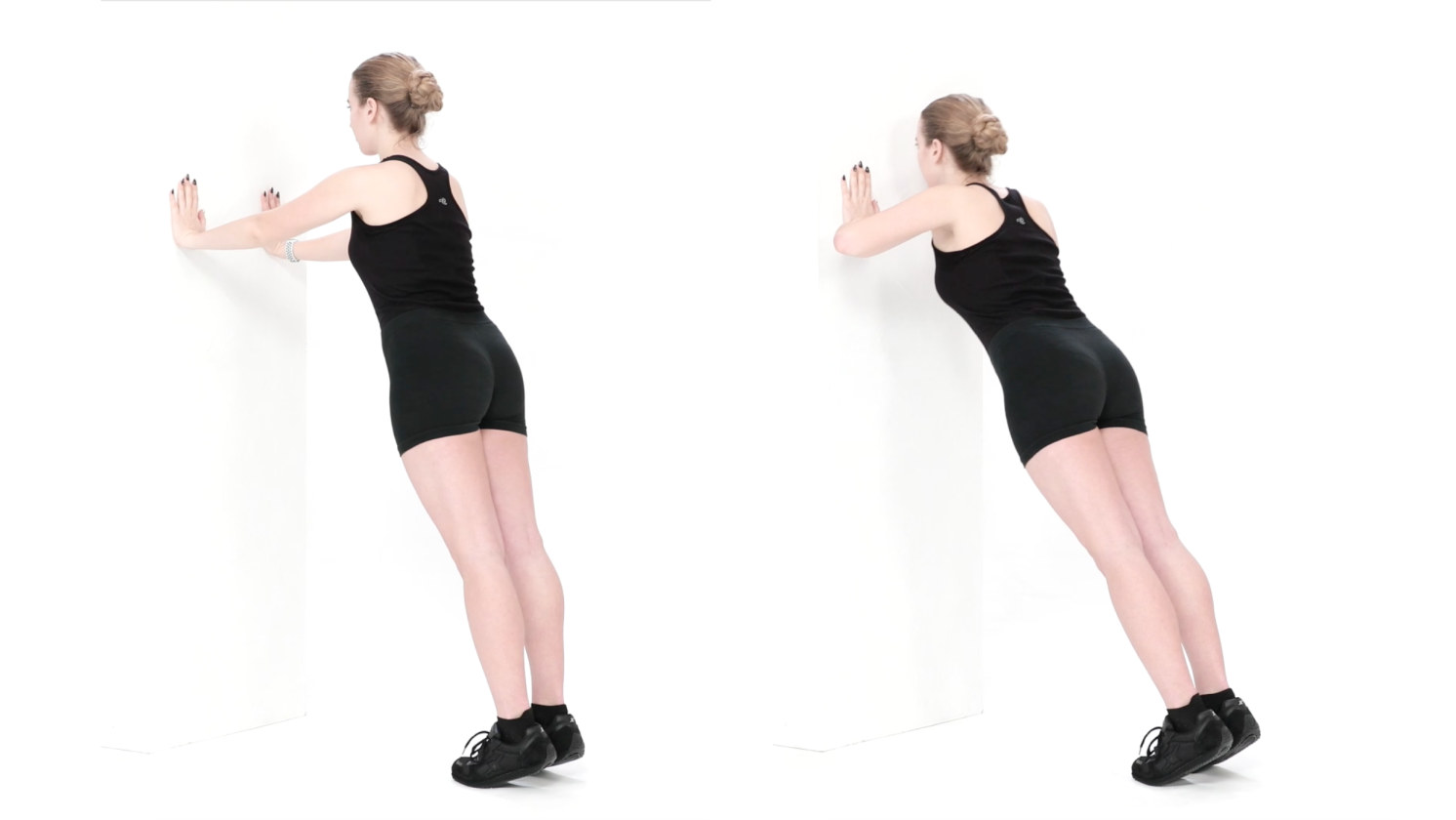 Wall push-ups
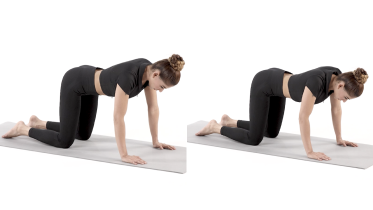 Quadruped scapular push up
Getting back to sport and the gym
OrthoInfo lists skiing, skating and skateboarding among the sports where a fall onto the hand can sprain the wrist, and suggests wrist guards or protective tape for them. Stage 5 should feel easy before you go back to push-ups, planks, yoga or any sport where you land on your hands. Physios commonly build up weight through the hands in steps, from a table to a wall to the floor, and then have you practice the moves of your sport before full training. That is usual practice, not a tested plan.
Keep in mind the NHS advice to avoid strenuous exercise for up to 8 weeks after a sprain. A physio can test your grip and how the wrist copes with weight against the other side and help you decide when you are ready.
When to see a physio or doctor
OrthoInfo advises seeing a doctor if the pain and swelling last more than 2 days, even after an injury that seemed mild. Pain on the thumb side of the wrist after a fall needs medical advice the same day. The NHS adds that a sprain that is getting worse, or not feeling better after you have looked after it yourself, should be checked, and BSSH notes that a sprain that does not settle as expected may need more X-rays or a scan.
It is also worth seeing a physio if the wrist still feels weak or painful when you grip or lean on it weeks after the injury, or if you need it for heavy work or a sport. A physio can check the wrist once the first swelling has settled and set the stages to your wrist. Each warning sign below says how fast to act.
For physiotherapists
The program is written for adults with a mild to moderate wrist sprain after a fall on an outstretched hand, with no fracture. The main clinical risk is an occult scaphoid fracture. OrthoInfo describes pain and swelling at or near the anatomic snuffbox, notes that the fracture may not show on initial radiographs, and describes a splint or cast for 2 to 3 weeks with repeat radiographs, or MRI or CT. NICE NG38 recommends considering MRI as first-line imaging for a suspected scaphoid fracture after a thorough clinical examination. BSSH patient advice supports radiographs to exclude fracture when pain is severe or prolonged, and further imaging when an apparent sprain does not settle.
The page uses the OrthoInfo grading (stretched, partially torn, completely torn or avulsed), and grade 3 injuries are outside its scope. BSSH frames a sprain as ligament microtearing without fracture or complete tear, managed with elevation, ice, analgesia, a splint weaned as pain allows with regular out-of-splint movement, and physiotherapy for some. The references here include no trial of exercise for acute wrist sprain, so progression follows symptom response (pain-free stage 1, then the next-morning rule) rather than tissue healing times. Keep the snuffbox in mind at every contact in the first weeks, screen for CRPS (NHS lists sprains among its triggers) and neurovascular change, watch for a painful clunk with loading that may point to scapholunate injury, and refer for imaging or a hand surgery opinion when pain with gripping or loading does not settle as expected.
See a doctor promptly if
- Emergency: after a fall or injury to the wrist, your hand is numb, tingles or has pins and needles, the wrist has changed shape or sits at an odd angle, or you heard a crack. The same applies to a bone showing through the skin or a cut that is bleeding heavily. Go to an emergency department or call emergency services straight away, and do not drive yourself. The wrist may be broken or out of place.
- Emergency: your arm, hand or fingers turn cold, pale, blue or gray compared with the other side. Call emergency services or go to an emergency department straight away, and do not drive yourself. The blood supply to the arm may be blocked.
- Emergency: you cannot remember the fall that hurt your wrist or how it happened. Go to an emergency department straight away, and do not drive yourself. You may have blacked out or hit your head without knowing it.
- Emergency: after a knock to the head, you were knocked out, even for a moment, you cannot remember what happened just before or after, you have had a headache ever since, or you are being sick (vomiting). The same applies, even if you feel fine, if you take medicine that thins your blood, other than aspirin on its own, have a bleeding or clotting condition, have had brain surgery in the past, or had been drinking alcohol or taking drugs when it happened. Go to an emergency department straight away, and do not drive yourself.
- Emergency: while you are in a cast or splint, your fingers turn blue, white or pale, or feel cold. Do not wait to see if raising your hand helps. Go to an emergency department straight away, and do not drive yourself. The cast or splint may be cutting off the blood supply, or pressure may be building up inside the forearm (compartment syndrome), and both need checking quickly.
- In a cast or splint, the pain gets worse, your fingers feel numb or tingle or look more swollen, or the cast feels too tight. Stop, raise your hand above your head, keep moving your fingers and contact your fracture clinic or get medical advice straight away. If you cannot move your fingers, the pain is severe even after painkillers, or the numbness, tingling or swelling has not settled within 30 minutes of raising your hand, go to your fracture clinic or an emergency department straight away, and do not drive yourself.
- Same day: after a fall onto your hand, pain, swelling or tenderness on the thumb side of the wrist, especially in the small hollow at the base of the thumb that shows when you give a thumbs-up (the anatomical snuffbox). Get medical advice the same day, even if it feels like a mild sprain, and ask about an X-ray. It can be hard to tell a broken wrist from a bad sprain, and a break in the small wrist bone on the thumb side (scaphoid) does not always show on the first X-ray. If your doctor still suspects one, you may wear a splint or cast and have a repeat X-ray or a scan, so keep that appointment even if the wrist feels better. A missed scaphoid break can fail to heal.
- Same day: new wrist pain after a fall, even a small one, if you are older, have low bone density (osteoporosis) or have taken steroid tablets for a long time, even if you can still move the wrist. Get medical advice the same day and ask about an X-ray. A broken wrist is not always obvious at first.
- Same day: the wrist is very painful, you cannot use it because of the pain, or the pain is getting worse. The same applies to a lot of swelling or bruising, swelling or bruising that is getting worse, or a wrist that feels very stiff and hard to move. Get medical advice the same day, as the wrist may need an X-ray.
- Same day: the wrist is hot, red and swollen, or you have wrist pain with a high temperature or feel hot, cold or shivery. Get medical advice the same day, and go to an emergency department if you feel very unwell. This can be a sign of infection in the joint, which needs treatment quickly.
- Since the injury, the hand is getting more painful rather than less, the skin becomes very sensitive to light touch, or the hand changes color, temperature, swelling or sweating compared with the other one, or looks shiny. See your doctor or physio as soon as you can, within a few days at most, as this can be complex regional pain syndrome (CRPS) and early treatment may help.
- The pain and swelling are still there more than 2 days after the injury, the wrist is not clearly getting better 2 weeks after it, or it clicks or clunks painfully when you grip or lean on your hand. See a doctor within a day or two, even if the sprain seemed mild. A torn ligament or a break that did not show at first can look like a simple sprain, and some need treatment early.
- The wrist hurts at night or at rest and the pain keeps getting worse rather than easing as the weeks go by. See your doctor within a few days. If you have had cancer, now or in the past, or are losing weight without trying, see your doctor sooner, within a day or two, and mention it. This applies even if the pain is not getting worse. If you are being treated for cancer now, contact your cancer team the same day.
- You blacked out before the fall that hurt your wrist and nobody has checked why. Get medical advice the same day. A blackout needs its own check, especially if you are over 65 or it came without warning.
Common questions
How long does a sprained wrist take to heal?
It depends on how badly the ligaments are hurt. The NHS says most sprains feel better after 2 weeks, advises avoiding strenuous exercise for up to 8 weeks, and says a bad sprain can take months. UK hand surgeons say recovery takes days or weeks and only rarely months (BSSH), and OrthoInfo notes that mild sprains often recover fully over several weeks. A wrist that is not clearly getting better after 2 weeks should be checked.
How do I know if my wrist is sprained or broken?
Often you cannot tell by looking or by how much it hurts. The NHS says it can be hard to tell if a wrist is broken, dislocated or badly sprained, and that you will probably need an X-ray. Pain or tenderness on the thumb side of the wrist after a fall, especially in the hollow at the base of the thumb, can be a break in the scaphoid bone, so get medical advice the same day. A wrist that has changed shape, or a hand that is numb or tingling after the fall, needs an emergency department straight away.
Should I wear a brace or splint for a sprained wrist?
Often for a short time. UK hand surgeons say a wrist splint is often given for a sprain, and advise taking the wrist out of it several times a day to move it within the limits of pain and wearing it less as the pain improves, so the wrist does not stiffen (BSSH). OrthoInfo notes that moderate sprains may need a splint. For sports with falls onto the hands, such as skating, skateboarding and skiing, OrthoInfo suggests wrist guards or protective tape.
Should I put ice or heat on a sprained wrist?
Ice, not heat, in the first couple of days. The NHS advises an ice pack or a bag of frozen vegetables wrapped in a tea towel for up to 20 minutes every 2 to 3 hours. It also advises avoiding heat, such as hot baths and heat packs, alcohol and massage for the first couple of days. Ice can ease the pain and swelling, but the exercises are what bring the movement and strength back.
Can I do push-ups with a sprained wrist?
Not until the wrist is ready for weight through the hand. Stage 5 of the program builds up from leaning on a table to a wall and then to the floor, and push-ups come after that feels easy. If leaning on the hand brings on pain at the thumb side of the wrist, stop and have it looked at, because a scaphoid break can feel like a sprain. Your physio can help you judge when to start.
Does a sprained wrist need surgery?
Usually not. UK hand surgeons say wrist sprains, where the ligaments are stretched or slightly torn but no bone is broken and no ligament is fully torn, do not need surgery (BSSH). A ligament torn right through or pulled off the bone is a more severe injury, and OrthoInfo notes it may need an operation. After surgery, the ligament usually heals in 8 to 12 weeks, but full recovery can take 6 to 12 months, so follow your surgeon's program.
References
- NHS. Sprains and strains. Page last reviewed 23 April 2024. https://www.nhs.uk/conditions/sprains-and-strains/
- NHS. Broken arm or wrist. Page last reviewed 26 May 2023. https://www.nhs.uk/conditions/broken-arm-or-wrist/
- British Society for Surgery of the Hand. Wrist sprains. Patient information. https://www.bssh.ac.uk/patients/conditions/1018/wrist_sprains
- American Academy of Orthopaedic Surgeons. Wrist sprains. OrthoInfo. https://www.orthoinfo.org/en/diseases--conditions/wrist-sprains/
- American Academy of Orthopaedic Surgeons. Scaphoid fracture of the wrist. OrthoInfo. https://www.orthoinfo.org/en/diseases--conditions/scaphoid-fracture-of-the-wrist/
- National Institute for Health and Care Excellence. Fractures (non-complex): assessment and management. NICE guideline NG38. 2016. https://www.nice.org.uk/guidance/ng38
- National Institute for Health and Care Excellence. Transient loss of consciousness ('blackouts') in over 16s. Clinical guideline CG109. 2010, last updated November 2023. https://www.nice.org.uk/guidance/cg109
- National Institute for Health and Care Excellence. Head injury: assessment and early management. NICE guideline NG232. 2023. https://www.nice.org.uk/guidance/ng232
- NHS. Causes: Complex regional pain syndrome. Page last reviewed 27 October 2022. https://www.nhs.uk/conditions/complex-regional-pain-syndrome/causes/
Written and checked by the PocketPhysio editorial team. Last updated 2026-09-28.
This page is general education, not a diagnosis or a personal treatment plan. See a physiotherapist or doctor for advice about your own situation.