Wrist circles
Wrist circles are a gentle mobility exercise that takes your wrist up, down and side to side in one smooth movement. You stand or sit with your elbow bent at your side and your forearm pointing forward, then slowly turn your hand in a circle one way and then the other. Physios often use them for a stiff wrist, for example once a cast has come off, and as a warm-up before wrist strengthening.
How to do the wrist circles
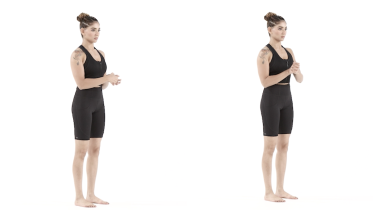
- Stand or sit up tall. The video shows standing, and the voice guide says sitting is fine too.
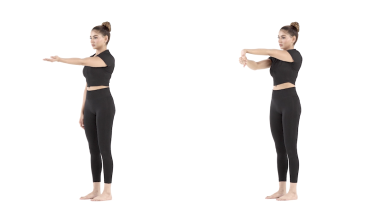
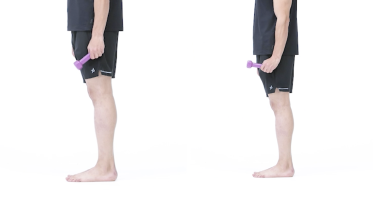
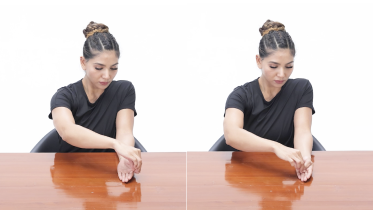
- Bend one elbow to about a right angle and keep it close to your side, with the forearm pointing forward. Turn the hand so the thumb is on top and the palm faces in, as if you were about to shake hands, as in the video.
- Relax your hand and fingers. Slowly move the hand in a circle: lift it up, take it round to one side, let it drop down and bring it round the other side.
- Keep your forearm still so the movement comes from the wrist only. Make the circle as big as feels comfortable.
- After a set of circles, change direction and do the same number the other way.
What you should feel
Easy movement and a light stretch around the wrist. A little stiffness at the start often loosens as you go.
Common mistakes
- Turning the whole forearm or swinging the elbow instead of moving at the wrist.
- Rushing, so the circles become small and jerky.
- Forcing the hand into a part of the circle that hurts.
- Clenching a tight fist, which stiffens the wrist.
How often
Many programs use 5 to 10 slow circles in each direction, 2 to 3 times a day. Your physio will adjust this.
Stop and check with your physio if
- Sharp pain anywhere in the wrist.
- A painful click, clunk or catch as the wrist turns.
- Tingling or loss of feeling in your fingers. If one side of your face or body suddenly goes numb or weak, or your speech becomes slurred or muddled, call emergency services, even if it goes away.
From the clinic
You need no equipment, so a set fits easily into a break at your desk. You can work one wrist at a time, as in the video, or both together. If one part of the circle feels rough or tight, keep the movement smaller there rather than pushing through it.
After a broken wrist, hand or forearm, or surgery on any of them such as a tendon repair, start only when your doctor, surgeon, physio or hand therapist says the bone or repair is ready for this, and follow their plan for how much to do. With inflammatory arthritis such as rheumatoid arthritis, keep the circles small and gentle on days when the wrist is hot or swollen. To work one direction at a time, see wrist flexion and extension and wrist radial and ulnar deviation.
Written and checked by the PocketPhysio editorial team. Last updated 2026-09-28.
This page is general education, not a diagnosis or a personal treatment plan. If you have pain, an injury or a health condition, see a physiotherapist or doctor before starting new exercises.