Pogo hops
Pogo hops are small, quick hops in place on both feet, staying on the balls of your feet with your knees nearly straight. The spring comes mostly from your ankles and calves, like a pogo stick. They usually come in the later stages of ankle, Achilles and calf rehab, and before a return to running or jumping sports.
How to do the pogo hops
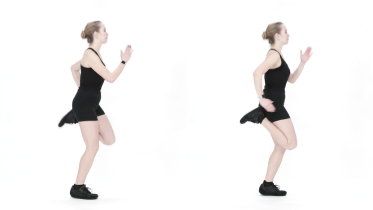
- Stand on a firm, non-slip floor with your feet close together and your hands on your hips, as in the video.
- Rise onto the balls of your feet and keep your knees nearly straight, with only a small bend.
- Hop straight up and down in place, pushing mainly from your ankles. Land on the balls of your feet and spring into the next hop, with your heels staying off the floor or only brushing it.
- Keep your body upright and your eyes ahead. Each landing should be quiet and in the same spot.
- Build the height in stages, as the voice guide describes: a few hops at about 30% of your highest hop, then 50%, then 70%. The video shows steady low hops at one height. Move up a stage only when the lower one feels easy and controlled.
What you should feel
Work in your calves and a springy feeling at the ankles, with your breathing picking up. Landings should feel light, not jarring through the heels, shins or knees.
Common mistakes
- Landing flat footed or on the heels with a thud.
- Bending the knees deeply on each landing, which turns it into a squat jump.
- Feet drifting forward, backward or apart as you hop.
- Hopping higher than you can land quietly.
How often
Many programs start with 2 to 3 sets of 10 to 20 low hops, or about 15 to 20 seconds, with a rest between sets, a few times a week. Your physio will adjust this and decide when you are ready to hop.
Stop and check with your physio if
- Sharp pain in the Achilles tendon, heel, shin or knee, on landing or afterward.
- A sudden pop or snap at the back of your ankle or heel, a feeling that someone kicked you there, or sudden pain there after which you cannot push off or rise onto your toes on that leg. Stop, take the weight off that leg carefully and go to an urgent care center or emergency department the same day, even if you can still walk, as this can be a torn Achilles tendon.
- Achilles or shin pain that is clearly worse the next morning, or new swelling in the ankle or knee.
- Chest pain or pressure, dizziness or feeling faint, a racing or irregular heartbeat, or being far more out of breath than the effort should cause.
From the clinic
Hopping loads the Achilles tendon, calves and shins far more than a calf raise does, so pogo hops are not a starting exercise. Physios usually want you to manage controlled single leg heel raises without pain first. After an Achilles tendon injury, a calf tear, a shin stress fracture or ankle surgery, wait until your physio clears you to hop. Later on, hops on one leg such as single leg hops over a line often follow.
Stay near a wall or counter you can touch if you lose your balance, and stop the set when the landings get noisy or wobbly. If you have osteoporosis or a heart condition, are pregnant, have fallen in the past year, or notice urine leaking when you hop, ask your physio or doctor before you start. If you have had a hip or knee replacement, get the go-ahead from your surgeon before you try pogo hops. Many surgeons advise against jumping and hopping after a joint replacement for good, not just for the first months, because each landing sends high impact through the new joint. If chest pain, pressure or tightness does not ease quickly when you rest, spreads to your arm, neck, jaw, stomach or back, or comes with sweating, feeling sick, feeling light-headed or being short of breath, call emergency services straight away, as this can be a heart attack. If it eases quickly and none of these happen, get medical advice the same day, and do not exercise again until you have been checked. If you faint while exercising, call emergency services, even if you feel fine again quickly.
Written and checked by the PocketPhysio editorial team. Last updated 2026-09-26.
This page is general education, not a diagnosis or a personal treatment plan. If you have pain, an injury or a health condition, see a physiotherapist or doctor before starting new exercises.