
Top of foot pain: what causes it and what helps
Warning signs, and when to get help
What causes top of foot pain?
The NHS cause list for pain in the top of the foot is short: a broken bone, a sprain or strain, tendonitis or osteoarthritis, gout, and sciatica. It adds that exercise, particularly running, kicking or jumping, and shoes that are too tight can bring it on.
In practice those sort into groups by what tissue is sore. A tendon crossing the top of the foot, irritated by load or by pressure from a shoe. A bone, either cracked by a single injury or worn down by repeated load into a stress fracture. A joint, either worn in the midfoot or inflamed by gout or another arthritis. And a nerve, squeezed where it runs close under the skin or irritated further up the leg or back.
Nothing below can diagnose your foot. What this page can do is get you describing the pain precisely enough to be seen at the right speed, because a tendon and a bone want opposite things from you today.
Is it a tendon or a bone?
This distinction is worth more than any cause list, and you can make a start on it yourself. Sit down, take the shoe off, and press along the top of your foot with one fingertip.
A tendon is sore along a line. Trace it and the tenderness follows a cord from the front of the ankle out toward the toes, and the whole line objects, not one spot. It usually eases in the first 10 minutes of walking, hurts more when you pull your toes up hard against resistance, and is often worse at the end of a day in a particular pair of shoes.
A bone is sore at a point. You can cover it with the tip of one finger, the area around it feels normal, and pressing it makes you flinch in a way that pressing a centimeter away does not. It gets worse the longer you are up instead of warming up, it can ache at night, there may be a little puffiness over it, and hopping on that leg reproduces it exactly.
What follows from it is the whole point. A tendon on the top of the foot does better with its load managed and the pressure taken off it: a change of lacing, a change of shoe, and some graded strengthening. A bone that may have a stress fracture needs the load off entirely until someone has looked at it, because repeated loading is what caused it. The two plans contradict each other, so guessing is expensive.
Why does the top of my foot hurt with no injury at all?
No injury, no twist, nothing you can point to. That is how a good deal of top of foot pain starts, and the causes behind it feel quite different from each other.
Gout comes on fast. The NHS describes sudden, severe pain in a joint with the skin over it hot, swollen and red, most often the big toe but also other joints in the feet and ankles, and notes that the redness can be harder to see on black or brown skin. That has its own route: the NHS asks for an urgent appointment or NHS 111 if sudden joint pain and swelling comes with pain that is getting worse, a very high temperature or feeling hot, cold or shivery, or feeling sick or unable to eat, because those can mean infection inside the joint. The warning list on this page carries the full wording and sends you for advice the same day.
Wear in the midfoot joints is the slow one. The NHS names osteoarthritis alongside tendonitis in its cause table. It tends to ache with standing and walking, stiffen after rest, settle when you sit down, and build over months and years instead of weeks. There is no guideline specific to midfoot arthritis that we were able to find, and no reliable figure for how common it is, so what we can say is limited to the pattern: a deep, aching, use-related pain over the middle of the top of the foot in an older foot, often with a bony ridge you can feel. A younger foot gets it too: the Lisfranc review names midfoot arthritis among the consequences of a midfoot injury that was missed or treated inadequately (Mohamed and colleagues, 2025), so a midfoot you hurt years ago is worth mentioning when you are seen.
A nerve gets described oddly. Tingling, a patch of numbness, a burning stripe, or an electric feeling when a shoe presses, in place of a plain ache. The nerve that supplies the skin on the top of the foot runs close under the surface, which is why a tight lace or a strap can set it off. Pain with numbness or tingling in both feet, worse in the evening, is a different problem and belongs with peripheral neuropathy; numbness with tenderness behind the inside of the ankle bone fits tarsal tunnel syndrome better. Tingling, numbness or pain on the top of the foot that also runs up the back of the leg toward your buttock is the pattern the NHS files under sciatica, which is a back problem turning up in the foot.
A stress fracture does not feel like an injury at all, because there was no moment. It turns up a few weeks into more walking, running or standing, and it is on the warning list on this page because the right response is to stop loading it and be seen within a few days.
Top of foot pain when walking
Walking is the commonest thing people say makes it worse. How it behaves across a walk is the useful part. Pain that is sharp for the first few hundred meters and then fades is behaving like a tendon or a stiff joint. Pain that starts quietly and climbs the longer you walk, so the end of a walk is worse than the start, is behaving like bone.
The push-off part of the step is worth noticing separately. If the pain comes at the moment your heel leaves the ground and your toes bend back, the problem is more likely to be at the front, around the big toe joint, and hallux rigidus covers the version where that joint has stiffened. If it comes when your foot swings forward and you lift your toes to clear the ground, the tendons that do that lifting are the better suspects.
Self-care for the walking version is modest and the NHS sets it out: rest and raise the foot when you can, a cold pack, or frozen peas in a bag with a towel between it and your skin, for up to 20 minutes at a time, every 2 to 3 hours, roomy shoes with a low heel and a soft sole, soft insoles or pads, gentle foot and ankle stretches, and paracetamol or ibuprofen gel. There is one exception to raising the leg. If your toes are numb, tingling or burning, or the cast or boot feels tight, do not prop the foot higher than your hip and do not put ice on it, and read the warning signs below for what to do instead. It advises against the activity you think is causing it, long spells of walking or standing, and high heels or tight, pointed shoes.
Top of foot pain after running
Runners get two versions and they are easy to confuse. The tendon version follows an increase in hills, speed or mileage, or a new pair of shoes laced differently, and it is sore along a line, often right where the lace crosses. The bone version follows the same increase but shows up at one point, builds week by week instead of settling, and is worse at the end of a run than the beginning.
Treat the second one as a stress fracture until a clinician says otherwise. OrthoInfo describes the weight-bearing bones of the foot and lower leg as particularly prone to them, with pain at one specific spot during or just after activity that eases with rest at first, then arrives during walking and daily tasks, sometimes with swelling, bruising or night aching. It also notes that an early X-ray can look normal because bone swelling does not show up on one, which is why a clear film does not end the conversation.
Two bones here deserve naming, and the reason is their blood supply. An anatomical review of navicular and fifth metatarsal base stress fractures describes the central part of the navicular, the bone you feel on the top of the midfoot just in front of the ankle, as having little or no direct blood penetration, with the inner and central regions the worst perfused, and the junction between the base and the shaft of the fifth metatarsal as relatively poorly supplied too. It ties that restricted supply, along with the way both bones are loaded, to delayed healing, non-union and refracture, and for the fifth metatarsal it says plainly that delays in treatment can do the same (Liu and colleagues, 2026). It also keeps the anatomy in proportion: most navicular bones have a dense blood supply and no avascular zone at all, so how the bone is loaded matters as much as how it is fed.
That paper is anatomy, and it gives no protocol: it does not compare resting with continuing to run, so it explains why clinicians worry about these two sites and prescribes nothing. What it means for you is on the warning list, where a tender point on the top of the midfoot stops the running and gets an opinion within a few days. Shin splints covers the shin end of the same load problem.
Treatment at these two sites is a surgical conversation, and not a settled one. An international consensus and systematic review on navicular fractures states that the management of navicular injuries remains controversial and lacks standardised treatment protocols, and its recommendations were written for elite athletes, who are not most people reading this (Webber and colleagues, 2026). Time off the foot, a boot, and fixing the bone with a screw are all genuine options at these two sites, and which one fits depends on where exactly the fracture is, how long it has been there and what you need the foot to do. That makes it a decision for a foot and ankle surgeon, with the timings coming from your own team rather than from this page or from somebody else's recovery story.
Pain near the ankle, and pain near the toes
Where along the top of the foot it hurts cuts the list down. The two ends of that area behave quite differently.
Near the ankle, at the front, the tendons that lift the foot pass under a tight band of tissue, and the midfoot joints sit just beyond it. That area is also where the navicular lives, so a point of bone tenderness here is the one that gets taken seriously. Soreness that developed after the ankle was twisted belongs with ankle sprain and needs checking if you cannot put weight on it.
Near the toes, the long bones of the foot fan out with very little covering them. Pain over one of those bones, at one tender or puffy spot, especially after more walking, running or standing, is on the warning list and goes to a doctor within a few days. Pain under the ball of the foot, not on top of it, is a different problem and metatarsalgia is the better page. Toward the little toe side, the tendons on the outside of the ankle can refer soreness along the outer border, which is peroneal tendinopathy. Toward the big toe side, a bunion changes the shape of the shoe's contents and can leave the skin and joint on top of the foot sore from pressure, which bunions covers.
A hot, red, swollen foot
This sits outside everything above, and it is why the NHS urgent list for pain in the top of the foot runs longer than the one for the sole. That list adds a foot that is hot and swollen, and a very high temperature or feeling very hot, or cold and shivery, noting these can be signs of a broken bone after an injury or of an infection.
Several problems look like this and each is urgent in its own way. Gout, which the NHS describes as sudden, severe joint pain with hot, swollen, red skin over it. An infection in the joint or in the skin and soft tissue, which can look much the same and is treated quickly. And, in a person with diabetes or reduced feeling in the feet, a Charcot foot. Diabetes UK describes swelling of the foot or ankle, a foot that feels warmer than the other, a change in color and a change in shape, and asks you to take the weight off that foot straight away and contact your doctor or footcare team.
The last possibility is not in the foot at all. A newly swollen, warm, tender calf alongside the foot can be a blood clot, which needs medical advice the same day, and emergency services if you are also short of breath or have chest pain. Do not rub or massage a calf like that. The warning signs below carry the full set, and all of these routes are in there with their timings.
Pain that started with a twist, a fall or a crush
If a weight landed on your foot, if the foot was twisted while your toes were planted, or if you came down hard on a bent foot, the midfoot needs ruling out properly and not watching for a week. A review of Lisfranc injuries, the group of injuries to the joints across the middle of the foot, states that these relatively uncommon injuries are frequently missed at first presentation in emergency departments, and that delayed or inadequate treatment can lead to chronic pain, midfoot arthritis and significant loss of function (Mohamed and colleagues, 2025).
The detail worth carrying into the appointment is about the X-ray. The same review states that non weight-bearing films may miss unstable, subtle injuries, and that weight-bearing views are essential where they can be done. An X-ray taken while you lie on a table is not the same test as one taken while you stand on the foot: the instability only shows when the joints are loaded. If you are told your X-ray is clear but the middle of your foot is still tender to press, swollen and painful to stand on, it is reasonable to ask whether a weight-bearing view or a scan is the next step.
Which scan depends on what is being looked for, and the same review names both. A CT is used when the plain films do not settle it or when the bony injury needs mapping, and MRI is described as the best test for an injury that is purely ligament (Mohamed and colleagues, 2025). If standing on the foot for a film is more than you can manage, say so instead of forcing it, because that is one of the situations the scans exist for. None of this is an argument to have with the radiographer who takes the film or the radiologist who reads it. It is one question for the clinician who ordered it: what happens next if this one comes back normal.
What to do in the meantime is on the warning list and it is not subtle. Pain that started with a fall, a twist or something heavy landing on the foot, with swelling or bruising, a snap, grinding or popping noise, or an inability to put weight on it, gets checked the same day. So does a foot whose shape has changed, or pain severe enough to make you feel faint, dizzy or sick.
Your laces, your straps and your shoes
Pressure from a shoe is one of the easiest causes to test and to change, and it is the one most often left out. The tendons and the nerve on the top of the foot have skin over them and nothing else. Press on that line for an hour at a time, five days a week, and it will eventually get sore.
The usual culprits are a lace pulled tight over the highest part of the midfoot, a stiff shoe tongue with no padding, a strap on a sandal or a work boot sitting across the same ridge, and a shoe laced tightly to stop the heel slipping. The NHS names shoes that are too tight among the causes. The test is to check whether the sore line matches where the pressure sits, and whether it eases within an hour of taking the shoes off.
The fix costs nothing: skip the eyelets directly over the sore area and lace above and below it, which keeps the rest of the shoe snug. Lace the shoe in two separate sections if the whole top of the foot objects. Put a folded piece of soft material under the tongue to spread the pressure. If the shoe cannot be laced in a way that leaves the area alone, the shoe is the problem. Give any of these a fortnight before you decide it has not worked.
Top of foot pain in a foot that has been operated on
If the foot you are reading about has had an operation, bunion surgery or any other, the page above reads differently for you. New or increasing pain after a foot operation is information for your surgical team, not a cue to adjust your own exercise. Your surgeon's and physio's instructions on weight bearing, range and timing come before anything on this site.
There are no week numbers anywhere on this page, and that is deliberate. How much weight you may put through the foot, how far the toes and the ankle may move, and the point at which either of those changes depend on which operation you had, on how the bone or the joint was held, and on how your own surgeon works. The Lisfranc review says as much for one of these operations: post-operative protocols vary with the method of fixation and the severity of the injury (Mohamed and colleagues, 2025). Two people whose operations share a name can be given different limits for good reasons, so numbers from a friend, a forum or a page like this one do not transfer to your foot. If you do not have your own limits in writing, or cannot remember them, ring your team and ask rather than guess.
More than one operation leaves pain on the top of the foot. Bunion surgery cuts and repositions bone at the inner side of the forefoot, and the swelling, the stiffness of the neighboring joints and the altered push-off can all be felt across the top of the foot while the foot relearns its step. Surgery to fuse or replace a midfoot or big toe joint sits directly under this area, and so does the commoner operation that shaves the bony ridge off the top of a stiff big toe joint, a cheilectomy, where the tender spot ends up exactly where a shoe creases. Fixing a broken bone in the foot leaves a plate or screws under skin that is thin here, with very little between the metal and the surface, so you may be able to feel the shape of it and a lace or a boot can rub on it. An operation for a stress fracture at the navicular or the base of the fifth metatarsal does the same in the same place. And an operation that involved a cast or boot leaves a foot that has not taken load for weeks, which aches for a while when it starts again.
Two things about metalwork are worth separating. Feeling a plate as a ridge, or finding that a lace or a work boot rubs over it, is ordinary, and it is dealt with by changing the shoe or the lacing, or by a conversation about removing the metal later if it keeps happening. Skin that is breaking down over the metal is not ordinary. If the skin above a plate, a screw or a wire goes thin, shiny, dusky or dark, blisters, opens, weeps fluid, or you can see or feel bare metal through it, treat it as urgent rather than as a rub, because metal that is no longer covered by healthy skin is a route for infection to reach the bone. That one is on the warning list with its own timing.
One more thing is worth a call rather than a wait. Pain that comes back under load months after a fusion or a fixation, particularly if it is the old pain in the old place, is not something you can judge from how the foot feels. Whether the bone has joined and whether the metal is still holding is answered by your surgeon and a follow-up X-ray, so it belongs with them.
Some of what follows gets reported rather than managed, and the warning list below carries each one in full. A wound that is leaking or oozing, or whose edges are coming apart, or still leaking into the second week, or a foot that is getting more red, hot, swollen or painful instead of settling, or a temperature with any of that: contact your surgical team the same day, or get urgent medical advice if you cannot reach them. A newly swollen, warm, tender calf, which needs medical advice the same day, and emergency services if you are short of breath or have chest pain, because an operated leg carries a raised clot risk for weeks after the operation. A foot or toe that turns cold, pale, blue or black, which means an emergency department straight away and not driving yourself. And a foot that has changed shape, which needs medical advice the same day.
For everything else, the useful signal is direction and not level. Pain that was settling and has started climbing again, a new tender point of bone that was not there last month, or a swelling that is growing week on week instead of shrinking is worth a call to your team. If you are unsure whether an exercise on this page is allowed yet, the answer comes from the people who operated. After foot or toe surgery, such as bunion surgery, or a broken bone in the foot or toes, ask your surgeon or physio when to start.
What helps at home, and what to leave alone
Start with the changes that cost nothing. Take the pressure off the sore line by relacing or changing shoes. Cut back the activity that brings it on, without going to bed. Use a cold pack wrapped in a cloth for up to 20 minutes at a time, as the NHS advises, and note that roomy shoes with a low heel and a soft sole, and soft insoles or pads, are on the same NHS self-care list. A pharmacist can tell you whether paracetamol or ibuprofen fits with your other medicines. There is one exception to raising the leg. If your toes are numb, tingling or burning, or the cast or boot feels tight, do not prop the foot higher than your hip and do not put ice on it, and read the warning signs below for what to do instead.
What to leave alone matters as much. Do not stretch into sharp pain over a tender point of bone, and do not work through pain on the assumption that it is a tendon when you have not checked whether it is a point or a line. Do not tape over a bony tender spot to keep walking on it. Do not massage a calf that is newly swollen, warm or tender. And do not keep going on a foot that is hot and swollen while you wait for it to settle, because the three causes of that picture all need seeing.
The NHS gives a clear point to stop self-treating: see a GP if the pain stops you doing normal activities, is getting worse or keeps coming back, has not improved after 2 weeks of home treatment, if you have tingling or loss of sensation in the foot, or if you have diabetes and foot pain. That last one has no two-week wait attached to it.
Does top of foot pain need an X-ray?
Not usually, and the honest answer is that the examination decides. A clinician pressing along the top of your foot can usually tell a tendon line from a bony point in under a minute, and if everything points at a tendon and an obvious shoe pressure, no imaging is needed to start treatment.
A few situations change that. An injury, where the NHS urgent list already covers a snap, grinding or popping noise, an inability to walk, a foot that has changed shape or severe pain, and where a midfoot injury needs weight-bearing views and not films taken lying down (Mohamed and colleagues, 2025). A suspected stress fracture, where an X-ray is often the first test but can look normal in the first 2 to 3 weeks, so a scan may be needed to answer the question. And a hot, swollen, painful joint, where the useful tests are usually blood tests and a sample of joint fluid, not a picture.
The question worth asking in the appointment is not whether you need an X-ray. It is what the plan is if the first one comes back normal. That single question is what stops a missed midfoot injury or an early stress fracture from drifting.
Exercises for top of foot pain
These are for the tendon and stiffness version, once a clinician has told you that bone is not the problem or the bone has healed. The aim is to get the ankle moving in every direction, then to load the muscles that lift the foot in a hold before you load them in a movement, and only then to put weight through the foot with the heels and the toes lifted.
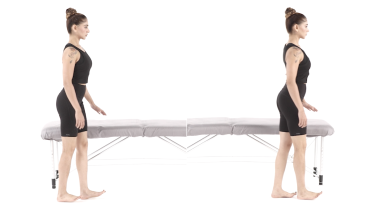
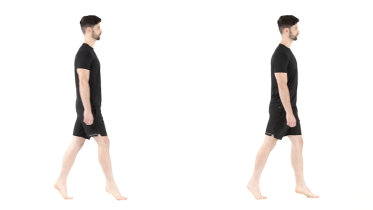
Start with the ankle alphabet and the isometric hold, both sitting. Add the band work when the hold is comfortable, then the calf stretch, which is done standing, and leave heel walking and toe walking until the top of the foot is quiet during the sitting work, because those two load the front of the shin and the top of the foot directly. A working ache along the front of the shin or the top of the foot is expected. A sharp pain at one point, or a foot that is more swollen the next morning, means the amount was wrong and not the exercise.
Check these before you start. Leave all of these out until you have been seen if one point of bone on the top of your foot is tender to press. After foot or toe surgery, such as bunion surgery, or a broken bone in the foot or toes, ask your surgeon or physio when to start. After an ankle fracture or ankle surgery, follow your surgeon's or physio's plan, and start these exercises only when they have cleared you, and if your foot is in a cast or boot, check whether the foot may come out of it and whether any direction is off limits for now. An Achilles tendon repair needs more care still, because pulling the foot up past a right angle stretches the healing tendon, and calf stretching is often limited for the first months after one, so follow your surgeon's and physio's instructions before you try any of these, and ask about heel walking and toe walking by name, because heel walking holds the foot up past a right angle with your body weight on it and toe walking puts more load through that tendon than anything else here.
With a heart condition or high blood pressure, check with your doctor before you start, and if you have high blood pressure, breathe steadily through every hold and never hold your breath. If you are pregnant, check with your midwife or physio before you start.
If you have osteoporosis, numbness or reduced feeling in your feet, or have fallen in the past year, leave heel walking and toe walking until a physio has watched you do them. Both drills take away the part of the foot you normally balance on, heel walking tips you backward in a way a hand at your side cannot catch, and staying up on your heels or your toes leans on the feeling in your soles. The other four are gentler: three are done sitting, and the calf stretch is done standing still rather than walking, with both hands on a wall at shoulder height if your balance is not steady. Once a physio has cleared the two walking drills for you, do them along a hallway or a counter you can reach the whole way, in lengths short enough that you never have to let go partway, and clear the floor behind you as well as in front, because the usual way to lose your balance on your heels is backward.
A child or teenager with foot pain should be assessed before starting any exercise program. With diabetes, get any new foot pain checked by your doctor before you start these exercises, and raise the two walking drills with them by name, because heel walking puts your weight on the heel and toe walking on the ball of the foot, which are two of the places a foot that cannot feel properly breaks down first.
Exercises that can help
Read the checks just above before you start any of these: they cover an operated foot, a cast or boot, an ankle fracture, an Achilles repair, pregnancy, blood pressure, falls and anyone still growing. Leave all of them out until you have been seen if one point of bone on the top of your foot is tender, because the two walking drills put your body weight straight through that area and the band and hold work pulls on the tendons that attach there. Ankle dorsiflexion with a band usually starts with a light band and 2 to 3 sets of 10 to 15 slow repetitions, once a day. Isometric ankle dorsiflexion is typically 5 to 10 holds, each lasting 5 to 10 seconds, once or twice daily at a light effort to begin with. Heel walking often starts at 2 to 3 lengths of 10 to 15 steps, resting between lengths, once a day or on most days, and toe walking at 2 to 3 walks of 10 to 20 steps, or about 20 to 30 seconds, with a rest in between, once a day or a few days a week. The calf stretch typically uses holds of about 30 seconds, 2 to 3 times on each leg, once or twice a day, and the ankle alphabet 1 to 2 rounds of the full alphabet, 2 to 3 times a day while the ankle is stiff. Your physio will adjust this, and after an operation the plan from your surgeon and physio comes first.
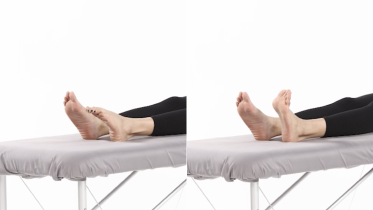 Ankle alphabet
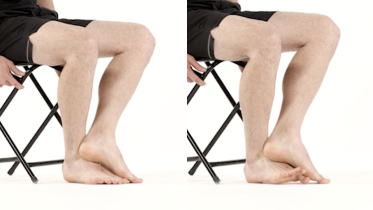 Isometric ankle dorsiflexion
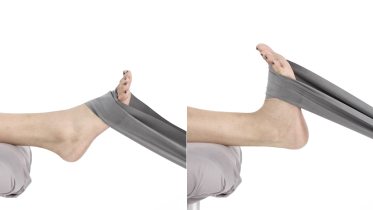 Ankle dorsiflexion with band
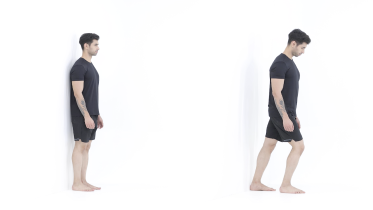 Calf stretch
 Heel walking
 Toe walking
When to see a physio (physical therapist)
Book an assessment if the top of your foot is no better after 2 weeks of taking the pressure off and cutting the load, if it keeps returning every time you build your walking or running back up, or if you cannot work out whether you are feeling a line or a point. That last one is a perfectly good reason to be seen, and it takes a clinician a couple of minutes to answer.
Go faster than that in several situations, and the warning signs below give each its own timing. They cover a stress fracture in one of the long bones of the foot or in the midfoot, gout and a joint infection, a skin or wound infection, a blood clot in the calf, a post-operative foot that is not settling, a foot that is losing feeling or starting to drag, and anyone whose diabetes or reduced feeling in the feet makes foot pain an unreliable guide. Red flags in physiotherapy explains why these lists exist and how clinicians use them.
The pages on either side of this one cover what it leaves out. Foot arch pain covers the sole and the inner border of the foot, and heel pain in the morning covers the first-step pattern under the heel. Foot and ankle pain by body area lists the rest of the foot pages here.
Related exercise programs
Warning signs
Get emergency help now
- Emergency: part of your foot or a toe turns cold, pale, blue or black. Call emergency services or go to an emergency department straight away, and do not drive yourself, as the blood supply to the foot may be blocked.
Get help now, day or night
- In a cast or boot, the pain gets worse, your toes feel numb, tingle or burn or look more swollen, or the cast or boot feels too tight. Stop, raise your foot to about hip level and no higher, keep moving your toes and contact your fracture clinic or get medical advice straight away. If you wear a boot, loosen the straps but keep it on. Do not prop the foot higher than that and do not put ice on it, because if pressure is building up inside the lower leg both of those cut down the blood reaching your foot. If you cannot move your toes, the pain is severe even after painkillers, or the numbness, tingling, burning or swelling has not settled within 30 minutes of raising your foot, go to your fracture clinic or an emergency department straight away, and do not drive yourself.
- Your tendon pain or swelling started while you were taking a fluoroquinolone antibiotic, such as ciprofloxacin or levofloxacin, or in the months after a course. Contact your doctor straight away. The UK medicines regulator (MHRA) advises stopping the antibiotic at the first sign of tendon pain or swelling and talking to your doctor. Hold off the foot and ankle exercises until you have been checked.
Get help today
- Same day: the pain started with a fall, a twist or something heavy landing on your foot, and there is swelling or bruising, you heard a snap, grinding or popping noise, or you cannot put weight on the foot. Get it checked the same day.
- Same day: the pain is severe or makes you feel faint, dizzy or sick, you cannot walk, or the shape of your foot has changed. Get medical advice the same day.
- Same day: the foot is hot, red and swollen, or you have a fever or feel unwell. Get medical help the same day, and go to an emergency department if you feel very unwell. If you have a very high or very low temperature, shivering you cannot control, you are breathing very fast or finding it hard to breathe, you are confused or your speech is slurred, your skin, lips or tongue look blue, gray, pale or blotchy (on brown or black skin this can be easier to see on the palms of the hands or soles of the feet), or you have a rash that does not fade when you press it, call emergency services, as this can be sepsis.
- Same day: the big toe joint suddenly becomes hot, red, swollen and very painful, even if you did not hurt it, or you have big toe pain with a high temperature or feel hot, cold or shivery. Get medical advice the same day, and go to an emergency department if you feel very unwell. This is often gout, but it can be a sign of infection in the joint, which needs treatment quickly. Do not exercise the toe until it has been checked.
- Same day: you have diabetes or numb feet, and one foot becomes hot, swollen or red, or changes color or shape, with or without pain. Take your weight off that foot straight away and get advice the same day from your doctor or your diabetes foot team. This can be Charcot foot, where the bones and joints of the foot are damaged and the foot can collapse. Do not exercise that foot until it has been checked. If you also have a fever or feel very unwell, or redness is spreading up your foot or leg, go to an emergency department.
- Same day: you have diabetes or numb feet and find a new blister, cut or sore on your foot, especially one you did not feel, a wound that smells or is leaking, or new pain in your foot that you cannot explain. Get it seen by your doctor or foot team the same day. If you also have a fever or feel very unwell, redness is spreading up your foot or leg, or part of your foot or a toe turns black, go to an emergency department.
- Same day: a burn, a scald or a blister on your foot or lower leg from hot water, a hot floor or pavement, a hot water bottle, an electric blanket, a heat pad, or sitting with your feet near a fire or radiator. Keep your weight off that foot and get it seen by your doctor or foot team the same day, however small the mark looks and even if it does not hurt. A foot that cannot feel heat can be burned deeply before you notice, and a burn on a numb foot can turn into an ulcer. If you also have a fever or feel very unwell, redness is spreading up your foot or leg, or part of your foot or a toe turns black, go to an emergency department.
- Same day: a sore, ulcer or wound on your foot that your team already knows about gets bigger or deeper, starts to smell or to leak more, the skin around it turns red, hot or puffy, or it has not started to heal. Get advice from your doctor or foot team the same day rather than waiting for your next appointment, and keep your weight off that foot. If you also have a fever or feel very unwell, redness is spreading up your foot or leg, or part of your foot or a toe turns black, go to an emergency department.
- Same day: a wound, blister or sore on your leg or foot becomes more red, hot, swollen or painful, or starts to leak or ooze, is still leaking in the second week or has never stopped, or you have a high temperature or feel hot, cold or shivery. Contact your fracture clinic or medical team the same day.
- Same day: since your operation, your wound is oozing, leaking or has pus coming out of it, or its edges start to come apart, or your foot is tender, swollen, painful or red and it is not getting better or is getting worse, or you have a high temperature or feel hot and cold or shivery. Redness can be harder to see on brown or black skin. Contact your surgical team the same day, or get urgent medical advice if you cannot reach them. These can be signs of an infection in the wound, or deeper in a joint, a bone or around metalwork in the foot. If you feel very unwell, go to an emergency department. If you have a very high or very low temperature, shivering you cannot control, you are breathing very fast or finding it hard to breathe, you are confused or your speech is slurred, your skin, lips or tongue look blue, gray, pale or blotchy (on brown or black skin this can be easier to see on the palms of the hands or soles of the feet), or you have a rash that does not fade when you press it, call emergency services, as this can be sepsis.
- Same day: since your operation, you felt a crack, snap or sudden give in the operated foot, or it has started to give way under you, or you suddenly cannot put weight through it when you could before, or the shape of the foot is changing, with the arch dropping again, a toe that was straightened shifting back, or the foot starting to look out of line or to sit differently in a boot or cast, or a boot or cast that fitted starts to feel loose and roomy. Bones that were cut, moved or fused, and tendons that were repaired or moved, are held in place by screws, plates, wires or stitches while they knit, and a correction can slip without any new injury and without a snap. It is put right more easily when it is found early. Stop the exercises, keep your weight off that foot and contact your surgical team the same day, or get urgent medical advice if you cannot reach them. If the foot looks clearly out of shape, or you cannot stand on it and cannot reach anyone, go to an urgent care center or an emergency department.
- Same day: you have a plate, screws or a wire in your foot and the skin over the metal is thinning, shiny, dusky or darkening, has blistered or opened, is weeping fluid, or you can see or feel bare metal through it. Contact your surgical team the same day, or get urgent medical advice if you cannot reach them, and keep the area clean, dry and covered until you are seen. Skin that is breaking down over metalwork can let infection reach the bone. If you also have a high temperature or feel hot, cold or shivery, or redness is spreading up your foot or leg, go to an emergency department.
- Same day: a calf or thigh that is newly swollen or getting more swollen, warm, tender, red or darker than usual, has swollen veins that are sore to touch, or has a throbbing or cramping pain that does not fit your injury or condition, or that feels different from normal muscle soreness after exercise. This can be a sign of a blood clot (deep vein thrombosis), especially after surgery, an injury, time in a cast or boot, a long trip or a spell of being much less mobile than usual. Get medical advice the same day. If you are also short of breath or have chest pain, call emergency services.
- Same day: a leg or foot that is getting weaker, for example your foot drags, catches on the ground or slaps down when you walk (foot drop). Get medical advice the same day. If the weakness is getting worse by the hour, go to an emergency department.
- Same day: the pain is there at night or at rest as well as when you stand and walk, and it is getting worse. If you are being treated for cancer now, contact your cancer team the same day.
Book an appointment
- Within a few days: the pain sits at one spot over one of the long bones that lead to the toes, and that spot is tender or swollen, especially after a sudden increase in walking, running or standing, or if you have thin bones (osteoporosis). Stop running and jumping, cut down on walking and standing, and see a doctor within a few days, as this can be a stress fracture. If walking hurts or makes you limp, get it checked the same day. An X-ray can look normal for the first 2 to 3 weeks, so a normal early X-ray does not rule it out.
- Within a few days: the pain sits at one small spot on a bone that you can point to with a finger, such as the shinbone or a bone in the foot, the bone aches at rest or at night, or hopping on that leg hurts at that one spot. Stop running, jumping and any exercise that hurts at that spot, and see a doctor within a few days, as this can be a stress fracture. This matters even more if the spot is on the front of the shinbone or the top of the foot in the middle, just in front of the ankle (the navicular bone), because doctors treat stress fractures there as high risk. If walking hurts or makes you limp, get it checked the same day. An X-ray can look normal for the first 2 to 3 weeks, so a normal early X-ray does not rule it out.
- Within a few days: you have not been diagnosed, and several joints in your hands, wrists or feet are painful, swollen and stiff, especially in the morning. This is not an emergency, but see your doctor within a few days, because early treatment can stop the condition getting worse and lower the risk of joint damage.
- Within a day or two: the pain is there at night or at rest as well as when you stand and walk, and it is getting worse. If you have had cancer, now or in the past, or are losing weight without trying, see your doctor sooner, within a day or two, and mention it. This applies even if the pain is not getting worse.
- Within a few days: the pain is there at night or at rest as well as when you stand and walk, and it is getting worse. See your doctor within a few days.
- Within a week or two: you have numbness, tingling, burning or loss of feeling in the foot. Book an assessment with a doctor or physio in the next week or two. If it came on over hours or days, started after an injury, is spreading, or comes with weakness in the foot, get medical advice the same day.
Common questions
Why does the top of my foot hurt for no reason?
Usually because something has been loading it quietly for weeks rather than because nothing happened. New shoes, a lace done up tightly over a bony ridge, a job that has you on hard floors, or a gradual rise in walking are all easy to miss, and the NHS names exercise such as running, kicking or jumping, and shoes that are too tight, among the causes of pain in the top of the foot. Four causes genuinely arrive without an injury and need separating: gout, which comes on fast with a hot, red, swollen joint and needs advice the same day; wear in the midfoot joints, which aches with standing and settles with rest; a squeezed nerve, which tingles or goes numb rather than aching; and a stress fracture, which hurts at one point of bone and gets worse the longer you are up. If you cannot see a reason, the questions worth answering are what changed in the last month and whether the sore spot is a line or a point.
How do I know if top of foot pain is a stress fracture?
Three features travel together, and all three present is the combination worth checking. The pain sits at one spot on bone that you can cover with a fingertip, rather than spreading along a tendon. It gets worse the longer you stand or walk instead of warming up, and hopping on that leg hurts at that same spot. OrthoInfo describes exactly that pattern, pain at one specific spot mainly during or just after activity and easing with rest early on, then arriving during walking and ordinary tasks as the injury progresses, sometimes with swelling, bruising or aching at night. The important part is what comes next: an early X-ray can look normal, because bone swelling does not show on one, so a clear X-ray in the first 2 to 3 weeks does not settle the question and the warning list on this page gives the timing for getting it looked at.
Can tight laces cause pain on the top of the foot?
Yes, and it is one of the few causes you can test and fix the same afternoon. The tendons that lift your toes and foot run across the top of the foot with very little padding over them, and a nerve runs close under the skin on the outer half, so a lace, a strap or a stiff shoe tongue pressing on that area can irritate either one. The NHS lists shoes that are too tight among the causes of pain in the top of the foot. The test is simple: if the soreness follows a line that matches where the lace sits, is worse at the end of a day in those shoes, and eases when you take them off, change how you lace them before you change anything else. Skipping the eyelets over the sore spot, or lacing in two separate halves, takes the pressure off without loosening the heel.
Should I tape the top of my foot?
Tape is not the first thing to reach for here, and it depends which problem you have. If the pain follows a tendon and a shoe or lace is pressing on it, the useful change is to the shoe and the lacing, not a layer of tape over the same spot. If one point of bone is tender, taping it makes it possible to keep walking on something that needs to stop being walked on, which is the opposite of what the foot needs. Tape and support have a place in the recovery stage of some foot and ankle injuries, set up by a clinician who has examined the foot and shown you where it goes, and taping a foot that has reduced feeling is not advisable at all, because you will not feel a rub or a pressure mark forming underneath it.
References
- NHS. Pain in the top of the foot. Page last reviewed 24 October 2025. https://www.nhs.uk/conditions/foot-pain/pain-in-the-top-of-the-foot/
- NHS. Gout. Page last reviewed 24 August 2023. https://www.nhs.uk/conditions/gout/
- American Academy of Orthopaedic Surgeons. Stress Fractures. OrthoInfo. https://www.orthoinfo.org/en/diseases--conditions/stress-fractures/
- Mohamed A, Elasad A, Khan AU, Fuad U, Salib P. From Missed Diagnosis to Optimal Outcomes: A Comprehensive Review of Lisfranc Injuries. Cureus. 2025;17(10):e94615. https://doi.org/10.7759/cureus.94615
- Webber KJ, Boggiano VJ, Balboni JM, Semelsberger SD, Moran J, Mast P, Vasquez A, Gianakos AL; IFASC Committee Members. Navicular fractures in elite athletes-2025 International Foot and Ankle Sports Consensus and systematic review. Knee Surgery, Sports Traumatology, Arthroscopy. 2026;34(9):3162-3177. https://doi.org/10.1002/ksa.70243
- Liu X, Hong CC, Reina F, Carrera A, Alcolea-Madera E, Del Vecchio JJ, Dalmau-Pastor M. Navicular and fifth metatarsal base stress fractures: an illustrated anatomical review. Knee Surgery, Sports Traumatology, Arthroscopy. 2026;34(9):3135-3149. https://doi.org/10.1002/ksa.70413
- National Institute for Health and Care Excellence. Diabetic foot problems: prevention and management. NICE guideline NG19. Published 26 August 2015, last updated 11 October 2019. https://www.nice.org.uk/guidance/ng19
- Diabetes UK. Charcot foot and diabetes. Last reviewed 8 November 2024. https://www.diabetes.org.uk/about-diabetes/looking-after-diabetes/complications/feet/charcot-foot
- Medicines and Healthcare products Regulatory Agency. Fluoroquinolone antibiotics: must now only be prescribed when other commonly recommended antibiotics are inappropriate. Drug Safety Update. 22 January 2024. https://www.gov.uk/drug-safety-update/fluoroquinolone-antibiotics-must-now-only-be-prescribed-when-other-commonly-recommended-antibiotics-are-inappropriate
Written and checked by the PocketPhysio editorial team. Last updated 2026-10-21.
This page is general education, not a diagnosis or a personal treatment plan. See a physiotherapist or doctor for advice about your own situation.