
Peripheral neuropathy exercises for balance, strength and safer feet
What is peripheral neuropathy?
Peripheral neuropathy means damage to the nerves that run out to your limbs (NHS). The feet are affected most often, and sometimes the hands too. The usual signs are numbness and tingling, burning, stabbing or shooting pains, and less ability to feel pain or changes in temperature. Some people also get muscle cramps or weakness, and when the nerves that control blood pressure are affected, standing up can make you feel faint or dizzy.
The NHS names diabetes as the most common cause in the UK. It lists many others, including years of heavy drinking, low vitamin B12, some chemotherapy and other medicines, kidney or liver disease, an underactive thyroid, and conditions that run in families. Sometimes no cause is found. That is why the first step is a doctor's check, not an exercise sheet. If your doctor, diabetes foot team or physio has given you a plan, follow theirs first.
Why numb feet make balance harder
Your feet tell your brain where they are and how your weight sits over them. When they are numb, that is harder to sense, and the NHS lists loss of balance among the symptoms. You lean more on your eyes instead, which is why a dark hallway or uneven ground can catch you out. Weak muscles in the feet and ankles, also on the NHS list, can add to it, since they help make the small corrections when you wobble.
A physio sees two separate risks in a numb foot. One is falling. The other is damage to the skin that you cannot feel, such as a blister from a new shoe or a burn from bath water that is too hot. This program is built around both.
Is this the right program for you?
The balance and falls prevention program is for anyone who feels unsteady as they get older. This page uses the same kind of balance and strength work but adds the foot care and ulcer precautions that numb feet need. If falls are your main worry and your feet feel normal, start there instead.
Tarsal tunnel syndrome is one nerve squeezed at the inner ankle, usually on one side. Neuropathy usually affects both feet. Sharp heel pain that is worst for the first few steps after you get up points more to plantar fasciitis, and an aching or collapsing arch is covered in the flat feet exercises.
Do exercises help peripheral neuropathy?
They can help, but the evidence is thinner than for many conditions. A 2014 review of 18 studies found exercise safe and feasible for people with neuropathy (Streckmann 2014). Balance training had the strongest effects on both movement and sensory symptoms, and endurance exercise may help prevent or slow nerve damage from diabetes. The studies of strength training alone showed smaller effects.
An older Cochrane review found too little evidence to judge whether exercise improves day-to-day function in neuropathy, though resistance exercise may make weak muscles stronger (White 2004). Trials since then point both ways. In one, 12 weeks of twice-weekly group gait and balance training improved walking speed, balance and leg strength in people with diabetes and mild nerve damage in their feet (Allet 2010). In another, a year of leg exercises and walking in people with diabetic neuropathy did not reduce falls, although balance on one leg with the eyes closed improved a little (Kruse 2010).
So think of exercise as a low-risk part of the plan, not a cure. The American Diabetes Association says balance training can lower falls risk even when neuropathy is present (Colberg 2016). The program below starts seated and builds slowly toward narrower balance work and stairs.
Is it safe to walk and exercise with numb feet?
For most people it is. In a trial of people with diabetic neuropathy, those who increased their walking did not get foot ulcers more often than those who did not, provided they were assessed and advised first (LeMaster 2008). The international diabetic foot guideline says an extra 1,000 steps a day is likely to be safe for ulcer risk, and suggests a foot and ankle exercise program, preferably supervised, for people at low to moderate risk of ulcers (Bus 2024). It advises building up to those extra steps gradually, adding no more than about a tenth each week, in suitable shoes and with regular skin checks.
Some situations change that. With an open sore that has not healed, weight-bearing exercise on that foot should be avoided, and with Charcot foot changes the aim is to avoid activities that increase pressure under the foot (Colberg 2016). A blister, or hard skin with bleeding or a dark mark under it, can be the start of an ulcer, so skip exercises that put weight or pressure on that foot until it has been seen and has healed (Bus 2024). The section on ulcers and Charcot foot below explains what to do.
Daily foot checks and foot care
Look at your feet every day, before you put your socks on in the morning and before bed (Diabetes UK). Check the soles, the heels and between your toes. A mirror helps if you sit down to use it, or ask someone else to look if you cannot bend easily. Add a check after every exercise session and every longer walk, since new shoes or extra steps can rub.
Wash your feet daily in warm water and dry them well, testing the water with your wrist or elbow first, because your feet may not feel heat (Diabetes UK; Macmillan). Do not soak them. A moisturizing cream helps keep the skin healthy, but keep it out from between the toes. Cut toenails often, not too short and not down the sides, and file the corners, or ask a podiatrist to do it.
A trained professional should check your bare feet at least once a year if you have diabetes (Diabetes UK), and more often if your feet are at higher risk (Bus 2024). Your doctor or diabetes team will tell you how often.
Shoes and socks for exercise
Wear flat shoes that fit well and grip the floor, not socks, tights or bare feet. Look for a wide, deep, rounded toe area and a lace or buckle that holds the shoe on (Diabetes UK). Run your hand around the inside before you put them on, in case a stone or rough seam has got in. The American Diabetes Association suggests keeping feet dry, with shoes that have gel or air midsoles and polyester or blended socks rather than pure cotton (Colberg 2016).
If you have been given special shoes or insoles, wear them for exercise too. The international guideline advises people at moderate to high risk to wear properly fitting footwear made for at-risk feet (Bus 2024). Break new shoes in over short spells and check your feet after each one.
How to use this program
Pick the stage that matches how steady you are now. If in doubt, begin with stage 1. You are ready for the next stage when the exercises feel steady, you lean on the counter less and your feet show no new marks after a session. Drop back a stage if an exercise leaves your symptoms clearly worse the next morning.
Doses differ from person to person. Many people begin strength exercises with 2 to 3 sets of 8 to 15 (up to 20 for the seated calf raise), sit to stand with 2 to 3 sets of 5 to 10, and the ankle and toe movements with 10 to 20 in a row, 1 to 3 times a day. Balance holds usually begin at 10 to 30 seconds with each foot in front in turn, and a few seconds is a fair start for single leg stance. Brisk walking tends to begin at 10 to 20 minutes on most days, and each exercise page lists its own ranges. Your physio will adjust this.
Before each session, move rugs out of the way, put a good light on and stand on a firm floor next to a kitchen counter or a heavy chair that will not slide. If you have had a fall in the last 12 months or feel unsteady, hold the support for the whole exercise and only practice when another person is in the house. Stand up slowly and pause before you move off, as nerve damage can lower blood pressure and make you feel faint or dizzy (NHS), and quick changes of position can bring this on (Colberg 2016).
A sudden loss of balance is different. Call emergency services straight away for any sign of a stroke, even if it goes away: sudden dizziness with unsteadiness or falling over, a face that droops on one side, an arm you cannot lift or keep up, slurred or muddled speech, weakness or numbness on one side of your body or face, sudden blurred vision, double vision or loss of sight, or a sudden severe headache.
Stop at once if you get chest pain or pressure, dizziness or feeling faint, a racing or irregular heartbeat, or being far more out of breath than the effort should cause. If chest pain, pressure or tightness does not ease quickly when you rest, spreads to your arm, neck, jaw, stomach or back, or comes with sweating, feeling sick, feeling light-headed or being short of breath, call emergency services straight away, as this can be a heart attack. If it eases quickly and none of these happen, get medical advice the same day, and do not exercise again until you have been checked.
During the balance and walking exercises, use this stop rule. You feel dizzy, lightheaded, faint or sick, or the room seems to spin. Hold your support, sit down and get medical advice the same day before you practice again. If you faint, it does not settle within a few minutes of sitting still, your vision suddenly blurs or goes double, or you cannot stand or walk steadily, call emergency services.
Standing up from a chair has its own rule, because nerve damage can make your blood pressure drop as you rise (NHS). You feel dizzy, lightheaded or faint as you get up. Sit back down and wait for it to pass. If it does not pass within a minute or two, or it keeps happening, get medical advice the same day before you practice again. If you faint, or it does not settle within a few minutes of keeping still, call emergency services.
A few more precautions depend on your health and your medicines. If you take insulin or diabetes tablets that can cause a hypo (low blood sugar), ask your diabetes team how to adjust your medicine or food around exercise and when to check your blood sugar (Colberg 2016). If you have been told the nerves that control your heart are affected (cardiac autonomic neuropathy), get your doctor's go-ahead before you start, and judge your effort by how hard it feels rather than by your heart rate. If nerve damage affects your heart, blood pressure or sweating, avoid exercising outdoors on very hot or humid days (Colberg 2016). If you have high blood pressure, breathe steadily through every repetition and never hold your breath.
The exercise program
Stage 1: Seated strength and steady standing up
Start here if you feel unsteady on your feet, have had a fall in the last 12 months or are new to exercise. Ankle pumps, ankle circles and toe curls get the ankles and the small foot muscles working, and the seated calf raise and seated knee extension build strength while your weight stays off your feet. Sit to stand with the armrests is the first standing work, so have a kitchen counter within reach once you are up, and pause before you walk off. If you have an open sore or a blister on your foot or are being treated for Charcot foot, do only the exercises your foot team has cleared and nothing that presses on that foot. Look over both feet when you finish.
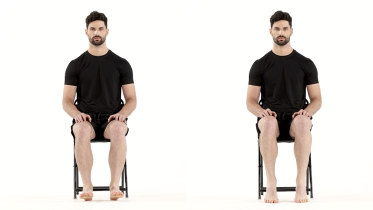 Ankle pumps
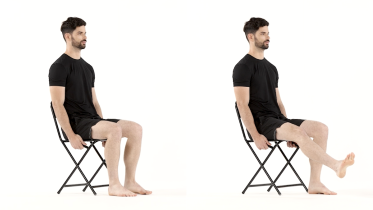 Ankle circles
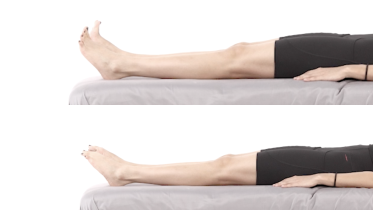 Toe curls
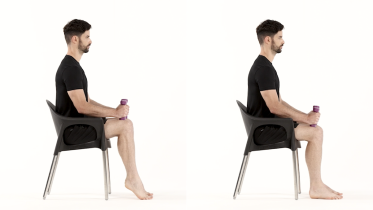 Seated calf raise
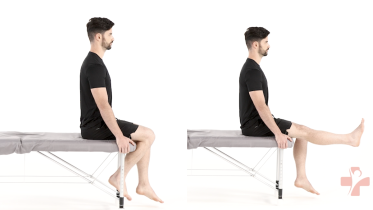 Seated knee extension
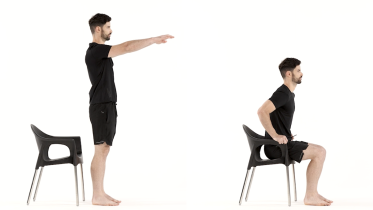 Sit to stand using armrests
Stage 2: Balance and strength standing at a counter
Move on when stage 1 feels easy and your feet show no new marks after sessions, often after a few weeks. Do every exercise here in shoes, with a kitchen counter or a heavy chair that will not slide right beside you. The side to side weight shift and semi-tandem stance train balance with your eyes open, while heel and toe raises, standing hip abduction and the chair squat build the ankle, hip and thigh strength you use to catch a stumble. Brisk walking starts here: add minutes before speed, and check your feet after every walk. Keep a hand on the support whenever you feel wobbly.
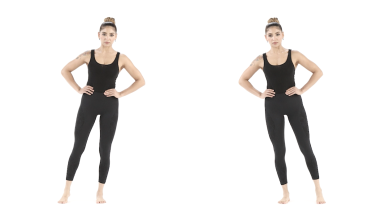 Side to side weight shift
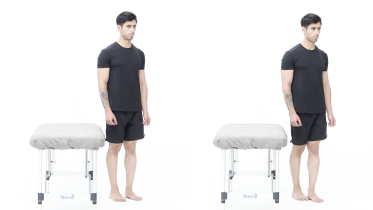 Semi-tandem stance
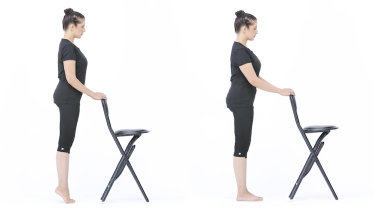 Heel and toe raises
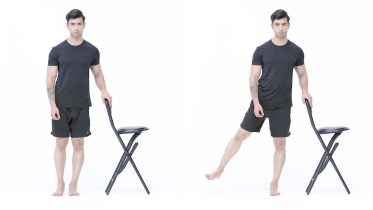 Standing hip abduction
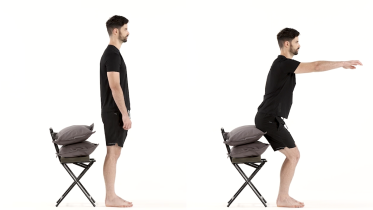 Chair squat
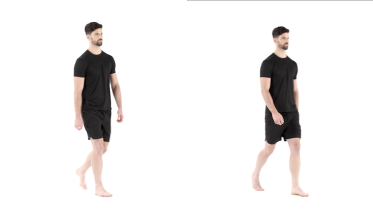 Brisk walking
Stage 3: Narrow balance, stepping and stairs
Move on when stage 2 feels steady and you need only a fingertip on the support. Tandem stance and single leg stance make your base narrower, and heel to toe walking and clock stepping make you balance while you move and step in different directions. Sit to stand without using your hands (with a counter within reach) and the step-up (holding a rail or counter) build strength for chairs, curbs and stairs. Keep your eyes open for all of them unless your physio adds eyes-closed work, because with less feeling in your feet your eyes do more of the work of keeping you upright. If you have had a fall in the last 12 months, do these only when another person is in the house.
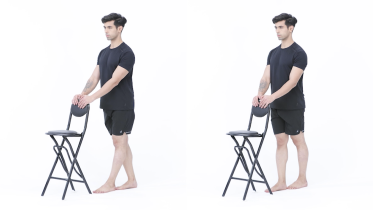 Tandem stance
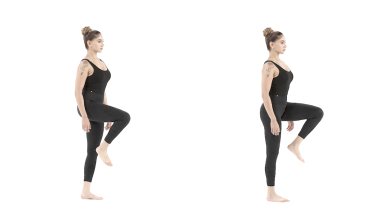 Single leg stance
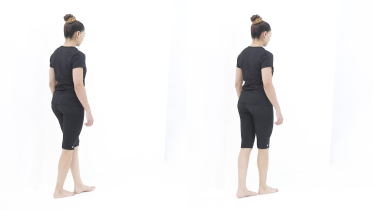 Tandem walking
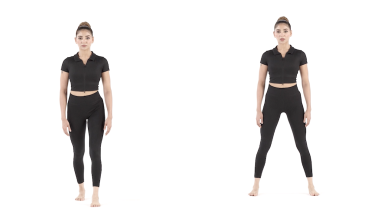 Clock stepping
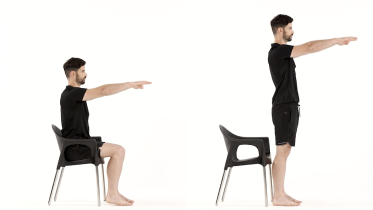 Sit to stand
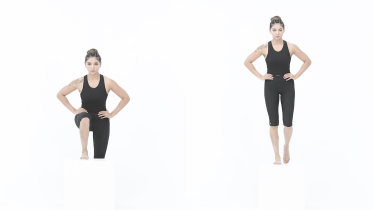 Step up
Foot ulcers and Charcot foot: when to keep weight off
A foot ulcer is an open wound or sore that is slow to heal (NHS). With numb feet, a blister or cut can start without you feeling it, and an infected wound can become serious. Get any new blister, cut or sore seen the same day, and do not exercise on that foot until your doctor or foot team says you can. If they give you a boot, cast or special shoe to take pressure off, wear it as they advise.
Charcot foot needs quick action, because damage to the bones and joints can make the foot collapse or change shape. Watch for a foot or ankle that is swollen, warmer than the other one, changes color or changes shape, with or without pain (Diabetes UK). Take your weight off that foot straight away and get advice the same day. Treatment usually means a cast or protective boot, sometimes with crutches or a wheelchair, and your foot team decides when exercise can restart.
When to see a physio or doctor
See your doctor if you notice numbness, tingling or burning in your feet or hands that has not been checked, so the cause can be looked for (NHS). Ask about a falls check if you have fallen, and about a foot check if you have diabetes. The warning signs below list what needs help sooner, from an emergency down to within a few days.
A physical therapist (physiotherapist) can test your balance and walking, set the right stage and tell you when to progress. The program is written for adults: a child with numbness, weakness or clumsy walking needs a doctor's check.
For physiotherapists
This is a home program for adults with established, slowly progressive distal symmetrical polyneuropathy, most often diabetic. Rule out acute or subacute onset first: ascending weakness over hours to weeks suggests Guillain-Barré syndrome, and bilateral leg symptoms with saddle or sphincter change suggest cauda equina. Cervical myelopathy can mimic neuropathy in older adults with imbalance, so check for hand clumsiness and upper motor neuron signs. Asymmetric or rapidly progressive deficits need medical assessment before exercise.
Streckmann and colleagues (2014) reviewed 18 studies (10 RCTs, 8 controlled trials) and concluded that balance training appeared the most effective intervention for motor and sensory symptoms, with endurance training relevant to metabolically induced neuropathy and weaker effects from strength training alone. White and colleagues (2004, Cochrane) found inadequate evidence for functional outcomes, with a suggestion that progressive resisted exercise improves strength. Allet and colleagues (2010, n=71) reported a 0.149 m/s gain in habitual gait speed relative to controls after 12 weeks of supervised group gait and balance training in people with diabetes and clinically diagnosed, mostly mild, neuropathy, largely maintained at 6 months; two participants developed Achilles pain and their progression was slowed. Kruse and colleagues (2010, n=79, 12 months) found no between-group difference in falls, with only a small improvement in eyes-closed single leg stance; the authors judged the intervention too low in intensity to change strength or balance.
On ulcer risk, the LeMaster trial (2008) found no significant difference in ulcer incidence when weight-bearing activity was increased after assessment and counseling. The IWGDF 2023 prevention guideline (Bus 2024) suggests a foot-ankle exercise program, preferably supervised, for people at IWGDF risk 1 or 2, says a total increase of 1,000 steps a day is likely safe if built up by no more than 10% a week, advises against mechanically loaded foot exercise with a pre-ulcerative lesion or ulcer, and suggests considering coaching in foot skin temperature monitoring for moderate to high risk. The ADA position statement (Colberg 2016) grades proper foot care during activity with peripheral neuropathy at B, and the precautions for autonomic neuropathy and the flexibility and balance training recommendation for older adults (2 to 3 times a week) at C; its text adds that balance training can reduce falls risk even when neuropathy is present. Its complications table (ungraded) advises daily foot inspection, appropriate footwear, avoiding weight bearing with unhealed ulcers and activities that raise plantar pressure with Charcot changes, and, with autonomic neuropathy, avoiding rapid postural changes and heat and monitoring intensity with heart rate reserve and perceived exertion. With cardiac autonomic neuropathy it advises physician approval and possibly symptom-limited exercise testing first.
Suspected active Charcot neuroarthropathy (warmth, swelling, redness or deformity, even without pain) needs referral to the multidisciplinary foot care service within 1 working day under NICE NG19, with non-weight-bearing management until seen. Inspect the feet at every visit, especially after progressing weight-bearing volume or changing footwear. Progress balance by narrowing the base and adding movement before removing vision, and keep support within reach given the reduced plantar sensation.
See a doctor promptly if
- Emergency: call emergency services straight away for any sign of a stroke, even if it goes away: sudden dizziness with unsteadiness or falling over, a face that droops on one side, an arm you cannot lift or keep up, slurred or muddled speech, weakness or numbness on one side of your body or face, sudden blurred vision, double vision or loss of sight, or a sudden severe headache.
- Emergency: swallowing suddenly becomes hard, over minutes or hours rather than slowly over months. Call emergency services straight away, even if it goes away, as this can be a sign of a stroke.
- Emergency: pain, tingling, numbness or weakness in both legs, numbness or altered feeling around your genitals or bottom, or new trouble peeing or controlling your bladder or bowels. The same applies if you lose feeling in one leg. Call emergency services or go to an emergency department straight away. These can be signs of pressure on the nerves at the base of the spine (cauda equina syndrome).
- Emergency: numbness, tingling or weakness that is new, came on over hours or days and is spreading, for example from your feet up your legs or into your hands. Go to an emergency department straight away, and do not drive yourself. Call emergency services if walking, climbing stairs or getting out of a chair suddenly becomes much harder, or you also have trouble breathing, swallowing or speaking, your face droops, or you cannot lift one or both arms. This can be a sign of Guillain-Barré syndrome, a rare condition that affects the nerves, or of pressure on the nerves in the spine.
- Numbness, tingling or burning in both feet that has built up slowly over months or years, often starting in the toes, is the usual pattern of peripheral neuropathy, and on its own it is not an emergency. Follow the emergency lines above if it is new, came on over hours or days, is spreading up your legs over days or weeks or comes with new weakness, or if you have numbness around your genitals or bottom or new trouble with your bladder or bowels. If numbness, tingling or burning in your feet or hands has never been checked by a doctor, book an appointment in the next week or two so the cause can be looked for. See your doctor within a day or two instead if you have had cancer or have lost weight without trying, and mention it.
- Hands that have slowly become clumsy, for example trouble doing up buttons or dropping things, with or without numbness or tingling in both hands. Get medical advice the same day. These can be signs of pressure on the spinal cord in the neck (cervical myelopathy), which can look like neuropathy. If the clumsiness or numbness gets worse quickly, call emergency services straight away.
- You have diabetes or numb feet, and one foot becomes hot, swollen or red, or changes color or shape, with or without pain. Take your weight off that foot straight away and get advice the same day from your doctor or your diabetes foot team. This can be Charcot foot, where the bones and joints of the foot are damaged and the foot can collapse. Do not exercise that foot until it has been checked. If you also have a fever or feel very unwell, or redness is spreading up your foot or leg, go to an emergency department.
- You have diabetes or numb feet and find a new blister, cut or sore on your foot, especially one you did not feel, a wound that smells or is leaking, or new pain in your foot that you cannot explain. Get it seen by your doctor or foot team the same day. If you also have a fever or feel very unwell, redness is spreading up your foot or leg, or part of your foot or a toe turns black, go to an emergency department.
- The foot is hot, red and swollen, or you have a fever or feel unwell. Get medical help the same day, and go to an emergency department if you feel very unwell. If you have a very high or very low temperature, shivering you cannot control, you are breathing very fast or finding it hard to breathe, you are confused or your speech is slurred, your skin, lips or tongue look blue, gray, pale or blotchy (on brown or black skin this can be easier to see on the palms of the hands or soles of the feet), or you have a rash that does not fade when you press it, call emergency services, as this can be sepsis.
- Part of your foot or a toe turns cold, pale, blue or black. Call emergency services or go to an emergency department straight away, and do not drive yourself, as the blood supply to the foot may be blocked.
- Same day: a leg or foot that is getting weaker, for example your foot drags, catches on the ground or slaps down when you walk (foot drop). Get medical advice the same day. If the weakness is getting worse by the hour, go to an emergency department.
- Emergency: you have just fallen and cannot get up, or you think you may have hurt your head, neck, back or hip. Stay where you are, keep warm and call emergency services, or get someone to call for you. If you got up and walked without trouble and only notice pain later, use the lines below.
- Emergency: you fell and cannot remember the fall or how it happened. Go to an emergency department straight away, and do not drive yourself. You may have blacked out or hit your head without knowing it.
- Emergency: you have had a fall or an injury and now have severe hip pain, or you cannot walk or put weight on the leg. Call emergency services or go to an emergency department. This can be a sign of a broken hip (hip fracture).
- Emergency: after a knock to the head, being very drowsy or finding it hard to keep your eyes open, confusion, a fit (seizure), new weakness or numbness anywhere in your body, new trouble understanding, speaking, walking or keeping your balance, new problems seeing or hearing, clear fluid coming from your ears or nose, bleeding from your ears or bruising behind them, a black eye when your eye was not hit, a dent in your head or a wound with something stuck in it, or a change in behavior. Call emergency services straight away. These can be signs of an injury to the brain.
- Emergency: after a knock to the head, you were knocked out, even for a moment, you cannot remember what happened just before or after, you have had a headache ever since, or you are being sick (vomiting). The same applies, even if you feel fine, if you take medicine that thins your blood, other than aspirin on its own, have a bleeding or clotting condition, have had brain surgery in the past, or had been drinking alcohol or taking drugs when it happened. Go to an emergency department straight away, and do not drive yourself.
- Emergency: you suddenly become short of breath, you get chest pain or pain in your upper back that may be worse when you breathe in, you cough up blood, your heart is beating very fast, or you faint. Call emergency services straight away, even if your leg looks normal. These can be signs of a blood clot in the lungs (pulmonary embolism).
- If chest pain, pressure or tightness does not ease quickly when you rest, spreads to your arm, neck, jaw, stomach or back, or comes with sweating, feeling sick, feeling light-headed or being short of breath, call emergency services straight away, as this can be a heart attack. If it eases quickly and none of these happen, get medical advice the same day, and do not exercise again until you have been checked.
- Same day: after a fall, you are in pain, have hurt yourself or feel unwell, or you were on the floor for an hour or more, without any of the emergency signs above. Get medical advice the same day, even if you managed to get up.
- Same day: new hip or groin pain after a fall, even a small one, if you are older, have low bone density (osteoporosis) or have taken steroid tablets for a long time, even if you can still walk. Get medical advice the same day. A broken hip is not always obvious at first.
- Emergency: new neck or back pain after a fall, a knock or a jolt, even a minor one such as a trip or a sudden stop in a car, if you have a condition that stiffens the spine, such as ankylosing spondylitis. Call emergency services or go to an emergency department straight away, do not drive yourself, and tell the staff about your spine condition, so they keep your neck and back in their usual position. A stiff spine can break after a small injury, and the break is easy to miss at first. If the pain started straight after the injury, or you also have numbness, tingling or weakness in your arms or legs, keep still and call emergency services.
- Back pain after a minor fall or strain if you are older, have low bone density (osteoporosis) or have taken steroid tablets for a long time. Get medical advice the same day.
- Neck pain after a car accident or a fall, even a minor one, if you are 65 or older, have low bone density (osteoporosis) or have taken steroid tablets for a long time. Get your neck checked by a doctor the same day, for example at an emergency department, before you start these exercises. At 65 or older, doctors usually want an X-ray or scan of the neck after an accident.
- Same day: you blacked out or fainted, even for a moment. Get medical advice the same day. Call emergency services instead if the person cannot be woken within 1 minute, has not fully recovered or has trouble speaking or moving, has chest pain or a pounding, fluttering or irregular heartbeat, fainted while exercising or lying down, is shaking or jerking, or was badly hurt.
- Same day: sudden new dizziness, or feeling faint or unsteady, without any of the stroke signs above. Stop, sit down and get medical advice the same day. If you faint, it does not settle within a few minutes of sitting still, or you cannot stand or walk steadily, call emergency services.
- Same day: dizziness, lightheadedness, blurred vision or feeling faint when you stand up that is new for you, does not pass within a minute or two, keeps happening, or has made you fall. Sit or lie down, and get medical advice the same day. Nerve damage can affect blood pressure, so it can drop when you stand up (postural hypotension), and your doctor can check it. If it does not settle within a few minutes of sitting or lying still, call emergency services. If you faint, use the fainting line above.
- Same day: a calf or thigh that is newly swollen, warm, tender, red or darker than usual, has swollen veins that are sore to touch, or has a throbbing or cramping pain that does not fit your injury or condition, or that feels different from normal muscle soreness after exercise. This can be a sign of a blood clot (deep vein thrombosis), especially after surgery, an injury, time in a cast or boot, a long trip or a spell of being much less mobile than usual. Get medical advice the same day. If you are also short of breath or have chest pain, call emergency services.
- Same day: you are having cancer treatment now and numbness, tingling, burning or weakness in your hands or feet is new or getting worse. Contact your cancer team the same day, as some cancer treatments can damage nerves and your team will want to know before your next treatment.
- Within a few days: you have had a fall, even if you were not hurt, or you keep tripping, stumbling or feeling that your legs might give way. Book an appointment with your GP within a few days and ask about a falls assessment. Tell them about every fall, even the ones where you were not hurt.
Common questions
Can exercise reverse peripheral neuropathy?
Exercise is not a cure for the nerve damage, but it can help how you move and feel. In a review of 18 studies, balance training had the clearest effects on both steadiness and symptoms, and endurance exercise such as walking may help prevent or slow nerve damage from diabetes (Streckmann 2014). The studies were small, so treat this as promising rather than proven. Treating the cause matters too: the NHS says keeping diabetes well controlled may help improve neuropathy, or at least stop it getting worse.
Is walking good for peripheral neuropathy?
For most people, yes. In a trial of people with diabetic neuropathy, a program that increased walking did not raise the rate of foot ulcers, as long as people were assessed and advised first (LeMaster 2008). International diabetic foot guidelines say an extra 1,000 steps a day, built up gradually, is likely to be safe for ulcer risk (Bus 2024). Walk in shoes that fit, build up slowly and check your feet afterward. With an unhealed ulcer, avoid walking for exercise until your foot team says otherwise (Colberg 2016).
What are the best balance exercises for neuropathy in the feet?
Standing balance work that slowly narrows your base, such as semi-tandem and tandem stance and then single leg stance, plus stepping and walking drills. Balance training was the most effective type of exercise in the Streckmann review, and the American Diabetes Association says it can lower falls risk even when neuropathy is present (Colberg 2016). Results are mixed, though. In people with diabetic neuropathy, a year-long program of leg exercises and walking did not reduce falls, though it did not increase them either (Kruse 2010). Always practice next to a counter, with your eyes open at first.
Should I walk barefoot if I have neuropathy?
No. With numb feet you may not feel a stone, a splinter or a hot floor until the skin is already damaged. International diabetic foot guidelines advise people at risk not to walk without suitable foot protection (Bus 2024), and Macmillan gives the same advice for neuropathy from cancer treatment. For exercise, wear flat shoes that fit well and grip the floor, not socks, tights or bare feet.
Can I exercise with a diabetic foot ulcer?
Not on that foot without your foot team's go-ahead. The American Diabetes Association advises avoiding weight-bearing activity with an unhealed ulcer and suggests more exercise that keeps the weight off your feet (Colberg 2016). Ask your foot team which exercises are safe for you, for example seated or upper body work. Keep wearing any boot, cast or special shoe they have given you.
References
- NHS. Peripheral neuropathy. Page last reviewed 10 October 2022. https://www.nhs.uk/conditions/peripheral-neuropathy/
- NHS. Peripheral neuropathy: symptoms. Page last reviewed 10 October 2022. https://www.nhs.uk/conditions/peripheral-neuropathy/symptoms/
- NHS. Peripheral neuropathy: causes. https://www.nhs.uk/conditions/peripheral-neuropathy/causes/
- NHS. Peripheral neuropathy: treatment. Page last reviewed 10 October 2022. https://www.nhs.uk/conditions/peripheral-neuropathy/treatment/
- NHS. Peripheral neuropathy: complications. Page last reviewed 10 October 2022. https://www.nhs.uk/conditions/peripheral-neuropathy/complications/
- Streckmann F, Zopf EM, Lehmann HC, et al. Exercise intervention studies in patients with peripheral neuropathy: a systematic review. Sports Medicine. 2014;44(9):1289-1304. https://doi.org/10.1007/s40279-014-0207-5
- White CM, Pritchard J, Turner-Stokes L. Exercise for people with peripheral neuropathy. Cochrane Database of Systematic Reviews. 2004;(4):CD003904. https://doi.org/10.1002/14651858.CD003904.pub2
- Allet L, Armand S, de Bie RA, et al. The gait and balance of patients with diabetes can be improved: a randomised controlled trial. Diabetologia. 2010;53(3):458-466. https://doi.org/10.1007/s00125-009-1592-4
- Kruse RL, LeMaster JW, Madsen RW. Fall and balance outcomes after an intervention to promote leg strength, balance, and walking in people with diabetic peripheral neuropathy: 'feet first' randomized controlled trial. Physical Therapy. 2010;90(11):1568-1579. https://doi.org/10.2522/ptj.20090362
- LeMaster JW, Mueller MJ, Reiber GE, et al. Effect of weight-bearing activity on foot ulcer incidence in people with diabetic peripheral neuropathy: feet first randomized controlled trial. Physical Therapy. 2008;88(11):1385-1398. https://doi.org/10.2522/ptj.20080019
- Colberg SR, Sigal RJ, Yardley JE, et al. Physical activity/exercise and diabetes: a position statement of the American Diabetes Association. Diabetes Care. 2016;39(11):2065-2079. https://doi.org/10.2337/dc16-1728
- Bus SA, Sacco ICN, Monteiro-Soares M, et al. Guidelines on the prevention of foot ulcers in persons with diabetes (IWGDF 2023 update). Diabetes/Metabolism Research and Reviews. 2024;40(3):e3651. https://doi.org/10.1002/dmrr.3651
- National Institute for Health and Care Excellence. Diabetic foot problems: prevention and management. NICE guideline NG19. Published 26 August 2015, last updated 11 October 2019. https://www.nice.org.uk/guidance/ng19
- Diabetes UK. Charcot foot and diabetes. Last reviewed 8 November 2024. https://www.diabetes.org.uk/about-diabetes/looking-after-diabetes/complications/feet/charcot-foot
- Diabetes UK. Serious foot problems and diabetes. Last reviewed 24 December 2024. https://www.diabetes.org.uk/about-diabetes/looking-after-diabetes/complications/feet/serious-foot-problem
- Diabetes UK. Taking care of your feet. Last reviewed 22 November 2024. https://www.diabetes.org.uk/about-diabetes/looking-after-diabetes/complications/feet/taking-care-of-your-feet
- Macmillan Cancer Support. Peripheral neuropathy. https://www.macmillan.org.uk/cancer-information-and-support/impacts-of-cancer/peripheral-neuropathy
- NHS. Guillain-Barré syndrome. Page last reviewed 12 August 2024. https://www.nhs.uk/conditions/guillain-barre-syndrome/
- NHS. Symptoms of a stroke. Page last reviewed 12 September 2024. https://www.nhs.uk/conditions/stroke/symptoms/
- NHS. Falls. Page last reviewed 6 March 2025. https://www.nhs.uk/conditions/falls/
- NHS. Fainting. Page last reviewed 17 August 2026. https://www.nhs.uk/symptoms/fainting/
- NHS. Sepsis. Page last reviewed 14 May 2026. https://www.nhs.uk/conditions/sepsis/
- NHS. Deep vein thrombosis (DVT). https://www.nhs.uk/conditions/deep-vein-thrombosis-dvt/
- NHS. Pulmonary embolism. https://www.nhs.uk/conditions/pulmonary-embolism/
- National Institute for Health and Care Excellence. Venous thromboembolism in over 16s: reducing the risk of hospital-acquired deep vein thrombosis or pulmonary embolism. NICE guideline NG89. Published 21 March 2018, last updated 13 August 2019. https://www.nice.org.uk/guidance/ng89
- NHS. Head injury and concussion. https://www.nhs.uk/conditions/head-injury-and-concussion/
- National Institute for Health and Care Excellence (NICE). Head injury: assessment and early management. NICE guideline NG232. Published 18 May 2023. https://www.nice.org.uk/guidance/ng232
- National Institute for Health and Care Excellence (NICE). Spinal injury: assessment and initial management. NICE guideline NG41. Published 17 February 2016. https://www.nice.org.uk/guidance/ng41
Written and checked by the PocketPhysio editorial team. Last updated 2026-09-29.
This page is general education, not a diagnosis or a personal treatment plan. See a physiotherapist or doctor for advice about your own situation.