
Metatarsalgia exercises and physiotherapy
What is metatarsalgia?
Metatarsalgia is pain under the ball of the foot. That is the padded area just behind the toes, where the five long bones of the foot (metatarsals) end and the toes begin. The word describes where it hurts, not one single problem. A review of imaging in metatarsalgia describes it as frequent, and most often linked to the way the foot is built and loaded (Palka and colleagues, 2025).
The NHS lists a range of things that can bring it on: running and other exercise, tight shoes, arthritis, the shape of your foot, and hard or cracked skin under the forefoot. Bunions and bursitis are on the list as well, and so is Morton's neuroma. It tends to be worst in thin-soled or high-heeled shoes, on hard floors, or late in a long day on your feet.
Metatarsalgia or something else?
Several problems cause pain in the same place, and some need a different plan. If the pain burns, feels like a pebble under the foot, or makes two toes tingle, it may be Morton's neuroma, a thickened nerve between two toes. If the pain is mainly at the big toe joint, see the bunions program for a bony lump on the inside of the big toe, or the hallux rigidus program for a stiff, painful big toe. This page is for pain under the heads of the smaller metatarsals, most often the second and third.
A stress fracture is a small crack in a bone from repeated load, often after a sudden rise in walking, running or standing. Metatarsal stress fractures often affect the second and third metatarsals, and an X-ray can look normal for the first 2 to 3 weeks (Palka and colleagues, 2025). Freiberg's disease is a small fracture just under the joint surface of one metatarsal head, mainly the second, in younger people (Palka and colleagues, 2025).
Inflammatory arthritis is another cause to rule out. Rheumatoid arthritis often affects the joints at the base of the toes, frequently before the hands and wrists (Palka and colleagues, 2025). The NHS says it usually affects the hands and feet as well as the wrists, and that early treatment can stop it getting worse. Gout, by contrast, usually strikes the big toe joint.
What helps ball of foot pain first
The first steps all aim to take pressure off the ball of the foot. The NHS self-care advice is to wear shoes with plenty of room for your feet, a low heel and a soft sole, and to use soft insoles or pads in them. It also suggests gentle foot and ankle stretches. Rest and raise the foot when you can, and try an ice pack wrapped in a towel for up to 20 minutes every 2 to 3 hours. Do not use ice on a numb foot unless your doctor or physio says it is safe.
Losing weight if you are overweight helps too, and paracetamol or ibuprofen gel can ease the pain; ask a pharmacist if you are not sure a medicine is safe for you.
A metatarsal pad is a small, soft dome that goes inside the shoe to spread the load away from the sore spot. Where it sits matters, so ask a podiatrist or physio to check the position if a ready-made pad does not help. In a study of 42 people with a history of ball of foot pain, a custom-made insole and a rocker bar under the shoe both cut the pressure under the forefoot, but only the insole lowered pain scores (Postema and colleagues, 1998). The fall in pressure did not match the fall in pain, so let comfort be your guide.
While the foot settles, cut back on running and jumping. Long spells of standing on hard floors count too. Cycling and swimming keep you fit without loading the forefoot.
Where exercise fits in
The evidence here is thin, and it is better to say so. In a review of metatarsalgia, Besse (2017) puts stretching and a change of shoes first, along with insoles and care of any hard skin, and keeps surgery as a later option. Exercise itself has not been well tested in trials, so this program rests mainly on common physio practice.
The calf is the starting point. The reasoning goes like this: a tight calf limits how far your ankle bends as you step, which may shift your weight onto the forefoot sooner. Surgeons sometimes lengthen a tight calf muscle as one of the operations for metatarsalgia (Besse, 2017). Whether stretching helps in the same way has not been tested in trials.
After the calf, the program rebuilds strength in the small muscles of the foot and toes and in the calf, starting in positions that keep weight off the forefoot. Walking comes last, built up slowly in better shoes. Your physio will adjust the program to your foot and the cause of your pain.
How to use this program
The exercises go with the shoe changes and pads. They do not replace them. Choose the stage that fits how your foot is today, or stage 1 if you cannot tell. Move up when your current stage feels easy and the ball of the foot is no sorer the next morning.
Stage 1 should be completely pain free. In stages 2 and 3, some mild discomfort in the foot or calf while you exercise is usually fine, as long as it fades soon afterward and the foot is no worse the next morning. A forefoot that is clearly sorer the next day tells you the load was too much. Drop back a step rather than stopping altogether.
Hold each calf stretch for about 30 seconds and repeat it 2 to 3 times per leg, once or twice a day. For the foot and toe exercises, many programs start at 1 to 3 sets of 10 to 15 (or 2 to 3 lengths of the towel), once or twice a day. Calf raises often start at 2 to 3 sets, of 10 to 15 when standing or 10 to 20 when seated. Brisk walking usually begins at 10 to 20 minutes on most days.
The exercise pages list a typical starting dose for each one. Your physio will adjust this.
If your balance is shaky, do the standing exercises next to a counter or wall you can hold. If you have diabetes or numb feet, check the skin on both feet when you finish each session. Before any exercise that presses or rolls on the sole, ask your doctor, podiatrist or physio whether it is safe for you.
The exercise program
Stage 1: Take the pressure off and loosen the calf
Use this stage while the ball of the foot is sore, and for the first weeks of the program. The two calf stretches come first: one with the back knee straight, then one with it bent, which reaches the deeper calf muscle (soleus). Keep your heel on the floor and your weight back toward it, so the stretch does not press through the ball of the foot. Toe curls and ankle circles are done sitting or lying, so the toes and ankle keep moving with no weight on the sore area. Nothing in this stage should hurt.
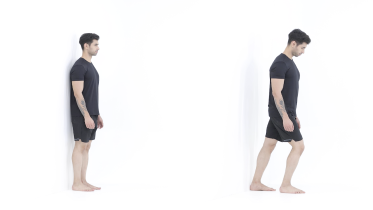 Calf stretch
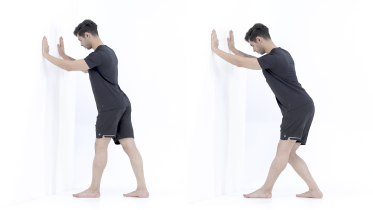 Soleus stretch
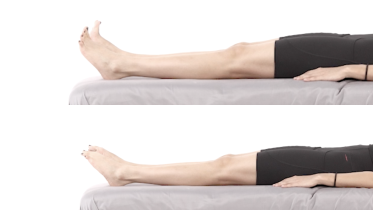 Toe curls
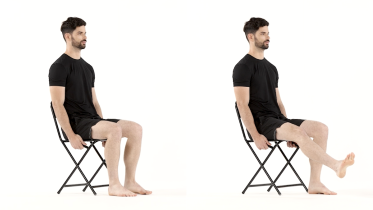 Ankle circles
Stage 2: Build foot and calf strength with the forefoot spared
When stage 1 feels easy and walking in roomier shoes has become more comfortable. Towel scrunches and towel sweeps, done sitting with the heel down, work the small muscles under the foot and toes. The seated calf raise strengthens the deeper calf muscle while most of your body weight stays off the front of the foot, so start without a weight on your knees. Heel walking works the muscles at the front of the shin with the ball of the foot lifted clear of the floor; keep a hand near a counter, as people tend to lose balance backward.
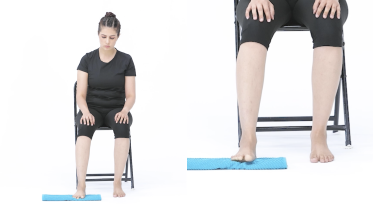 Towel scrunches
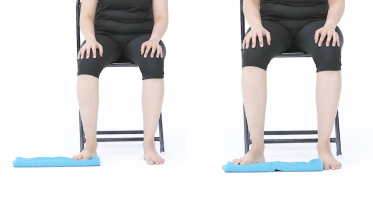 Foot towel sweeps
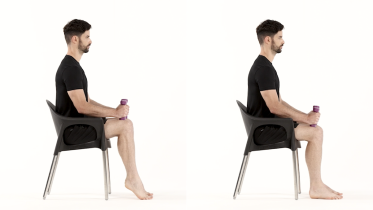 Seated calf raise
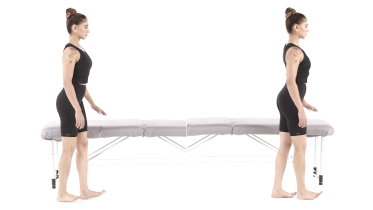 Heel walking
Stage 3: Standing calf raises, balance and walking
Move on once stage 2 feels easy and the forefoot is no sorer the morning after. Calf raises put your full weight through the ball of the foot, so start with a small rise on both feet and go higher only if the forefoot stays quiet the next day. Single leg stance trains the small corrections your foot makes on uneven ground: hold a counter until you feel steady, and wear well-fitting flat shoes with a sole that grips, rather than socks, tights or bare feet. Brisk walking in your roomier shoes builds up your time on your feet. Add time before speed, and keep each walk to a length your foot is fine with the next morning.
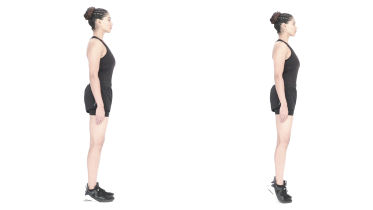 Calf raises
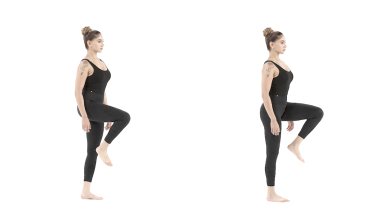 Single leg stance
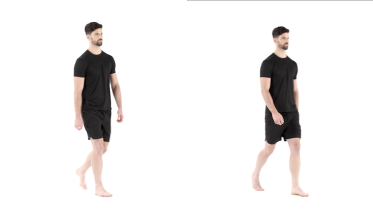 Brisk walking
When to see a physio or doctor
The NHS says to see a doctor if the pain has not improved after 2 weeks of home treatment, is getting worse or stops you doing normal activities. The same goes for tingling or numbness in the foot, and for foot pain when you have diabetes. Get urgent help, it says, if the pain is severe, you cannot walk, the shape of your foot has changed, the foot is hot and swollen as well as painful, or you feel hot, cold or shivery.
A doctor, podiatrist or physical therapist (physiotherapist) can find the cause, arrange an X-ray or scan if needed and advise on pads or insoles. If you have diabetes, a few foot changes need a check the same day. The warning signs below list them.
Pain that carries on after a fair trial of shoe changes and pads, alongside the exercises, is a reason to ask for a referral to a foot and ankle specialist. Surgery is an option for some people, and after any foot surgery you should follow your surgeon's program rather than this page. The program here is written for adults. A child or teenager with pain in the ball of the foot should be checked by a doctor or physio.
For physiotherapists
This page gives patients a starting program for mechanical metatarsalgia of the lesser rays. Footwear and padding come first, together with load management.
Screen for the differentials Palka and colleagues (2025) describe. Stress fracture shows as focal bony tenderness, often over the second or third metatarsal shaft, and radiographs may be negative for 2 to 3 weeks. Also consider Freiberg infraction of the second metatarsal head, second MTP joint instability with plantar plate injury, and interdigital neuroma. For inflammatory arthritis, note that RA often involves the MTP joints before the hands and wrists, so ask about morning stiffness and other joints.
Besse (2017) puts conservative care first (stretching, footwear changes, insoles, debridement of plantar lesions). Gastrocnemius recession is among the soft tissue procedures he lists, and he notes that metatarsalgia from inflammatory disease needs its own treatment strategy.
Postema and colleagues (1998) studied 42 people with a history of primary metatarsalgia. Pain fell with a custom molded insole. Both the insole and a rocker bar reduced plantar pressure, but pressure reduction and pain relief were not clearly linked. Trial evidence for exercise is lacking, so the program draws on general principles. It starts with calf flexibility and moves on to intrinsic and calf strengthening, with balance work and graded walking at the end.
Early stages keep load off the metatarsal heads; standing heel raises come last because they load the forefoot most. Assess ankle dorsiflexion with the knee straight and bent to decide how much stretching each patient needs. In diabetes or neuropathy, exclude active Charcot neuroarthropathy before you load the foot. NICE NG19 advises referral within 1 working day to the multidisciplinary foot care service, with non-weight-bearing treatment until then. Progress on the 24-hour response, and refer on when symptoms persist despite footwear and padding.
See a doctor promptly if
- You have diabetes or numb feet, and one foot becomes hot, swollen or red, or changes color or shape, with or without pain. Take your weight off that foot straight away and get advice the same day from your doctor or your diabetes foot team. This can be Charcot foot, where the bones and joints of the foot are damaged and the foot can collapse. Do not exercise that foot until it has been checked. If you also have a fever or feel very unwell, or redness is spreading up your foot or leg, go to an emergency department.
- The foot is hot, red and swollen, or you have a fever or feel unwell. Get medical help the same day, and go to an emergency department if you feel very unwell. If you have a very high or very low temperature, shivering you cannot control, you are breathing very fast or finding it hard to breathe, you are confused or your speech is slurred, your skin, lips or tongue look blue, gray, pale or blotchy (on brown or black skin this can be easier to see on the palms of the hands or soles of the feet), or you have a rash that does not fade when you press it, call emergency services, as this can be sepsis.
- You have diabetes or numb feet and find a new blister, cut or sore on your foot, especially one you did not feel, a wound that smells or is leaking, or new pain in your foot that you cannot explain. Get it seen by your doctor or foot team the same day. If you also have a fever or feel very unwell, redness is spreading up your foot or leg, or part of your foot or a toe turns black, go to an emergency department.
- Part of your foot or a toe turns cold, pale, blue or black. Call emergency services or go to an emergency department straight away, and do not drive yourself, as the blood supply to the foot may be blocked.
- The pain started with a fall, a twist or something heavy landing on your foot, and there is swelling or bruising, you heard a snap, grinding or popping noise, or you cannot put weight on the foot. Get it checked the same day.
- The pain is severe or makes you feel faint, dizzy or sick, you cannot walk, or the shape of your foot has changed. Get medical advice the same day.
- The pain sits at one spot over one of the long bones that lead to the toes, and that spot is tender or swollen, especially after a sudden increase in walking, running or standing, or if you have thin bones (osteoporosis). Stop running and jumping, cut down on walking and standing, and see a doctor within a few days, as this can be a stress fracture. An X-ray can look normal for the first 2 to 3 weeks, so a normal early X-ray does not rule it out.
- A calf or thigh that is newly swollen, warm, tender, red or darker than usual, has swollen veins that are sore to touch, or has a throbbing or cramping pain that does not fit your injury or condition, or that feels different from normal muscle soreness after exercise. This can be a sign of a blood clot (deep vein thrombosis), especially after surgery, an injury, time in a cast or boot, a long trip or a spell of being much less mobile than usual. Get medical advice the same day. If you are also short of breath or have chest pain, call emergency services.
- The pain is there at night or at rest as well as when you stand and walk, and it is getting worse. See your doctor within a few days. If you have had cancer, now or in the past, or are losing weight without trying, see your doctor sooner, within a day or two, and mention it. This applies even if the pain is not getting worse. If you are being treated for cancer now, contact your cancer team the same day.
- You have not been diagnosed, and several joints in your hands, wrists or feet are painful, swollen and stiff, especially in the morning. This is not an emergency, but see your doctor within a few days, because early treatment can stop the condition getting worse and lower the risk of joint damage.
- The joint at the base of one toe, most often the second, is swollen, stiff and painful, or the toe has started to drift or lift out of line. Book an assessment with a doctor or physio in the next week or two, as an X-ray or scan may be needed.
- You have new numbness, tingling, burning or loss of feeling in the foot or toes. Book an assessment with a doctor or physio in the next week or two.
- A leg or foot that is getting weaker, for example your foot drags, catches on the ground or slaps down when you walk (foot drop). Get medical advice the same day. If the weakness is getting worse by the hour, go to an emergency department.
Common questions
What is the difference between metatarsalgia and Morton's neuroma?
Metatarsalgia describes where it hurts, under the ball of the foot, and it has many causes. Morton's neuroma is one of those causes, an irritated, thickened nerve that runs between two toes, most often the third and fourth. It tends to burn or feel like standing on a pebble, and the toes next to it can tingle or go numb. If that sounds like you, the Morton's neuroma program fits better.
What shoes are best for metatarsalgia?
The NHS suggests shoes with plenty of room for your feet, a low heel and a soft sole, so high heels and thin, hard soles are best left for later. Soft insoles or pads can go inside those shoes. There is no single best brand or model, so judge a pair by how your forefoot feels by evening.
Do metatarsal pads and insoles help?
They help some people, and the NHS includes soft insoles or pads in its self-care advice. The research is small. In a study of 42 people with a history of ball of foot pain, a custom-made insole and a rocker bar on the sole both cut the pressure under the forefoot, but only the insole lowered pain scores, and the fall in pressure did not match the fall in pain (Postema and colleagues, 1998). If ready-made pads do not help, a podiatrist can show you where to place a pad or make an insole for you.
Is walking good for metatarsalgia?
Walking is usually fine in amounts your foot tolerates, and staying active matters for your general health. While the ball of the foot is sore, cut back on running and long walks on hard ground, and swap some of it for cycling or swimming. Then build walking back up in small steps, in roomy shoes with a soft sole, adding time before speed.
How long does metatarsalgia last?
It depends on the cause, and nobody can give you a fixed time in advance. Pain from shoes or a sudden rise in activity often eases once the load comes down. The NHS advises seeing a doctor if the pain has not improved after 2 weeks of home treatment, is getting worse or stops you doing normal activities, as another cause may need a different plan.
References
- NHS. Pain in the ball of the foot. Page last reviewed 5 November 2025. https://www.nhs.uk/symptoms/foot-pain/pain-in-the-ball-of-the-foot/
- Besse JL. Metatarsalgia. Orthopaedics and Traumatology: Surgery and Research. 2017;103(1S):S29-S39. https://doi.org/10.1016/j.otsr.2016.06.020
- Palka O, Guillin R, Lecigne R, Combes D. Radiological approach to metatarsalgia in current practice: an educational review. Insights into Imaging. 2025;16(1):94. https://doi.org/10.1186/s13244-025-01945-3
- Postema K, Burm PE, Zande ME, van Limbeek J. Primary metatarsalgia: the influence of a custom moulded insole and a rockerbar on plantar pressure. Prosthetics and Orthotics International. 1998;22(1):35-44. https://doi.org/10.3109/03093649809164455
- NHS. Rheumatoid arthritis. Page last reviewed 8 March 2023. https://www.nhs.uk/conditions/rheumatoid-arthritis/
- American Academy of Orthopaedic Surgeons. Stress fractures. OrthoInfo. https://www.orthoinfo.org/en/diseases--conditions/stress-fractures/
- Diabetes UK. Charcot foot and diabetes. Last reviewed 8 November 2024. https://www.diabetes.org.uk/about-diabetes/looking-after-diabetes/complications/feet/charcot-foot
- Diabetes UK. Serious foot problems and diabetes. Last reviewed 24 December 2024. https://www.diabetes.org.uk/about-diabetes/looking-after-diabetes/complications/feet/serious-foot-problem
- National Institute for Health and Care Excellence. Diabetic foot problems: prevention and management. NICE guideline NG19. Published 26 August 2015, last updated 11 October 2019. https://www.nice.org.uk/guidance/ng19
- NHS. Sepsis. Page last reviewed 14 May 2026. https://www.nhs.uk/conditions/sepsis/
- NHS. Deep vein thrombosis (DVT). Page last reviewed 30 April 2026. https://www.nhs.uk/conditions/deep-vein-thrombosis-dvt/
Written and checked by the PocketPhysio editorial team. Last updated 2026-09-28.
This page is general education, not a diagnosis or a personal treatment plan. See a physiotherapist or doctor for advice about your own situation.