
Morton's neuroma treatment and exercises
What is Morton's neuroma?
Morton's neuroma is a thickening of the tissue around one of the small nerves that run between the long bones of the foot to the toes. Despite the name, it is not a tumor. It most often sits between the third and fourth toes, and less often between the second and third. OrthoInfo describes it as much more common in women, usually between the ages of 30 and 60.
The exact cause is not known. OrthoInfo explains that squeezing of the nerve in the space between the toes seems to trigger swelling and the thickened tissue around it. The NHS links it to tight or high-heeled shoes, and to running or other sports that load the front of the foot hard. Foot shapes and problems such as flat feet, high arches, bunions or hammer toes can add to it.
Symptoms of Morton's neuroma
The typical picture is a shooting, stabbing or burning pain in the ball of the foot, often running into the third and fourth toes. Many people say it feels like a pebble or a fold in the sock under the foot. The toes next to it can tingle or go numb. It usually gets worse in tight or high-heeled shoes and when you push off, for example when running, and eases when you take the shoe off and rub the foot.
If your pain is mainly under the heel, the plantar fasciitis program fits better. If your arch aches or is dropping, see the flat feet program. This page is about pain in the ball of the foot and toes.
What helps Morton's neuroma first
The first-line treatments all aim to take pressure off the nerve. The NHS self-care advice is to rest and raise the foot when it is sore, and to wear wide, comfortable shoes with a low heel and a soft sole. It also suggests soft insoles or metatarsal pads, losing weight if you are overweight, and cutting back on high-impact activity such as running. Tight or pointy shoes are best avoided, as are high heels and thin soles. Ibuprofen or paracetamol can help with pain; ask a pharmacist if you are not sure a medicine is safe for you.
OrthoInfo gives much the same list: shoe changes, custom inserts or metatarsal pads to spread the pressure, and anti-inflammatory medicines. The next step is usually one or more steroid injections around the nerve, and some centers offer other injections or procedures that target the nerve, such as an alcohol injection or radiofrequency treatment. If symptoms do not improve within 3 to 6 months, or keep coming back, OrthoInfo says a surgeon may suggest surgery.
The trial evidence for all of this is thin. A Cochrane review found only 6 randomized trials with 373 people in total, and the comparisons it reports are about steroid injections and the surgical approach (Matthews and colleagues, 2024). A second systematic review looked at 22 studies of 9 non-surgical treatments and recommended steroid injections, with about 50% success at 12 months (Thomson and colleagues, 2020). Orthoses were among the 9 treatments; exercise was not.
Where exercise fits in
Be realistic about what exercise can do here. The two reviews above include no exercise trials, so there is no evidence that exercise shrinks the thickened nerve or takes the pressure off it. Shoes, pads and, if needed, injections do that job.
It still has a job. When the front of the foot hurts, many people walk less and move the foot less, and the calf and foot muscles weaken. This program keeps the toes and ankle moving and the calf supple, then rebuilds strength in the foot and calf in steps that go easy on the forefoot. Last comes walking, built back up slowly in better shoes. Your physio will adjust it to your foot.
How to use this program
Use the program alongside the shoe changes and pads, not instead of them. Pick the stage that matches your foot today. Not sure? Begin with stage 1. Move up once the stage you are on feels easy and the foot is no worse the next morning.
Keep stage 1 pain free. From stage 2, mild discomfort in the foot or calf during the exercises is usually acceptable if it settles soon after and your foot is no worse the next morning. Nerve symptoms are different: if an exercise brings on burning, tingling or numbness in the toes, or the pebble feeling, stop that exercise and go back a step.
A common calf stretch dose is a hold of about 30 seconds, done 2 to 3 times on each leg, once or twice a day. Strength exercises often start at 1 to 3 sets of 10 to 15, once a day or a few days a week, and brisk walking at 10 to 20 minutes on most days. Each exercise page gives a typical starting dose, and your physio will adjust this to your foot.
If you feel unsteady, rest a hand on a counter or wall during the standing and balance work. With diabetes or numb feet, look over the skin of both feet after every session. Ask your doctor, podiatrist or physio first before any exercise that presses or rolls on the sole.
The exercise program
Stage 1: Keep the foot moving without pressing on the ball of the foot
For a sore forefoot, and for the first weeks of any program. Toe curls and ankle circles are done lying or sitting, so no weight goes through the ball of the foot while the toes and ankle keep moving. The two calf stretches keep the back of the lower leg supple for walking: one with the back knee straight, then one with it bent. Keep all of these pain free. Stop any exercise that brings on burning, tingling or numbness in the toes.
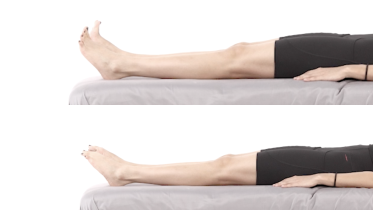 Toe curls
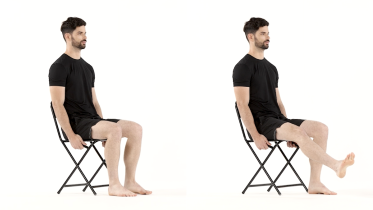 Ankle circles
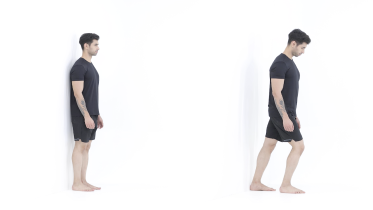 Calf stretch
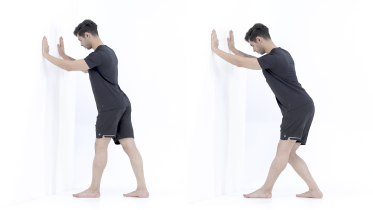 Soleus stretch
Stage 2: Build strength in the foot and calf
When stage 1 feels easy and walking in wider shoes has become more comfortable. Towel scrunches and towel sweeps work the small muscles of the foot against light resistance, with your heel resting on the floor. The seated calf raise strengthens the deeper calf muscle while most of your body weight stays off the front of the foot. Single leg stance trains balance: do it in your wide, soft-soled shoes, next to a counter you can hold.
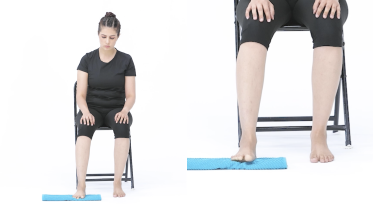 Towel scrunches
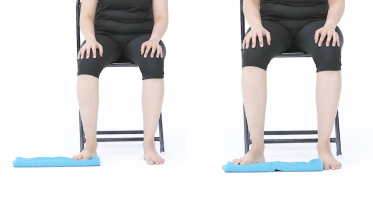 Foot towel sweeps
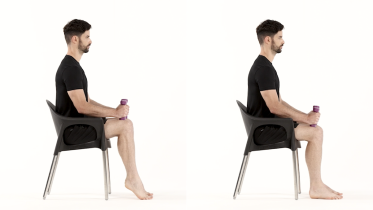 Seated calf raise
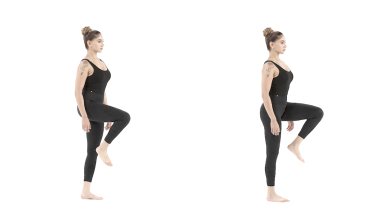 Single leg stance
Stage 3: Standing calf raises and walking tolerance
When stage 2 feels easy and your foot is no worse the next morning. Calf raises put your full weight onto the balls of your feet, right where the nerve sits, so they are the exercise here most likely to stir it up. Start with a small rise on both feet and only go higher if the toes stay quiet. Brisk walking in wide, low-heeled shoes with a soft sole builds up your time on your feet, adding time before speed.
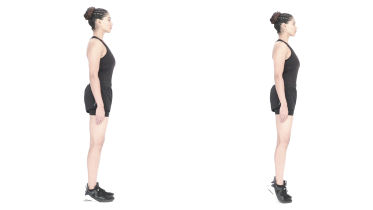 Calf raises
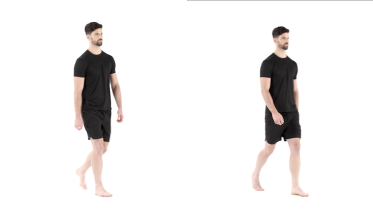 Brisk walking
When to see a physio or doctor
The NHS advises seeing a doctor if the pain is severe or getting worse, or has not improved after 2 weeks of looking after it yourself. The same applies if you have tingling, weakness or numbness in the foot, or the pain started after a recent injury or foot surgery. A doctor, podiatrist or physio can confirm the cause and arrange a scan if needed. They can also advise on pads or insoles, and on whether an injection is worth trying. With diabetes, some foot changes need a same-day check; the warning signs below list them.
If you have had surgery for Morton's neuroma, follow your surgeon's program rather than this page. This program is written for adults. If a child has pain like this in the ball of the foot, get them checked by a doctor or physio.
For physiotherapists
This page gives patients a supporting program for Morton's neuroma (interdigital neuroma). Footwear changes and metatarsal padding are presented as first line, alongside medical treatment. OrthoInfo describes diagnosis from the history, web space compression and a Mulder's click, with ultrasound as the preferred imaging and X-rays to rule out a stress fracture or arthritis. If the pattern does not fit, or symptoms spread beyond one web space, consider other causes of forefoot pain and nerve symptoms from further up the leg or the back.
The evidence base is small and mostly about injections. Matthews and colleagues (2024) included 6 RCTs (n=373): low-certainty evidence that corticosteroid plus local anesthetic may make little or no difference to pain or function compared with local anesthetic alone, and moderate-certainty evidence that ultrasound guidance probably improves pain and function. Thomson and colleagues (2020) reviewed 22 studies of 9 non-operative modalities and recommended corticosteroid injection, with 50% success at 12 months, while radiofrequency ablation and cryoablation need better trials.
Neither review includes exercise, so the program here is general foot and calf conditioning and graded walking, not a treatment for the neuroma. Loading choices favor positions that keep weight off the metatarsal heads early, with standing heel raises last because they load the forefoot most. Progress on the 24-hour response and on whether nerve symptoms are provoked, and refer on for injection or a surgical opinion when symptoms persist despite footwear and padding.
See a doctor promptly if
- You have diabetes or numb feet, and one foot becomes hot, swollen or red, or changes color or shape, with or without pain. Take your weight off that foot straight away and get advice the same day from your doctor or your diabetes foot team. This can be Charcot foot, where the bones and joints of the foot are damaged and the foot can collapse. Do not exercise that foot until it has been checked. If you also have a fever or feel very unwell, or redness is spreading up your foot or leg, go to an emergency department.
- The foot is hot, red and swollen, or you have a fever or feel unwell. Get medical help the same day, and go to an emergency department if you feel very unwell. If you have a very high or very low temperature, shivering you cannot control, you are breathing very fast or finding it hard to breathe, you are confused or your speech is slurred, your skin, lips or tongue look blue, gray, pale or blotchy (on brown or black skin this can be easier to see on the palms of the hands or soles of the feet), or you have a rash that does not fade when you press it, call emergency services, as this can be sepsis.
- You have diabetes or numb feet and find a new blister, cut or sore on your foot, especially one you did not feel, a wound that smells or is leaking, or new pain in your foot that you cannot explain. Get it seen by your doctor or foot team the same day. If you also have a fever or feel very unwell, redness is spreading up your foot or leg, or part of your foot or a toe turns black, go to an emergency department.
- Part of your foot or a toe turns cold, pale, blue or black. Call emergency services or go to an emergency department straight away, and do not drive yourself, as the blood supply to the foot may be blocked.
- The pain started with a fall, a twist or something heavy landing on your foot, and there is swelling or bruising, or you cannot put weight on the foot. Get it checked the same day.
- The pain sits at one spot on the top of your foot, over one of the long bones that lead to the toes, and that spot is tender or swollen, especially after a sudden increase in walking, running or standing, or if you have thin bones (osteoporosis). Stop running and jumping, cut down on walking and standing, and see a doctor within a few days, as this can be a stress fracture rather than Morton's neuroma. An X-ray can look normal for the first 2 to 3 weeks, so a normal early X-ray does not rule it out.
- A calf or thigh that is newly swollen, warm, tender, red or darker than usual, has swollen veins that are sore to touch, or has a throbbing or cramping pain that does not fit your injury or condition, or that feels different from normal muscle soreness after exercise. This can be a sign of a blood clot (deep vein thrombosis), especially after surgery, an injury, time in a cast or boot, a long trip or a spell of being much less mobile than usual. Get medical advice the same day. If you are also short of breath or have chest pain, call emergency services.
- A leg or foot that is getting weaker, for example your foot drags, catches on the ground or slaps down when you walk (foot drop). Get medical advice the same day. If the weakness is getting worse by the hour, go to an emergency department.
- The pain is there at night or at rest as well as when you stand and walk, and it is getting worse. See your doctor within a few days. If you have had cancer, now or in the past, or are losing weight without trying, see your doctor sooner, within a day or two, and mention it. This applies even if the pain is not getting worse. If you are being treated for cancer now, contact your cancer team the same day.
- Emergency: pain, tingling, numbness or weakness in both legs, numbness or altered feeling around your genitals or bottom, or new trouble peeing or controlling your bladder or bowels. The same applies if you lose feeling in one leg. Call emergency services or go to an emergency department straight away. These can be signs of pressure on the nerves at the base of the spine (cauda equina syndrome).
- Numbness, tingling or burning spreads beyond the two toes next to the sore spot, covers the whole foot, or comes with back pain or pain running down one leg. Book an assessment with a doctor or physio in the next week or two.
Common questions
Can Morton's neuroma go away?
It often settles once the pressure on the nerve comes down. OrthoInfo, from the American Academy of Orthopaedic Surgeons, reports that changes in shoes and activity and orthotics give some relief to up to about half of people, and that many get long-term relief from a mix of shoe changes, orthotics, anti-inflammatory medicines and steroid injections. Nobody can tell you in advance whether yours will settle. If it has not improved after 2 weeks of looking after it yourself, the NHS advises seeing a doctor.
Do exercises help Morton's neuroma?
Not as a treatment for the nerve itself, as far as the research goes. The two main reviews of treatment for Morton's neuroma include no exercise trials (Thomson and colleagues, 2020; Matthews and colleagues, 2024). Exercise is still useful alongside the shoe changes and pads: it keeps your foot, ankle and calf moving and strong, and helps you build your walking back up without flaring the nerve. Your physio will adjust the exercises to your foot.
What shoes are best for Morton's neuroma?
The NHS suggests wide, comfortable shoes with a low heel and a soft sole, and advises against tight or pointy shoes, high heels and shoes with thin soles. The aim is room across the front of the foot so the bones are not squeezed together over the nerve. Soft insoles or a metatarsal pad can be added, and a podiatrist can fit custom pads or insoles if ready-made ones do not help.
Do steroid injections work for Morton's neuroma?
They help many people, but the relief does not always last and the trial evidence is mixed. OrthoInfo reports short-term relief in about 50 to 70% of people, with long-term relief less common. A systematic review of non-surgical treatments found that steroid injections reduced pain, with about 50% success at 12 months (Thomson and colleagues, 2020). A Cochrane review found low-certainty evidence that a steroid and local anesthetic injection may make little or no difference compared with local anesthetic alone, and moderate-certainty evidence that guiding the injection with ultrasound probably reduces pain more than an unguided one (Matthews and colleagues, 2024). The same review reports that a few people had thinning of the skin or of the fat pad under the foot after a steroid injection. Your doctor or specialist can talk through whether one is worth trying for you.
When is surgery needed for Morton's neuroma?
OrthoInfo says a surgeon may suggest surgery if symptoms do not improve within 3 to 6 months of other treatment, or keep coming back. The operation either frees the tissue around the nerve (decompression) or removes the thickened part of the nerve (neurectomy), and OrthoInfo reports success in 80 to 95% of people. Removing the nerve can leave the skin between those two toes permanently numb, and OrthoInfo reports that symptoms come back in about 5 to 20% of people. After surgery, follow your surgeon's program rather than this page.
References
- NHS. Morton's neuroma. Page last reviewed 12 June 2025. https://www.nhs.uk/conditions/mortons-neuroma/
- American Academy of Orthopaedic Surgeons. Morton's Neuroma. OrthoInfo. https://www.orthoinfo.org/en/diseases--conditions/mortons-neuroma/
- Matthews BG, Thomson CE, Harding MP, McKinley JC, Ware RS. Treatments for Morton's neuroma. Cochrane Database of Systematic Reviews. 2024;2:CD014687. https://doi.org/10.1002/14651858.CD014687.pub2
- Thomson L, Aujla RS, Divall P, Bhatia M. Non-surgical treatments for Morton's neuroma: a systematic review. Foot and Ankle Surgery. 2020;26(7):736-743. https://doi.org/10.1016/j.fas.2019.09.009
- American Academy of Orthopaedic Surgeons. Stress fractures. OrthoInfo. https://www.orthoinfo.org/en/diseases--conditions/stress-fractures/
- Diabetes UK. Charcot foot and diabetes. Last reviewed 8 November 2024. https://www.diabetes.org.uk/about-diabetes/looking-after-diabetes/complications/feet/charcot-foot
- Diabetes UK. Serious foot problems and diabetes. Last reviewed 24 December 2024. https://www.diabetes.org.uk/about-diabetes/looking-after-diabetes/complications/feet/serious-foot-problem
- NHS. Sepsis. Page last reviewed 14 May 2026. https://www.nhs.uk/conditions/sepsis/
- NHS. Deep vein thrombosis (DVT). Page last reviewed 30 April 2026. https://www.nhs.uk/conditions/deep-vein-thrombosis-dvt/
Written and checked by the PocketPhysio editorial team. Last updated 2026-09-28.
This page is general education, not a diagnosis or a personal treatment plan. See a physiotherapist or doctor for advice about your own situation.