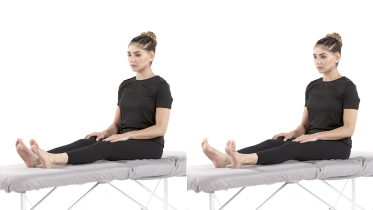
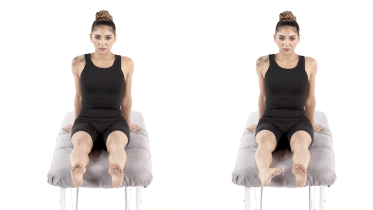
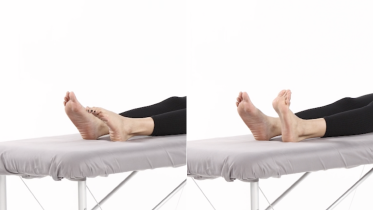
Isometric ankle dorsiflexion
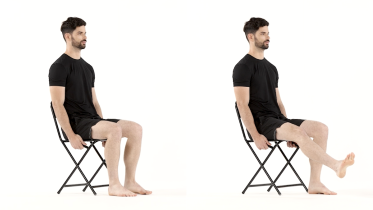
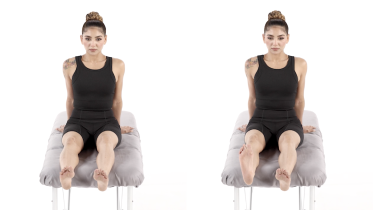
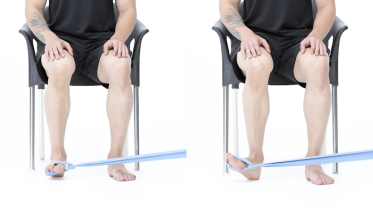
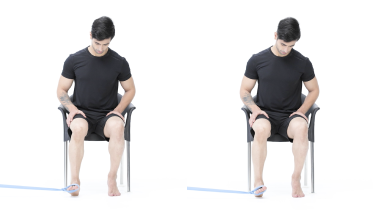
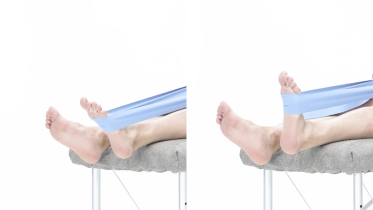
Isometric ankle dorsiflexion works the shin muscle that lifts your foot upward (tibialis anterior) while the ankle stays still. You sit on a chair, rest your good foot on top of the affected one, and try to lift the front of the affected foot while the good foot holds it down. No equipment is needed, and because nothing moves it often comes early in ankle rehab, before a band is added.
How to do the isometric ankle dorsiflexion
- Sit up straight on a firm chair, feet flat and knees bent to about a right angle.
- Lift your good foot and rest it across the top of your affected foot, over the front half, so its weight sits there lightly.
- Keeping the heel of the affected foot on the floor, try to lift the front of that foot toward the ceiling. The good foot pushes down just enough to stop it moving.
- Let the effort rise gently over a second or two. Once it is steady, hold it there and breathe normally.
- Relax both feet slowly, pause for a moment, and start the next one.
What you should feel
Tension along the front of the shin of the affected leg, sometimes up toward the knee. The foot should hardly move at all, and the ankle should not ache or pinch.
Common mistakes
- Pushing so hard that the affected foot lifts the other foot off, which turns the hold into a movement.
- Lifting the whole leg from the hip or the knee instead of working from the ankle.
- Only pulling the toes up while the rest of the foot stays relaxed.
- Holding your breath as the foot presses up.
How often
A typical range is 5 to 10 holds, each lasting 5 to 10 seconds, done once or twice daily at a light effort to begin with. Your physio will adjust this.
Stop and check with your physio if
- A sharp pain along the shin or across the front of the ankle, or pain that builds hold after hold.
- New weakness, numbness or pins and needles in the foot. If it stays after you stop, or keeps getting worse, get medical advice the same day.
- More swelling around the ankle after the session than before it.
From the clinic
The top foot is only a brake. It should press down with the same amount of force the lower foot pushes up, so the two cancel out and nothing moves. Start around half effort. If the ankle stays comfortable during the session and afterward, you can push a little harder next time.
When the holds feel easy, programs often move on to ankle dorsiflexion with a band, where the foot moves against resistance. Isometric ankle eversion and isometric ankle inversion train the sides of the ankle the same way, with the foot kept still. If you are recovering from a broken ankle or an ankle operation, ask your physio whether this suits your stage of healing and how firmly to push.
Written and checked by the PocketPhysio editorial team. Last updated 2026-09-28.
This page is general education, not a diagnosis or a personal treatment plan. If you have pain, an injury or a health condition, see a physiotherapist or doctor before starting new exercises.