Straight leg raise with the leg turned out
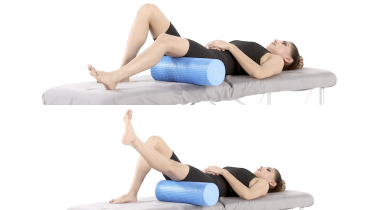
This is a straight leg raise done with the whole leg turned out from the hip, so the kneecap and toes point out at an angle. You lie on your back with the other knee bent, lift the straight leg, then lower it slowly. Physios use it in knee rehab as a variation on the plain straight leg raise. The knee stays straight and the thigh does the work.
How to do the straight leg raise with the leg turned out
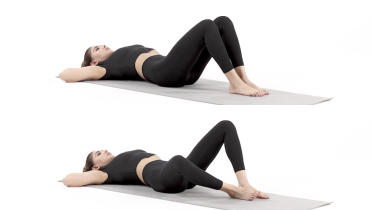
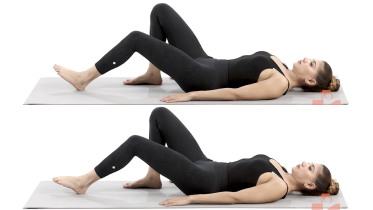
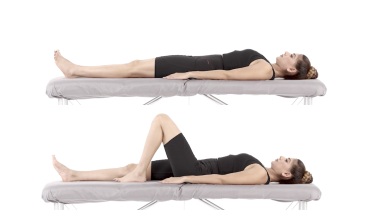
- Lie on your back on a mat or firm bed with a pillow under your head. Bend one knee with that foot flat, and keep the leg you are working straight.
- Turn the straight leg out from the hip so the kneecap and toes point out to the side at an angle. The turn comes from the hip, not just the foot.
- Tighten the front of your thigh so the knee is fully straight before you lift.
- Keeping the leg turned out and the knee straight, lift it slowly off the mat to about the height of your bent knee.
- Hold the leg up for a few seconds, up to about 5, then lower it slowly until it rests on the mat. Relax for a moment before the next lift.
What you should feel
Work along the front of the thigh and in the front of the hip.
Common mistakes
- Letting the leg roll back so the kneecap faces the ceiling again as it lifts.
- Turning only the foot out while the knee still points straight up.
- The knee bending during the lift. Lock it straight first.
- Arching your lower back, or lifting fast and dropping the leg.
How often
A common starting point is 8 to 12 slow lifts, repeated for 2 or 3 sets, once a day. Your physio will adjust this.
Stop and check with your physio if
- Pain in your lower back, or sharp pain in the front of the hip or groin.
- Knee pain that climbs as the set goes on.
- Your calf or thigh is getting more swollen, or becomes warm, tender, red or darker than usual, or has a new throbbing or cramping pain. This can be a blood clot, especially after an operation, an injury, time in a cast, boot or brace, or a spell of being much less mobile than usual, and after an operation it can also be an infection. Stop and contact your medical team or get medical advice the same day. If you are also short of breath or have chest pain, call emergency services.
- Your wound becomes more red, hot, swollen or painful, or starts to leak. Contact your medical team the same day.
From the clinic
Get comfortable with the plain straight leg raise first. A knee that bends during the lift is a sign to spend more time on quad sets until the thigh can hold the knee straight on its own. The video lifts the leg well above the bent knee. To start, knee height is plenty, and it keeps your lower back out of it. If you are pregnant and past the first three months, check with your physio before exercising flat on your back.
After a knee fracture or knee surgery, including a knee replacement, follow your surgeon's or physio's plan, and start this exercise only when they have cleared you. If you have had a hip replacement, get the go-ahead from your surgeon or physio before you try straight leg raises with the leg turned out. Some operations limit this kind of work for the first months, so the timing depends on your surgery. Some types of hip replacement surgery also limit how far the leg may turn out, so ask about that too.
Written and checked by the PocketPhysio editorial team. Last updated 2026-09-26.
This page is general education, not a diagnosis or a personal treatment plan. If you have pain, an injury or a health condition, see a physiotherapist or doctor before starting new exercises.