Lying hip flexor stretch
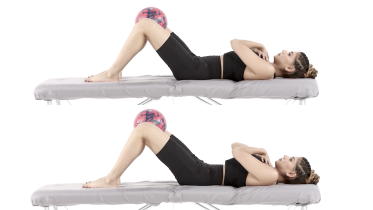
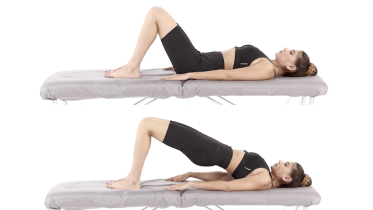
This stretch works on the muscles at the front of the hip that lift the thigh (hip flexors, mainly iliopsoas), lying on your back. You lie close to the side of a firm bed or treatment table and let the leg nearest the edge slide off and hang toward the floor, while the other leg stays straight on the bed. The weight of the hanging leg lowers the thigh below the line of your body, and that stretches the front of the hip. It is a good option if you find it hard to keep your balance in standing stretches.
How to do the lying hip flexor stretch
- Lie face up on a firm bed or treatment table, close to one of the long edges, with both legs straight. Fold your arms over your chest, as in the video, or rest them at your sides.
- Slide the leg nearest the edge off the side and let it hang toward the floor. Let the knee bend a little, and rest your foot on the floor if it reaches.
- Keep the other leg straight and relaxed on the bed, with your back and pelvis flat.
- Let the hanging leg go heavy so its own weight eases the thigh down. Stay there and take slow breaths.
- Bend the knee to lift the leg back onto the bed. Rest, then repeat. To stretch the other hip, move to the other edge.
What you should feel
A mild pull over the front of the hanging leg's hip, sometimes spreading into the front or inner thigh, as the leg also drifts out to the side. Nothing should hurt in your lower back.
Common mistakes
- Lying so far from the edge that the thigh cannot drop.
- Letting the lower back arch up off the bed as the leg hangs.
- Sliding so close to the edge that you feel you might roll off.
- Pushing the leg down with force instead of letting it hang.
How often
The voice guide suggests a 15 to 30 second hold, and many programs do this 2 or 3 times per leg, once or twice daily. Your physio will adjust this.
Stop and check with your physio if
- Pinching in the groin, or sharp pain where the thigh meets the body.
- Your lower back starts to ache or pinch while the leg hangs.
- Pins and needles, numbness or a burning feeling over the front of the thigh.
From the clinic
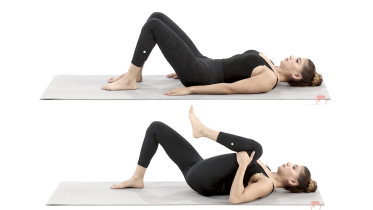
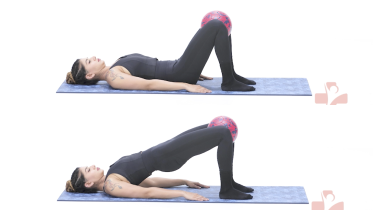
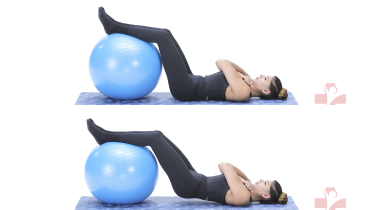
The voice guide describes a different stretch: pulling one knee to your chest while the other leg stays flat. The video shows the leg hanging off the side of the table instead, with the other leg straight, so the steps here follow the video. If you want a version that holds one knee in, the Thomas stretch hugs one knee while the other leg hangs over the end of the bed.
Use a bed or table that is firm and does not move, and keep enough of your body on it that you feel secure. Nothing holds the other leg in this version, so the lower back can arch as the thigh drops. If that happens, bend the knee of the leg on the bed and put that foot flat. That helps your back settle.
To get up, bring the hanging leg back onto the bed first, then roll onto your side and push up with your arms. If getting on and off a high bed or table is hard for you, or you have had a fall in the past year, have someone with you.
If you have had a hip replacement, get the go-ahead from your surgeon or physio before you try this stretch. Letting the leg hang below the edge of the bed takes that hip back past straight, and many surgeons ask you to avoid that for the first months after some operations. If you are pregnant and past the first three months, check with your physio before exercising flat on your back.
Written and checked by the PocketPhysio editorial team. Last updated 2026-09-28.
This page is general education, not a diagnosis or a personal treatment plan. If you have pain, an injury or a health condition, see a physiotherapist or doctor before starting new exercises.