Resisted tummy draw-in
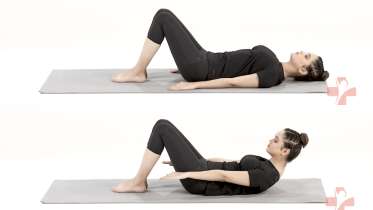
The resisted tummy draw-in is a simple deep core exercise done lying on your back with your knees bent. A hand or a light object such as a small book rests on your stomach, and you gently draw your lower tummy in away from it, hold for a few seconds while breathing normally, then relax. The object gives you something to feel and watch while you learn the movement.
How to do the resisted tummy draw-in
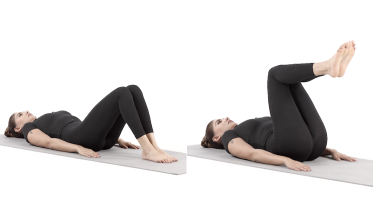
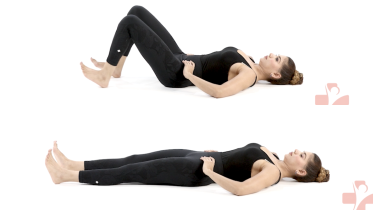
- Lie on a mat on your back with your knees bent and your feet flat on the floor. Your arms lie loosely on the mat.
- Place a light, flat object, such as a small paperback book, on your stomach just below your belly button. Your own hand works too.
- Breathe in and let your tummy rise under the book.
- As you breathe out, lift your pelvic floor a touch. Let your lower tummy draw in gently with it, without pulling it in hard. The book should sink a little.
- Hold the draw-in for a few seconds while you keep breathing gently, with your back and pelvis still.
- Relax fully and let the book rise again before the next one.
What you should feel
A small, soft tightening deep under the book, low in the stomach. Your buttocks and thighs stay relaxed.
Common mistakes
- Holding your breath while you hold the draw-in.
- Pressing your back flat into the mat or tilting your pelvis to make the book drop.
- Using something heavy. It only needs enough weight for you to feel it.
How often
A common starting point is 5 to 10 holds of about 5 to 10 seconds, 1 to 3 times a day. Your physio will adjust this.
Stop and check with your physio if
- Your back hurts more during the holds or afterward.
- Pain, tingling or numbness goes down a leg.
- You see a ridge or bulge along the middle of your stomach, or feel pressure low in the pelvis. Let your physio know.
From the clinic
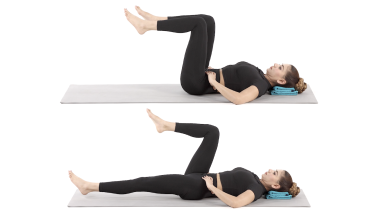
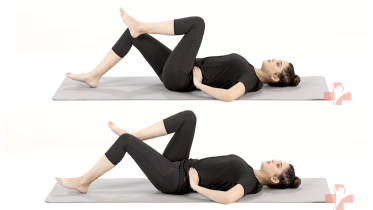
The resistance here is very light. The book is mostly there as feedback: when it sinks a little and stays down while you keep breathing, you are drawing in rather than pushing out. With your hand, a light touch is enough. Transverse abdominis activation teaches the same hold with your fingertips at the sides of your lower stomach, and once it comes easily you can keep it while your legs move in the double heel slide. If you have high blood pressure, breathe steadily through every hold and never hold your breath.
Ask your doctor or physio first if you have a hernia or a recent stomach operation, and do not rest anything on a scar that is still healing. If you have recently given birth, including by cesarean section, or you have a gap down the middle of your stomach muscles (diastasis recti), ask your physio, midwife or doctor first. If you are pregnant, check with your midwife or physio before you start. If you are pregnant and past the first three months, check with your physio before exercising flat on your back.
Written and checked by the PocketPhysio editorial team. Last updated 2026-09-26.
This page is general education, not a diagnosis or a personal treatment plan. If you have pain, an injury or a health condition, see a physiotherapist or doctor before starting new exercises.